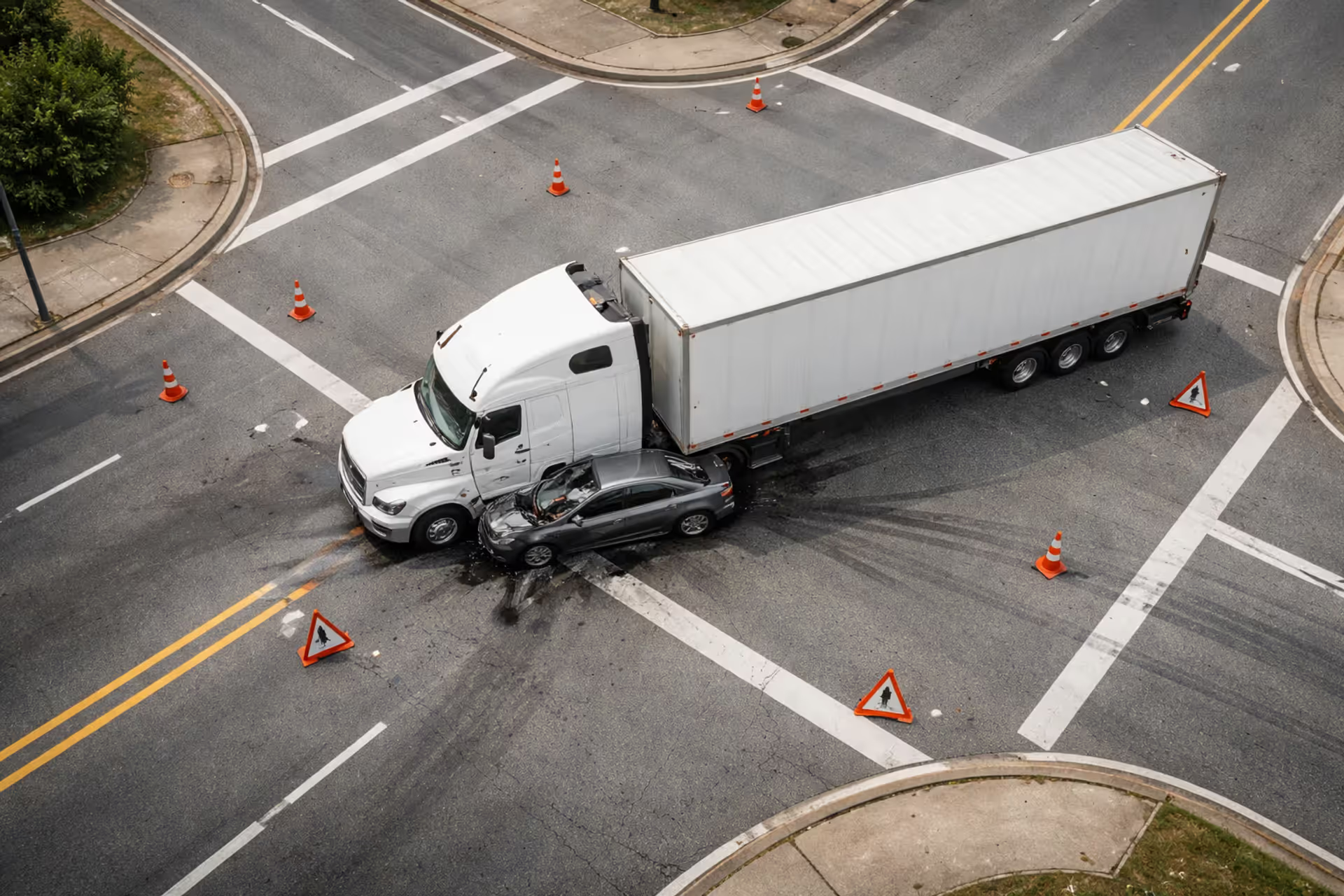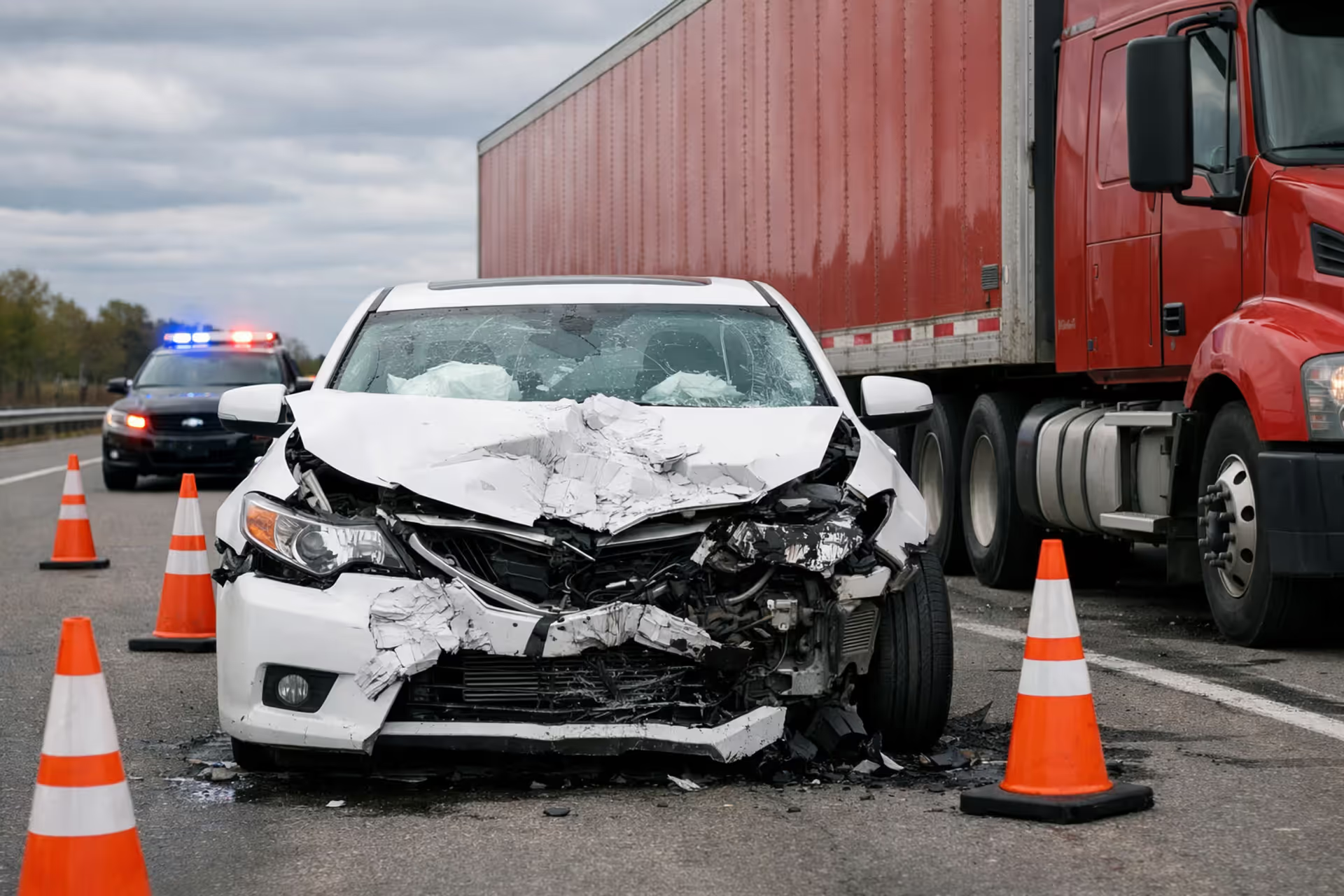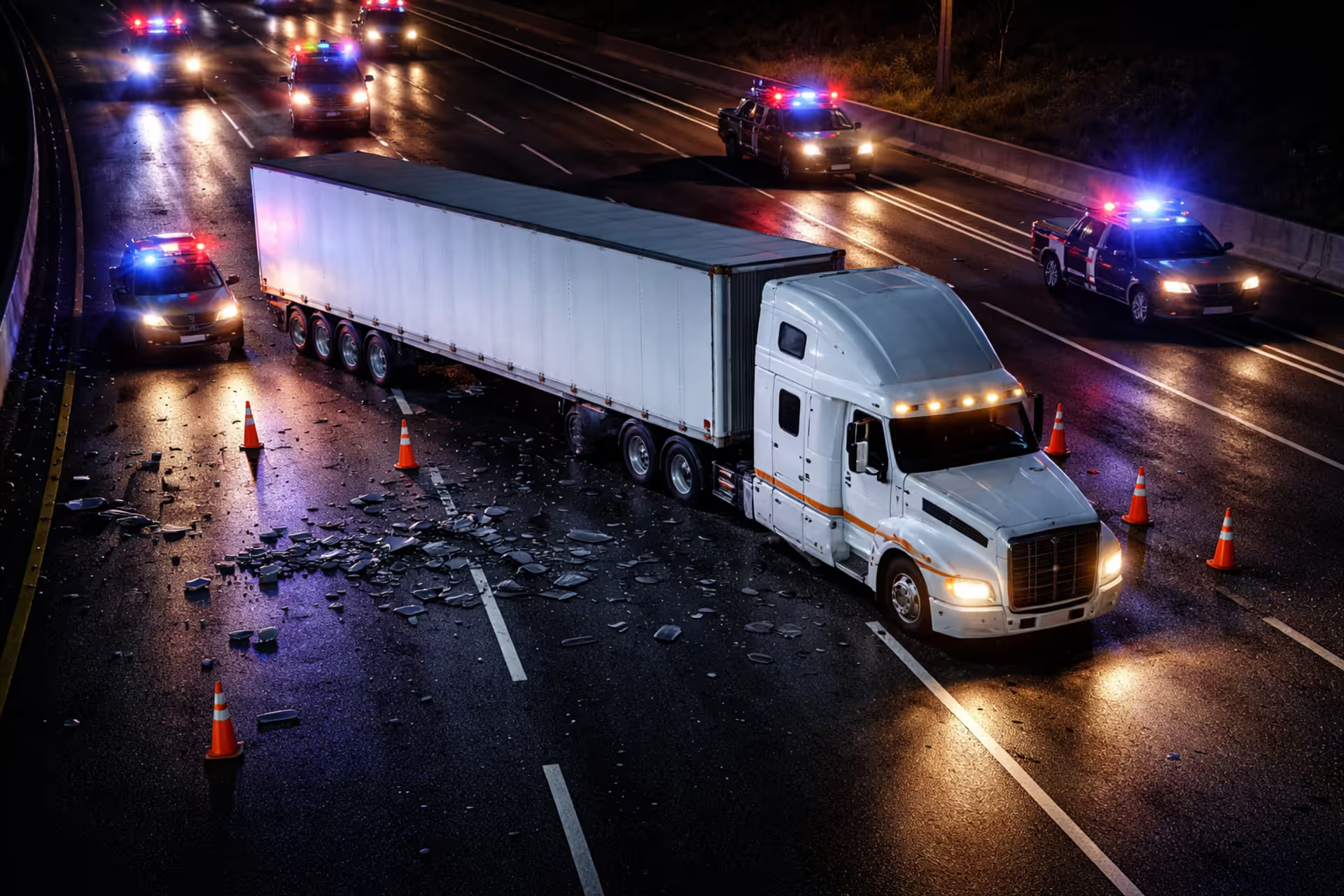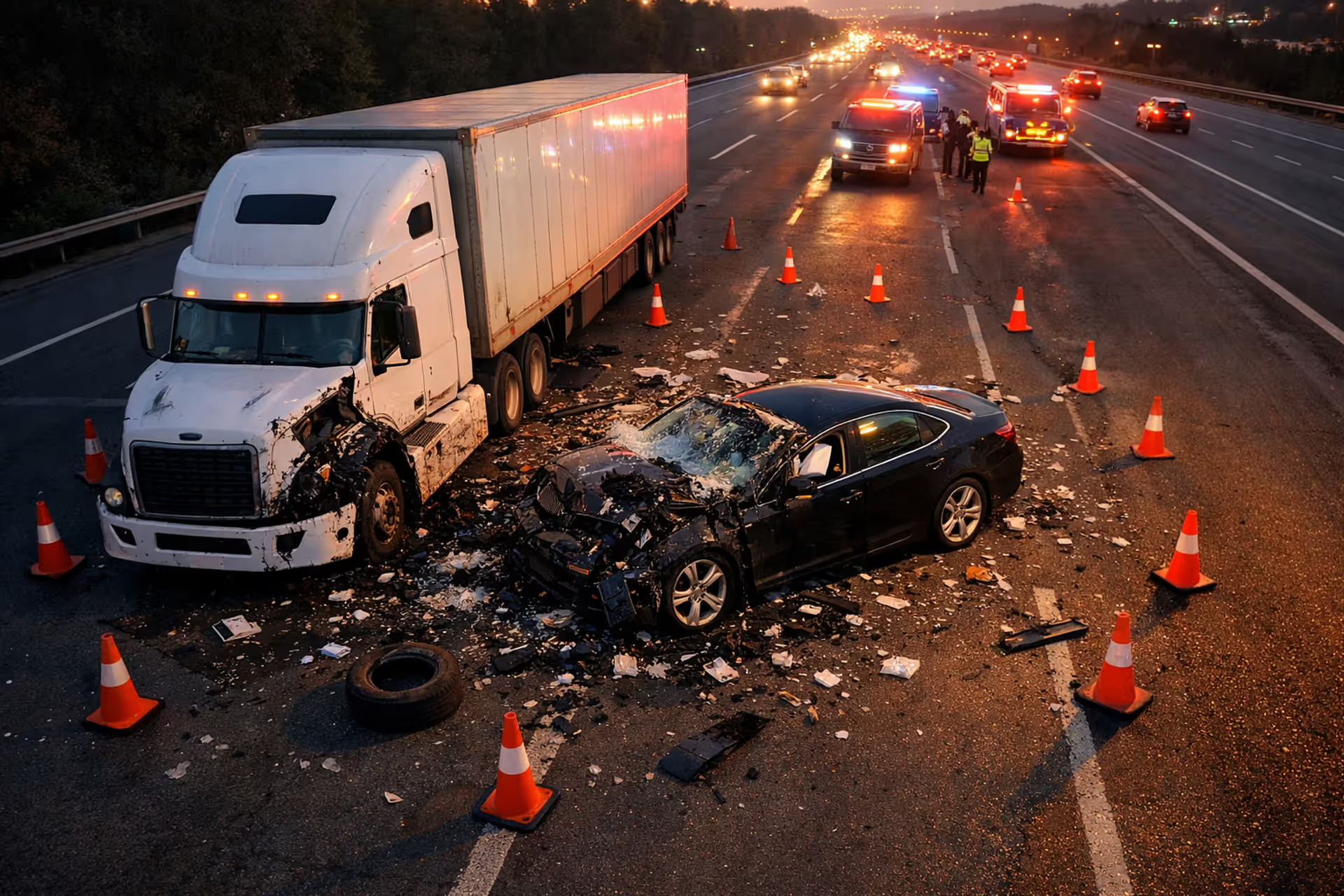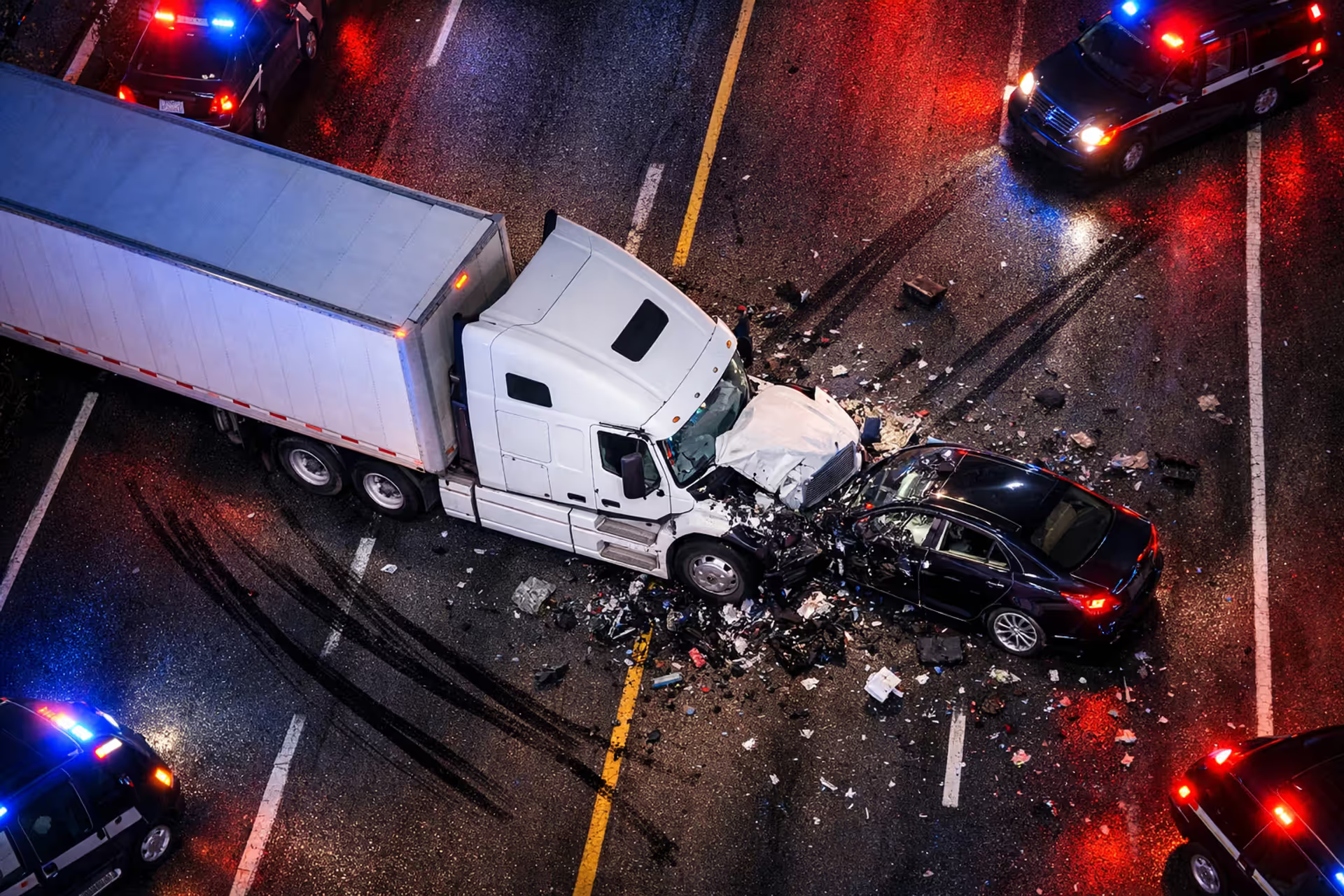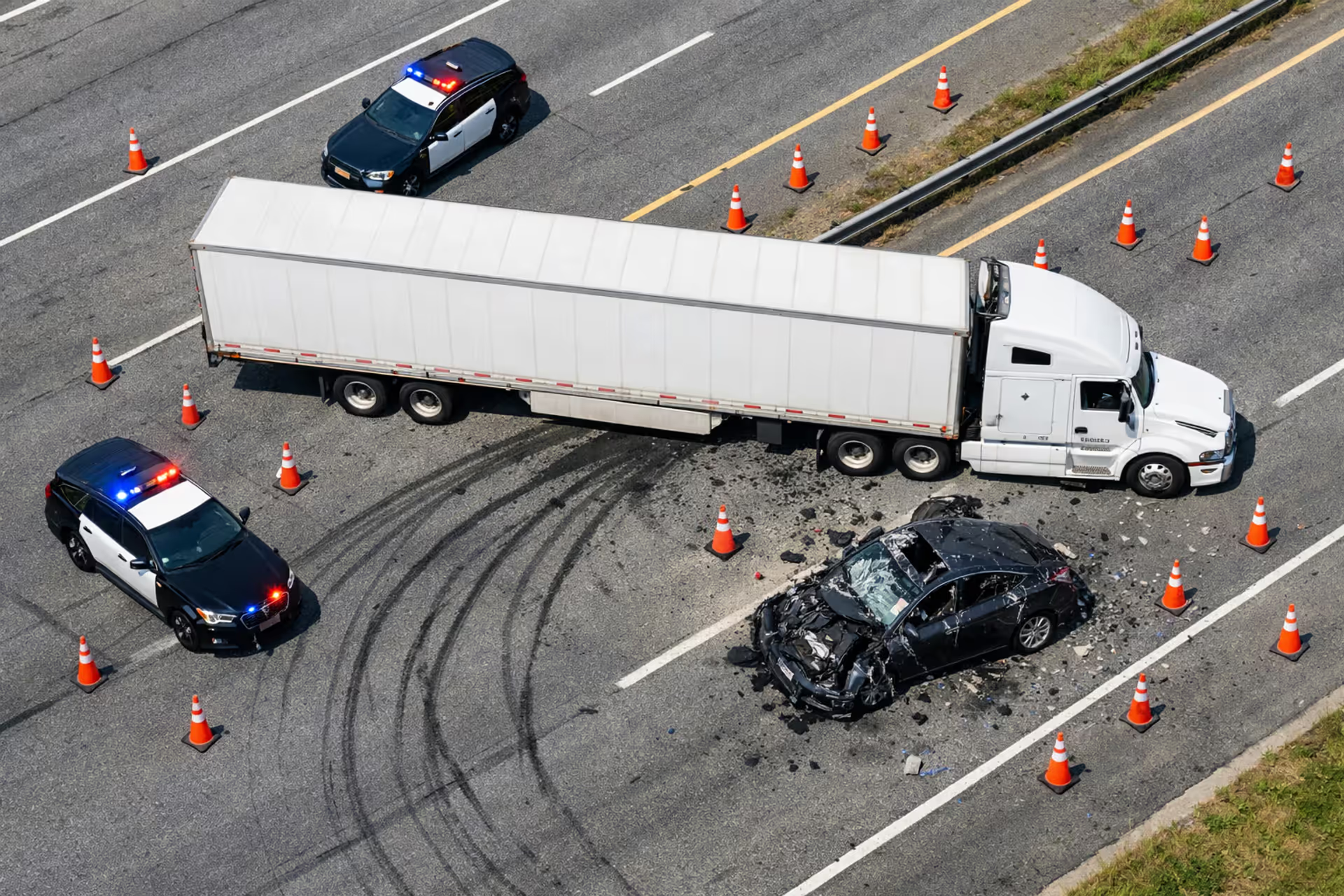
Aerial view of a highway accident scene with a large semi-truck and a damaged passenger car surrounded by emergency vehicles and traffic cones
Truck Accident Legal Guide: Your Rights and Options After a Commercial Vehicle Crash
Content
When an 80,000-pound tractor-trailer collides with a passenger vehicle, the aftermath extends far beyond twisted metal and shattered glass. Victims face mounting medical bills, insurance companies with teams of adjusters, and a legal landscape governed by federal regulations most personal injury attorneys never encounter. Understanding your rights after a commercial vehicle crash means recognizing that these cases operate under entirely different rules than typical fender-benders.
Why Truck Accident Cases Differ from Standard Car Accidents
The moment a commercial truck enters the equation, you're no longer dealing with state traffic laws alone. The Federal Motor Carrier Safety Administration (FMCSA) imposes strict regulations on every aspect of trucking operations—from mandatory rest breaks to vehicle maintenance schedules. Drivers must log their hours electronically, trucks require regular inspections documented in maintenance records, and companies face specific hiring standards.
This regulatory framework creates multiple avenues for establishing liability that simply don't exist in standard car accidents. When a drowsy driver causes a crash after logging 14 hours behind the wheel, the trucking company's dispatch practices come under scrutiny. If brake failure contributes to the collision, maintenance records dating back months become critical evidence.
Commercial insurance policies present another layer of complexity. While most drivers carry $25,000 to $100,000 in coverage, commercial trucks typically have policies ranging from $750,000 to $5 million or more. These high-value policies mean insurance companies deploy experienced attorneys and investigators immediately—often arriving at crash scenes before victims leave in ambulances.
Black box data—formally called Electronic Logging Devices (ELDs) and Event Data Recorders (EDRs)—captures information that transforms truck accident legal cases. These devices record speed, braking patterns, engine performance, and hours of service. Unlike witness testimony that fades or changes, this data provides objective evidence of what happened in the seconds before impact. However, trucking companies can overwrite or "lose" this data if not preserved through immediate legal action.
The complexity of FMCSA regulations and the multiple parties involved in commercial trucking operations require attorneys who understand not just personal injury law, but the intricate web of federal compliance requirements. A lawyer who handles car accidents won't have the specialized knowledge to identify violations that establish liability in truck cases
— Michael Leizerman
Immediate Steps to Protect Your Truck Crash Claims
The hours following a truck crash determine whether you build a strong case or watch critical evidence disappear. Unlike car accidents where insurance companies might take days to investigate, trucking companies dispatch "rapid response teams" within hours to document scenes, interview witnesses, and collect evidence that supports their version of events.
Contact emergency services immediately, regardless of whether injuries appear serious at first. Internal bleeding, traumatic brain injuries, and spinal damage frequently show no immediate symptoms. A police report establishes an official record, and emergency responders document conditions before anyone moves vehicles or clears debris from the roadway.
Take photographs from multiple angles if physically able: truck position, skid marks, road conditions, traffic signals, cargo, vehicle damage, and any visible truck identification numbers. Photograph the truck's DOT number displayed on the cab—this number unlocks the company's safety record, inspection history, and past violations.
Collect contact information from witnesses before they leave. Bystanders who saw the truck drift across lanes or run a red light provide testimony insurance companies can't dismiss as biased. Get names, phone numbers, and email addresses—don't rely on police reports to capture every witness.

Author: Jason Calloway;
Source: capeverde-vip.com
Critical Evidence That Disappears Quickly
Trucking companies must preserve evidence once they know a claim exists, but the clock works against victims. Trucks get repaired or returned to service, washing away physical evidence. Electronic logging data gets overwritten on 30-day cycles. Drivers receive new assignments in different states, making them difficult to depose later.
Surveillance footage from nearby businesses typically records over itself within 7-14 days. Traffic cameras may capture the collision but municipalities often erase footage within 30 days. Weather data, road construction records, and traffic pattern information becomes harder to obtain as time passes.
Sending a preservation letter—a formal legal demand to preserve all evidence—stops trucking companies from "accidentally" losing critical information. This step requires an attorney who understands exactly what evidence exists in truck accident cases and can demand specific items: driver logs, maintenance records, hiring files, dispatch communications, drug testing results, and electronic data.
Common Mistakes That Weaken Your Case
Giving recorded statements to insurance adjusters before consulting an attorney ranks among the most damaging mistakes. Adjusters ask seemingly innocent questions designed to elicit responses they'll use to minimize payouts: "You're feeling okay now, right?" becomes "Claimant admitted feeling fine after the accident."
Accepting quick settlement offers might seem tempting when medical bills pile up, but initial offers rarely account for long-term treatment needs, future surgeries, or permanent disability. Once you sign a release, you cannot reopen the claim when complications develop months later.
Posting on social media creates evidence insurance companies mine for inconsistencies. That photo of you standing at a family gathering becomes "proof" you're not really injured, even though you're grimacing in pain and left after 20 minutes. Adjusters scroll through years of posts looking for anything to undermine your truck accident advice from medical professionals.
Waiting too long to seek legal help allows critical deadlines to pass. Statutes of limitations vary by state—typically two to three years—but some claims against government entities require notice within 60-90 days. Evidence preservation becomes exponentially harder as weeks turn into months.
The first 72 hours after a trucking accident are the most critical period for any victim’s case. Evidence vanishes, data gets overwritten, and memories fade. The trucking industry knows this — their rapid response teams exist specifically to control the narrative before victims even leave the hospital. Acting quickly with proper legal guidance is not optional, it is the single most important decision that shapes the entire outcome
— Joe Fried
Who Can Be Held Liable in Semi-Truck Injury Legal Cases
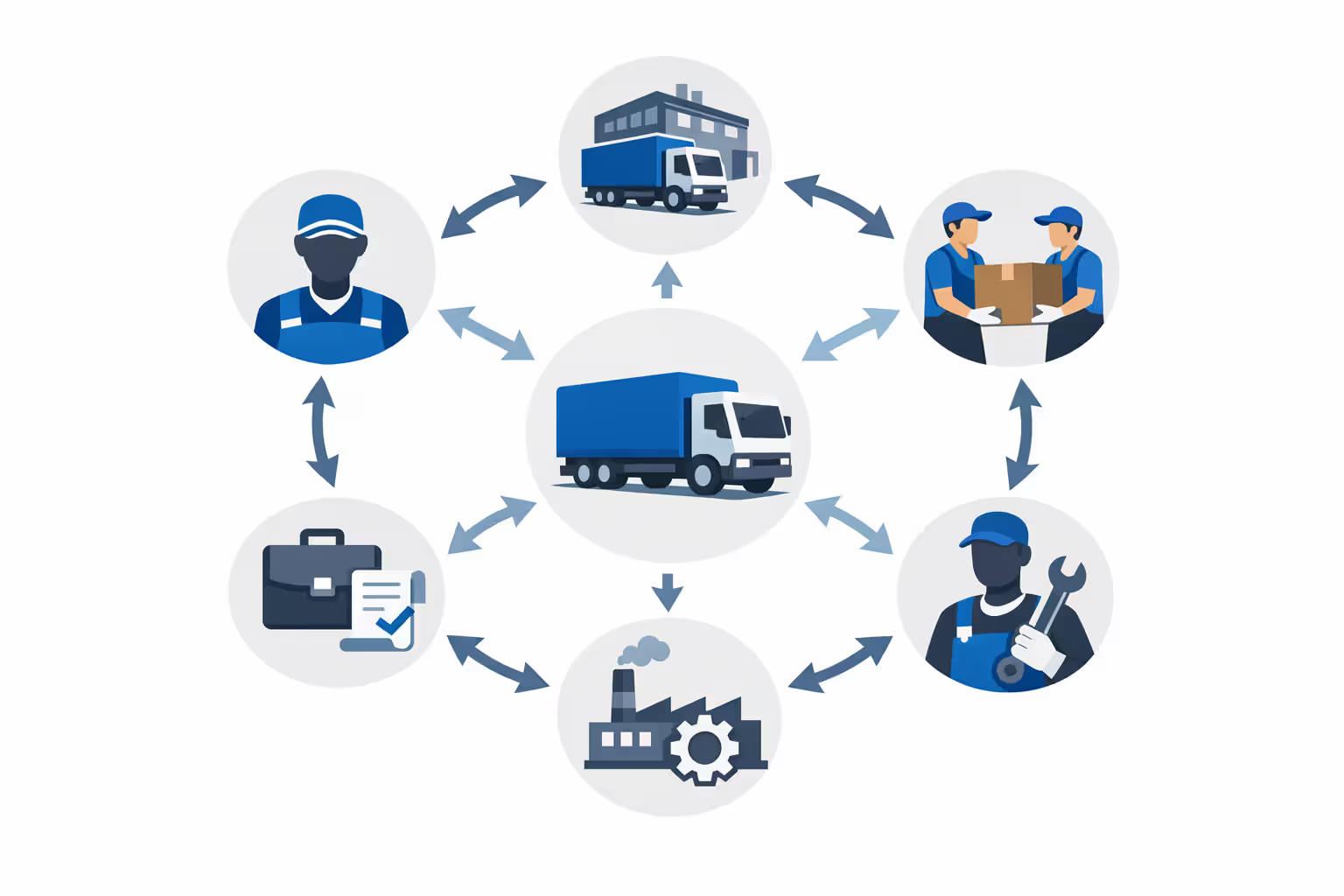
Truck accidents rarely involve just one at-fault party. The commercial trucking industry operates through complex networks where multiple companies and individuals share responsibility for safe operations. Identifying every liable party maximizes compensation because each entity carries separate insurance coverage.
| Potentially Liable Party | Primary Responsibilities | Coverage Type |
| Truck Operator | Vehicle operation safety, compliance with hours-of-service rules, pre-trip vehicle inspections, maintaining proper CDL licensing | Individual auto coverage (typically minimal), employer commercial auto policy coverage |
| Trucking Company | Hiring qualified drivers, providing adequate training, maintaining vehicles properly, implementing safe dispatch practices, ensuring regulatory compliance | Commercial auto liability coverage ($750K-$5M+), general business liability, cargo coverage |
| Cargo Loading Company | Distributing weight correctly, securing loads properly, adhering to weight limit regulations | General business liability, cargo-specific coverage, professional liability protection |
| Maintenance Service Provider | Performing required repairs, conducting mandated inspections, replacing worn parts, keeping accurate maintenance documentation | Garage keepers liability coverage, general business liability, professional liability protection |
| Equipment Manufacturer | Creating safe product designs, manufacturing without defects, providing adequate safety warnings and instructions | Product liability coverage ($1M-$10M+) |
| Freight Broker/Logistics Company | Verifying carrier qualifications, confirming proper licensing and insurance, selecting safe carriers with good safety records | Broker-specific liability, errors and omissions coverage |
The truck driver might have run a red light, but investigation reveals the trucking company pressured drivers to meet unrealistic delivery schedules, creating an environment where drivers felt compelled to speed and skip rest breaks. Both parties share liability.
Cargo loaders who improperly distribute weight cause trucks to become unstable in turns or during braking. When 40,000 pounds of freight shifts suddenly, even experienced drivers lose control. The loading company's negligence contributed to the crash even though they weren't driving.
Maintenance contractors who skip brake inspections or use substandard replacement parts create ticking time bombs. When those brakes fail on a mountain grade, the maintenance provider's negligence becomes a direct cause of the collision.
When product defects or manufacturing flaws contribute to collisions, manufacturers bear responsibility. Tire blowouts from defective products, steering system failures, or coupling devices that separate unexpectedly all represent potential product liability claims independent of any driver negligence.
Freight brokers—middlemen who connect shippers with trucking companies—must verify that carriers maintain proper licensing and insurance. When brokers hire unqualified carriers with poor safety records to save money, they share responsibility for resulting crashes.
Author: Jason Calloway;
Source: capeverde-vip.com
Trucking law help becomes essential because identifying these parties requires subpoenaing business records, analyzing contracts, and understanding the relationships between various entities involved in a single shipment.
How Truck Accident Attorneys Build Your Case
Specialized truck accident attorneys approach cases differently than general personal injury lawyers. They immediately send preservation letters to all potentially liable parties, demanding preservation of electronic data, maintenance records, hiring files, and dispatch communications before evidence disappears.
Investigation teams visit crash scenes days or weeks after accidents, taking measurements, photographing sight lines, and documenting road conditions. Accident reconstruction experts analyze police reports, vehicle damage, skid marks, and debris fields to determine speed, point of impact, and sequence of events. These experts use physics and engineering principles to create demonstrative exhibits that help juries visualize how crashes occurred.
Attorneys subpoena the truck's electronic logging device data and event data recorder information, then hire experts to interpret this technical data. These devices record hundreds of data points, but understanding what the numbers mean requires specialized knowledge. An expert can explain that the data shows the driver never touched the brakes before impact, contradicting claims that the car "came out of nowhere."
FMCSA regulations require trucking companies to maintain extensive records: driver qualification files, drug and alcohol testing results, vehicle inspection reports, maintenance logs, and hours-of-service records. Attorneys analyze these documents for violations that establish negligence. A driver who falsified logbooks or a company that skipped required inspections demonstrates a pattern of regulatory disregard.
Medical documentation requires coordination with treating physicians to ensure records clearly link injuries to the accident and explain future treatment needs. Attorneys work with life care planners and economists to calculate lifetime costs for catastrophic injuries requiring ongoing care, multiple surgeries, or permanent disability.
Negotiation strategies in truck cases differ from typical settlements. With multiple insurance policies in play, attorneys negotiate with several companies simultaneously, understanding how policy limits and coverage disputes affect settlement values. When one insurer settles, it often creates pressure on others to resolve claims before trial.
In commercial trucking litigation, the difference between adequate and exceptional representation often comes down to understanding the regulatory framework. Every FMCSA violation uncovered is a building block of liability. Attorneys who treat these cases like ordinary car wrecks leave millions in potential recovery on the table and fail the very people who need them most
— Rena Leizerman
Compensation Factors in Commercial Truck Litigation
Truck accident damages extend far beyond vehicle repairs and immediate medical bills. The severity of injuries in commercial vehicle crashes often results in life-altering consequences requiring comprehensive compensation.
Costs related to medical care encompass emergency room visits, hospital stays, surgical procedures, physical therapy, medications, durable medical equipment like wheelchairs or hospital beds, and projected future treatment. Catastrophic injuries might require millions in lifetime medical care: spinal cord injuries averaging $1-5 million over a lifetime, traumatic brain injuries requiring ongoing therapy and assistance with daily living.
Lost wages compensate for income lost during recovery, but truck accident claims also address diminished earning capacity. A construction worker who suffers permanent back injuries can't return to physical labor. An accountant with traumatic brain injury affecting cognitive function can't perform complex financial analysis. Economic experts calculate the difference between pre-accident earning potential and post-injury capacity over a working lifetime.
Pain and suffering damages address physical pain, emotional distress, loss of enjoyment of life, and psychological trauma. Quantifying these non-economic damages requires painting a picture of how injuries affect daily life: the former marathon runner who can't walk without assistance, the parent who can't pick up their children, the professional who suffers PTSD anxiety every time they see a truck.
Future care needs become critical in catastrophic injury cases. Life care planners project costs for ongoing medical treatment, home modifications, assistive devices, and personal care assistance. These projections ensure victims receive compensation for needs that will arise years after settlement.
In situations involving extreme recklessness or intentional rule violations, courts may award punitive damages designed to punish defendants and prevent similar future conduct. When trucking companies knowingly ignore safety regulations or drivers operate under the influence, these damages can substantially exceed compensatory awards in particularly egregious cases.
| Injury Category | Common Settlement Range | Value-Influencing Elements |
| Minor Injuries | $25,000 - $100,000 | Soft tissue damage, complete recovery anticipated within several months, limited medical intervention required |
| Serious Injuries | $100,000 - $500,000 | Fractures requiring surgical repair, recovery periods spanning many months, some degree of permanent functional limitation |
| Catastrophic Injuries | $500,000 - $5,000,000+ | Spinal cord damage, severe brain trauma, loss of limbs, permanent incapacitation, lifetime care requirements |
| Wrongful Death | $500,000 - $10,000,000+ | Lost financial contribution to family, loss of guidance and companionship, decedent's pre-death suffering, burial expenses |
Disclaimer: Settlement amounts fluctuate significantly based on individual case circumstances including clarity of liability, available insurance coverage, jurisdiction, injury extent, victim's age and profession, and caliber of legal representation. These ranges reflect general observations, not guarantees for specific situations.
Choosing the Right Trucking Accident Consultation: What to Ask
Not all personal injury attorneys possess the specialized knowledge truck accident cases demand. During initial consultations, ask specific questions that reveal whether an attorney has genuine experience with commercial vehicle litigation or just handles these cases occasionally.
"How many truck accident cases have you handled?" seems basic, but listen for specifics. An attorney who's handled 50+ truck cases understands FMCSA regulations, knows how to obtain and interpret black box data, and has relationships with accident reconstruction experts who specialize in commercial vehicles. Someone who's handled three truck cases might lack this depth of experience.
"What's your experience with FMCSA regulations?" should prompt detailed discussion about hours-of-service rules, maintenance requirements, driver qualification standards, and cargo securement regulations. Attorneys who can't discuss these regulations in detail will struggle to identify violations that establish liability.
Ask about their trial record specifically in truck cases. Many attorneys settle cases but avoid trial. While most cases settle, insurance companies offer better settlements when they know an attorney has successfully tried commercial vehicle cases to verdict. Request specific information: "What verdicts have you achieved in commercial vehicle cases that went before juries?"
Resource questions matter because truck cases require significant upfront investment. "Do you have the financial resources to hire accident reconstruction experts, medical experts, and economic experts?" Building a strong case might require $50,000-$100,000 in expert fees before settlement or trial. Attorneys without resources may pressure clients to accept low settlements.
Fee structure discussions should cover contingency percentages, whether percentages increase if cases go to trial, and what costs clients remain responsible for if cases are lost. Most truck accident attorneys work on contingency—typically 33-40%—meaning they only get paid if you recover compensation.
Timeline expectations help you plan financially and emotionally. "What's the typical duration from filing to resolution in commercial vehicle cases?" Matters involving catastrophic injuries and complex liability often span 18-36 months. Understanding this timeline helps you prepare for the long process ahead.

Author: Jason Calloway;
Source: capeverde-vip.com
Frequently Asked Questions About Truck Accident Advice
The aftermath of a truck accident presents challenges that extend far beyond typical car crashes. Federal regulations, multiple liable parties, complex insurance policies, and catastrophic injuries create a legal landscape requiring specialized knowledge and resources. Understanding your rights means recognizing that these cases demand attorneys who focus specifically on commercial vehicle litigation, not general practice lawyers who occasionally handle truck accidents.
Taking immediate action to preserve evidence, avoiding insurance company traps, and consulting with experienced truck accident legal counsel protects your ability to recover full compensation for injuries that may affect you for the rest of your life. The trucking industry deploys teams of investigators and attorneys within hours of serious crashes—you deserve equally skilled representation fighting for your interests. Every day that passes without proper legal guidance allows critical evidence to disappear and makes building a strong case more difficult.
Your focus should remain on medical recovery while experienced attorneys handle the complex legal battle ahead. With the right representation, you can hold negligent parties accountable and secure the compensation needed for medical care, lost income, and the life changes these devastating crashes impose.