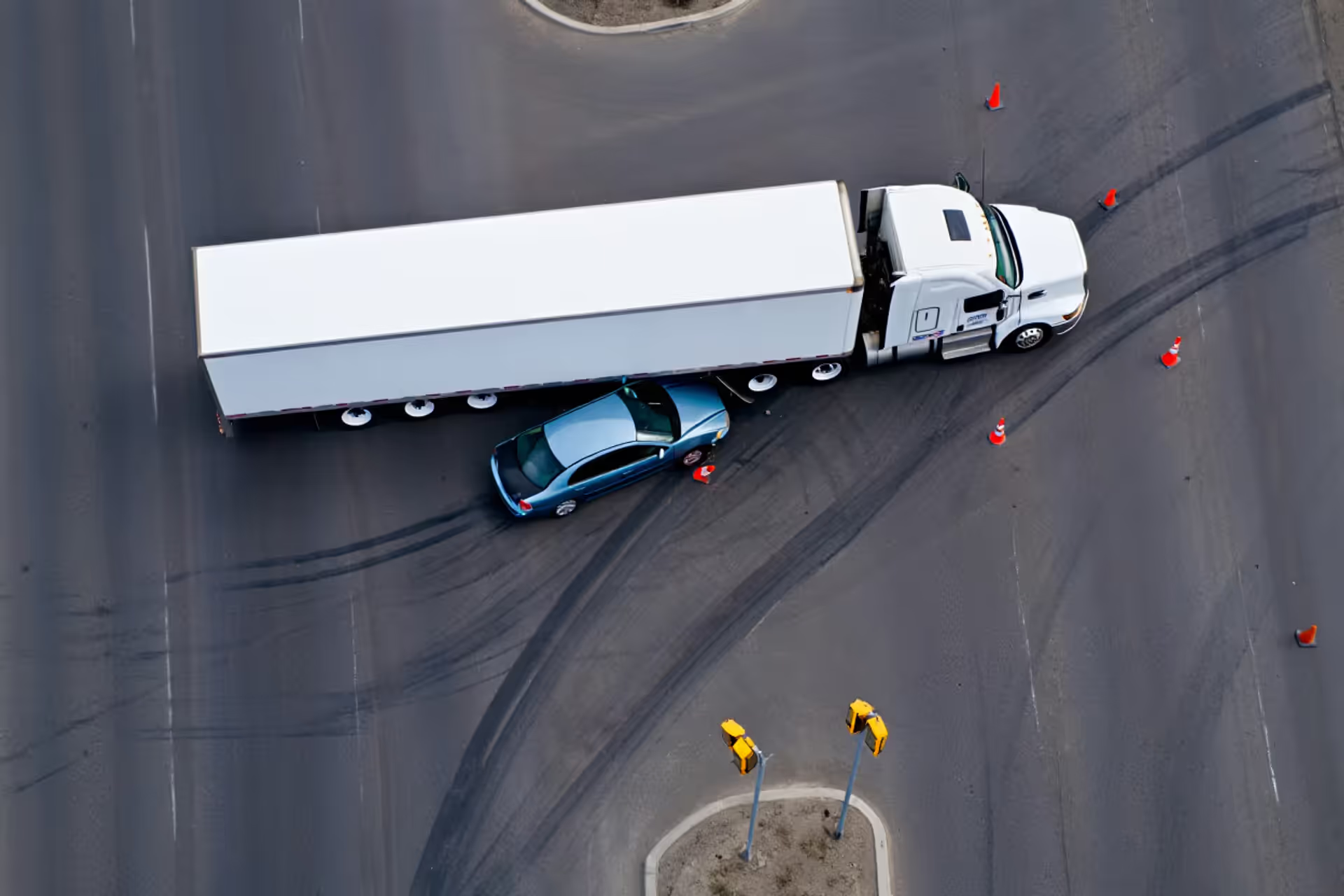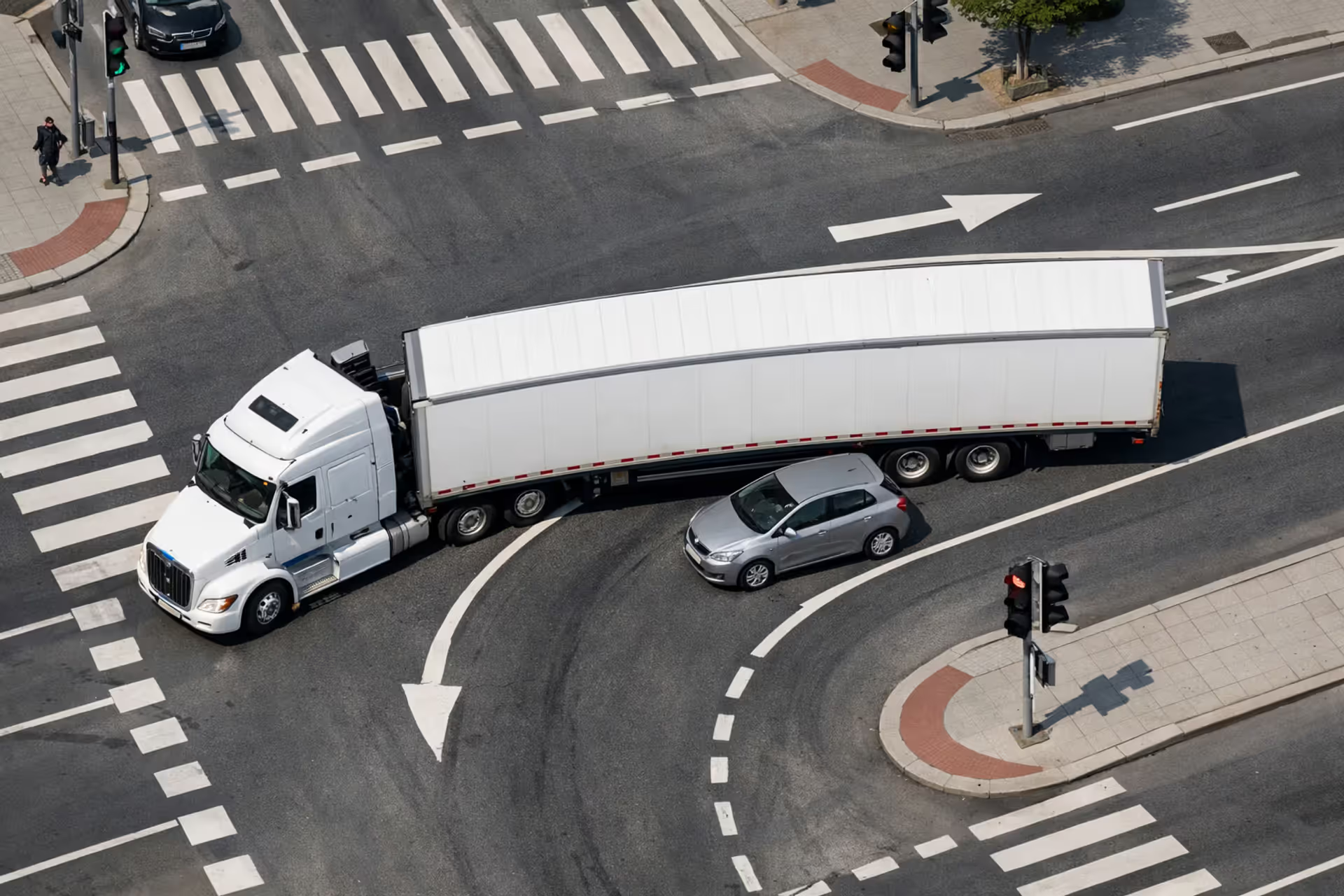
Aerial view of a semi-truck making a wide right turn at a city intersection with a small car dangerously close to the trailer
Determining Liability When a Commercial Truck's Wide Right Turn Causes a Crash

Content
Picture this: you're driving through an intersection when suddenly an 18-wheeler's trailer sweeps across your lane, crushing your vehicle against the curb. Or maybe you're a pedestrian caught in the path of a turning big rig. These scenarios happen daily across the United States, and they raise a complicated question: who's responsible when a semi-truck's turning maneuver goes wrong?
The answer isn't straightforward. Several elements come into play—was the trucker signaling? Where were you positioned on the road? Did weather play a role? Were traffic rules broken? Because these crashes involve federally-regulated commercial vehicles, massive corporate entities, and insurance policies worth millions, understanding who owes you compensation requires digging deeper than your typical fender-bender analysis.
If you've been hurt or your car's been totaled in one of these incidents, what follows will help you make sense of the legal landscape ahead.
Why Trucks Make Wide Right Turns and Common Causes of Collisions
Tractor-trailers can't pivot through intersections like your Honda Civic. The physics simply don't allow it. A fully-loaded big rig stretches up to 75 feet from bumper to bumper, and those back wheels track a completely different path than the front ones.
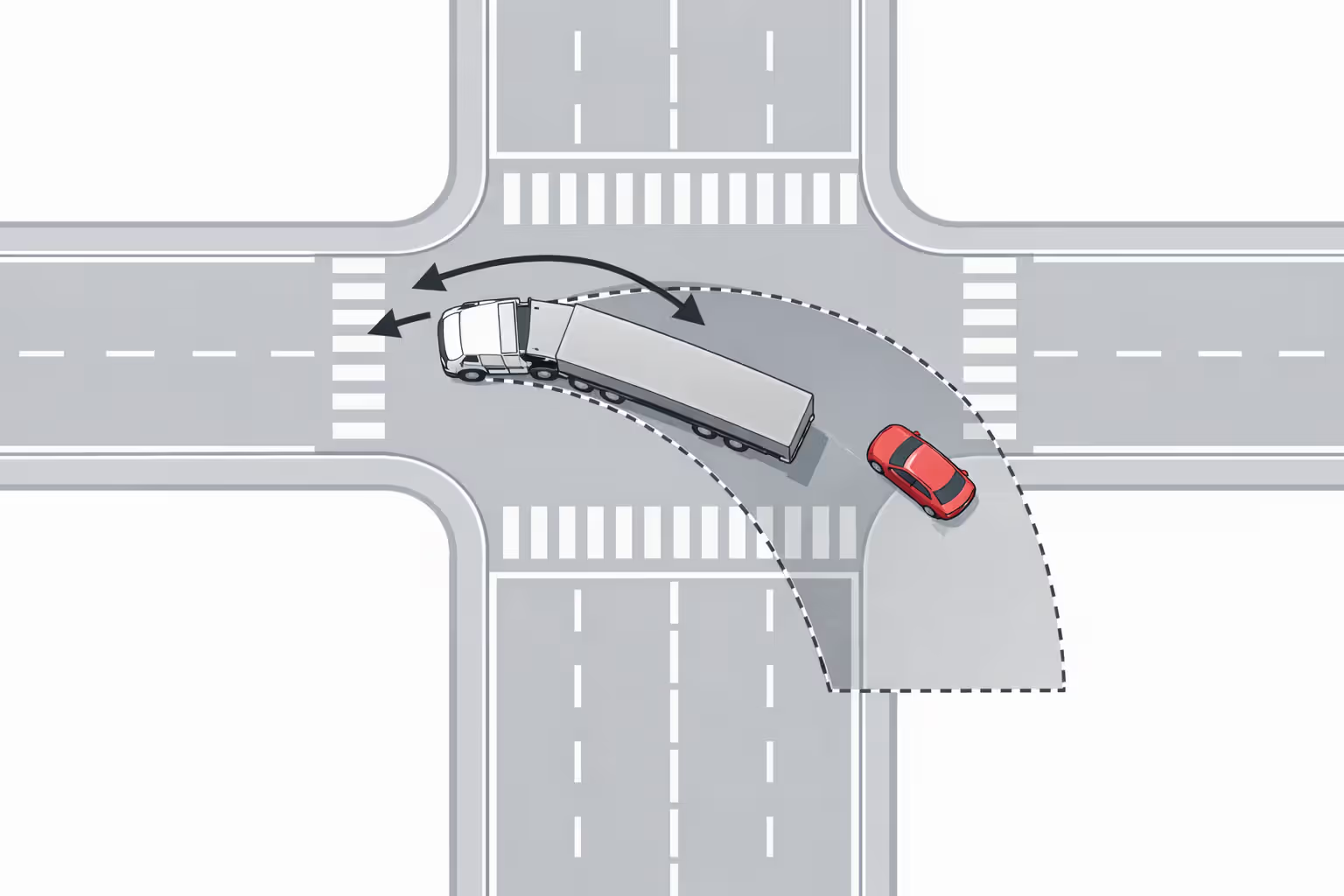
The "Right Turn Squeeze" Explained
Here's what happens: when a trucker needs to make a right turn, they'll first veer left—sometimes a full lane over. This isn't careless driving; it's necessary geometry. Without that initial leftward swing (truckers call it a "button-hook" maneuver), the trailer's rear wheels would jump the curb, flatten a fire hydrant, or worse—clip pedestrians waiting at the corner.
The lethal trap emerges during this two-part move. A driver in a sedan sees the truck drift left and thinks, "Great, there's room to squeeze by on the right." They gun it. Meanwhile, the trucker's already committed to sweeping that entire right side with 53 feet of trailer. The car gets pinned between steel and concrete, often with fatal results.
I've reviewed dozens of these crashes. In nearly half, the smaller vehicle's driver told investigators they thought the truck was changing lanes, not turning. They genuinely believed they had space to pass. By the time they realized their mistake, they were trapped in the trailer's swing path with nowhere to go.
Author: Rebecca Thornton;
Source: capeverde-vip.com
Driver Blind Spots and Visibility Issues
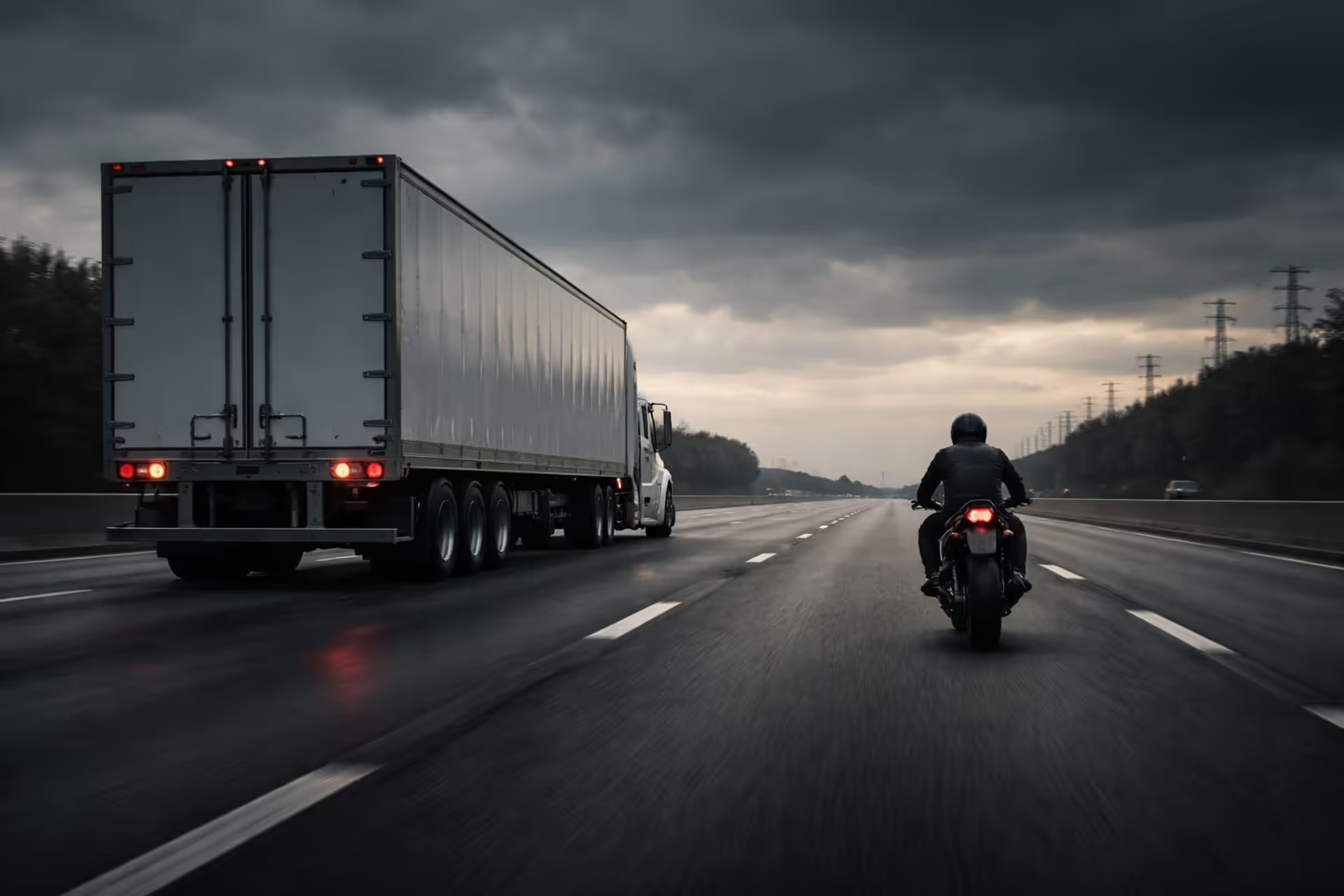
Stand next to a semi-truck sometime. You'll notice something unsettling: you can't see the driver, and they definitely can't see you. That right-side blind spot stretches from the passenger door backward along the entire trailer length, extending outward three lanes in some configurations.
Even modern trucks equipped with multiple mirrors and camera systems have these vision dead zones. If you pulled alongside after the driver's last mirror check—or if the driver didn't check thoroughly—you've effectively vanished from their world. Motorcycles and bicycles disappear even more easily because of their slim profiles.
Add rain, darkness, or a trucker glancing at their GPS, and the risk multiplies. Urban intersections demand split-second judgments while navigating tight spaces, reading signals, and monitoring traffic from all directions. Something's bound to slip through the cracks.
The greatest danger in trucking accidents is not the size of the vehicle — it’s the assumption of safety. Drivers of smaller cars routinely misjudge a truck’s turning radius, and truck operators routinely overestimate their own visibility. When both assumptions collide at an intersection, the results are catastrophic and largely preventable
— Ray LaHood
How Fault Is Determined in Truck Turn Collisions
Figuring out liability requires assembling a puzzle from many pieces. No single factor decides the outcome.
Evidence Collected at the Scene
Responding officers measure everything: skid distances, final vehicle positions, debris scatter patterns, sight line obstructions. They photograph damage from every angle and note whether the truck's blinkers were flashing. These details reconstruct the collision's choreography.
Modern commercial trucks carry electronic logging devices that record speed, throttle position, brake application, and steering inputs continuously. This "black box" data reveals precisely what the driver did in those critical final seconds. Was the truck going 35 mph around a turn rated for 15? Did the driver slam the brakes, or did they never see the other vehicle at all?
Investigators also pull the trucker's hours-of-service logs. Federal law caps driving time to prevent fatigue-related crashes. A driver who's been behind the wheel for 13 straight hours violates those rules, and exhaustion impairs judgment as severely as alcohol. Maintenance logs matter too—worn brake pads or cracked mirrors might explain why the driver couldn't stop or didn't see you.
Role of Traffic Camera Footage and Witness Statements
Dashboard cameras have revolutionized these cases. Footage doesn't misremember or exaggerate. It shows exactly when signals activated, how long they flashed before the turn, whether the car accelerated into the truck's path, and where both vehicles sat at impact.
Intersection surveillance cameras and business security systems often capture the entire sequence. Attorneys send preservation letters within days of a crash to prevent this footage from being overwritten.
Eyewitness accounts add context, though humans are notoriously unreliable observers. Two people watching the same collision will swear they saw opposite things. Smart investigators compare witness statements against physical evidence and video to separate perception from reality.
Most jurisdictions split fault proportionally when both parties share blame. Let's say the trucker didn't signal, but you were texting and speeding. A jury might assign 70% fault to the truck driver and 30% to you. In states using "pure" comparative fault rules, you'd collect 70% of your total damages. "Modified" comparative fault states (the majority) bar your recovery entirely if you're 50% or 51% responsible, depending on local law. A handful of states still follow harsh "contributory negligence" standards where even 1% fault destroys your claim.
Video evidence from the three seconds before impact tells us everything. Did the truck driver check mirrors? When did the turn signal activate? Where was the other vehicle positioned? These datapoints make or break cases worth millions
— Sarah Chen
Common Liability Scenarios: Who Pays for Damages?
The specific circumstances surrounding your crash determine which party's insurance company writes the check.
| Scenario | Who's Typically Responsible | What Makes the Difference |
| Trucker never activated turn signals or signaled only one blink before turning | Truck driver and their employer | Timestamp data from the truck's electrical system, video showing no warning lights, multiple witnesses confirming lack of signal |
| Passenger vehicle tried squeezing past the truck's right side | Car's driver | Whether state law permits passing on the right in that location, if the truck gave adequate signal, whether the car was already positioned there before the turn sequence started |
| Truck swung wide left into another lane before the right turn without checking for traffic | Truck driver and their employer | Whether that wide swing was genuinely necessary given the intersection's turning radius, mirror-check frequency documented in driver training records, traffic density at that moment |
| Pedestrian or bicyclist hit while crossing legally with the signal | Truck driver and their employer | State vehicle codes requiring drivers to yield to pedestrians in crosswalks, whether the crossing signal gave the pedestrian right-of-way, dashcam showing driver never looked right before turning |
| Defective equipment like failed brakes or broken mirrors prevented the driver from seeing or stopping | Trucking company or third-party maintenance provider | Federal inspection requirements showing missed maintenance windows, mechanical expert testimony proving the defect caused the crash, records showing prior complaints about that specific equipment |
When a truck driver's carelessness caused your injuries—say they were scrolling Instagram instead of watching the road—both the driver personally and their employer face liability. The legal principle of "respondeat superior" makes employers answer for their workers' on-the-job negligence.
Things get messier when the driver operates as an independent contractor rather than a direct employee. Courts then examine how much control the shipping company, broker, or freight customer exercised over that driver. Did they dictate routes and schedules? That control can extend liability even without a formal employment relationship.
Sometimes fault reaches beyond the driver and trucking company. Cargo loading companies face claims when unbalanced freight made the truck tip during the turn. Cities get sued when poor intersection design, faded lane markings, or malfunctioning traffic lights contributed to the collision. Truck manufacturers face liability for design defects that create excessive blind spots.
Many cases involve split responsibility. Maybe the trucker failed to signal and you were distracted by your phone. Both insurance companies will battle over the percentage breakdown because every point of fault shifts thousands of dollars between them.

Author: Rebecca Thornton;
Source: capeverde-vip.com
What Your Truck Injury Settlement May Include
Compensation in commercial truck cases typically dwarfs ordinary car accident settlements for two reasons: injuries tend to be more severe, and trucking companies carry larger insurance policies (often $1 million minimum, sometimes $5 million or more for hazmat carriers).
Your medical bills form the baseline: ambulance rides, emergency department treatment, surgery, hospital stays, physical therapy, medications, medical equipment, and future care needs if you face permanent limitations. Save every invoice, every insurance explanation of benefits, every receipt from the pharmacy.
Income replacement covers your missed paychecks while recovering. But what if your injuries prevent you from ever returning to your trade? You can claim "lost earning capacity"—the career income you'll never see because of your diminished physical abilities. A 35-year-old electrician who loses hand function from a crush injury just lost 30 years of skilled wages.
Your vehicle and personal property damage gets compensated too—repair bills or fair market value if the car's totaled, plus contents destroyed in the crash (laptops, tools, musical instruments, whatever you were carrying).
The largest component in serious injury cases is "non-economic damages": physical pain, emotional trauma, permanent scarring, disability, loss of life's pleasures. These subjective harms don't come with receipts, but they profoundly impact settlement value. A visible facial scar affecting a young woman differently than a similar injury to her leg. Chronic pain that never fully resolves commands more compensation than injuries that heal completely.
Several factors push settlements higher: permanent disability of any kind, injuries requiring multiple surgeries, lifelong pain management, disfigurement on visible body areas, and egregious trucker conduct (drunk driving, intentional recklessness, driving with a suspended license). Crystal-clear liability where the trucker blatantly violated traffic laws strengthens your negotiating leverage.
These settlements span a massive range. A whiplash case with full recovery might settle for $30,000. A traumatic brain injury or spinal cord damage resulting in paralysis can justify $5 million or more. Every case stands on its own facts, jurisdiction, injury specifics, and attorney skill.
Steps to Take After Being Hit by a Turning Semi-Truck
Author: Rebecca Thornton;
Source: capeverde-vip.com
What you do in the crash's immediate aftermath can make or break your eventual compensation claim.
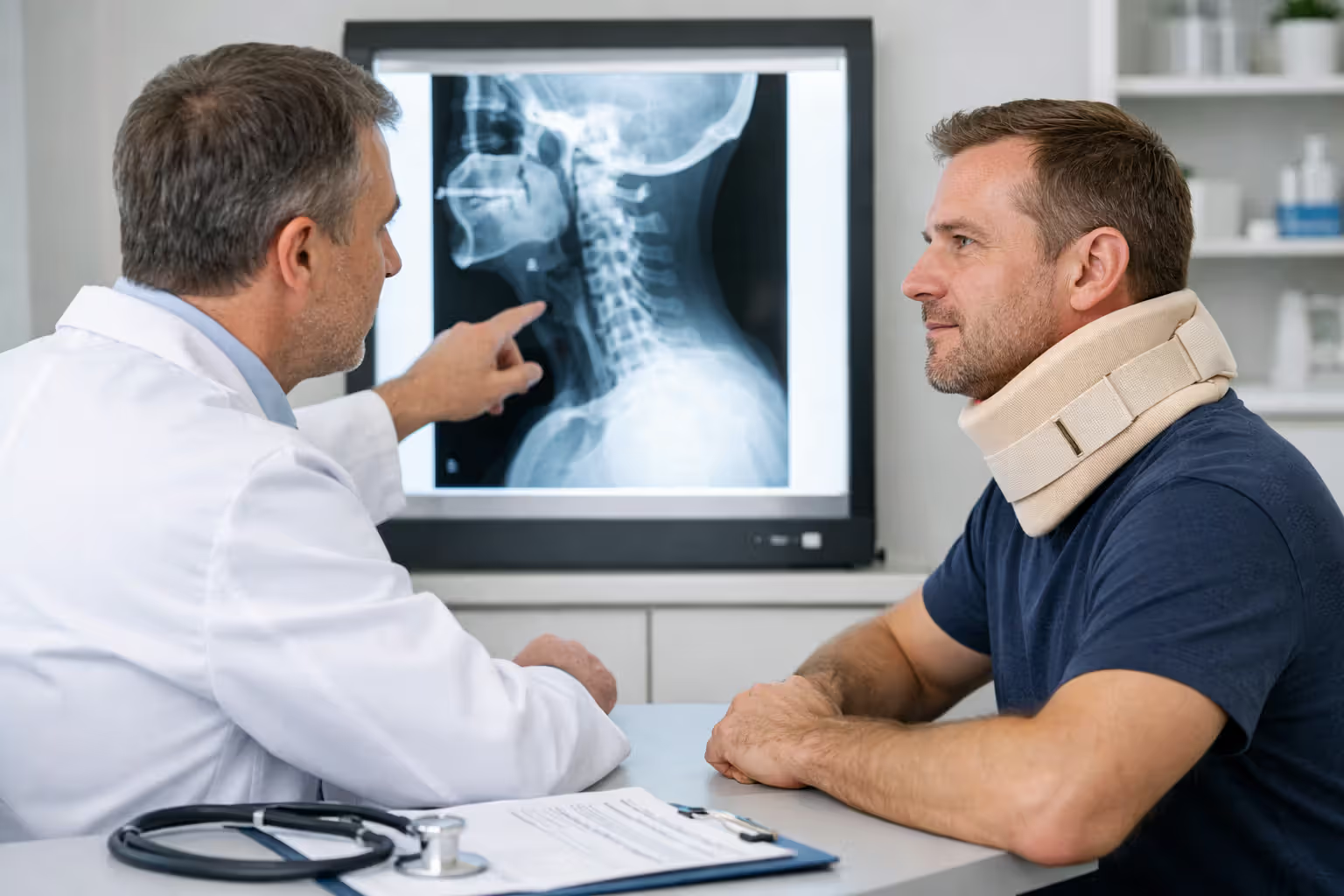
Get to safety first if you can move, then immediately call 911. Even feeling "fine" means nothing—adrenaline masks pain, and internal bleeding or brain injuries don't always announce themselves right away. Accept ambulance transport if you experience any pain, confusion, dizziness, or numbness.
Document everything your phone can capture. Photograph both vehicles from every angle, the intersection layout, traffic signals and signs, skid marks, debris, your visible injuries. Get the truck's DOT number—it's displayed on both cab doors—plus the license plate and company name painted on the trailer. Collect names and phone numbers from the driver, any witnesses, and responding officers. Note the exact time, weather, and lighting conditions.
Don't apologize or say anything that sounds like accepting blame, even if you think you might've made a mistake. Insurance adjusters will twist your polite "I'm sorry this happened" into an admission of fault. Stick to factual information when speaking with police: your location, intended destination, what you observed. Nothing more.
See your doctor within 24 hours even if the ER cleared you. Soft tissue injuries, concussions, and internal organ damage often emerge days later. Any gap in treatment gives insurance companies ammunition: "If they were really hurt, why did they wait a week to see a doctor?"
Preserve everything related to the crash. Don't repair your vehicle until your attorney's accident reconstruction expert examines it. Keep the clothes you wore, especially if they're torn or bloodstained. Download dashcam footage immediately before it auto-deletes.
In thirty years of representing truck accident victims, the single most important factor has always been speed of evidence preservation. Trucking companies begin building their defense within hours of a crash. If the injured party waits even two weeks to hire counsel, critical electronic data and surveillance footage may already be gone forever
— Joe Fried
Contact a trucking accident attorney before speaking with any insurance adjuster. The trucking company's insurer will call within hours, hoping to record your statement or offer a quick settlement before you realize how badly you're hurt. Anything you tell them becomes evidence against you later. These companies employ armies of lawyers working to minimize what they pay. You need your own legal representation.
Time limits matter critically. Each state imposes "statutes of limitations" ranging from one to six years for injury claims. California gives you two years. So does Texas. New York allows three. Florida recently extended theirs to four years. Miss these deadlines and your claim dies permanently, no matter how valid. Claims against government entities (city buses, municipal trucks) require special notice within 30 to 180 days in most places. Don't wait.
When You Need a Commercial Truck Accident Attorney
Trucking cases differ fundamentally from regular car accidents. They operate under federal regulations, involve multiple corporate defendants, and require battling well-funded legal teams.
The Federal Motor Carrier Safety Regulations impose hundreds of specific requirements: maximum daily and weekly driving hours, mandatory rest breaks, vehicle inspection schedules, driver qualification testing, cargo securement standards, drug and alcohol testing protocols. Violations of these federal rules establish automatic negligence in many courts. An experienced attorney knows which regulations apply to your case and how to obtain evidence proving violations.
Trucking companies and their insurers dispatch investigation teams to crash sites within hours. They're photographing evidence, interviewing witnesses, and building their defense before you've even left the hospital. Without your own legal team working just as quickly, you're fighting at a severe disadvantage.
Most truck accident lawyers work on contingency fees—they take a percentage of your settlement or verdict (typically 33-40%) and nothing if you lose. This structure lets injured people access top-tier legal representation without paying anything upfront. If you don't recover compensation, you don't owe attorney fees (though you might owe case costs like expert witness fees, depending on your contract).
During an initial case evaluation, an attorney will assess your claim's strength, identify every potentially liable party (there might be five or six defendants in a complex case), estimate your damages' value, and explain your options. They'll also tell you honestly if your case is worth pursuing—some accidents involve such minor injuries or such clear plaintiff fault that litigation would cost more than any potential recovery.
You need legal help if you suffered serious injuries requiring hospitalization, if the insurance company denies liability or disputes your injury severity, if you've received a settlement offer that seems suspiciously low, if multiple parties are involved, or if the trucking company already has lawyers working the case. Handling these complex claims alone almost always results in substantially lower compensation or outright claim denial.
Frequently Asked Questions About Truck Turn Accidents
Right-turn truck accidents create complicated liability puzzles requiring thorough investigation and knowledge of both state traffic codes and federal commercial motor vehicle regulations. The unique operating characteristics of tractor-trailers, combined with their massive blind spots, make these collisions especially dangerous for passenger vehicles, motorcycles, and pedestrians.
If you've been injured in this type of crash, prioritize your medical recovery while simultaneously preserving evidence and documenting everything connected to the collision. Don't speak with insurance adjusters or accept settlement offers until you've consulted with an attorney experienced in commercial trucking litigation. The compensation difference between self-representation and skilled legal counsel often amounts to hundreds of thousands of dollars—money you'll need for ongoing medical treatment, replacing lost income, and rebuilding your life after serious injury.