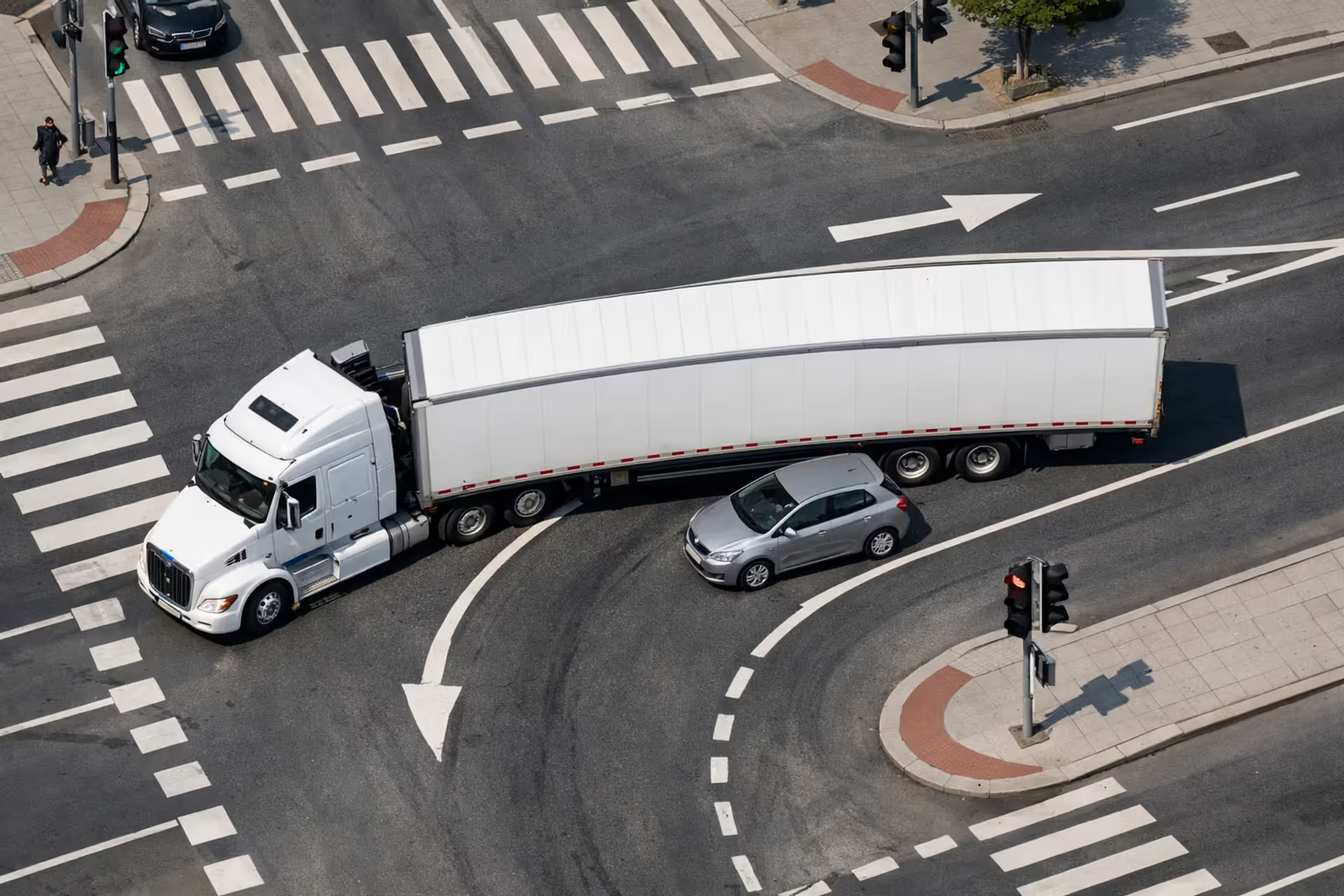
Aerial view of a semi-truck collision with a passenger car at an intersection showing the massive size difference between vehicles
What to Do After a Semi and Truck Accident: Legal Rights and Compensation Guide

Content
Getting hit by an 80,000-pound commercial truck changes everything in an instant. The physics alone—a passenger vehicle weighing 4,000 pounds versus a fully loaded semi—mean injuries are often catastrophic. Beyond the immediate trauma, victims face a legal landscape far more complex than typical fender-benders. Insurance adjusters from multiple companies start calling within hours. Medical bills pile up while you're still in the hospital. And unlike a standard car crash, federal regulations, corporate liability shields, and multi-million-dollar policies all come into play.
Understanding your rights after a semi and truck accident isn't just helpful—it's essential to protecting your financial future. This guide walks through what makes these cases different, who pays when things go wrong, and how to navigate the claims process without getting steamrolled by commercial insurers.
How Semi-Truck Collisions Differ from Regular Car Accidents
When a Honda Civic rear-ends your Toyota, you're usually dealing with one driver, one insurance company, and a straightforward claim. Semi-truck collisions operate in an entirely different legal universe.
Multiple Liable Parties in Commercial Trucking Cases
A single commercial truck injury case might involve five or more defendants. The driver works for a trucking company, which leases the truck from a financing company, which contracts maintenance to a third-party shop, while the trailer belongs to a separate logistics firm, and the cargo was loaded by yet another company.
Each entity carries its own insurance policy. A typical trucking operation may carry commercial liability policies starting at seven figures, with cargo insurers adding separate coverage layers. When equipment is leased rather than owned, that introduces yet another insurance carrier into the mix. This complexity works both ways—it means more potential sources of compensation, but also more insurance companies working to minimize what they pay.
Real example: A driver suffers spinal injuries when a semi's brakes fail. Investigation reveals the trucking company skipped required maintenance, but the brake parts themselves were defective. Now you're pursuing claims against the trucking company for negligence, the parts manufacturer for product liability, and possibly the maintenance contractor for improper installation. Three defendants, three insurance companies, three legal strategies.
Author: Jason Calloway;
Source: capeverde-vip.com
Federal Regulations That Impact Your Claim
The Federal Motor Carrier Safety Administration (FMCSA) imposes rules that don't exist for passenger vehicles. Drivers must log hours of service electronically. Trucks need regular inspections documented in maintenance records. Employers must verify driver qualifications through background screening and substance testing protocols. Weight limits are strictly enforced.
These regulations create a paper trail that becomes evidence. If a driver was on hour 13 of a shift when federal law caps driving at 11 hours, that violation strengthens your case. If maintenance logs show the company deferred brake repairs three times, that's documented negligence.
According to Sarah Mitchell, a former FMCSA compliance officer now working as a trucking safety consultant: "The regulations exist because commercial trucks are inherently dangerous when not properly maintained and operated. In nearly 40% of truck accident cases I've reviewed, at least one federal violation contributed to the crash. These aren't technicalities—they're safety rules written in blood."
But here's the catch: you need to know these regulations exist to request the right documents. Insurance companies won't volunteer the driver's logbook or the company's safety rating unless you specifically demand them.
Common Causes of Commercial Truck Accidents and Who's Responsible
Not all semi and truck accident scenarios point to the same liable party. Understanding the cause helps identify who should pay.
| Accident Cause | Potentially Liable Party | Key Evidence Needed |
| Driver fatigue (exceeding federal hour limits) | Trucking company, driver | Electronic logging device (ELD) records, dispatch communications, duty status logs |
| Cargo loading errors or securement failures | Loading company, shipper | Bill of lading, cargo photographs, weight distribution analysis |
| Equipment failure including brake defects | Maintenance provider, trucking company, component manufacturers | Service records, inspection documentation, failed parts analysis |
| Insufficient driver qualification or training | Trucking company | Personnel files, training documentation, hiring records |
| Phone use or other distractions while driving | Driver, trucking company (for policy enforcement failures) | Cellular records, in-cab camera footage, eyewitness accounts |
| Excessive speed or aggressive operation | Driver, trucking company (when delivery pressures incentivize violations) | Event data recorder information, GPS logs, delivery schedule documentation |
| Tire failure causing loss of control | Trucking company, tire manufacturer, maintenance contractor | Tire service records, tread depth measurements, pressure monitoring logs |
The "who's responsible" question gets murky when multiple factors combine. A driver might have been speeding (driver fault) because the company set unrealistic delivery deadlines (company fault) while driving on tires that should have been replaced 10,000 miles ago (maintenance fault). Good attorneys pursue all angles.
One common mistake victims make: accepting the trucking company's immediate narrative. An adjuster might call the day after your commercial truck injury claiming "our driver had the green light" or "witnesses say you changed lanes suddenly." They're building their defense while you're still processing what happened. Don't give recorded statements before consulting legal counsel.
The biggest mistake I see truck accident victims make is treating their case like a regular car crash. By the time they realize the trucking company has already preserved evidence favorable to their defense and discarded what isn’t, the window for building a strong case has narrowed dramatically. Time is not on the victim’s side
— Robert Clifford
Steps to Take Immediately Following a Truck Collision
The actions you take in the first hours and days after a semi-truck collision directly impact your ability to recover compensation.
Documenting the Scene and Gathering Evidence
If you're physically able, use your phone to photograph everything: the truck from multiple angles, license plates, DOT numbers on the cab, visible damage to all vehicles, skid marks, traffic signals, road conditions, and your injuries. Capture the truck's company name and any identifying information.
Get the driver's commercial license information, not just a regular license. Note the trucking company name—sometimes it's different from what's painted on the truck if the driver is an independent contractor. If there are witnesses, ask for their contact information before they leave.
Here's what most people miss: the truck itself is evidence. Its black box (electronic control module) records speed, brake application, and other data for the seconds before impact. Insurance companies can download this data, and they will—to build their case. You need an attorney to preserve this evidence quickly through a spoliation letter, which legally requires the trucking company to retain the data and not "accidentally" lose it during routine maintenance.
One practical tip: if you're conscious and have your phone, start a voice memo capturing your immediate recollection of the crash sequence—the vehicles' positions, weather conditions, traffic patterns, what actions you took to avoid collision. Memory fades fast, especially after trauma and pain medication. This recording isn't admissible in court, but it helps you give consistent statements later.

Author: Jason Calloway;
Source: capeverde-vip.com
When to Seek Medical Attention vs. Emergency Care
If you have any of these symptoms, you need an ambulance immediately: loss of consciousness, difficulty breathing, chest pain, severe bleeding, inability to move limbs, or confusion. Don't let adrenaline fool you—people walk away from crashes with internal bleeding or brain injuries that become life-threatening hours later.
For injuries that seem minor—neck soreness, back pain, headaches—see a doctor within 24 hours anyway. Defense attorneys exploit delayed medical treatment by questioning injury severity. "If the plaintiff was genuinely hurt, wouldn't they have sought immediate care?" becomes their argument at settlement negotiations.
Document everything medical. Keep copies of emergency room records, follow all treatment recommendations, attend every physical therapy appointment. If you can't afford treatment, tell your attorney—many medical providers will treat on a lien, meaning they wait for settlement payment.
How Trucking Accident Settlements Are Calculated
Commercial truck injury settlements vary wildly—from $50,000 for soft tissue injuries to $10 million-plus for catastrophic cases. Understanding the components helps set realistic expectations.
| Category of Damages | Compensation Coverage | Common Proportion of Total Recovery |
| Prior medical treatment | ER visits, surgical procedures, hospital stays, prescriptions, therapy sessions completed | 20-35% of settlement value |
| Projected medical needs | Continuing treatment requirements, anticipated surgeries, lifetime care costs, assistive devices | 15-30% (substantially higher with permanent injuries) |
| Economic losses from inability to work | Salary already forfeited plus diminished future earning potential | 15-25% of total compensation |
| Vehicle and personal property losses | Auto replacement or repair costs, damaged belongings | 5-10% (frequently handled as separate claim) |
| Non-economic damages for suffering | Physical discomfort, psychological trauma, diminished quality of life | 25-40% of settlement amount |
| Family relationship impacts | Harm to spousal and family connections | 5-10% (in applicable cases) |
These proportions fluctuate significantly depending on how severely you're hurt. A broken arm that heals in three months might settle for $75,000, with medical bills eating up the majority. A traumatic brain injury requiring lifetime care could reach $8 million, where future medical costs dominate the calculation.
Insurance companies start with your "special damages"—the concrete numbers like medical bills and lost wages—then apply a multiplier for pain and suffering. Minor injuries might receive a 1.5x calculation. Life-altering disabilities may warrant multipliers of 5x, 7x, or higher in severe cases. They'll argue for the lowest multiplier possible. Your attorney argues for higher based on how the injury changed your life.
One critical factor: policy limits. When a commercial operator carries $1 million in primary liability coverage and their employer maintains an additional $5 million umbrella policy, but your injuries justify $10 million, you might not recover full value unless you can bring in additional defendants or locate supplemental coverage. This is why identifying all liable parties matters so much in semi-truck claims.

Author: Jason Calloway;
Source: capeverde-vip.com
What Truck Collision Attorneys Actually Do for Your Case
Hiring a lawyer isn't about having someone fill out forms. Specialized truck collision attorneys bring resources that level the playing field against corporate legal teams.
Investigation Resources Law Firms Use
Within days of taking a case, good attorneys deploy accident reconstructionists to the crash site. These experts measure road conditions, analyze impact angles, and use physics to determine speed and fault. They create visual presentations that make complex collisions understandable to juries.
Attorneys also hire trucking industry experts who review maintenance records, driver qualifications, and company policies. These experts can testify that a trucking company's practices fell below industry standards—powerful evidence of negligence.
They'll subpoena the truck's black box data, cell phone records, dispatch communications, and the driver's complete employment file. They'll request the company's safety rating from FMCSA and any prior accident history. They'll check if the driver had previous violations or if the company has a pattern of regulatory violations.
You can't do this yourself. Companies won't voluntarily hand over damaging documents to an unrepresented victim. They'll claim attorney-client privilege, destroy records after the legal retention period expires, or simply ignore requests. Attorneys have subpoena power and know which documents matter.

Author: Jason Calloway;
Source: capeverde-vip.com
Negotiating with Commercial Insurance Companies
Commercial insurers employ teams of adjusters, lawyers, and investigators whose job is minimizing payouts. They'll use every tactic: questioning your injuries, arguing you were partially at fault, claiming you had pre-existing conditions, or offering quick lowball settlements before you understand your injury's full extent.
A truck accident legal specialist knows these games. When an insurer offers $100,000 for an injury that requires $200,000 in future surgery, your attorney presents the medical evidence and treatment plan from your doctors. When they argue you were speeding, your attorney presents the accident reconstruction showing their driver ran a red light.
Most cases settle before trial, but only because the insurance company knows your attorney is prepared to go to court. That preparation—having experts lined up, evidence organized, and a trial strategy ready—creates settlement leverage. Insurance companies settle when going to trial becomes riskier than paying fair value.
Insurance companies don’t settle cases fairly out of goodness—they settle when the cost of fighting exceeds the cost of paying. A well-prepared attorney with expert witnesses, preserved black box data, and a compelling demand package changes that calculation entirely. Preparation isn’t just strategy; it’s the single most powerful leverage a victim has in these cases
— Lisa Blue Baron
Timeline: How Long Do Semi-Truck Claims Take to Resolve?
There's no universal answer to claim duration—resolution timeframes vary based on case complexity and the severity of your injuries. Straightforward cases involving clear fault and moderate injuries often conclude within 6-9 months. Complex semi-truck claims involving catastrophic injuries, multiple defendants, and disputed liability can take 2-4 years.
Here's a realistic timeline for a moderate-severity case:
Months 1-3: Attorney investigation, evidence gathering, medical treatment continues. Spoliation letters sent to preserve evidence. Initial demand letters may go out if liability is clear.
Months 4-9: Treatment reaches "maximum medical improvement"—the point where doctors say you've healed as much as you will. Attorney compiles all medical records, bills, and expert reports. Formal demand package sent to insurance companies.
Months 10-15: Negotiation phase. Insurance company responds with offers. Counter-offers go back and forth. Many cases settle here if parties are reasonable.
Months 16-24+: If settlement fails, lawsuit is filed. Discovery process begins—depositions, document exchanges, expert witnesses disclosed. Mediation attempts. Trial preparation. Most cases still settle before trial, often right before the trial date when both sides face the reality of jury uncertainty.
Trucking accident settlements take longer than car accidents because the stakes are higher and defendants fight harder. A $2 million claim gets scrutinized differently than a $20,000 fender-bender. Patience becomes essential—accepting a quick $150,000 offer when your case is worth $800,000 is a mistake you can't undo.
One factor that speeds things up: clear liability with video evidence. If a dashcam or traffic camera shows the truck driver blatantly at fault, insurance companies settle faster because they know they'll lose at trial.
Frequently Asked Questions About Truck Accident Claims
The weeks following a semi and truck accident determine whether you'll receive fair compensation or get pressured into accepting pennies on the dollar. Commercial trucking companies and their insurers have entire legal departments working to minimize what they pay you. They're making phone calls, gathering evidence, and building their defense while you're still recovering from injuries.
Your most important move: consult a specialized attorney before giving any recorded statements or signing anything. Initial consultations are typically free, and most truck collision attorneys work on contingency—they only get paid if you recover compensation. This means you get experienced legal representation without upfront costs.
Document everything obsessively. Keep a journal of your pain levels, limitations, and how injuries affect daily life. Save all medical bills, prescription receipts, and documentation of missed work. Take photos of your injuries as they heal. This evidence becomes the foundation of your claim.
Don't wait to "see how you feel" before taking action. Statutes of limitations are real deadlines, evidence disappears over time, and witnesses' memories fade. Insurance companies interpret delays as signs your injuries weren't serious. The sooner you start the process, the stronger your case becomes.
Commercial truck accidents are different from typical crashes in every way that matters—the severity of injuries, the complexity of liability, the sophistication of the opposition, and the potential value of settlements. Treating it like a simple car accident claim leaves money on the table and potentially leaves you without coverage for future medical needs. Take these cases seriously, get specialized help, and protect your right to full compensation.