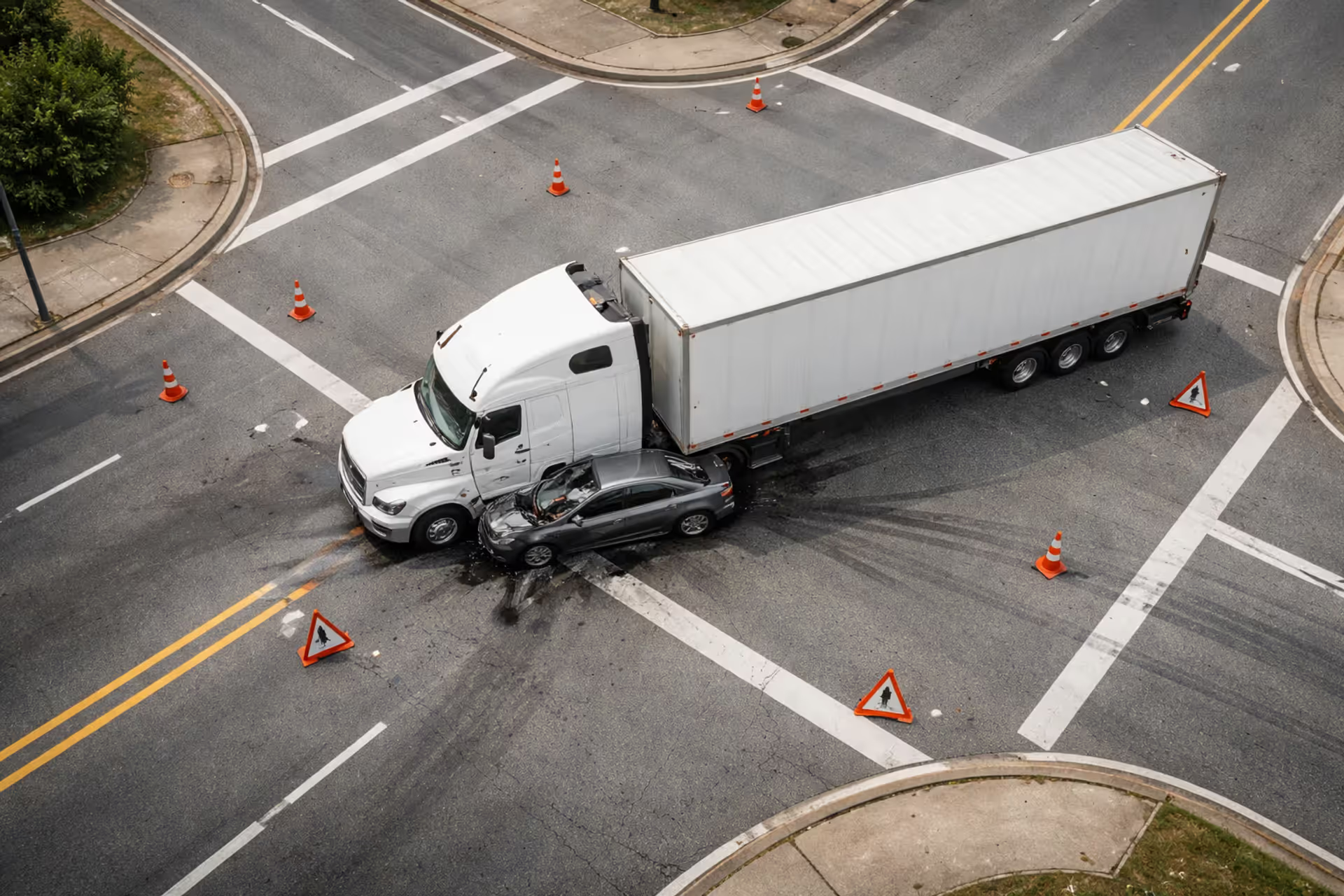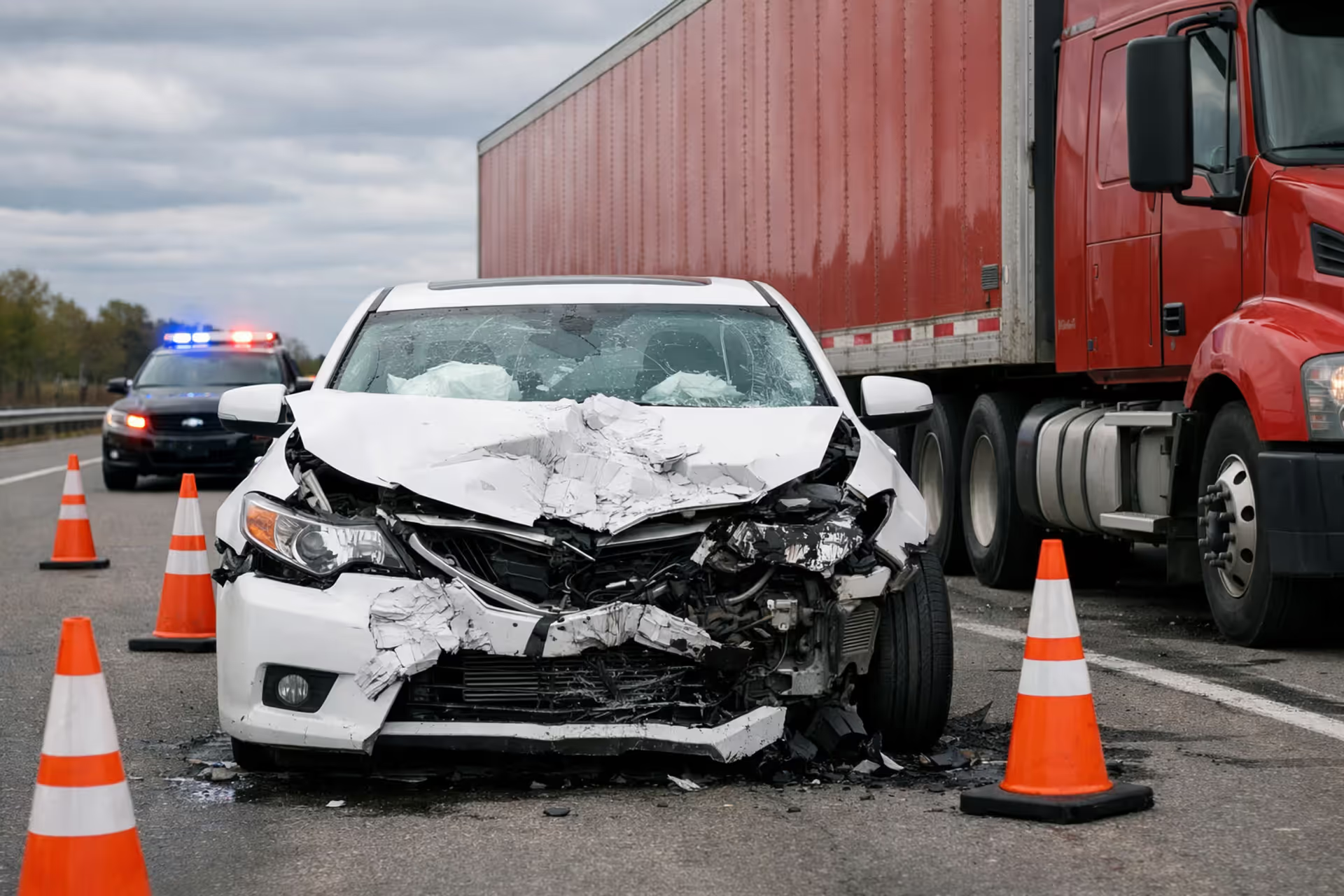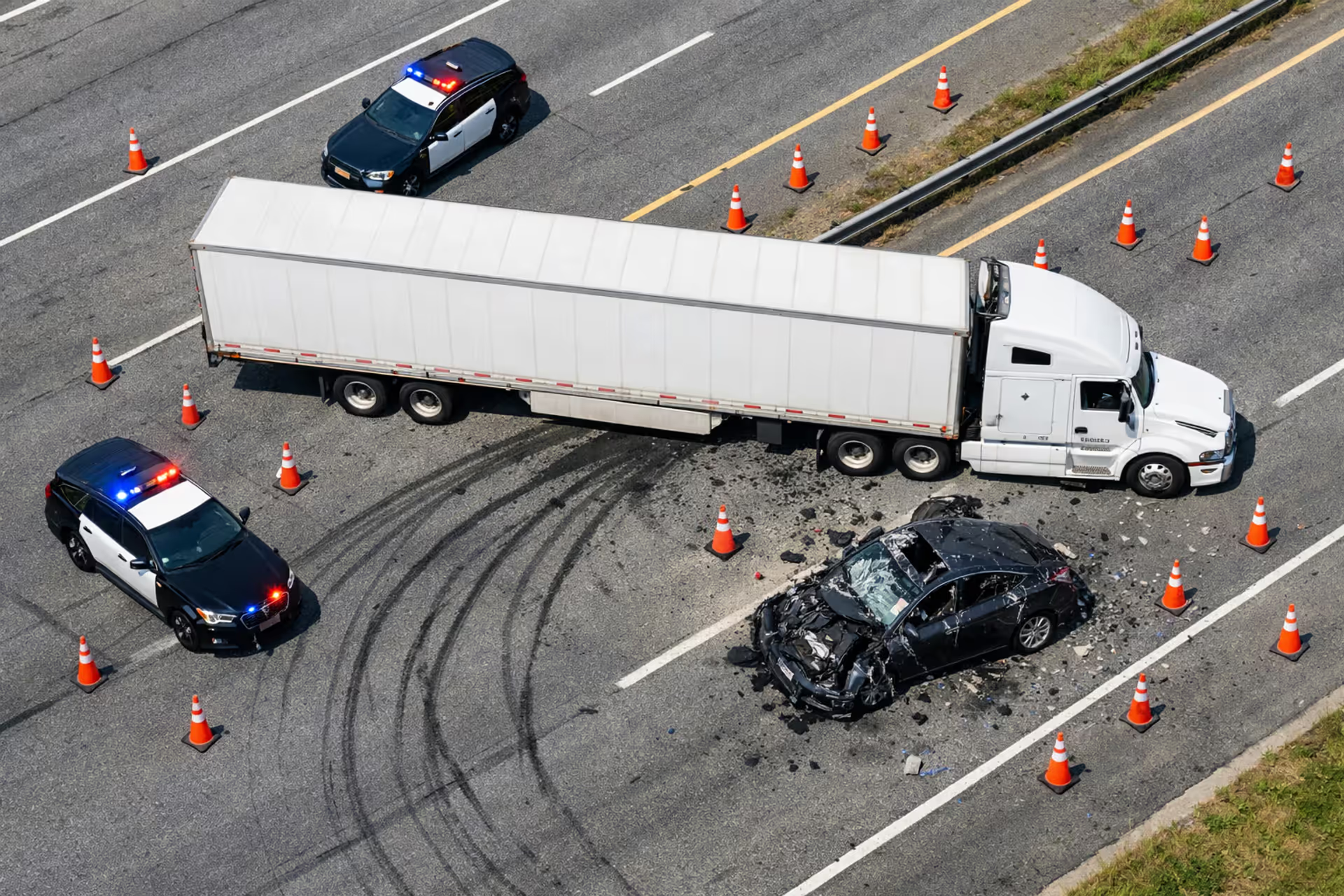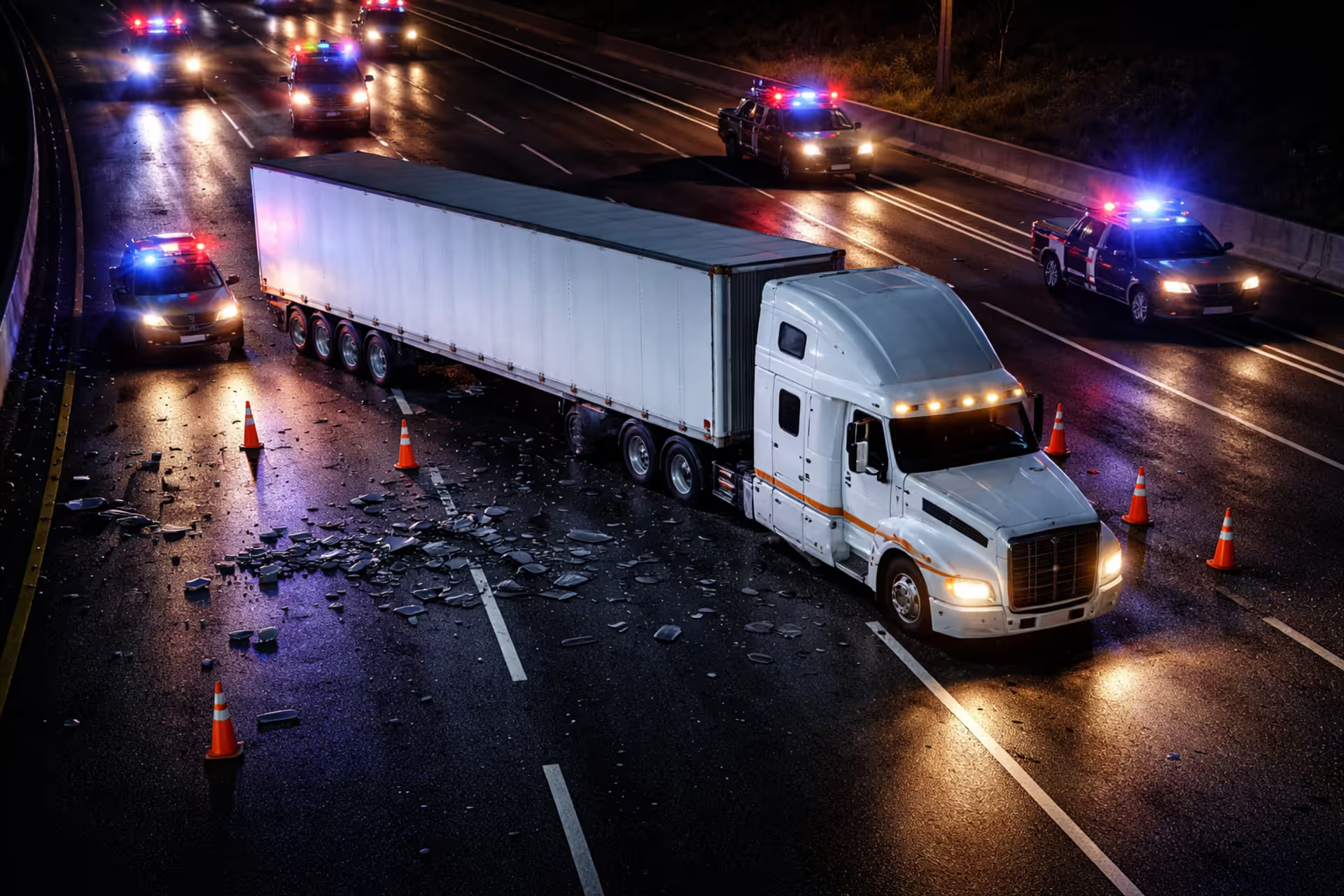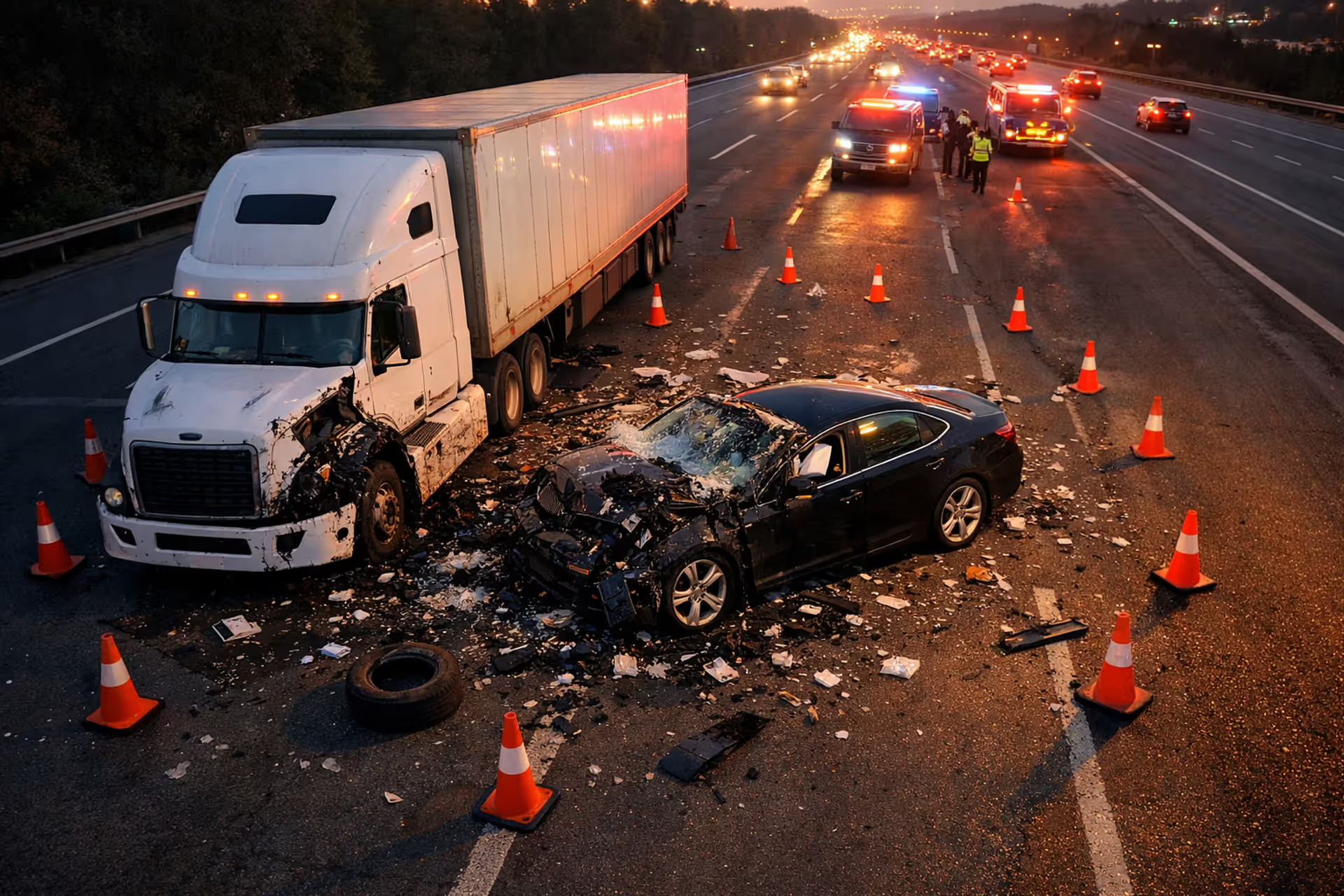
Damaged silver sedan next to an 18-wheeler semi truck on highway shoulder with emergency lights at dusk
How to File a Semi Truck Accident Lawsuit: Legal Steps and What to Expect

Content
Picture this: you're driving home when an 18-wheeler slams into your sedan. The physics alone are terrifying—that truck outweighs your car by maybe 40,000 pounds. But here's what most people don't realize until it's too late: the legal aftermath can drag on for years, involve four or five different insurance companies, and require expert testimony that costs more than most people's annual salary.
I've seen families give up legitimate claims worth half a million dollars because they didn't understand how different truck cases are from regular car accidents. We're not talking about calling State Farm and settling in six weeks. These cases involve federal regulations thicker than phone books, corporate legal teams whose entire job is denying claims, and evidence that starts disappearing within 48 hours of the crash.
What follows is a realistic walk-through of pursuing a commercial vehicle claim—from figuring out if you've actually got a case worth filing, all the way through picking an attorney who won't get steamrolled by trucking company lawyers. I'll show you what damages actually get awarded (with real numbers), who might owe you money besides just the driver, and which common mistakes torpedo otherwise solid cases.
When You Have Grounds for a Trucking Accident Lawsuit
Just being in a wreck with a big rig doesn't mean you can sue. Courts want to see negligence—concrete proof that somebody screwed up and that screw-up caused your injuries. The good news? Truck drivers and their employers break rules constantly, and those violations become your evidence.
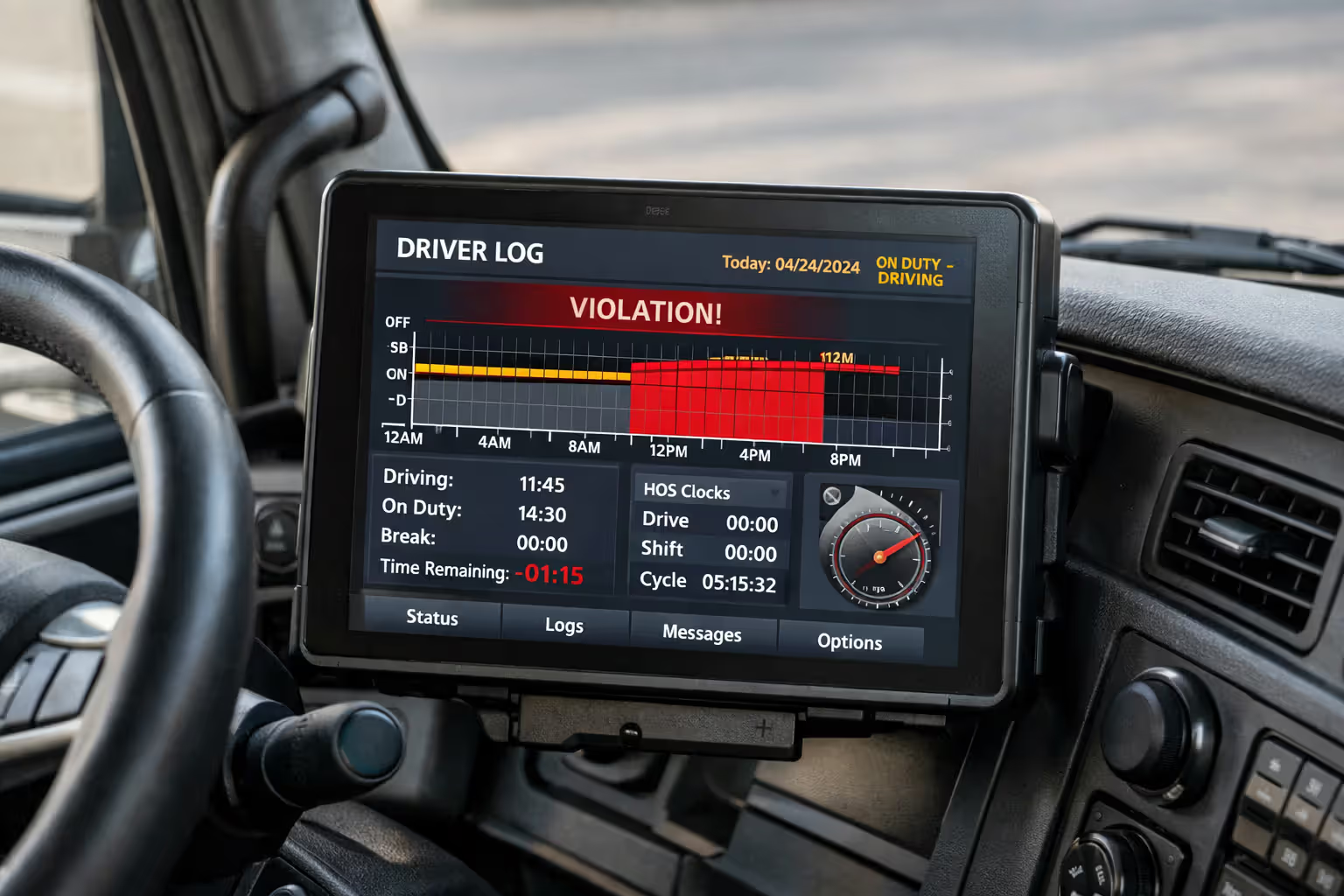
The Federal Motor Carrier Safety Administration publishes hundreds of regulations covering everything from how long drivers can work to exactly how cargo must be tied down. When companies ignore these rules to make an extra delivery or save maintenance costs, they're handing you your case on a silver platter. Example: federal law caps driving at 11 hours per shift. If a driver's electronic log shows 13 hours before your collision, that violation speaks louder than any witness statement.
Here's where truck cases get interesting—you can often sue multiple defendants. Maybe the driver was speeding (his fault), but the company also skipped the last three brake inspections (their fault), and the shipping company overloaded the trailer by 5,000 pounds (another defendant). Each one carries insurance, and suddenly you're not trying to squeeze $300,000 from a $100,000 policy anymore.
Author: Marcus Delaney;
Source: capeverde-vip.com
Common Causes That Strengthen Your Legal Claim
Some crash causes immediately make insurance adjusters nervous. Driver fatigue tops that list—FMCSA research pins roughly 30% of serious wrecks on tired drivers pushing through mandatory rest breaks. Electronic logging devices (which truckers call "e-logs") record everything, and when investigators download that data showing a driver falsified rest periods, companies start talking settlement.
Inadequate training creates another liability goldmine. Getting a commercial license requires passing tests, sure, but that's bare minimum competency. Carriers that rush new drivers through one-week orientations instead of proper training programs? They're creating dangerous drivers and massive legal exposure. I've reviewed cases where drivers jackknifed on icy roads using techniques that would've failed any legitimate training program.
Maintenance neglect shows up constantly in crash investigations. Federal rules require detailed service logs, and gaps in those records suggest the company prioritized schedules over safety. One case I know involved a tire blowout that killed two people—turned out the trucking company had skipped four scheduled tire inspections over eight months. That maintenance record became exhibit A.
Then you've got distracted driving, drug use, and road rage. Dashboard camera footage, post-crash drug screens, and witness statements document these problems. I remember one case where the driver had received three speeding tickets in 25 days but kept his job because the company was desperate to cover routes.
The trucking industry is governed by a complex web of federal regulations that exist for one reason: to protect the public. When carriers cut corners on maintenance, push drivers beyond legal hours, or fail to properly train their operators, they aren’t just breaking rules—they’re making a calculated decision that profit matters more than human life. Every violation documented in the aftermath of a crash becomes a powerful piece of evidence that speaks directly to corporate negligence
— F. Clifford
Differences Between Commercial Truck and Passenger Vehicle Cases
The gap between car wrecks and truck litigation is enormous. Your typical fender-bender might involve a single $50,000 insurance policy. Commercial trucks? They routinely carry $1 million minimum, with many carriers holding $5 million policies. Some specialized haulers maintain even higher limits.
Investigation costs alone separate these cases. A car crash needs a police report and medical records. Truck litigation demands accident reconstruction engineers ($10,000-$20,000), trucking industry experts ($8,000-$15,000), medical specialists for each injury type ($5,000 each), and economic analysts ($5,000-$10,000). Proper pre-trial investigation can easily hit $75,000 before you even file the lawsuit.
FMCSA regulations add layers of complexity that general practice lawyers miss completely. These rules fill multiple volumes covering brake specifications, load securement formulas, and mandatory rest period calculations. An attorney who handles divorce cases Monday and truck wrecks Tuesday won't recognize that the cargo securement violated §393.106 or that the driver's 34-hour restart didn't meet federal requirements.
Corporate defendants fight harder and dirtier than individual drivers. Trucking companies employ full-time claims specialists and retain law firms that specialize in minimizing payouts. They'll dispatch investigators to crash scenes before you leave the hospital—that's how aggressive they are about shaping the narrative and gathering evidence supporting their defense.

Author: Marcus Delaney;
Source: capeverde-vip.com
Types of Compensation Available in Semi-Truck Legal Claims
Damages split into categories that courts treat very differently. Economic damages cover measurable financial losses—hospital bills, lost paychecks, car replacement, future medical expenses. Non-economic damages compensate the stuff you can't invoice: chronic pain, emotional distress, permanent disability, lost enjoyment of life. Punitive damages (the rarest type) punish defendants for truly outrageous conduct.
Medical expenses typically dominate the economic category. Severe truck crashes cause traumatic brain injuries, crushed vertebrae, multiple fractures, and organ damage. One ER visit might run $150,000, but lifetime treatment costs can reach $5 million-plus. Life care planners (specialized medical experts) calculate these future expenses based on your specific injuries and required care.
Lost earning capacity goes way beyond missed work days. Consider a 33-year-old electrician who suffers nerve damage and can't work with tools anymore. He's lost 30+ years of income potential. Vocational economists calculate these losses by analyzing wage history, typical career advancement, and remaining work-life expectancy. A $55,000 salary projected over 32 years hits $1.76 million before accounting for raises and inflation adjustments.
Pain and suffering calculations lack any standard formula. Insurance companies sometimes multiply medical bills by 1.5 to 5, depending on injury severity. Permanent disabilities, visible scarring, and chronic pain justify higher multipliers. Losing an arm or suffering facial disfigurement carries value beyond medical costs—it affects every job interview, first date, and family photo for the rest of your life.
| Damage Type | Typical Settlement Range | Evidence You'll Need |
| Emergency & Hospital Care | $75,000–$600,000+ | Every itemized bill, insurance EOB statements, payment confirmations, complete medical timeline |
| Future Medical Costs | $150,000–$6,000,000+ | Life care planner testimony, treating doctor projections, cost analyses for procedures |
| Missed Wages | $15,000–$250,000 | Pay stubs, W-2s, tax returns, employer income verification |
| Reduced Earning Ability | $300,000–$3,500,000+ | Vocational expert reports, economist testimony, complete employment records |
| Pain & Life Quality Loss | $125,000–$2,500,000+ | Medical records, therapy notes, personal diary entries, family testimony |
| Property Damage | $8,000–$85,000 | Repair estimates, market value assessments, replacement receipts |
| Punitive Damages | Varies wildly | Evidence of deliberate wrongdoing, repeated violations, safety policy failures |
Punitive awards require proving behavior that went beyond ordinary carelessness. A company that knowingly let an unqualified driver operate after multiple safety violations might face punitive liability. These awards aren't about compensating you—they're about sending messages to boardrooms. Juries have awarded millions when testimony revealed companies consciously chose profits over public safety.
The Truck Injury Litigation Process: Timeline and Key Stages
Most people expect lawsuits to wrap up in a few months. Reality check: commercial truck cases typically take 20 to 40 months from filing through resolution. Complex cases with multiple defendants and catastrophic injuries? Those can push past four years. Why so long? Because these cases require extensive investigation, multiple expert analyses, and negotiations involving several insurance carriers.
Investigation begins immediately after impact. Crucial evidence disappears fast—skid marks fade within days, debris gets swept away, electronic data overwrites itself. Attorneys send spoliation letters to trucking companies within 72 hours, legally requiring them to preserve logbooks, maintenance files, GPS records, and black box data. Companies that "accidentally" destroy evidence face severe court sanctions and adverse jury instructions.
Evidence in trucking cases has a half-life measured in hours, not months. Electronic logs overwrite, black box data disappears, and crash scenes are cleared before victims even leave the emergency room. The single most important thing any truck accident victim can do is ensure that a preservation letter reaches the carrier immediately. Without that critical step, the strongest case in the world can crumble into nothing
— Lisa A. Powell
You can't settle intelligently until reaching maximum medical improvement—the point where your doctors say you're as healed as you'll get and can predict permanent limitations. Settling earlier means guessing about future medical needs, and that gamble favors insurance companies. Someone who accepts $175,000 for a back injury can't come back two years later when they need $250,000 in fusion surgery.
Filing deadlines (statutes of limitations) vary by state but usually run one to three years from the crash date. Miss that deadline and your case dies instantly, regardless of how strong your evidence is. Some states pause the clock for minors or injuries that weren't immediately apparent, but counting on exceptions is dangerous.
Discovery is where both sides exchange information. Lawyers demand documents, send written questions (interrogatories), and conduct depositions where witnesses give sworn testimony recorded by court reporters. This phase commonly consumes 8-14 months and produces thousands of pages. Defense attorneys use discovery to probe for weaknesses and build settlement negotiation leverage.
Settlement talks happen throughout the case but intensify as trial approaches. Maybe 75% of cases go through mediation—a neutral third party facilitates negotiations. Many cases resolve during mediation because both sides face trial uncertainty. A guaranteed $650,000 settlement looks different than a potential $1.8 million verdict when you're also facing the possibility of losing completely.
Trials run anywhere from four days to four weeks for complicated truck cases. Juries hear from crash reconstructionists, medical authorities, trucking safety experts, and economists. Each side presents evidence, cross-examines witnesses, and makes closing arguments. Verdicts are unpredictable—sometimes juries award more than plaintiffs requested, sometimes they side entirely with defendants.
Statute of Limitations by State (Brief Overview with Examples)
Texas gives injured people two years from the crash to file lawsuits. California allows two years for injury claims but extends to three years for property damage alone. New York provides three years for personal injury litigation. Florida recently shortened its statute from four years down to two for negligence cases.
These time limits contain exceptions and complications. If the truck was government-owned (city bus, state maintenance vehicle), notice requirements might demand filing within six months. Cases involving minors often pause the clock until the child turns 18. Wrongful death claims sometimes carry different deadlines than injury lawsuits.
Some jurisdictions apply a "discovery rule" that starts the countdown when you discovered or reasonably should have discovered the injury. This matters when internal injuries or conditions like traumatic brain injury aren't immediately obvious. Someone who seemed fine initially but develops seizures eight months later might get additional filing time.

Author: Marcus Delaney;
Source: capeverde-vip.com
How Liability Works in Commercial Truck Crash Cases
Figuring out who pays gets complicated when multiple parties contributed to the crash. Maybe the driver caused the immediate collision, but the company's pressure to meet unrealistic delivery schedules created conditions making it likely. Manufacturers might have produced defective parts, while maintenance shops might have missed critical safety issues.
Trucking companies face vicarious liability for employee actions taken within the scope of employment. When a company employee causes a crash while making deliveries, the company shares responsibility even if their policies were perfect. This legal doctrine, called "respondeat superior," ensures injured people can access corporate insurance coverage rather than relying solely on individual drivers who might have minimal personal assets.
Independent contractor classifications muddy liability. Some trucking operations classify drivers as contractors to avoid responsibility, but courts look beyond labels to actual working relationships. If the company dictates routes, schedules, and equipment while claiming the driver works independently, courts frequently reject this arrangement and impose liability anyway.
Cargo loading companies bear responsibility when improperly secured freight causes accidents. Shifting loads during transport can make trucks impossible to control. Federal regulations specify securement requirements based on cargo type and weight. When loaders ignore these requirements and freight breaks loose, they become liable defendants.
Maintenance contractors servicing trucks face liability for negligent repairs. A shop that fails to properly fix brakes or misses worn steering components shares responsibility when those failures cause crashes. Their insurance coverage adds another potential source of compensation.
Parts manufacturers face strict liability when defective components cause collisions. Brakes that fail prematurely, tires that separate without warning, or coupling mechanisms that disconnect unexpectedly establish manufacturer liability. These cases don't require proving negligence—only that the defect existed and caused harm.
| Who Might Be Liable | Insurance Usually Carried | What They're Responsible For |
| Trucking Company | $1 million–$5 million+ | Hiring qualified drivers, providing proper training, enforcing safety rules, maintaining vehicles, preventing hours-of-service violations |
| Individual Driver | $100,000–$500,000 (personal) | Following traffic laws, operating vehicle safely, complying with rest requirements, reporting equipment problems |
| Freight Loading Company | $500,000–$2 million | Proper weight distribution, following securement rules, balanced loading, accurate documentation |
| Maintenance Shop | $300,000–$1.5 million | Quality repairs, thorough safety inspections, proper parts installation, accurate service records |
| Parts Manufacturer | $2 million–$15 million+ | Designing safe products, meeting manufacturing standards, providing adequate warnings, defect-free production |
| Leasing Company | $1 million–$3 million | Vehicle maintenance standards, ensuring equipment safety, meeting regulatory requirements |
Third-party leasing arrangements create additional liability layers. When trucking companies lease vehicles from equipment suppliers, responsibility for maintenance and safety can become murky. Lease agreements specify who handles various safety obligations, but injured parties can frequently pursue both lessees and lessors.
Government entities occasionally share liability when road design or maintenance failures contribute to collisions. Poorly marked construction zones, missing guardrails, or inadequate signage can make governments liable. However, suing governmental entities requires special procedures and shorter deadlines than private lawsuits.
Critical Mistakes That Weaken Your Semi-Truck Collision Case
Accepting quick settlement offers might be the most common and expensive mistake. Insurance adjusters contact victims within days, sometimes offering checks before medical treatment even starts. These fast settlements sound tempting when bills are piling up, but they're calculated to close claims cheaply. The adjuster offering $35,000 three weeks after your crash knows the case might justify $400,000 once injuries fully develop.
Delaying medical treatment creates gaps that defense lawyers exploit mercilessly. Missing doctor appointments or waiting weeks to see specialists gives insurers ammunition to argue injuries weren't serious. A ten-day gap in treatment becomes "evidence" that you recovered, even if you simply couldn't afford the appointment or get time off work.
Social media destroys cases with alarming frequency. That photo of you smiling at your nephew's birthday becomes "proof" you're not suffering. The post mentioning a short walk becomes evidence you're exaggerating disability. Defense attorneys scour social media hunting for contradictions to your injury claims. Privacy settings offer zero protection—courts routinely order plaintiffs to provide social media access during discovery.
Giving recorded statements to insurance adjusters without attorney guidance is dangerous. Adjusters are trained to ask questions eliciting answers that benefit their defense. They'll ask how you're feeling, expecting you'll say "okay" out of habit. They'll ask about prior injuries, looking for ways to blame pre-existing conditions. Everything you say can be used against you later.
Failing to preserve evidence means losing the ability to prove your case. Damaged vehicles get repaired or junked. Torn clothing gets thrown away. Injury photos fade from memory. The intersection where the crash happened gets repaved, eliminating the pothole or faded pavement marking that contributed to the wreck. Document everything immediately before it disappears.
Hiring attorneys without truck crash experience wastes precious time and money. General personal injury lawyers might handle car crashes competently but lack the specialized knowledge these cases demand. They don't know which FMCSA regulations apply, can't spot trucking industry standard violations, and lack relationships with the specific experts these cases require.
Discussing your case publicly—whether with neighbors, on online forums, or with reporters—creates problems. Statements you make casually can be twisted and used against you. Mentioning to a coworker "I'm feeling better" becomes ammunition for defense claims that you've fully recovered. Media interviews where you describe the crash can be scrutinized for inconsistencies with later testimony.

Author: Marcus Delaney;
Source: capeverde-vip.com
What to Look for When Choosing a Truck Accident Attorney
Specialization matters more in trucking cases than almost any other legal area. Attorneys who dedicate substantial practice time to commercial vehicle crashes understand federal regulations, industry standards, and investigation techniques that general practitioners miss entirely. Ask potential lawyers what percentage of their practice involves truck collisions and how many similar cases they've handled in the past three years.
Resources for proper investigation separate qualified attorneys from those in over their heads. These cases require hiring crash reconstruction experts ($8,000-$20,000), medical specialists ($4,000-$12,000 per expert), trucking industry consultants ($7,000-$18,000), and economic analysts ($5,000-$10,000). Attorneys must advance these costs, recovering them only if the case wins. Lawyers lacking financial resources to fund comprehensive investigations can't build strong cases.
Trial experience matters even though most cases settle. Insurance companies offer better settlements when they know your attorney will actually go to trial if necessary. Lawyers who always settle, never trying cases, get lowball offers because adjusters know they'll eventually accept. Ask how many truck crash cases the attorney has taken to verdict and what results they achieved.
Fee arrangements in these cases typically involve contingency agreements—attorneys take a percentage of recovery instead of charging hourly. Standard contingency fees run 33% to 40%, often increasing if cases go to trial. This structure means you pay nothing upfront, but it also means attorneys claim substantial portions of settlements. Clarify whether expenses (expert fees, filing costs, deposition charges) come from your share or the total recovery.
Truck crash cases require fundamentally different expertise than typical car accidents. You're not just dealing with a negligent driver—you're navigating federal transportation regulations, corporate liability structures, and defendants with essentially unlimited resources to fight claims. Attorneys who don't regularly handle these cases are simply outmatched from day one. The difference between adequate representation and specialized expertise can easily mean hundreds of thousands in compensation
— Michael Chen
Communication style and availability matter during processes spanning multiple years. Attorneys who don't return calls, provide updates only when pressed, or delegate everything to paralegals create frustration and anxiety. Ask about communication expectations during initial consultations—how often will you get updates, who will you primarily interact with, and how quickly should you expect responses to questions?
Reputation within the legal community provides insight into attorney capability. Lawyers respected by judges and opposing counsel often negotiate better settlements because their adversaries recognize their competence and preparation. Check whether attorneys have published articles on trucking law, spoken at legal seminars, or received recognition from bar associations.
Local knowledge helps in state court systems where judges have preferences and procedural rules vary. An attorney who regularly practices in the courthouse where your case will be heard understands what arguments resonate with local juries and how particular judges handle procedural issues.
Frequently Asked Questions About Semi Truck Accident Lawsuits
The aftermath of a serious truck crash creates overwhelming challenges—mounting medical bills, lost income, insurance company pressure, and physical recovery demands all competing for attention simultaneously. Understanding your legal options doesn't eliminate these pressures, but it provides a roadmap through the chaos.
Filing a lawsuit isn't about getting rich or punishing drivers—it's about obtaining resources to rebuild your life after someone else's negligence destroyed your health, career, or family member. The compensation you recover funds surgeries, rehabilitation, income replacement, and future treatment needs that insurance companies would prefer ignoring.
The complexity of these cases demands specialized legal help. Federal transportation regulations, corporate liability structures, and well-funded defense teams create obstacles that general practice attorneys can't navigate effectively. Finding qualified representation early protects your rights and preserves critical evidence before it vanishes.
Time pressure matters more than most crash victims realize. Evidence deteriorates, witnesses forget details, and filing deadlines approach whether you're ready or not. Taking action now—even while still receiving treatment—means protecting your options and building the strongest possible case.
Your focus should remain on medical recovery while experienced attorneys handle legal complexities. The right legal team investigates the crash, identifies all liable parties, calculates full damages, negotiates with insurers, and tries cases when necessary. This allows you to concentrate on healing rather than battling corporate legal departments.
Every truck crash case is unique, with different injuries, liable parties, and complications. General information helps you understand the process, but your specific situation requires professional evaluation. Consultations with qualified attorneys cost nothing and provide clarity about your particular circumstances, potential recovery, and best path forward.