
Large semi-truck driving on an interstate highway at dusk alongside smaller passenger vehicles showing size contrast
What Causes Truck Accidents? 7 Leading Factors Behind Commercial Vehicle Crashes

Content
Here's something most people don't think about: when an 18-wheeler crashes, we're not just talking about a fender bender scaled up. A fully loaded semi weighs roughly 20 times what your sedan does, and that mass difference changes everything. A moment of inattention that might cause a minor scrape in a Honda Civic can trigger a multi-fatality pileup when it happens to an 80,000-pound truck barreling down the interstate at 70 mph.
Every year, about 450,000 police reports get filed for crashes involving large commercial trucks across the U.S. That's actually less than 10% of all traffic accidents—but here's the grim part: these collisions kill and seriously injure people at rates way out of proportion to their frequency. The physics just works against everyone involved.
What's interesting is that truck crashes almost never boil down to just one thing going wrong. You'll typically find a combination of factors: maybe a driver who's been behind the wheel too long, plus a maintenance issue that got ignored, plus weather that made conditions tricky. Understanding how these pieces fit together matters whether you're trying to stay safe on the road, figuring out liability after a crash, or working to prevent the next one.
How Driver Fatigue Leads to Devastating Trucking Collisions
Drowsy driving doesn't announce itself with flashing lights. That's what makes it so dangerous. A trucker doesn't suddenly go from wide awake to unconscious—instead, their mental processing gradually slows down, reaction times stretch out, and they don't even realize how impaired they've become until it's too late.
Federal rules say drivers hauling cargo can spend 11 hours driving, but that has to happen within a 14-hour workday, and they need 10 straight hours off before starting again. For passenger carriers like buses, it's 10 hours of driving within 15 hours on duty. Why such specific limits? Because study after study shows that driver fatigue trucking situations create impairment levels matching drunk driving.
Ever heard of microsleep? It's terrifying. Your brain basically shuts off for anywhere from 3 to 15 seconds, but your eyes might stay open. You're not sleeping in any normal sense—you're just... gone. Picture this: at 65 mph, you're covering about 95 feet every second. A five-second microsleep means you've traveled nearly 500 feet with nobody actually controlling the vehicle. That's longer than a football field with both end zones.

Author: Marcus Delaney;
Source: capeverde-vip.com
Plenty of tired truck drivers face pressure from dispatchers who've built delivery schedules that don't account for reality. They'll skip their mandatory breaks, doctor their logbooks, or even mess with their electronic logging devices (ELDs) because they're worried about keeping their jobs. Some convince themselves that a couple energy drinks can substitute for actual sleep. Biology doesn't work that way. Caffeine might mask how tired you feel, but it does absolutely nothing to restore your brain's ability to process information and react quickly.
Here's something that doesn't get enough attention: sleep apnea affects roughly 28% of commercial drivers. Even when these drivers comply perfectly with rest regulations, their sleep quality is so poor that they wake up exhausted. The condition causes breathing to stop repeatedly during the night, fragmenting sleep patterns so badly that 10 hours in bed might deliver maybe 4-5 hours of actual restorative rest. Recent federal guidelines now require medical examiners to screen for this during the physicals that truckers need for their commercial licenses.
Fatigue is a silent killer on our highways. Unlike alcohol or drugs, there is no quick test for drowsiness, and drivers themselves are often the last to recognize how impaired they have become. The only true countermeasure for fatigue is sleep — not caffeine, not loud music, not an open window. We must build transportation systems that respect human biology rather than fight against it
— Dr. Charles Czeisler
The Role of Distracted Driving in Truck Accident Statistics
When a distracted car driver glances away for three seconds, they might drift a bit in their lane—annoying but usually not catastrophic. That same three-second glance from someone piloting a semi? They could cross multiple lanes, miss seeing traffic stopped ahead, or drift onto a shoulder where a disabled vehicle is sitting. The consequences scale up dramatically with vehicle size.
Cell phones top the distraction list despite clear federal bans. The rules prohibit hand-held phone use for commercial drivers—no texting, no dialing, no holding the phone to your ear. Get caught, and you're looking at fines up to $2,750. The company can get hit with $11,000 penalties if they're allowing or encouraging the practice. But enforcement is tough, especially when drivers convince themselves that a quick text at a red light doesn't count.
GPS units mounted on dashboards are legal, but they still pull your attention away when you're programming them while moving. Entering an address requires you to look at the screen and use precise finger movements—both of which are completely incompatible with keeping an 18-wheeler safely in its lane. Smart drivers handle all their navigation setup during rest stops, not while they're rolling down the highway.
Eating while driving creates problems that go beyond simple distraction. Unlike people driving cars who might briefly steady the wheel with a knee (don't do this, by the way), truck drivers are managing vehicles that demand constant steering corrections because of their length and weight distribution. Unwrapping a burger, opening a drink lid, or reaching down for something you dropped—these activities split your focus right when road conditions can change instantly.
Then there's dispatch communication, which creates a more subtle but equally dangerous form of distraction. Fleet management systems send messages to screens mounted in the cab, and companies often expect quick responses. Some carriers make it worse by monitoring trucks in real-time and questioning drivers about route choices or speed variations, which creates pressure to respond immediately even while navigating heavy traffic.
Federal Motor Carrier Safety Regulations spell out prohibitions on texting and hand-held device use, but truck driver distractions go way beyond phones. We're talking about adjusting the AC, fiddling with the radio, managing CB conversations, and sometimes even reading paperwork. Each one seems harmless in isolation, but combine any of them with the momentum of a fully loaded big rig, and you've got a recipe for disaster.
When Mechanical Failures Turn Deadly: Brake Systems and Maintenance Issues
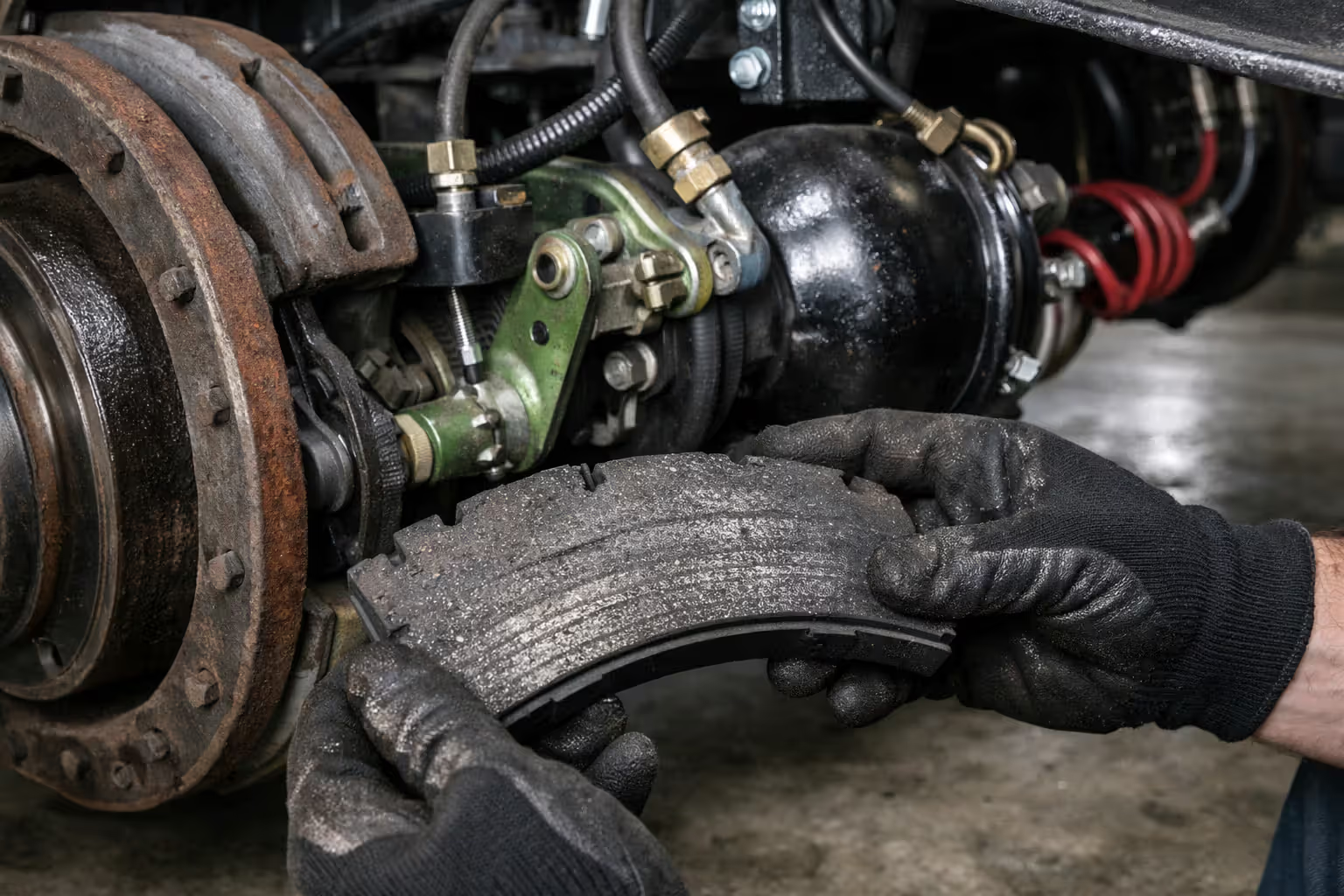
About 30% of mechanical-related truck crashes involve brake system failures. Commercial trucks use air brakes rather than the hydraulic systems in your car, and these can fail in ways that range from losing all stopping power to having wheels lock up unexpectedly—neither option is good when you're hauling 40 tons of cargo.
Air brake systems are complex beasts with multiple potential failure points. You've got air compressors that have to maintain pressure, brake chambers that convert air pressure into mechanical force, and slack adjusters that need proper clearance as pads wear down. When any single component fails, it can compromise everything else. Drivers are supposed to check for air leaks, worn pads, cracked drums, and proper adjustment during pre-trip inspections, but rushed schedules and inadequate training often turn these inspections into quick box-checking exercises where nothing really gets examined.
Author: Marcus Delaney;
Source: capeverde-vip.com
Mountain grades create especially dangerous brake failure trucking scenarios. Drivers who ride their brakes continuously during long descents instead of downshifting to use engine braking can heat their brake drums past 800 degrees Fahrenheit. At those temperatures, brake fade kicks in—the friction material stops gripping effectively, and your stopping power vanishes no matter how hard you mash the pedal.
Brakes give warning signs before complete failure: stopping distances get longer, the vehicle pulls to one side when braking, you hear grinding or squealing noises, or you smell that distinctive burnt odor from overheated friction material. Drivers trained to recognize these symptoms can pull vehicles out of service before disaster strikes. But economic pressure to complete deliveries creates powerful incentive to ignore the warnings and "just make it to the destination" before dealing with problems.
Annual inspections are federally mandated for commercial vehicles, but lots of components need attention more frequently than that. Brake systems really should get thorough inspections every 3,000 miles or three months, whichever comes first. Maintenance schedules exist in the regulations, but enforcement mostly relies on roadside inspections that only check a tiny fraction of the commercial fleet at any given time.
Trucking companies that postpone maintenance to save money are essentially gambling with public safety. Replacing brake pads might cost a few hundred dollars; defending against a wrongful death lawsuit runs into the millions. Yet short-term financial pressure leads some carriers to push maintenance intervals way beyond safe limits, creating mechanical defects that stay hidden until something fails catastrophically.
Overloading and Improper Cargo Securement Dangers
How weight gets distributed in a trailer completely transforms how that truck handles. Load it correctly, and the trailer tracks smoothly through curves and responds predictably to steering. Load it wrong, and you might get jackknifing during moderate braking or rollovers on turns that wouldn't challenge a properly balanced rig.
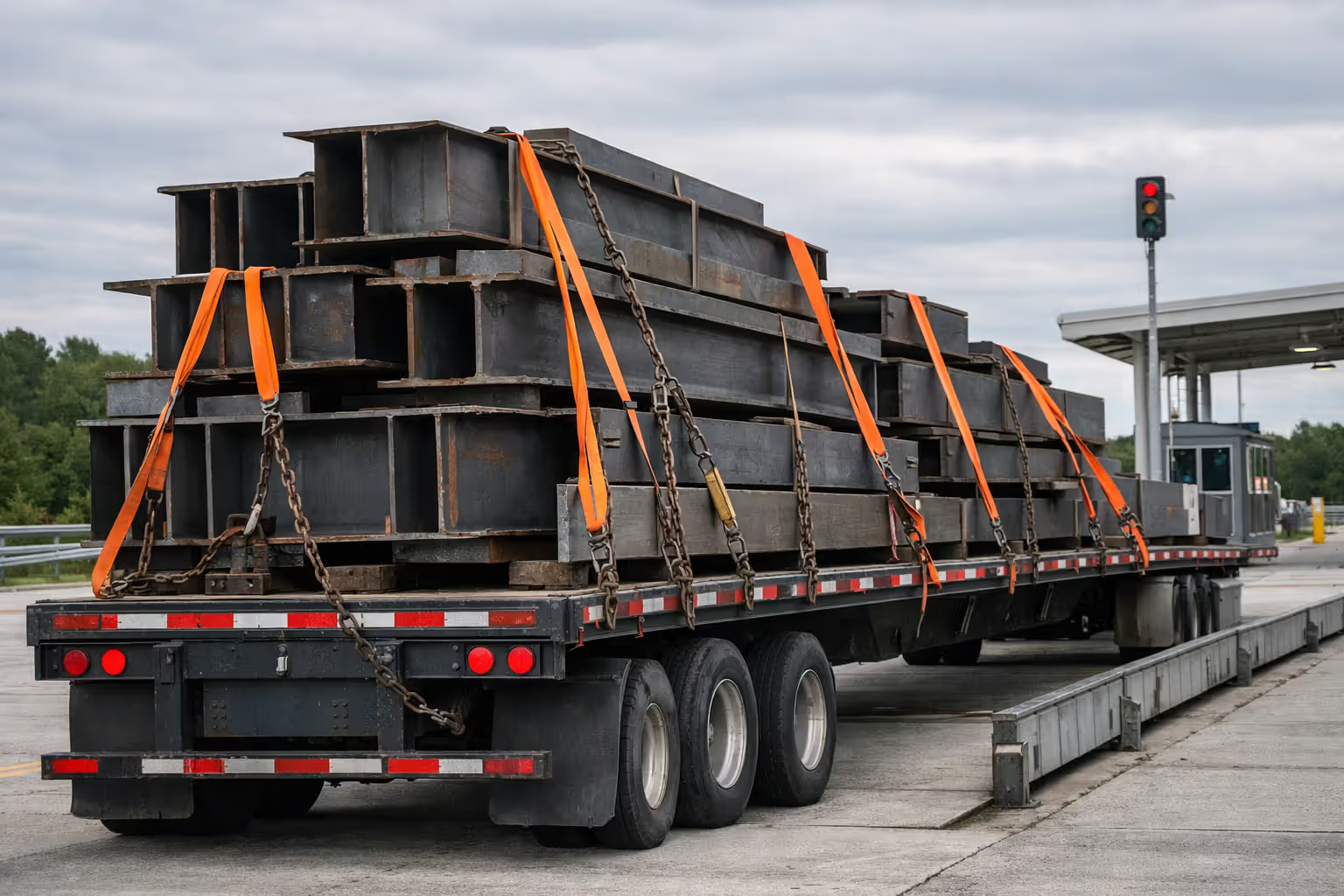
Overloaded truck accidents happen in two main ways: exceeding total weight limits and distributing weight incorrectly across axles. You can be under the legal gross weight but still have a dangerous situation if you've put too much weight on the rear tandems while leaving the tractor's drive axles lightly loaded. This reduces traction and steering control—drivers describe it as the steering wheel feeling "light" and the truck being hard to keep in its lane.
Author: Marcus Delaney;
Source: capeverde-vip.com
Cargo that shifts during transit creates dynamic instability. Liquid tankers without adequate internal baffles experience "slosh"—the liquid surges around inside, shifting the center of gravity unpredictably. Flatbed loads secured with insufficient chains or straps can shift during turns, suddenly changing weight distribution in the middle of a maneuver. Experienced drivers can sometimes feel these shifts through the steering wheel and compensate, but eventually physics overwhelms skill when loads move significantly.
Federal Weight Regulations Truckers Must Follow
Federal interstate highways have an 80,000-pound gross vehicle weight limit, plus specific restrictions on individual axles: steering axles max out at 12,000 pounds, while tandem axle groups can't exceed 34,000 pounds. States sometimes set stricter limits on their own highways, though special permits can authorize heavier loads on routes built to handle the extra weight.
These limits exist for good reasons beyond just protecting roads and bridges. Basic physics says that doubling vehicle weight doubles the kinetic energy that brakes need to dissipate. Overweight trucks need longer stopping distances even when their brakes work perfectly, which creates serious rear-end collision risk.
Weigh stations use both stationary scales and weigh-in-motion systems to enforce these rules. Penalties for overweight violations include fines, immediate out-of-service orders, and points on the carrier's safety rating through the CSA system. Despite all this enforcement, economic pressure to maximize payload per trip tempts some carriers and drivers to deliberately overload, hoping they'll slip through without hitting a weigh station.
The vast majority of truck accidents are preventable. They result from known hazards—fatigue, distraction, poor maintenance, inadequate training—that we have the knowledge and tools to address. What's often missing is the commitment to prioritize safety over short-term cost savings or schedule pressures. When carriers, drivers, and regulators all fulfill their safety responsibilities, accident rates drop dramatically.
— Dr. Thomas Molloy
How Improper Loading Affects Vehicle Control
Center of gravity height determines rollover threshold. Stack cargo high in the trailer, and you raise the center of gravity, which reduces how much lateral force the vehicle can handle before tipping over. Tanker trucks with liquid cargo face particular rollover danger because liquids naturally move toward the high side during turns, pushing the center of gravity even higher at exactly the wrong moment.
Securing loads properly requires specific techniques that vary by cargo type. FMCSA cargo securement rules specify minimum numbers and strength ratings for tie-downs based on what you're hauling. A 40,000-pound load needs tie-downs with combined working load limits of at least 20,000 pounds—typically four Grade 7 chains or eight heavy-duty straps. Cutting corners on securement creates cargo weight violations and serious control issues.
Drivers need to physically check their cargo securement after traveling the first 50 miles, then recheck every three hours or 150 miles after that. Why? Straps stretch, chains settle into the load, and cargo compresses—all of which loosens the initial securement. This re-check requirement appears in federal rules but frequently gets skipped when drivers face tight delivery windows.
Negligence Factors: Who's Responsible When Trucking Companies Cut Corners?
Trucking negligence factors go way beyond just individual driver mistakes. They encompass systemic problems with how carriers operate. Companies that prioritize profit over safety create environments where crashes shift from being possible to being inevitable.
Training programs that barely meet minimum standards produce drivers who lack skills for handling emergencies. Federal requirements mandate only 30 hours of actual behind-the-wheel training for entry-level commercial drivers. Many safety experts argue that's barely enough to scratch the surface of what's needed to safely operate 80,000-pound vehicles across diverse traffic scenarios and weather conditions. Quality carriers provide extensive additional training; negligent ones push drivers into revenue service as fast as regulations permit.
Pressure to meet unrealistic delivery deadlines forces drivers into impossible situations where they have to choose between their paycheck and public safety. When dispatchers threaten termination for late deliveries without considering traffic conditions, weather delays, or mandatory rest periods, drivers feel they have no choice but to speed, skip inspections, or falsify their logs. This creates a toxic culture where violations become standard operating procedure rather than rare exceptions.
Skipped inspections represent incredibly shortsighted cost-cutting. A proper pre-trip inspection takes 30-45 minutes—time that carriers unwilling to pay drivers for non-driving work will pressure them to eliminate or rush through. Drivers who breeze through inspections or skip them completely miss defects that could be fixed inexpensively before they cause crashes.
Negligent hiring practices put unqualified drivers in control of massive vehicles. Federal regulations require carriers to verify driving records, check for drug and alcohol violations, and confirm medical certification before hiring anyone. Some carriers perform minimal verification or deliberately ignore red flags in applicant backgrounds because driver shortages mean they need warm bodies in seats. This negligent hiring creates clear liability pathways when those unqualified drivers inevitably cause crashes.
Trucking company liability flows through the legal doctrine of respondeat superior—employers are responsible for actions their employees take while doing their jobs. Courts have also recognized negligent entrustment claims when carriers knowingly let dangerous drivers operate their vehicles. These liability theories mean injured parties can pursue compensation from carriers who typically have much deeper pockets than individual drivers.
Some carriers use independent contractor arrangements to claim they're not liable for driver negligence. Courts increasingly look past these contractual labels to examine the actual control carriers exercise over drivers. When carriers dictate routes, set schedules, and control operational procedures, they often face liability regardless of how they've classified the employment relationship.
Safety and compliance are not expenses — they are investments. Every dollar a carrier spends on proper maintenance, thorough driver training, and genuine regulatory compliance saves exponentially more in human suffering, legal liability, and operational disruption. The carriers with the best safety records are consistently the most profitable over time
— Anne Ferro
Environmental and Road Conditions That Increase Truck Accident Risk
Weather amplifies every inherent danger of commercial truck operation. Rain cuts tire traction and stretches out stopping distances. Snow and ice create conditions where even gentle brake applications or slight steering adjustments can trigger loss of control. Fog eliminates the visibility advantage that the elevated cab position normally gives truck drivers.
Wind creates unique hazards for high-profile vehicles. Empty trailers essentially become sails, catching crosswinds that can shove trucks out of their lane or tip them completely over. Bridges and overpasses funnel wind into concentrated blasts that suddenly increase lateral forces without warning. Experienced drivers learn through hard-won knowledge which routes and conditions exceed safe limits for their particular vehicle configuration, though pressure to complete deliveries sometimes overrides this caution.
Road design features create hazards that affect trucks very differently than cars. Exit ramps with posted advisory speeds appropriate for passenger vehicles may exceed safe speeds for top-heavy tractor-trailers. Curves that feel gradual in a sedan can generate sufficient rollover forces in a loaded truck. Steep grades challenge brake systems and engine power in ways that flat terrain never does.

Author: Marcus Delaney;
Source: capeverde-vip.com
Construction zones squeeze traffic into narrower lanes while introducing uneven pavement, abrupt transitions, and unexpected obstacles. Lane widths that easily accommodate passenger vehicles barely fit truck mirrors. Concrete barriers eliminate the margin for error that shoulders normally provide. These conditions demand heightened attention precisely when the monotony of orange barrels stretching for miles tempts drivers toward complacency.
Visibility limitations hit trucks harder than smaller vehicles. The right-side blind spot extends the entire trailer length plus several lanes outward. Mirrors and cameras help but can't eliminate these blind zones completely. Passenger vehicle drivers who hang out in these areas remain completely invisible to truckers who might change lanes or turn without ever seeing them.
Parking and rest area shortages force exhausted drivers to keep operating beyond safe limits. Hours-of-service rules require rest breaks, but when rest areas fill to capacity hours before drivers reach them, those drivers face an impossible choice: violate regulations by continuing to drive, or violate different regulations by parking illegally on highway shoulders or ramps.
Frequently Asked Questions About Truck Accident Causes
Truck accident causes rarely exist in isolation. A fatigued driver might miss obvious warning signs of brake problems. Dispatch pressure to meet deadlines might lead to skipped inspections that would have caught overloading. Distraction from a cell phone might prevent a driver from slowing down when weather deteriorates.
Prevention requires addressing multiple factors simultaneously. Carriers need to establish safety cultures that prioritize crash prevention over delivery speed. Regulators must enforce existing rules consistently while updating standards to reflect current technology and operational realities. Drivers must accept personal responsibility for their own alertness, vehicle condition, and safety regulation compliance.
The trucking industry moves roughly 70% of all freight in America—it serves genuinely essential economic functions. Safe operations benefit everyone involved: carriers avoid liability costs and equipment damage, drivers make it home to their families, and the public shares highways with professionally operated vehicles. Preventing crashes requires understanding their root causes and actually committing to address those factors before the next tragedy happens.
Crash investigations consistently reveal warning signs that existed before disasters occurred. Maintenance records show repairs that got repeatedly postponed. Electronic logs expose patterns of hours-of-service violations. Training records demonstrate inadequate preparation. Recognizing these patterns allows intervention before crashes happen rather than merely assigning blame after the fact.
Whether you drive trucks professionally, manage a fleet, or just share the road with commercial vehicles, understanding these causes helps you make smarter decisions. Drivers can refuse to operate unsafe vehicles or exceed legal hours despite dispatch pressure. Carriers can invest properly in training and maintenance rather than gambling on continued accident avoidance. Regular motorists can give trucks adequate space and avoid lingering in blind spots where truckers literally cannot see them.
The physics of commercial vehicle operation—mass, momentum, stopping distance—can't be changed. The human and organizational factors that contribute to crashes can be changed. Reducing both truck accident frequency and severity requires sustained commitment to addressing root causes rather than accepting crashes as an inevitable cost of freight transportation.