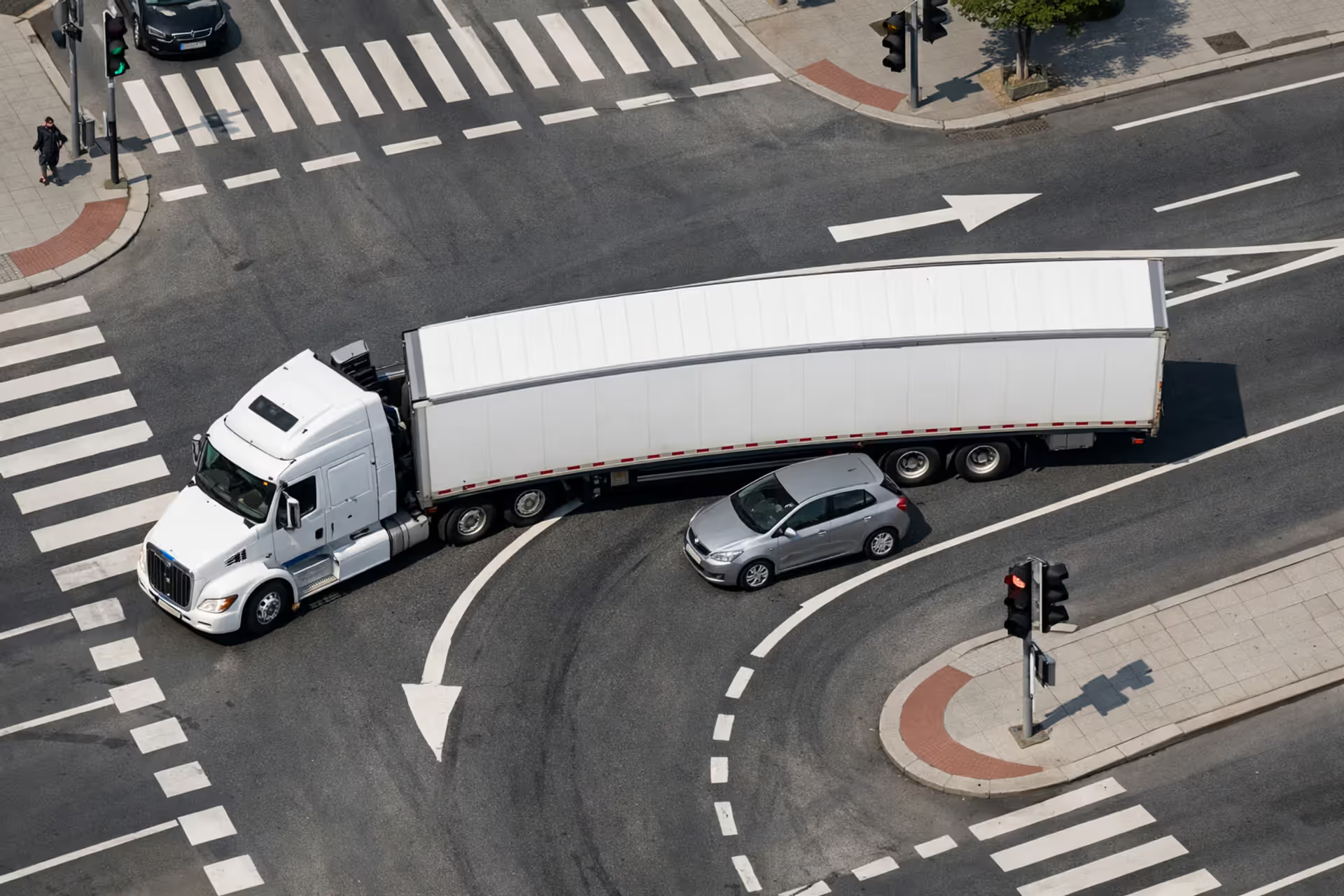
Damaged silver car next to a large white semi-truck on a highway at dusk with emergency lights and orange traffic cones
What to Do After a Car Accident with a Semi Truck: Legal Rights and Compensation Guide

Content
Being struck by an 80,000-pound commercial vehicle changes everything. The physics alone—a fully loaded semi truck carries roughly 20 times the force of a standard sedan—means injuries are often catastrophic, medical bills climb into six figures, and the legal landscape becomes exponentially more complicated than a typical fender-bender.
Most drivers never anticipate sharing fault determinations with federal motor carrier regulations, electronic logging devices, or corporate trucking entities with teams of adjusters trained to minimize payouts. Yet these factors define every aspect of recovery after a collision with a semi.
Why Semi-Truck Accidents Differ from Regular Car Crashes
Federal oversight transforms these cases. The Federal Motor Carrier Safety Administration (FMCSA) imposes strict hours-of-service rules, maintenance schedules, and driver qualification standards that don't apply to passenger vehicles. When a car accident with semi truck occurs, attorneys subpoena logbooks, inspection records, and GPS data that simply don't exist in standard auto claims.
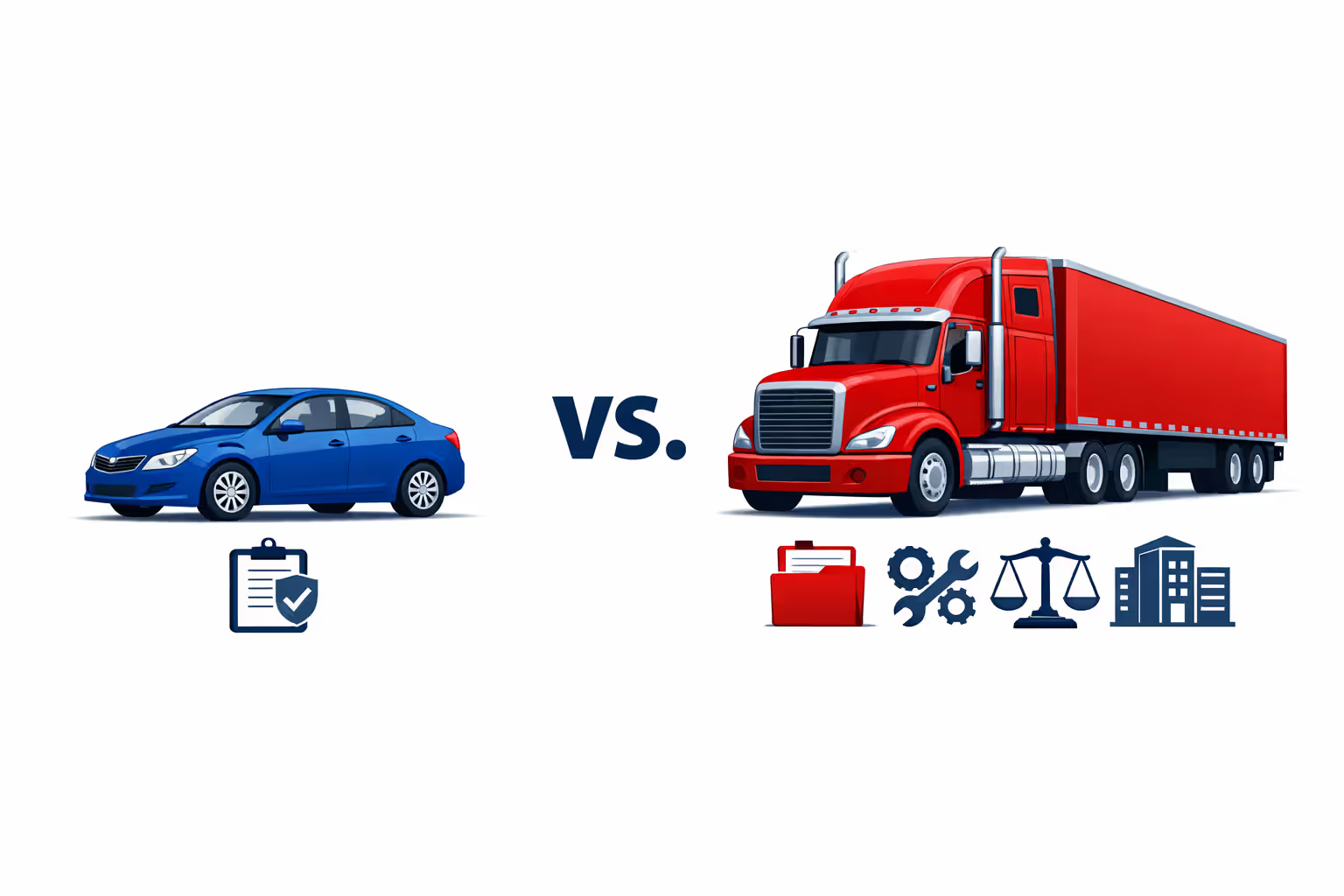
Multiple parties complicate liability. A typical car crash involves two drivers and two insurance companies. Commercial truck accidents routinely involve the driver, the trucking company, the cargo loader, the leasing company, the maintenance contractor, and sometimes parts manufacturers. Each entity carries separate insurance policies—often $1 million or more per occurrence—and each will deploy legal teams to shift blame elsewhere.
Injury severity escalates dramatically. While a 35-mph collision between two sedans might result in whiplash and a few thousand dollars in medical treatment, the same impact with a semi frequently causes spinal cord damage, traumatic brain injuries, or multiple fractures requiring surgeries, rehabilitation, and permanent lifestyle changes. Commercial truck settlement figures reflect this reality, with median payouts ranging from $150,000 to well over $1 million depending on permanent impairment.
Insurance complexity multiplies. Trucking companies carry layered policies: primary liability coverage, excess umbrella policies, cargo insurance, and sometimes non-trucking liability coverage for when drivers use trucks off-duty. Determining which policies apply and in what order requires forensic analysis of contracts, lease agreements, and the precise circumstances of the crash.
Author: Natalie Sinclair;
Source: capeverde-vip.com
Common Causes of Semi-Truck Collisions and Liability Factors
Driver fatigue remains the leading culprit despite electronic logging mandates. Drivers still manipulate logs, dispatch pressure encourages cutting corners, and the monotony of long-haul routes creates dangerous inattention. But proving a driver was drowsy requires more than witness statements—it demands analysis of cell phone records, fuel stop receipts, and sometimes testimony from biomechanical experts about reaction times.
Blind spot crashes happen constantly. The average semi has four major blind spots: directly in front for 20 feet, behind for 30 feet, along the entire right side, and two lanes deep on the left. Drivers merging or changing lanes without checking mirrors cause predictable collisions, but trucking companies often argue the passenger vehicle "came out of nowhere" or was speeding.
Driver Negligence vs. Company Responsibility
The distinction matters enormously for recovery. If a driver runs a red light while operating within the scope of employment, the trucking company bears vicarious liability under respondeat superior doctrine. But if that same driver was intoxicated, the company might argue the conduct was so egregious it falls outside employment scope—unless you can prove the company failed to conduct proper background checks or ignored prior violations.
Negligent hiring, training, and supervision create direct company liability. A trucking accident attorney will investigate whether the company hired drivers with suspended licenses, skipped mandatory drug testing, or failed to provide adequate training on the specific truck model involved. These failures make the company independently liable, not just vicariously responsible for driver errors.
Independent contractor classifications shield many trucking companies—or so they claim. Firms increasingly classify drivers as contractors to avoid liability, but courts look beyond labels to the actual relationship. If the company controlled routes, schedules, and equipment, most jurisdictions will find an employment relationship regardless of contract language.
Injustice anywhere is a threat to justice everywhere. We are caught in an inescapable network of mutuality, tied in a single garment of destiny. Whatever affects one directly, affects all indirectly
— Martin Luther King Jr.
Mechanical Failures and Maintenance Records
Brake failures kill. Federal regulations require annual inspections and periodic brake adjustments, but many companies defer maintenance to maximize truck uptime. When brake failure contributes to a crash, maintenance logs become critical evidence. Gaps in service records, repeated minor repairs, or out-of-service violations in prior inspections all suggest negligent maintenance.
Tire blowouts cause catastrophic loss of control. Trucking companies must track tire age, tread depth, and proper inflation. A blowout caused by a bald tire or one operated beyond its service life points directly to company negligence. Conversely, a blowout from road debris may not indicate fault—but you need experts to examine the tire remnants and determine the cause.
Defective parts shift liability to manufacturers. If a steering linkage fractures due to a design flaw rather than poor maintenance, the parts manufacturer or truck manufacturer may bear responsibility. These cases require product liability expertise beyond standard truck injury legal help, often involving engineering analysis and recall history research.
Immediate Steps to Take Following a Trucking Accident
Move to safety only if you can do so without worsening injuries. Staying in a disabled vehicle on a highway invites secondary collisions, but attempting to walk with a spinal injury can cause paralysis. If you're trapped or seriously hurt, stay still and call 911 immediately.
Document everything before evidence disappears. Trucking companies dispatch accident response teams within hours to photograph scenes, interview witnesses, and download electronic data. If you're physically able, photograph all vehicle damage, skid marks, traffic signals, weather conditions, and the truck's DOT number displayed on the cab. Capture witness names and contact information—bystanders rarely stay once police arrive.
Seek medical evaluation even without obvious pain. Adrenaline masks injuries. Internal bleeding, concussions, and soft tissue damage often don't produce symptoms for hours or days. Insurance adjusters use any gap between the accident and first treatment to argue injuries weren't crash-related. An emergency room visit or urgent care evaluation within 24 hours establishes the causal link.
Request the police report but verify its accuracy. Officers often arrive after the fact and rely on driver statements. If the report contains errors—wrong vehicle positions, incorrect descriptions of damage, or failure to cite the trucker—you can submit a supplemental statement with photographic evidence. The initial report isn't the final word.
Never give recorded statements to trucking company insurers. Adjusters will call within hours, expressing concern while asking you to describe what happened. They're building a defense. Polite phrases like "I didn't see the truck until it hit me" become admissions of inattention. Refer all calls to your truck crash lawyer before discussing fault or injuries.
Preserve your own vehicle's electronic data. Modern cars have event data recorders that capture speed, brake application, and steering input in the seconds before impact. This data typically overwrites after 30-60 days. An attorney can send a preservation letter to your insurance company and arrange for data download before it's lost.

Author: Natalie Sinclair;
Source: capeverde-vip.com
How Commercial Truck Settlement Amounts Are Calculated
Compensation isn't arbitrary—it follows established damage categories, though applying them requires projecting lifetime impacts from current medical evidence.
| Settlement Factor | Passenger Vehicle Accident | Semi-Truck Accident |
| Average Settlement Range | $15,000–$50,000 | $150,000–$1,000,000+ |
| Number of Potentially Liable Parties | 1-2 | 3-7 |
| Typical Insurance Policy Limits | $50,000–$250,000 | $1,000,000–$5,000,000+ |
| Investigation Complexity | Days to weeks | Months, often requiring experts |
| Typical Case Duration | 3-8 months | 12-36 months |
Medical Expenses and Future Care Costs
Past medical bills are just the starting point. If you've undergone spinal fusion surgery, economists calculate the cost of likely revision surgeries, pain management, and mobility aids over your life expectancy. A 35-year-old with permanent partial disability might face $2-3 million in future medical costs.
Life care plans formalize these projections. Certified life care planners—typically nurses with economic training—create detailed reports outlining every anticipated medical need: medications, therapies, home modifications, attendant care, and replacement medical equipment. Defense experts will challenge these plans, making the planner's credentials and methodology critical.
Lost Wages and Earning Capacity
Missing work for six months creates obvious lost income, but diminished earning capacity is harder to prove. If back injuries prevent you from returning to construction work, a vocational expert evaluates your transferable skills, education, and labor market opportunities. The difference between your pre-injury earning potential and post-injury realistic earnings—calculated over your remaining work life—becomes the lost earning capacity claim.
Household services have economic value. If injuries prevent you from mowing the lawn, cleaning, or caring for children, you can claim the replacement cost of these services. Courts recognize that a stay-at-home parent who can no longer perform childcare due to injuries has suffered real economic loss.
The measure of a society is found in how they treat their weakest and most helpless citizens. A nation’s greatness is measured by how it treats its weakest members
— Mahatma Gandhi
Pain and suffering multipliers are myths. Despite popular belief, insurers don't simply multiply medical bills by three or five. Non-economic damages depend on injury permanence, visible scarring, impact on daily activities, and how sympathetically your story presents. A young parent paralyzed by a drowsy trucker will command far higher pain and suffering awards than an elderly retiree with similar injuries.
Punitive damages apply when conduct is willfully reckless. If a trucking company knowingly allowed an unqualified driver to operate or systematically falsified maintenance records, courts may award punitive damages to punish and deter. These aren't compensatory—they're meant to hurt the defendant financially. But the bar is high; ordinary negligence doesn't qualify.
When You Need a Truck Crash Lawyer vs. Handling Claims Yourself
Minor property-damage-only crashes with clear liability might not require an attorney. If the truck rear-ended you at a stoplight, you have no injuries, and the trucking company's insurer promptly offers to repair your vehicle, hiring a lawyer might cost more than the case is worth.
Any injury beyond first-aid level demands legal representation. Once you're discussing medical treatment, lost wages, or pain and suffering, the insurance company's interests directly oppose yours. They profit by minimizing payouts; you need maximum recovery. The playing field isn't level without someone who understands trucking regulations and insurance policy structures.
Statute of limitations deadlines are unforgiving. Most states allow 2-3 years to file personal injury lawsuits, but some impose one-year limits. Miss the deadline by a single day and your case dies regardless of merit. Trucking accident attorney consultations are typically free, so there's no financial risk in getting deadline clarity early.
Insurance company tactics exploit unrepresented claimants. Adjusters might offer quick settlements before you understand injury severity, claim your own insurance must pay first under policy coordination provisions, or argue that pre-existing conditions caused your symptoms. These strategies work on people unfamiliar with insurance bad faith law and comparative negligence rules.
Federal regulations create specialized knowledge requirements. Understanding how hours-of-service violations, drug and alcohol testing failures, or maintenance regulation breaches affect liability requires specific expertise. General practice attorneys who handle divorces and wills typically lack this knowledge. You need someone who regularly litigates FMCSA regulation cases.
The first 72 hours after a semi-truck collision are critical. Trucking companies preserve evidence that helps them and often 'lose' evidence that hurts them. We've seen electronic logging data mysteriously corrupted, dash cam footage erased due to 'technical issues,' and witnesses suddenly unavailable. Immediate legal representation ensures independent investigators secure evidence before it vanishes.
— Michael R. Pines
What to Expect During the Semi-Truck Collision Claims Process
The timeline stretches far longer than typical car accident claims. While fender-benders might settle in weeks, commercial truck cases routinely take 18-24 months from crash to resolution, sometimes longer if litigation is required.
Investigation and Evidence Gathering
Attorneys immediately send spoliation letters demanding the trucking company preserve all evidence: the truck's electronic control module data, driver logs, maintenance records, employment files, dispatch communications, and any video footage. Federal regulations allow trucking companies to destroy certain records after six months, making speed essential.
Accident reconstruction often becomes necessary. Engineers examine vehicle damage, analyze skid marks and debris fields, review traffic camera footage, and use physics calculations to determine speeds, impact angles, and sequence of events. When both sides dispute fault, these experts testify about what the physical evidence proves.
Medical record review extends beyond your treatment. Attorneys obtain the truck driver's medical certification records to check for undisclosed conditions, prior injury claims to identify preexisting issues that might limit damages, and employment files to uncover prior crashes or violations.

Author: Natalie Sinclair;
Source: capeverde-vip.com
Negotiation Timeline and Settlement Phases
Initial demands come after maximum medical improvement. You can't value a claim until doctors determine whether injuries are permanent and what limitations remain. Sending a demand letter before this point invites lowball offers based on incomplete information.
Discovery in litigation forces disclosure. If negotiations fail, filing a lawsuit triggers formal discovery: interrogatories, document requests, and depositions under oath. Trucking companies must answer questions about safety policies, produce internal communications, and allow you to depose the driver, safety director, and corporate representatives.
Mediation resolves most cases before trial. Courts typically require mediation—a facilitated negotiation with a neutral third party. Success rates exceed 70% because both sides face trial uncertainty. The mediator shuttles between rooms, testing each side's resolve and highlighting weaknesses in their positions.
Trial becomes the last resort. Only 3-5% of truck accident cases reach jury verdicts. Trials are expensive, time-consuming, and unpredictable. But sometimes trucking companies refuse reasonable settlements, gambling that juries won't award large verdicts. When that happens, you need attorneys with trial experience, not just settlement negotiators.

Author: Natalie Sinclair;
Source: capeverde-vip.com
Frequently Asked Questions About Truck Accident Cases
Recovery after a car accident with semi truck extends far beyond physical healing. Financial stability, legal vindication, and accountability for negligent parties all factor into making yourself whole. The trucking industry's economic incentives—maximize miles, minimize maintenance costs, pressure drivers to meet unrealistic schedules—create predictable dangers. When those dangers materialize into crashes, victims shouldn't bear the costs alone.
Starting the claims process early preserves options. Evidence degrades, witnesses relocate, and corporate memories conveniently fail as time passes. The trucking company's investigators are already building their defense. Balancing that effort with your own thorough investigation levels the playing field.
Choosing representation carefully affects outcomes substantially. Board certification in truck accident law, trial experience with trucking cases, and resources to hire top-tier experts distinguish attorneys who regularly secure full-value settlements from those who settle quickly for whatever insurers offer. Initial consultations cost nothing, so interview multiple firms, ask about their largest truck accident verdicts, and verify they have the financial strength to litigate against corporate defendants for years if necessary.
Your focus should remain on medical recovery while legal professionals handle the complexities of federal regulations, corporate liability structures, and insurance negotiations. Trucking companies count on victims being overwhelmed by the process and accepting inadequate settlements just to move on. Understanding your rights, the true value of your claim, and the importance of experienced legal help ensures you're not among them.