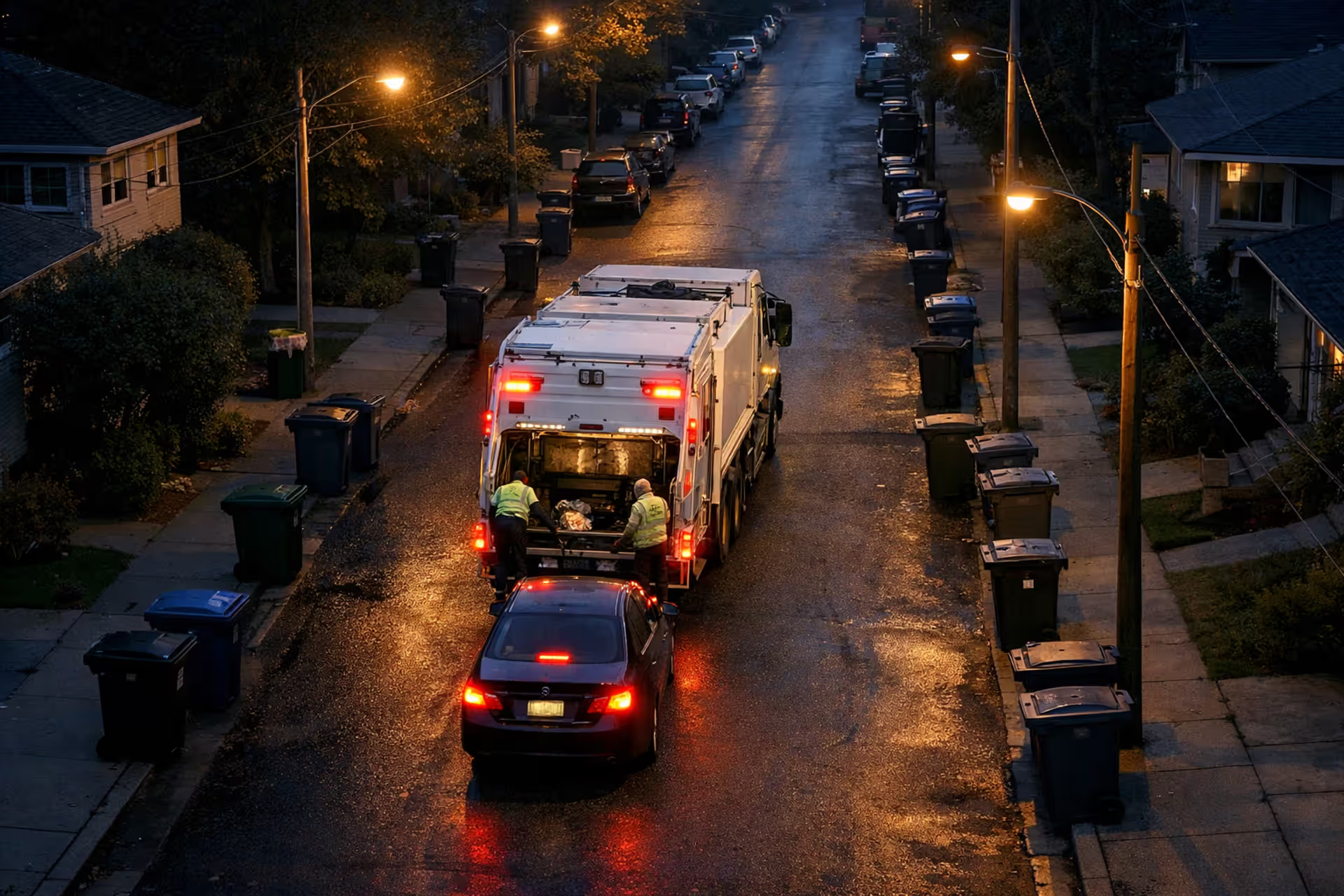
Garbage truck stopped on a narrow residential street at dawn with a sedan waiting behind it
Garbage Truck Accidents: Causes, Liability, and Your Legal Rights

Content
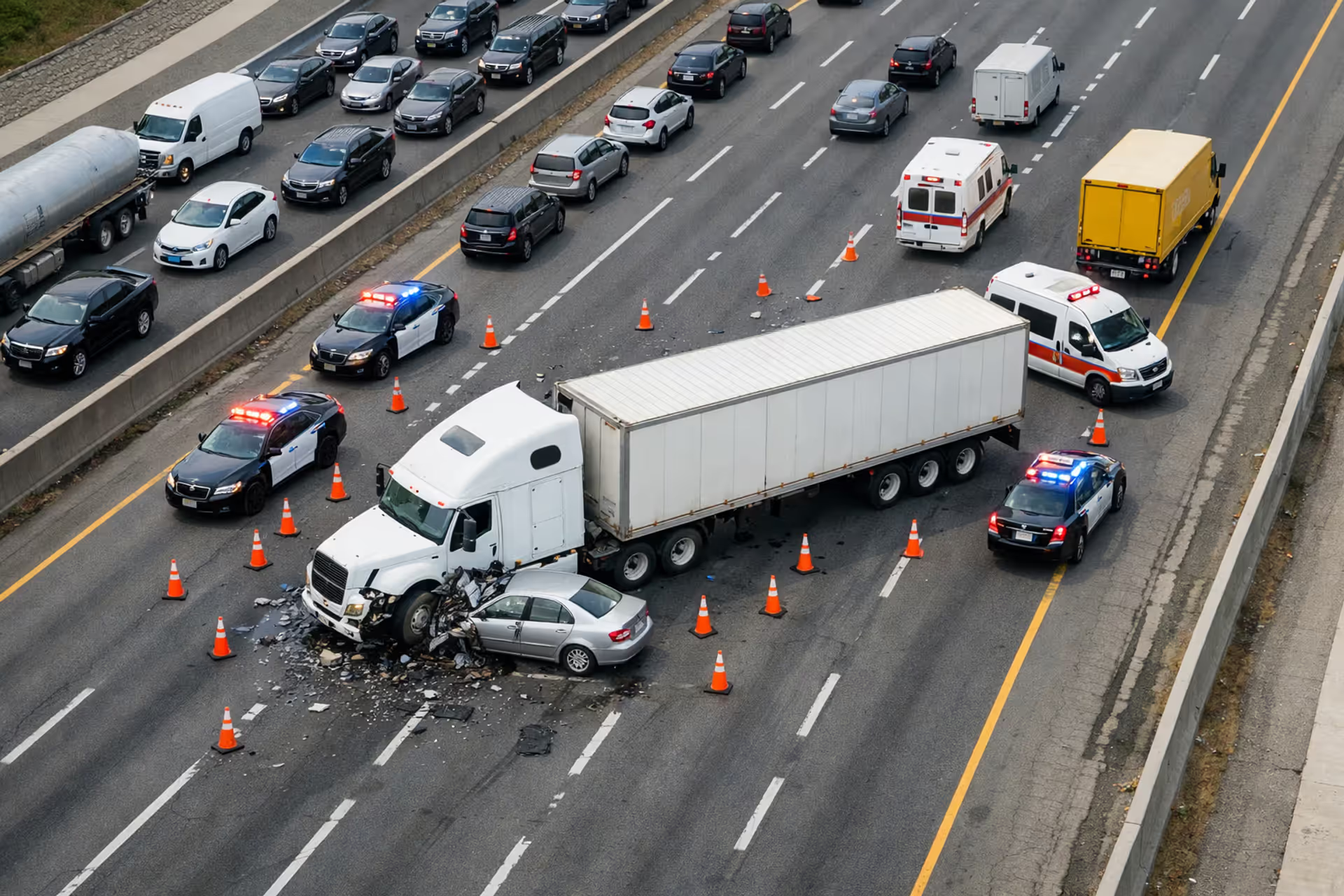
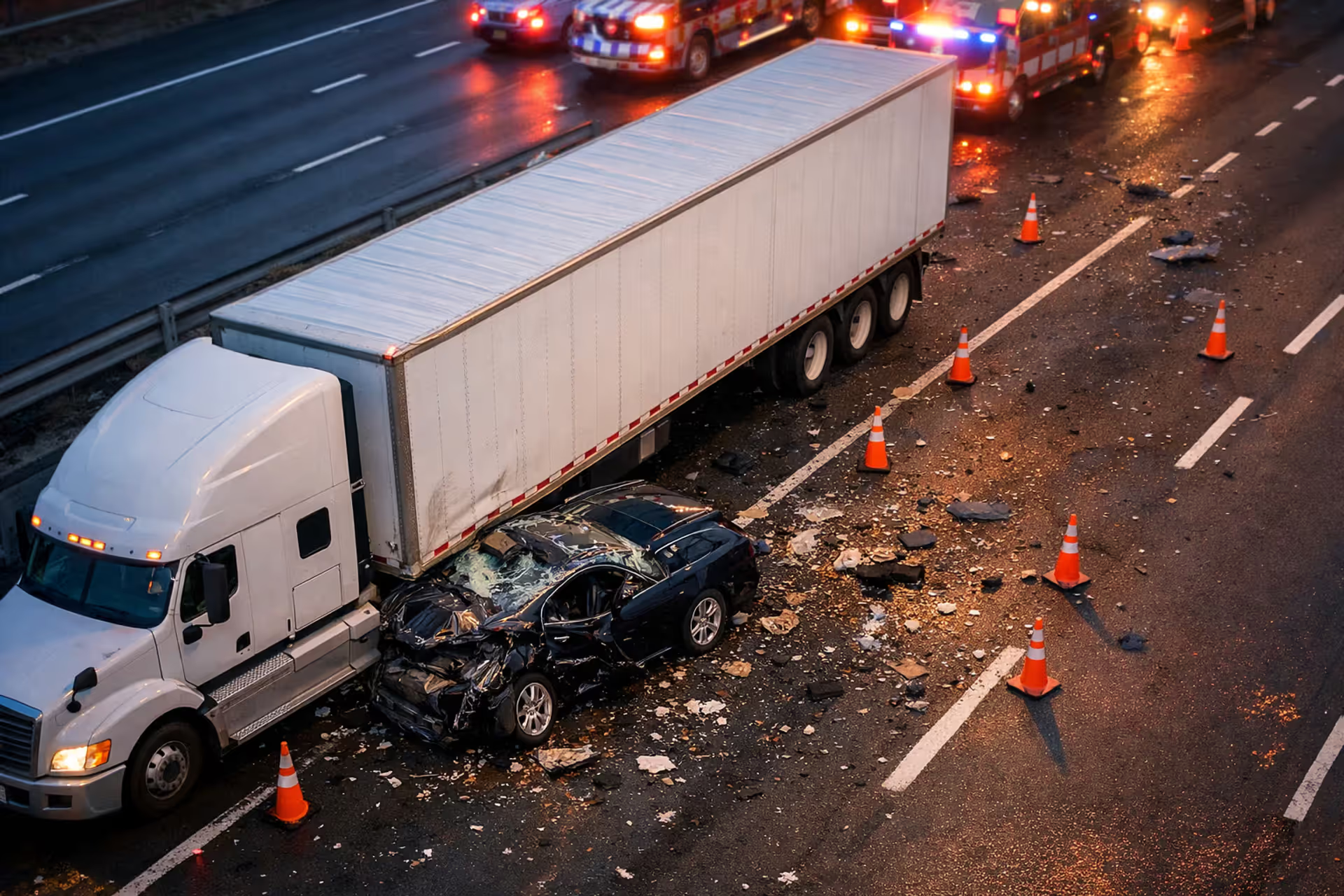
Every weekday morning, before most people start their commute, garbage trucks lumber through neighborhoods—squeezing down narrow streets, reversing into blind corners, and stopping abruptly every few houses. These workhorses of sanitation can tip the scales at 25 tons when packed with refuse. That's fifty thousand pounds of metal and trash sharing roads with sedans that weigh maybe three thousand pounds.
The math alone tells you why accidents turn serious fast. But here's what makes these cases different from your typical fender-bender: you might be filing a claim against the city itself, which comes with byzantine rules. Or you're up against a major corporation with lawyers on speed dial. Either way, you're not dealing with some distracted driver and their basic insurance policy.
If you've been hit by a trash truck, you're facing claims procedures that differ completely from standard auto accidents. Some deadlines are measured in weeks, not years. And depending on whether the city or a private company owns that truck, your path to compensation changes entirely.
Why Garbage and Waste Management Trucks Cause Serious Accidents
Think about how a garbage truck operates for a minute. The driver pulls up, stops, waits while workers grab bins, then rolls forward maybe thirty feet before stopping again. They'll repeat this dance hundreds of times before lunch. All those sudden stops mean cars behind them need to stay alert constantly—and let's be honest, how many drivers are paying full attention at 6 AM?
Now add the backing up. Residential streets weren't designed for vehicles this size. Drivers constantly reverse into driveways or turn around in cul-de-sacs. They're maneuvering a truck longer than some studio apartments into spaces where a Honda Civic barely fits.
The visibility issue is worse than most people realize. Stand next to a garbage truck sometime and notice how high the cab sits. That right-side blind spot—where workers are loading—stretches twenty feet or more. An entire sedan disappears there. Behind the truck? Even longer. Older municipal trucks might have basic mirrors and nothing else. No cameras, no sensors, just a driver trying to watch six directions while operating hydraulics and dodging traffic.
Then there's the human factor. Routes start at 4 AM in many cities. Workers show up in darkness, climb into cold trucks, and face ten or twelve hours of physical labor mixed with driving. By hour eight, everyone's exhausted. Throw in the pressure to finish routes on schedule, and you've got tired drivers making split-second decisions in heavy machinery.
Maintenance gets deferred more than it should. Brakes wear down quickly when you're stopping a thousand times per shift with maximum weight. Hydraulic lines crack. Backup alarms quit working. A well-run fleet stays on top of this. But budget-strapped municipalities or cost-cutting private haulers? Sometimes trucks roll out with problems that should've grounded them.
The trucks themselves create hazards even when everything works correctly. Those automated arms that grab bins swing across entire traffic lanes. Rear-loaders need workers riding on back platforms while the truck moves. It's dangerous by design—necessary for the job, but risky for everyone nearby.

Author: Rebecca Thornton;
Source: capeverde-vip.com
Who Is Liable When a Trash Truck Hits Your Vehicle or Property?
Figuring out who's legally responsible after a garbage truck collision isn't as straightforward as reading the name painted on the side. That determination shapes everything—what deadlines apply, how much you can recover, even which court hears your case.
Municipal vs. Private Waste Management Companies
If your city employs the driver directly, you're making a claim against the government. That triggers something called sovereign immunity—an old legal doctrine saying you can't sue the king without his permission. Modern versions let you file claims, but with serious strings attached.
First string: those notice deadlines I mentioned. You might have only thirty days in some states. Ninety days is common. Six months if you're lucky. Miss that window and your case evaporates, regardless of how badly you're hurt or how recklessly the driver acted.
The notice itself demands specific information. You'll state when and where the crash happened, describe the collision in detail, list your injuries, document your damages, and specify an amount you're claiming. Leave something out? The city can reject your notice on technicalities. You might get one chance to fix it, or you might not.
Second string: damage caps. Plenty of states limit what you can collect from government entities. Maybe it's $250,000 per person. Maybe $500,000 per incident. Those limits don't budge even if your medical bills alone exceed them. Paralyzed with millions in lifetime care costs ahead? That cap still applies.
Private haulers operate under completely different rules. National companies like Waste Management or Republic Services, or local contractors—they face standard negligence liability with no sovereign immunity protection. Their insurance policies typically run $1 million to $5 million. You can pursue full damages: economic losses, pain and suffering, future medical costs, lost earning capacity, all of it.
The financial difference can be staggering. Same injuries, same negligence, but one defendant is private and one is municipal? Your recovery might differ by millions.
Here's what I see repeatedly—garbage trucks combine everything that causes wrecks. They're out before sunrise when nobody's fully awake. They stop without warning. The driver can't see half of what's around them. And companies often hire whoever's willing to start at 4 AM for not much money. When my phone rings about a sanitation truck collision, I tell clients: we need photos and witness names today, not next week. These companies send their legal team to the scene faster than you'd believe
— Michael Chen
Third-Party Liability Scenarios
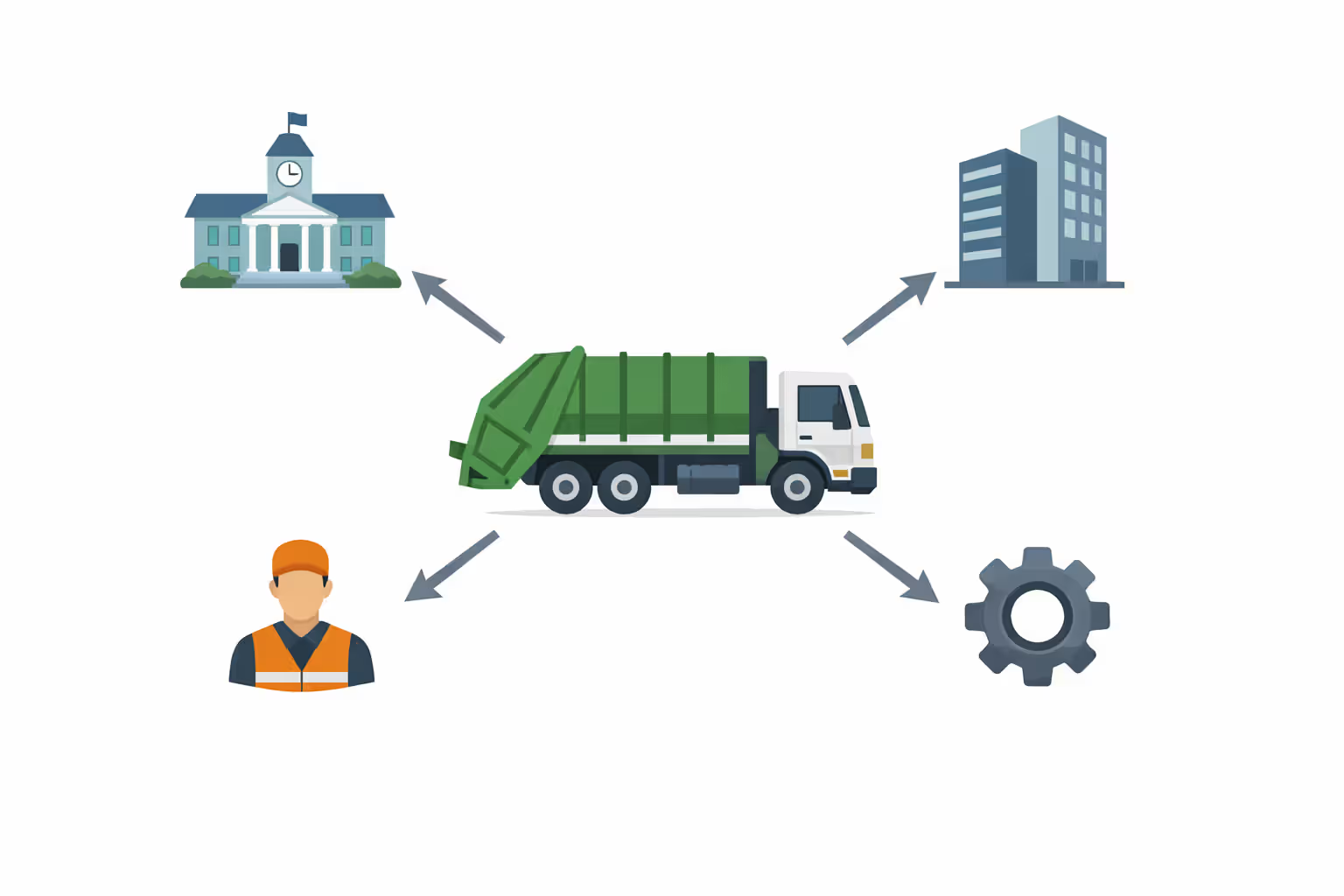
Contractor relationships muddy the waters constantly. Cities contract with private companies for collection services, then arguments erupt over who's actually liable when crashes happen. Courts look at contract terms, who controlled the driver's day-to-day activities, and who owned the equipment.
Some drivers technically work as independent contractors—they own their truck, have their own insurance, and contract with a larger waste company. The big company will argue they're not responsible for an independent contractor's negligence. But if they dictated routes, schedules, procedures, and pricing, courts often find enough control to impose liability anyway.
Equipment failures open up additional defendants. Brake systems that fail after ignored recall notices? The waste company faces negligence claims for inadequate maintenance. But if the brakes were defectively designed from the factory, the manufacturer joins the lawsuit. Same goes for backup cameras that didn't work or hydraulic systems with known failure patterns.
Property owners occasionally share fault too. Overgrown hedges blocking sightlines at a driveway entrance where the backing accident occurred? That's comparative negligence territory. A car parked illegally that forced the garbage truck into opposing traffic? Partial responsibility might shift.
Author: Rebecca Thornton;
Source: capeverde-vip.com
Common Injuries and Damages in Garbage Truck Collisions
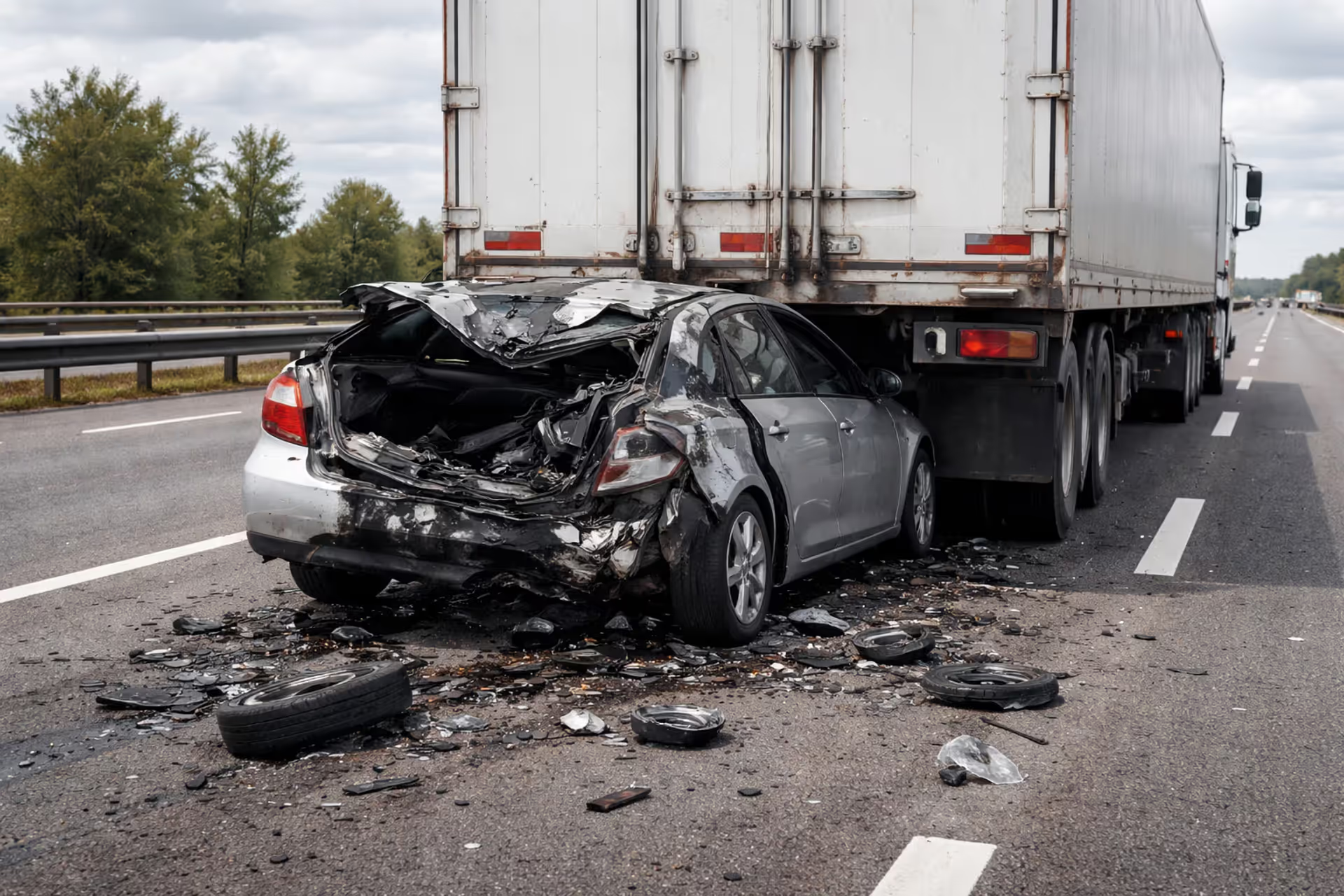
When forty thousand pounds of garbage truck meets three thousand pounds of Camry, physics isn't kind to the Camry's occupants. The weight ratio—roughly 13:1 at minimum, worse when the truck's fully loaded—means collision forces get absorbed almost entirely by the smaller vehicle.
Traumatic brain injuries show up even in "minor" rear-end collisions at intersections. Your brain floats in fluid inside your skull. Sudden deceleration whips it forward against the skull's interior, then backward. You don't need to hit your head on anything. The movement itself causes damage. Someone rear-ended at a stoplight might walk away feeling fine, then develop headaches, memory problems, and personality changes over the following weeks.
Spinal injuries range from herniated discs to complete paralysis. Side-impact collisions—where the garbage truck's massive front end strikes a passenger door—compress the vehicle's occupant space. Your spine can't handle those forces. Vertebrae fracture. Discs rupture. In the worst cases, the spinal cord itself gets damaged, causing permanent paralysis below the injury site.
Pedestrians struck by backing garbage trucks face particularly grim outcomes. Elderly victims often suffer multiple fractures from impacts that younger people might survive. Hip fractures, pelvic fractures, skull fractures—bones get crushed. Even with surgery and rehabilitation, many never regain their previous mobility.
Internal injuries hide initially because adrenaline masks pain. Your spleen ruptures or your liver tears, but you're focused on your broken arm. Hours later, internal bleeding becomes life-threatening. This is why emergency room visits matter even when you feel "okay." Doctors can identify internal injuries before they become critical.
Cyclists hit by garbage trucks rarely walk away. The height difference alone is problematic—trucks ride high while cyclists sit low. Drivers simply don't see them. Getting struck or run over by wheels that weigh more than entire motorcycles? Catastrophic injuries or death are typical outcomes.
Crashes into buildings happen more than you'd expect. Trucks lose control on hills, brake failures occur, or drivers misjudge turning clearances. When twenty-five tons of truck hits your house at twenty miles per hour, it doesn't just dent the siding. Foundation damage, structural compromise, total reconstruction—we're talking hundreds of thousands in property losses.
| Injury Type | Typical Settlement Range | What This Covers |
| Minor Impact Injuries | $10,000 - $50,000 | Whiplash, sprains, small fractures that heal within weeks; brief physical therapy |
| Moderate Injuries | $50,000 - $250,000 | Broken bones needing surgery, disc herniations requiring procedures, concussions with complete recovery after months |
| Severe Injuries | $250,000 - $1,000,000 | Multiple operations, permanent scarring or disfigurement, partial disability preventing certain work, chronic pain requiring ongoing treatment |
| Life-Altering Injuries | $1,000,000 - $10,000,000+ | Paralysis, severe traumatic brain injury, amputations, permanent total disability |
| Wrongful Death Claims | $500,000 - $5,000,000+ | Funeral expenses, loss of financial support for dependents, loss of companionship |
These figures represent what cases actually settle or award at trial. Your specific situation might fall outside these ranges. Municipal defendants with damage caps might pay less regardless of injury severity. Well-insured private companies facing clear liability and catastrophic injuries sometimes settle for considerably more. The jurisdiction matters too—urban areas with higher costs of living typically see higher awards than rural regions.
What Affects Your Garbage Truck Accident Settlement Amount?
Two people suffer identical injuries in garbage truck accidents. One settles for $75,000. The other gets $425,000. Why? Settlement values depend on variables that aren't always obvious until you've worked these cases.
How badly you're hurt and whether you fully recover forms the baseline. Broke your arm, it healed perfectly, you're back to normal? You're looking at medical bills plus maybe two to five times those costs for pain and suffering. But permanent injuries that still bother you months later, keep you from certain activities, or require ongoing treatment? Now we're talking ten to twenty times medical costs, sometimes more.
Your medical records need to tell a clear, consistent story. Going to every appointment, following doctor's orders, seeing specialists when referred—this builds credibility. Gaps in treatment raise questions. Why'd you wait three months to see the orthopedist? Did the injury really hurt that badly if you skipped physical therapy half the time? Insurance adjusters pounce on inconsistencies.
Documentation from doctors linking injuries to the accident is crucial. An MRI showing disc herniations means nothing if the radiologist notes "degenerative changes" that could've existed before the crash. You need physicians specifically stating the accident caused or aggravated these conditions.
Lost earnings go beyond the paychecks you already missed. Can't return to your job as a plumber because of back injuries? The difference between what you earned before and what you'll make in a desk job for the rest of your working life is recoverable. For a 35-year-old, that calculation might span thirty years and total half a million dollars or more.
Your state's fault rules matter enormously. Pure comparative negligence states (like California) reduce your recovery by your percentage of fault. You're 20% at fault for speeding? Your $200,000 settlement becomes $160,000. Modified comparative negligence states (like Texas) bar recovery if you're 51% or more at fault. And the few contributory negligence states (like Alabama and North Carolina)? Any fault on your part eliminates recovery entirely.
Policy limits create hard ceilings. The private hauler carries a one-million-dollar policy. Your damages total two million. Collecting that second million means going after the company's assets directly, which often isn't worth the fight unless they're substantial and reachable. Municipal defendants face statutory caps regardless of their assets.
Evidence quality determines leverage. Dashcam video showing the garbage truck running a red light? Case basically settles itself. Neutral witnesses who stopped and gave statements? Powerful. Physical evidence like skid marks that prove the truck never braked? Persuasive. Without strong evidence, it's your word against the driver's, and those cases settle for less.
The company's safety record enters negotiations too. Is this their fourth accident this year? Have regulators cited them for maintenance violations? Do their drivers have multiple crashes? That pattern creates leverage. Companies want to avoid trials where juries hear about repeated negligence. Single isolated incidents don't carry that same pressure.
Steps to Take Immediately After a Trash Truck Accident Today
What you do in the first hour after a crash with a garbage truck shapes everything that follows. Make smart choices now or pay for mistakes later.
Get yourself to safety first if you're able. Garbage trucks often block entire lanes. Other drivers aren't expecting stopped vehicles. If you can get out and move to the shoulder or sidewalk without risking further injury, do it. If you're hurt and can't move, stay put with your seatbelt on unless there's immediate danger like fire.
Dial 911 right away. Yes, even if the collision seems minor. Police reports establish an official record with the truck operator's information, insurance details, and an officer's observations. Paramedics can document injuries on scene. Their records become evidence later. Saying you're fine when you're actually in shock undermines future claims.
Start photographing everything before anyone moves the vehicles. Your phone camera is evidence gold. Capture the garbage truck from every angle—get close-ups of company names, truck numbers, license plates, and damage. Shoot your vehicle's damage thoroughly. Grab wide photos showing the overall scene, street signs, traffic signals, and any skid marks or debris. Take fifty photos, not five.
Photograph the truck driver and any workers present. Get clear shots showing faces and uniforms. Write down names you see on ID badges. Garbage crews often include multiple people. Identifying everyone there helps locate witnesses later when memories fade.
Hunt for witnesses immediately and get their contact information. People who saw the collision often leave before police finish their investigation. Anyone standing around watching? Approach them. Ask for names and phone numbers. If they'll let you, record a brief video on your phone where they explain what they saw. Witnesses who stick around until police arrive will give official statements, but others won't.
Keep your mouth shut about fault. Don't apologize. Don't theorize about what happened. You're jacked up on adrenaline and possibly injured. Statements made at accident scenes get twisted later. Give the officer basic facts. When the waste company's supervisor shows up—and they often arrive fast—decline detailed discussions beyond exchanging information.
See a doctor within twenty-four hours even if you feel okay. Adrenaline is masking pain right now. Injuries like internal bleeding or brain trauma don't always produce immediate symptoms. Emergency room or urgent care visits create medical records linking injuries directly to the accident. Waiting weeks before seeking treatment lets insurance companies argue your injuries came from something else.
Don't fix your car yet. Adjusters need to inspect the damage first. Keep torn clothing, bloodied items, or damaged personal property like phones or glasses. They demonstrate impact severity.
Contact your own insurance company and report the accident, but stick to basic facts. Your policy probably requires prompt notification. But you don't need to give a detailed recorded statement immediately. Your insurer might provide medical payments coverage or uninsured motorist benefits that apply even when someone else caused the crash.
Reject any quick settlement offers. Adjusters frequently contact victims within days, dangling checks before you know how badly you're injured. These offers typically represent a fraction of fair value. You'll sign releases preventing future claims even if complications develop.
How Long Do You Have to File a Claim?

Author: Rebecca Thornton;
Source: capeverde-vip.com
Time limits for pursuing compensation after garbage truck crashes vary wildly depending on who owned the truck and where you live. Blow these deadlines and your claim dies regardless of how strong your case might be.
Municipal trash trucks come with the shortest deadlines by far. Most states require formal written notice to government entities within thirty to one hundred eighty days after the accident. California gives you six months to file against most government agencies. Texas requires six months' notice for municipal claims. New York demands notice within ninety days for many municipalities. Florida sets a three-year deadline for most government tort claims but specific cities sometimes impose shorter notice requirements through local ordinances.
These aren't casual deadlines. Your notice must identify you by name and contact information, specify when and where the accident occurred, describe how the collision happened, list the injuries you sustained, document damages you've suffered, and state the compensation amount you're seeking. Leave out required information? The government entity can reject your notice outright. Some jurisdictions let you correct deficiencies; others don't.
After submitting notice, you wait while the government reviews your claim—typically thirty to ninety days. They'll accept, deny, or ignore it (which counts as denial). Only after formal denial can you proceed to filing a lawsuit. This administrative process must wrap up before the statute of limitations expires, making immediate action essential.
Private waste company accidents follow standard personal injury limitation periods—usually two to three years depending on your state. That extra time provides breathing room but shouldn't make you complacent. Evidence deteriorates constantly. Witnesses move away or forget details. Video footage gets recorded over. Physical evidence vanishes.
Special circumstances trigger different deadlines. Hit-and-run garbage truck accidents might fall under uninsured motorist provisions in your own policy, which often carry one or two-year filing deadlines. Wrongful death claims sometimes run on different clocks than personal injury claims, occasionally shorter.
Children injured in trash truck accidents get special treatment. Many states pause the statute of limitations until the child turns eighteen, then add another two to three years. But parents' claims for the child's medical expenses they paid? Those face normal deadlines. You can end up with situations where the child's claim remains viable while the parents' claim has expired.
"Discovery rule" exceptions can extend deadlines when injuries weren't immediately apparent. Brain injuries diagnosed months after the collision might start the limitation period from the diagnosis date rather than the accident date in some states. But proving you couldn't reasonably have discovered the injury earlier demands compelling medical evidence.
Here's the reality: waiting years to pursue your claim crushes settlement value. Insurance companies recognize that claimants who delay usually have weaker cases. Memories fade. Medical records disappear after retention periods expire. Connecting current symptoms to an old accident becomes harder. Cases filed within months of the collision settle for substantially higher amounts than identical claims filed years later.
Frequently Asked Questions About Garbage Truck Accidents
Garbage truck accidents create legal complications that set them apart from typical car crashes. Between the massive weight differences, Byzantine liability rules, and operational hazards built into waste collection work, these cases demand specialized knowledge and fast action.
Whether you're dealing with a city sanitation truck or a private hauler, grasping the compressed deadlines, evidence requirements, and liability factors gives you the foundation to protect your rights. The municipal versus private distinction affects not just who you're suing, but how much you can potentially recover and what procedures you must follow.
Document everything immediately after the collision, get medical attention even for seemingly minor problems, and talk to an attorney experienced in truck accidents before speaking with any insurance adjusters. The choices you make in the first days after a trash truck accident often determine whether you receive fair compensation or face years of financial struggle from injuries someone else caused.
The severity of injuries in garbage truck collisions—combined with the procedural complexity surrounding these claims—makes professional legal guidance valuable in virtually every case beyond minor property damage. Waste management companies deploy sophisticated legal resources immediately after accidents. Protecting yourself requires understanding your rights and the specific challenges these cases present.