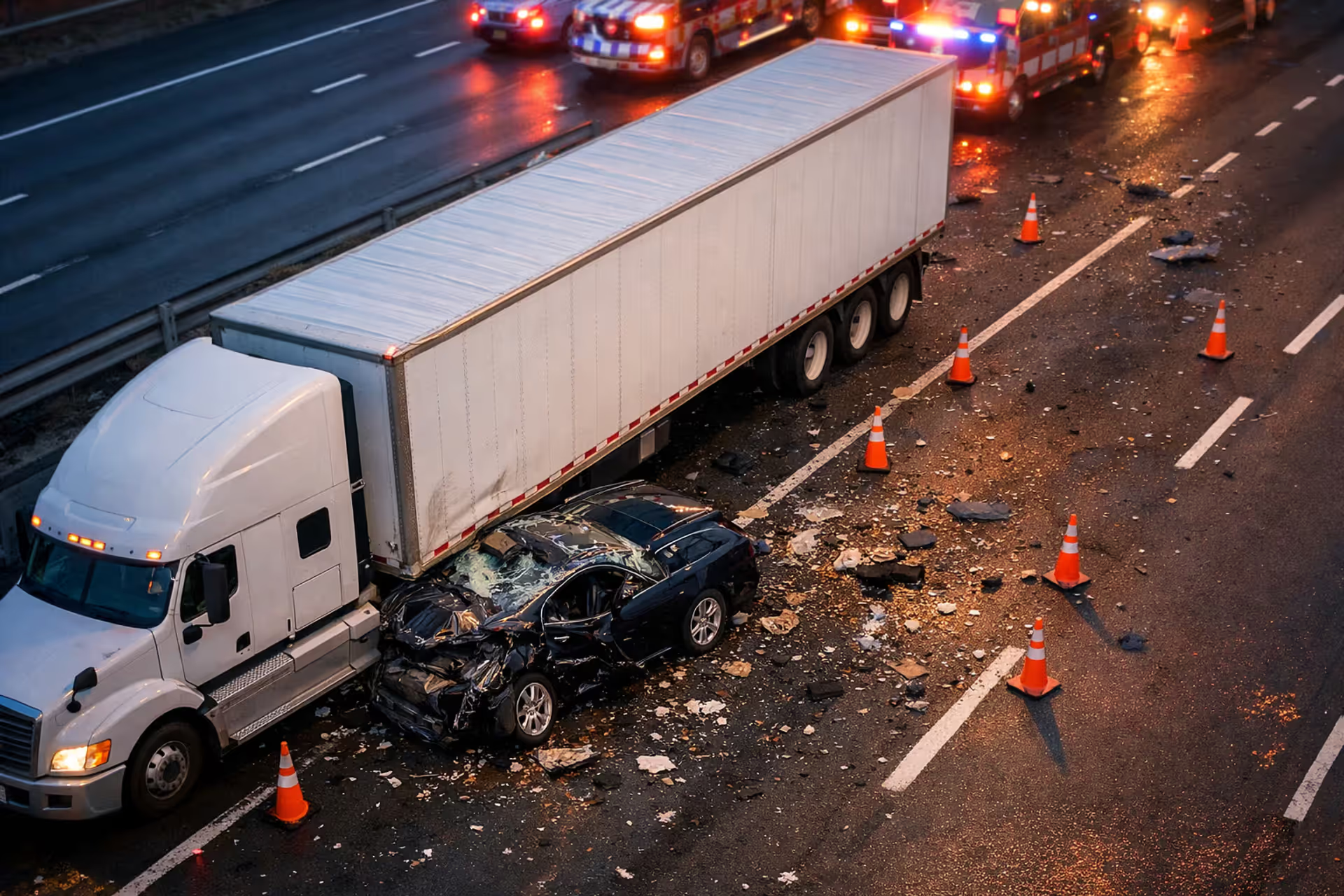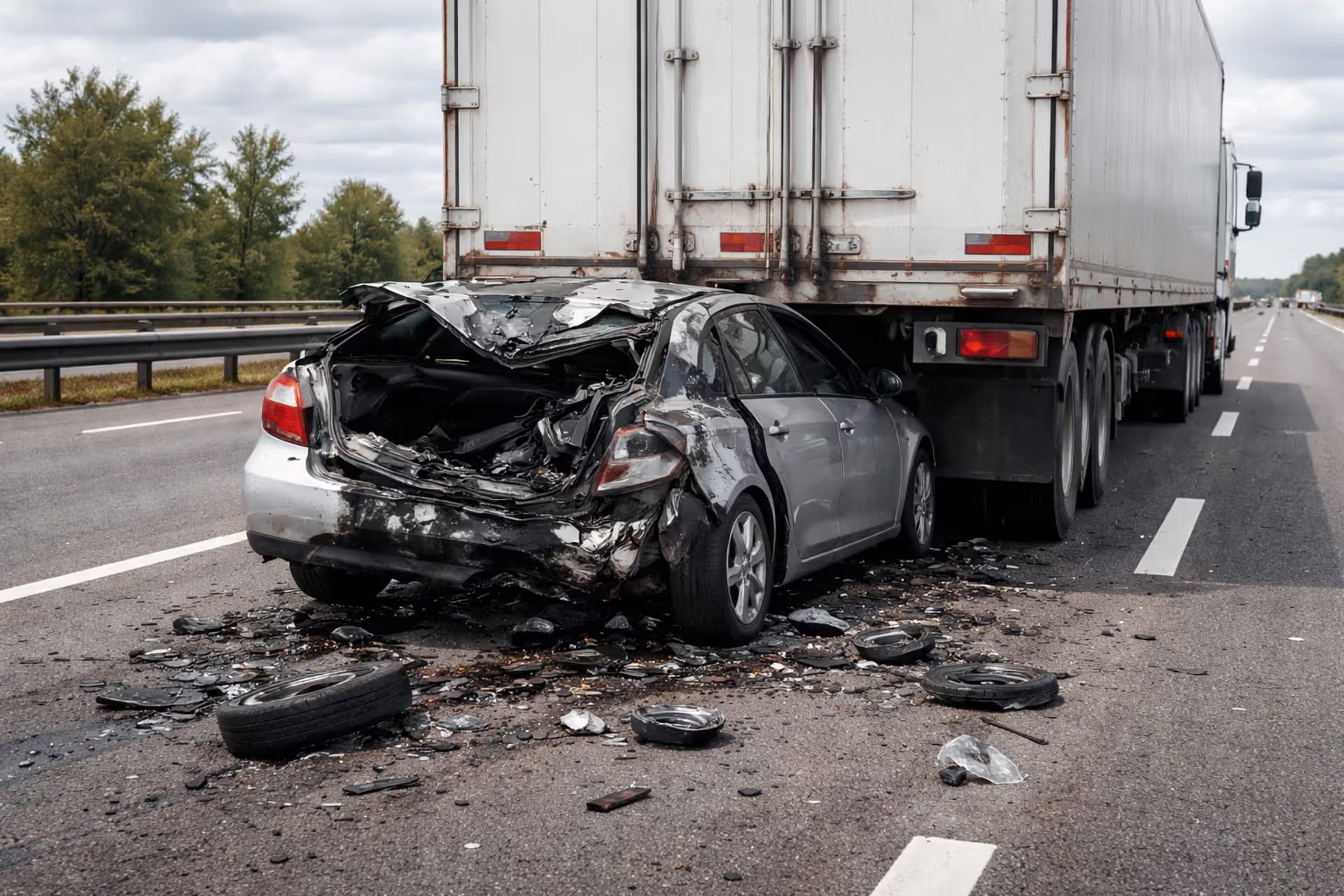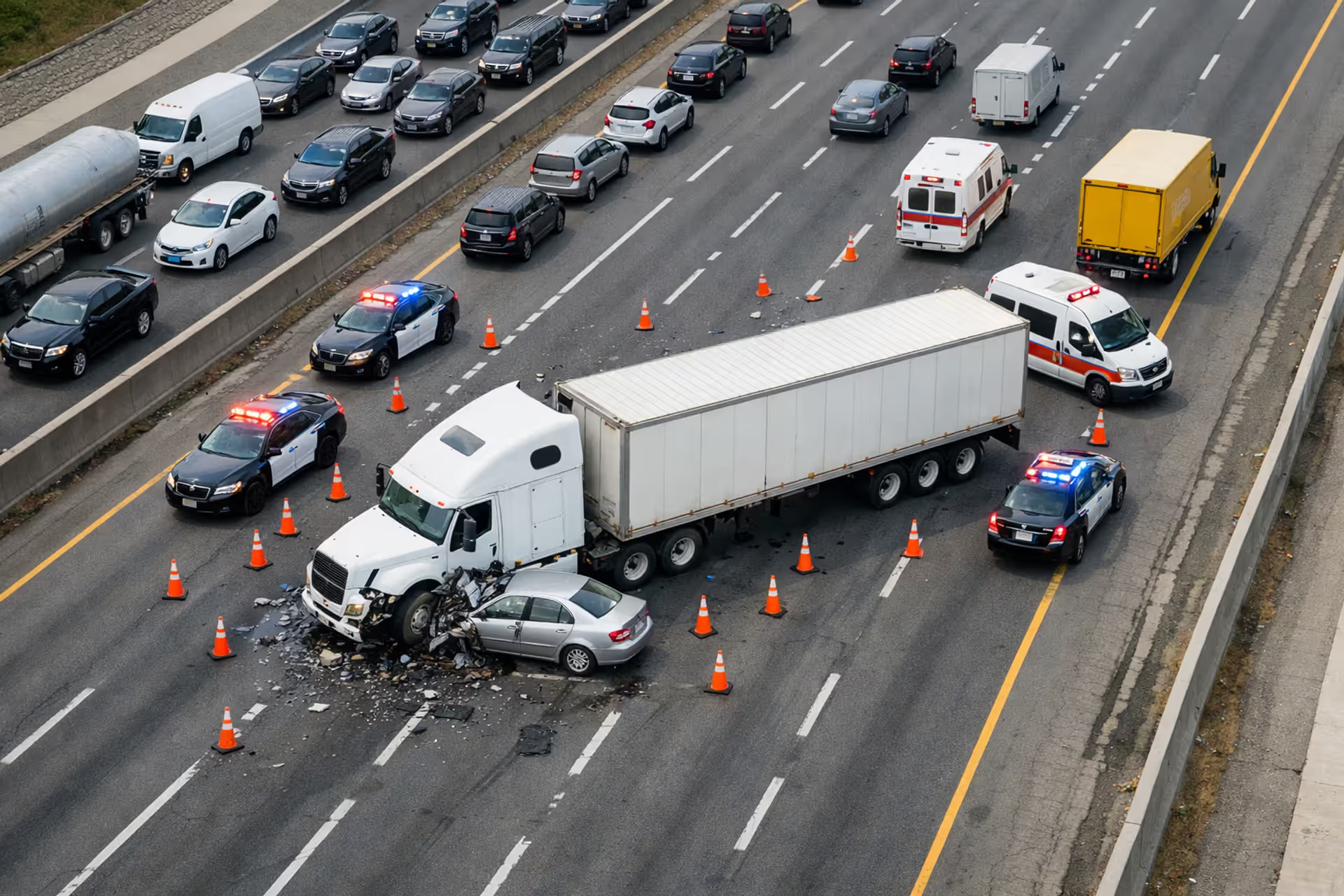
Aerial view of a serious semi-truck and sedan collision on a multi-lane interstate highway with emergency vehicles and traffic backup
What Happens If a Truck Driver Gets in an Accident: Legal Process and Liability Explained

Content
Picture this: A fully loaded semi barreling down the interstate suddenly collides with a sedan. The crash doesn't just create a massive traffic jam—it sets off a chain reaction involving federal investigators, multiple insurance companies, attorneys, and potentially criminal prosecutors.
The fallout from these crashes affects everyone differently. Truck drivers might lose their commercial license and livelihood. Trucking companies face seven-figure lawsuits. Injured victims navigate a confusing maze of claims and medical bills. Each party deals with unique challenges that don't exist in regular fender-benders.
If you've been involved in a semi-truck collision or you're trying to understand what these crashes mean legally, here's what actually happens behind the scenes.
Immediate Steps Taken After a Commercial Truck Accident
Federal law doesn't mess around when big rigs crash. The rulebook for commercial drivers differs drastically from what regular motorists face.
Truck drivers can't just pull over, exchange insurance information, and drive away—even from seemingly minor accidents. FMCSA rules force them to stay put and help anyone who's hurt. That means calling 911, flagging down help, or getting injured people away from traffic. Leaving early, even for a "good reason," can land drivers in jail.
The clock starts ticking immediately on reporting requirements. Someone died? The trucking company has to notify DOT right away—no delays allowed. For crashes where someone needs an ambulance or vehicles need towing, companies have narrow reporting windows measured in hours, not days.
Here's where it gets serious for drivers: mandatory drug testing. Fatal accidents trigger an automatic test—drivers must provide samples within two hours for alcohol and 32 hours for drugs. Miss these windows, and it looks suspicious. Even non-fatal crashes require testing if the driver got cited and someone went to the hospital or vehicles got towed. Some drivers have tried to dodge these tests. It never ends well.
Police show up and start documenting everything—skid marks, debris patterns, where vehicles landed, weather conditions. But serious commercial truck accidents often bring specialized crash reconstruction teams who measure angles, photograph from drones, and create computer simulations. They're looking for evidence that might disappear once tow trucks haul everything away.

Author: Natalie Sinclair;
Source: capeverde-vip.com
Modern trucks are basically computers on wheels. That works against drivers who mess up. Electronic logging devices track every mile. Dash cams record what happened. Engine computers store data about speed, braking, and throttle position right before impact. Smart drivers know tampering with this evidence means criminal charges on top of whatever else they're facing.
Trucking companies? They're already working the problem. Many dispatch investigators and lawyers to crash sites within an hour or two. They're protecting company interests, not necessarily the driver's.
Who Is Legally Responsible When a Truck Driver Causes an Accident?
Figuring out who pays after a truck crash isn't as simple as "the driver who caused it." The answer often involves multiple defendants and legal theories you won't find in regular car accidents.
Driver vs. Trucking Company Liability
The company-driver relationship determines whether victims can pursue the trucking company's deep pockets or just the driver's limited assets.
There's this legal concept called "respondeat superior"—fancy Latin for "let the master answer." Basically, employers are on the hook when their employee drivers screw up during work. Driver fell asleep hauling Amazon packages on an assigned route? Amazon's insurance pays. The company doesn't need to do anything wrong themselves—they're liable simply because the driver worked for them.
Why does this matter? Money. Federal law requires most interstate trucking companies to carry at least $750,000 in insurance. Many carry $1 million to $5 million policies. Some hauling hazardous materials need even more. Compare that to the typical driver who might have $100,000 in personal coverage—if they have anything beyond basic liability.
But here's the catch: not every truck driver is an "employee." Some work as independent contractors. Companies love arguing they're not responsible for contractor negligence. Courts don't always buy it. Judges look past labels to examine who really controlled the operation. Did the company dictate routes, schedules, and procedures? Then that "contractor" looks an awful lot like an employee.
Trucking companies also face direct liability for their own mistakes. Hired a driver with three DUIs? That's negligent hiring. Skipped training on handling mountain roads? Negligent training. Ignored reports that a driver kept falling asleep? Negligent supervision. These claims stick even when the driver was an independent contractor.
The trucking industry is one of the most regulated industries in the United States, and for good reason. When a 40-ton vehicle is involved in a collision, the consequences are catastrophic. Holding companies accountable for negligent hiring, training, and supervision isn’t just about compensation—it’s about forcing an industry to prioritize safety over profit margins.
— Joan Claybrook
Third-Party Liability Scenarios
The web of responsibility extends well beyond driver and company.
Cargo loading companies enter the picture when freight shifts or falls off. A poorly secured load can yank a trailer sideways, causing jackknives even when drivers do everything right. If the loading company violated securement standards, they're liable.
Maintenance shops and leasing companies get sued when mechanical failures contribute to crashes. Brakes that were "fixed" last week but fail catastrophically? The repair shop might pay. A leased truck with bald tires? The leasing company shares fault.
Truck manufacturers face product liability claims when defects cause crashes. Design flaws in braking systems, manufacturing defects in steering components, or tires that blow out prematurely all create liability.
Sometimes other drivers deserve blame even though a truck physically hit the victim. Say a car cuts off a semi, forcing an emergency swerve that causes the truck to strike someone else. The car that caused the initial hazard might be primarily at fault, not the truck driver who reacted.
This explains why truck accident cases get complicated fast. Finding every potentially liable party—and their insurance policies—often requires investigators and attorneys.
Consequences for the Truck Driver: Career, License, and Criminal Charges
For professional drivers, serious accidents don't just mean legal trouble—they can end careers permanently.
Your Commercial Driver's License is your meal ticket. Lose it, and you can't work. The violations that trigger CDL disqualification are harsh. First DUI? One-year suspension minimum. Second DUI? You're probably done forever (though some states allow reinstatement petitions after ten years of clean driving). Caused a fatal accident while violating major regulations? Expect disqualification.
Even without losing your CDL entirely, points add up. Different states use different systems, but the principle stays the same: accumulate too many points from traffic citations, and your license gets suspended. The citation for following too closely that police wrote after your crash? That's points. Unsafe lane change? More points. Stack enough together quickly, and you're sitting at home instead of driving.
Most trucking companies won't wait for the government to act. They'll fire you first. Insurance premiums skyrocket when companies employ drivers with accident histories, especially preventable accidents. Some carriers operate under zero-tolerance policies—one serious crash and you're gone, regardless of who was technically at fault.
Finding another trucking job afterward becomes brutally difficult. Companies typically require clean driving records for the past three to five years. That recent accident? It's a scarlet letter on your DAC report (the background check system for truck drivers). Some drivers switch to local delivery or non-CDL work because they can't get hired by reputable carriers.

Author: Natalie Sinclair;
Source: capeverde-vip.com
Criminal prosecution represents the nightmare scenario. Vehicular manslaughter charges follow fatal accidents involving alcohol, drugs, or reckless behavior. State laws vary wildly, but prison sentences range from months to decades. Even without deaths, reckless driving or unsafe operation charges bring misdemeanor convictions, fines, probation, and more black marks on your record.
Then there's civil liability. Usually, the trucking company's insurance handles settlements. But drivers can be named in lawsuits personally. If you were using the company truck for personal business when you crashed, or if damages exceed insurance policy limits, you might face personal financial ruin.
Your personal auto insurance rates? They're going up dramatically. Some insurers refuse coverage to drivers with commercial vehicle accidents on record. This affects your personal car, not just your commercial driving prospects.
How Truck Accident Claims and Settlements Work
Victims quickly discover that commercial truck accident claims operate in a different universe than typical car accident settlements.
You'll start by filing a claim with the trucking company's insurer. Don't expect the quick turnaround you'd get from a car insurance company. Commercial carriers know millions might be at stake. Their adjusters investigate thoroughly, interview witnesses multiple times, and consult with accident reconstruction experts before offering a dime.
How long until you see money? That depends entirely on your situation. Got whiplash from a minor accident where the truck driver admitted running a red light? Maybe four to eight months. Suffered a spinal cord injury in a complex multi-vehicle crash where fault is disputed? Expect one to three years, possibly longer if litigation becomes necessary.
Multiple insurance policies create layers of coverage—and complications. Your case might involve the trucking company's primary liability policy, excess umbrella coverage that kicks in above the primary limit, the driver's personal policy, cargo insurance, and possibly maintenance company coverage. Each policy has different language, coverage triggers, and exclusions. Getting these insurers to coordinate rather than pointing fingers at each other requires persistence.
What determines your settlement amount? Injury severity matters most, but it's not just medical bills. Lost wages, future earning capacity, permanent limitations, daily pain, and reduced quality of life all factor in. Strong evidence of gross negligence—like a driver who falsified logbooks to drive 16 hours straight—increases settlement values significantly because it raises the threat of punitive damages at trial.
Average Truck Accident Settlement Ranges by Injury Severity
| Type of Injury | Medical Bills (Typical) | What Cases Usually Settle For | How Long It Takes |
| Soft tissue damage, small fractures | $5K-$25K | $15K-$75K | 3-6 months |
| Broken bones requiring surgery | $50K-$250K | $100K-$500K | 6-18 months |
| Life-altering injuries (paralysis, brain damage, lost limbs) | $500K-$5M+ | $1M-$10M+ | 1-3+ years |
| Fatalities | $100K-$1M+ | $500K-$10M+ | 1-3+ years |
These figures fluctuate dramatically based on where the accident happened, what coverage exists, and how strong your evidence is. States with damage caps limit the top end. Clear liability with sympathetic victims pushes values higher.
Structured settlements appear more often in truck cases than car accidents. Instead of one big check, you receive guaranteed payments over months or years. These arrangements offer tax benefits and ensure you won't blow through millions in a few years—important for catastrophic injuries requiring lifetime care.
Common Mistakes That Hurt Your Truck Accident Claim
Victims often torpedo their own cases through innocent mistakes that seem harmless at the time.
Waiting to see a doctor is probably the biggest error. Adrenaline masks injuries initially. You feel shaken but "okay," so you go home to rest. Three days later your back is killing you, so you finally visit urgent care. Insurance adjusters pounce on that delay, arguing your injuries can't be serious if you waited, or maybe something else caused them. Gaps in treatment create similar problems. Skipped physical therapy appointments signal that you're not really hurt.
Saying "I'm sorry" or "I didn't see the truck" at the accident scene gets used against you later. Adjusters treat polite apologies as fault admissions. Accident investigations often reveal contributing factors you couldn't know about initially—the truck's brakes were defective, the driver exceeded hours-of-service limits, or the trucking company skipped required maintenance. Apologizing at the scene locks you into accepting blame before anyone knows what actually happened.
Quick settlement offers arrive when insurers smell vulnerability. You're overwhelmed, bills are piling up, and an adjuster offers $5,000 to "close this out quickly." Seems reasonable for a "minor" accident. But you don't yet know that your herniated disc will need surgery, or that your concussion symptoms will persist for months. Once you sign that release, you can't come back asking for more money when the full scope of injuries emerges.
Evidence disappears if you don't act fast. Trucking companies must preserve certain records after accidents, but they won't eagerly hand over documents that prove their negligence. Electronic data gets overwritten. Maintenance records get "lost." Without an attorney sending preservation letters immediately, crucial proof vanishes.
In commercial trucking litigation, the first 72 hours after a crash are more important than the next 72 months. Electronic data is overwritten, witnesses forget details, and physical evidence is cleared from the roadway. The party that moves fastest to preserve evidence almost always holds the stronger hand at trial.
— Rena Leizerman
Social media posts become free ammunition for insurance companies. That photo of you smiling at your kid's birthday party? Adjusters present it as proof you're not really suffering. The video of you mowing the lawn? Evidence you're not disabled. Never mind that you're on pain medication and will pay for that yard work with a week of increased pain. Adjusters monitor your public profiles looking for anything that contradicts your injury claims.
Statutory deadlines will kill your case dead if you miss them. Every state imposes time limits for filing lawsuits—typically two to four years from the accident date. Miss that deadline by even one day, and courts dismiss your case regardless of how strong it is. Some claims against government entities require notice within 90 to 180 days. Blow these deadlines and you're done.
Talking to insurance adjusters without legal guidance rarely helps your case. Adjusters seem friendly and helpful. They're actually trained interrogators working to minimize what their company pays. They ask leading questions designed to get you to minimize your injuries or accept partial blame. Everything you say gets recorded and analyzed for statements that can be used against you.
When to Hire a Truck Accident Attorney and What They Do
Not every fender-bender needs a lawyer. Commercial truck accidents almost always do.
You need an attorney when accidents involve serious injuries, death, disputed fault, or insurance companies that won't play fair. If your medical costs exceed $50,000, you're permanently disabled, or someone died, the stakes justify legal representation. The company has lawyers protecting their interests from day one. You should too.
Commercial truck cases involve federal regulations, multiple insurance policies, and corporate defendants with experienced legal teams. Victims attempting to navigate this alone face overwhelming disadvantages. We've seen cases where critical electronic evidence was 'lost' before families hired counsel, destroying their ability to prove what actually happened.
— Michael Leizerman
Attorneys investigate far deeper than police. They download black box data showing exactly how fast the truck was traveling and whether the driver braked. They subpoena electronic logs revealing whether the driver exceeded the legal 11-hour daily driving limit or whether the company pressured drivers to falsify records. They pull the driver's complete employment file, including prior accidents, failed drug tests, and safety violations the company chose to ignore.
Dealing with multiple insurers requires knowing which policy should pay first and how different coverages interact. Primary policies, umbrella policies, and underinsured motorist coverage each trigger under specific circumstances with specific exclusions. Attorneys negotiate with multiple adjusters simultaneously, preventing the finger-pointing game where everyone blames someone else while you wait unpaid.
Deciding whether to settle or litigate involves strategic judgment. Insurance companies offer more money when they face credible trial threats. Attorneys evaluate your case's jury appeal, how clear the liability evidence is, and whether litigation costs are justified. Some cases settle within months because fault is obvious and injuries are catastrophic. Others require filing lawsuits just to force serious settlement discussions.

Author: Natalie Sinclair;
Source: capeverde-vip.com
Most injury attorneys work on contingency—usually 33-40% of whatever you recover. You pay nothing upfront and nothing if they don't win. This levels the playing field against well-funded corporate defendants with in-house legal departments.
Frequently Asked Questions About Truck Driver Accidents
Commercial truck accidents create a perfect storm of medical crises, financial pressure, and legal complexity that regular car accidents don't approach. Federal regulations, corporate defendants, multiple insurance layers, and dramatically higher stakes combine to make these cases uniquely challenging.
Victims need to understand that trucking companies have teams protecting their interests from the moment crashes occur. Preserving evidence quickly, documenting injuries thoroughly, and avoiding common missteps helps protect your claim's value during an incredibly vulnerable time.
For truck drivers, these accidents can instantly destroy careers built over years or decades. The consequences extend far beyond immediate legal penalties. Operating commercial vehicles is serious business—mistakes that would be minor in a passenger car context become career-ending when you're driving an 80,000-pound truck.
Whether you're a victim seeking compensation or a driver facing fallout, commercial vehicle accidents require professional guidance. The decisions you make in the first days and weeks after a crash often matter more than the actual facts of the accident itself.