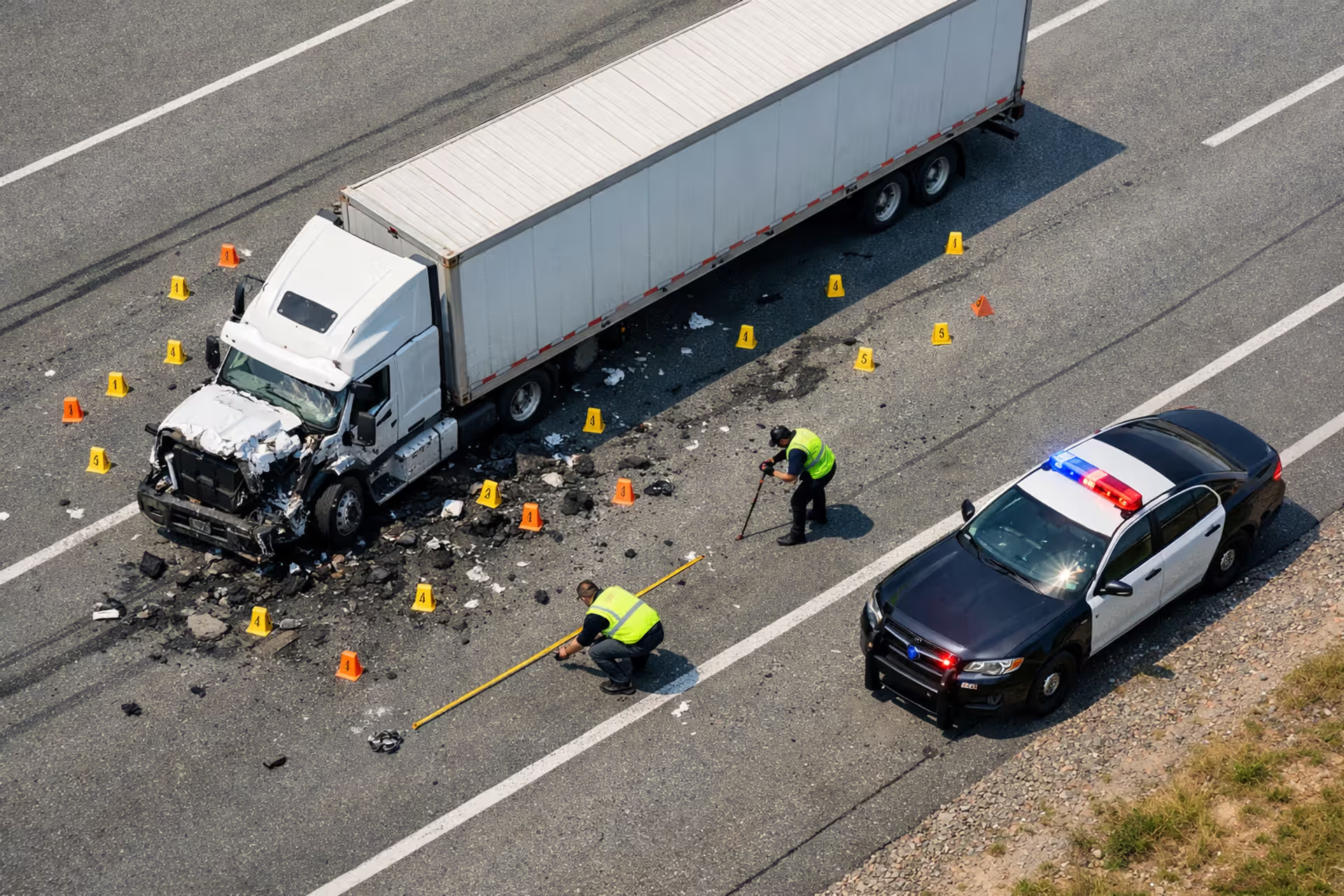
Aerial view of a semi-truck stopped on a highway shoulder at night with emergency lights and a police vehicle nearby
FMCSA Accident Reporting Requirements: What Trucking Companies Must Know

Content
Your trucks will crash eventually. Just statistics—enough miles on the road and something will happen. Maybe a four-wheeler cuts across three lanes without looking. Maybe black ice. Maybe your driver misjudges a turn radius in Chicago during rush hour.
The companies that keep their doors open after these incidents? They know exactly which crashes require federal reporting, which documentation matters, and which deadlines will destroy them if missed.
FMCSA reporting makes no intuitive sense. A fender-bender in a Walmart parking lot can become a federal case, while a dramatic-looking collision might fly completely under the radar. Everything hinges on injury severity, damage type, and medical care timing.
You're juggling drug tests, state paperwork, MCS-150 updates, and evidence preservation. Miss one piece and DOT auditors will find it. They always do.
When Does FMCSA Require Accident Reporting? (Threshold Criteria Explained)
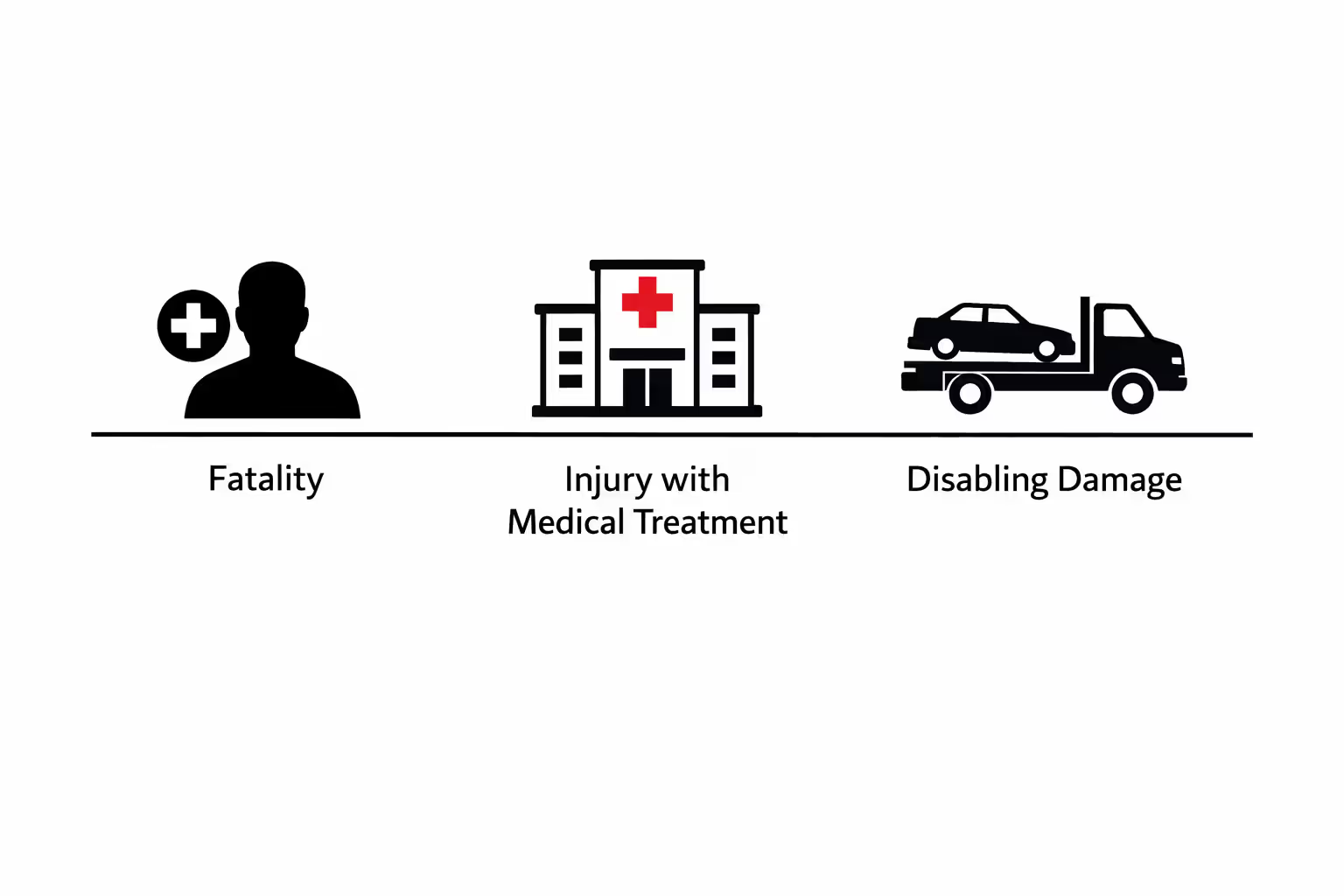
Three scenarios put crashes into your MCMIS record. Hit one threshold and the crash counts, regardless of fault.
Someone dies within 30 days. Scene fatalities obviously count. But here's what surprises people: that pedestrian your driver barely tapped who walked away talking on their phone? If complications from the collision kill them 23 days later, you've got a reportable fatality. The clock starts ticking from impact, not from when someone actually dies.
Wild scenario that catches people off-guard: your driver has a massive heart attack, loses consciousness, and the truck drifts into a barrier. He dies from the cardiac event. Still counts as reportable because death happened during a crash sequence, even though the medical emergency started everything.
Author: Rebecca Thornton;
Source: capeverde-vip.com
Someone gets hurt badly enough that doctors treat them right away at a medical facility. This threshold confuses everyone because you need specific conditions met: actual treatment performed by medical professionals, happening at a real medical facility, occurring soon after the crash.
Treatment means procedures performed by doctors or nurses at hospitals, urgent care facilities, or medical offices. Paramedics cleaning wounds at the roadside doesn't count, even when they're doing genuine medical work. Someone scrapes their arm, EMTs bandage it curbside, the person waves off the ambulance and goes home—threshold not met.
But that same person heads to urgent care six hours later because the scrapes won't stop bleeding and needs proper treatment? Now you've crossed into reportable territory. "Right away" means seeking treatment within a window that clearly connects to crash injuries. Visiting your regular doctor three days later probably doesn't qualify. Showing up at urgent care that same afternoon absolutely does.
The "away from the scene" piece has actual physical meaning. Paramedics treating someone inside an ambulance that's still parked at the collision location haven't moved them away yet. Once that ambulance rolls toward the hospital, you've satisfied the threshold. Treatment has to happen somewhere other than the actual crash site.
Damage so severe that towing becomes necessary. Your truck—or any vehicle in the crash—physically cannot drive away because of collision damage. We're not talking about convenience towing to clear traffic lanes faster. Actual mechanical inability to operate the vehicle.
Blown tire needs a tow, sure, but you could swap it roadside and keep moving. Not disabling. Destroyed axle, crushed frame, or engine damage that stops the truck cold? That's disabling. Quick test: could someone reasonably fix this problem at the roadside and drive away?
Critical detail here: this applies to every vehicle involved. Your truck took cosmetic damage and runs perfectly, but you T-boned a Honda that's now riding a flatbed because the front suspension is obliterated? Reportable crash because one vehicle sustained disabling damage and needed towing.
Step-by-Step: How to File an Accident Report with FMCSA
FMCSA doesn't run a crash reporting portal where you log in and upload incident details. Law enforcement reports qualifying crashes directly into federal databases. Those reports automatically populate your Motor Carrier Management Information System record.
Your actual reporting runs through state channels. Every state mandates crash reports when specific damage or injury thresholds get exceeded. You submit these to state police, highway patrol, or DMV following that state's process. Most states give you roughly 10 days, though timing varies wildly. The investigating officer's report feeds state databases, which sync with FMCSA systems.
You've got 30 days after any reportable crash to update your MCS-150 biennial filing. Log into the FMCSA portal and refresh your profile with current safety data. This doesn't technically "report" the crash to FMCSA—they already learned about it from cops—but your registration must stay current. Auditors cross-check whether your MCS-150 updates match your crash history. Gaps raise serious questions about your safety management.
Post-accident drug and alcohol testing operates on brutal timelines: 8 hours for alcohol, 32 hours for controlled substances. These windows start when you learn about the crash, not when it happened. Your driver gets hospitalized unconscious for 14 hours? Test them the moment medical staff allows it and document precisely why you couldn't hit the standard window. Missing these deadlines without bulletproof documentation counts as a testing refusal, which creates catastrophic consequences for both driver and carrier.
Maintain an internal accident register documenting every crash, reportable or otherwise. Include dates, locations, vehicles, injury descriptions, property damage estimates, citations, and your determination of whether FMCSA thresholds were met. This register becomes your primary defense during compliance reviews and preventability determination requests later.
The single greatest mistake I see carriers make is treating crash documentation as a reactive process. The best-run fleets have systems in place long before a truck leaves the yard—standardized forms, trained dispatchers, clear escalation protocols. When a crash happens, they execute a playbook instead of scrambling to figure out what’s required. That preparation is what separates carriers who survive audits from those who don’t.
— Robert Caldwell
State forms vary wildly. California wants Form SR-1 filed with DMV. Texas uses CR-2 and CR-3 forms submitted to TxDOT. Florida requires written reports sent to the Department of Highway Safety and Motor Vehicles for crashes involving injury, death, or property damage over $500. Learn the rules for states where you run regular routes, because mixing them up costs money and creates compliance gaps.
Federal Reporting Deadlines and State-Level Variations
FMCSA relies on state crash reports and police investigations to populate federal databases, creating a tangled web of deadlines spread across 50 jurisdictions. There's no direct "report to FMCSA by this date" requirement for the crash itself—states handle that data flow through law enforcement channels. But post-accident testing? Those deadlines come straight from federal regulations and they're absolutely rigid.
Alcohol testing must happen within 8 hours of learning about the crash. Controlled substance testing gets 32 hours. Can't complete testing in these windows because the driver's hospitalized, unconscious, or in police custody? Document exactly why and preserve that documentation forever. You'll need it during the next audit.
Every state runs its own reporting system with unique deadlines and thresholds:
| Jurisdiction | Reporting Window | Damage Threshold | Forms Required | Submission Method |
| Federal (FMCSA) | 30-day MCS-150 update | None—pulls data from states | MCS-150 biennial refresh | Online portal |
| California | 10 days | $1,000+ damage or any injury | Form SR-1 | Mail or DMV website |
| Texas | 10 days | $1,000+ damage / injury / fatality | Forms CR-2 and CR-3 | TxDOT online or mail |
| Florida | 10 days | $500+ damage / injury / fatality | Written crash report | Mail to FLHSMV |
| Pennsylvania | 5 days | Any injury / fatality / tow-away | Form AA-600 | PennDOT website or mail |
| Illinois | Immediate (must call police) | $1,500+ damage or any injury | Police crash report | Officer files it |
Late state filings cost $50 to $500 depending on location. The fine hurts less than the compliance gap it creates. Auditors see a reportable crash in your MCMIS record but can't find documentation proving you filed timely state reports? They flag it as procedural failure suggesting broader safety management breakdowns.
Some states impose tighter commercial vehicle deadlines versus private cars. Pennsylvania's 5-day commercial window versus 10 days for passenger vehicles surprises interstate carriers operating across multiple states. Illinois requires immediate police notification for commercial crashes even when damage looks minimal—you can't just exchange information and move on.
Beyond fines, late reporting complicates insurance claims, limits your ability to challenge fault, and creates negative inferences in litigation. DOT auditors interpret late reporting as evidence your safety culture needs work. They're not entirely wrong—companies that miss reporting deadlines usually have other compliance issues lurking.
Required Documentation for Commercial Vehicle Accidents
Strong crash documentation starts the second your truck stops moving and continues for months. The quality of initial evidence collection determines whether you can successfully challenge preventability or defend liability claims years later.
Driver statements and witness information: Get written statements from your driver before they leave the scene, while memory remains fresh and adrenaline hasn't worn off yet. Document their version of events, weather and road conditions, traffic patterns, actions by other vehicles. Collect complete contact information—names, phone numbers, physical addresses, email—from anyone who witnessed the collision. Third-party witness accounts carry substantially more weight than driver statements when FMCSA reviews preventability requests. Strangers who stopped to help have no reason to lie for you.
Police reports and crash scene evidence: Grab the investigating officer's report within 48 to 72 hours while details remain accurate. These reports include the officer's preliminary fault assessment, citations issued, statements from all parties, and initial cause determinations. Photograph everything from multiple angles: all vehicles showing damage patterns and final positions, skid marks or debris, road surface conditions, traffic signals or signs, sight distance obstructions, weather. Time-stamped photos taken immediately after the crash become invaluable evidence when challenging fault six months later. Crash scenes change fast—debris gets swept, vehicles get moved, weather clears up.
Vehicle inspection reports: Conduct detailed post-accident inspection documenting your commercial vehicle's mechanical condition before the crash happened. Were brakes functioning properly? Tires within legal limits? Lights operational? Steering components sound? Thorough post-accident inspection showing the truck was mechanically sound before impact supports your argument that equipment failure or poor maintenance didn't contribute to the collision.
Drug and alcohol testing records: Document every single step of post-accident testing with obsessive detail. Record when you learned about the crash, when the driver was removed from duty, when testing occurred, chain-of-custody procedures followed, test results received. Couldn't complete testing within required windows? Document specific reasons with supporting evidence. "Driver was intubated in ICU" works. "We didn't realize it was required" doesn't work. Ever.
Hours-of-service logs: Pull your driver's logs covering the seven days before the crash, not just the day it happened. Auditors examine whether fatigue played any role in the collision. Even if the driver had legal hours remaining at crash time, patterns matter significantly. Driving consistently during circadian low points (2 AM to 6 AM) or running maximum hours for multiple consecutive days raises fatigue management questions. ELD data showing vehicle speed, precise location, and driving time in the 15 minutes before impact becomes critical evidence in both preventability determinations and liability defense strategies.
Preserve all documentation at least three years, five years for crashes involving serious injury or fatality. Organize files chronologically by crash date with all related documents stored together in one place. Fumbling to locate crash documentation during DOT audits suggests inadequate safety management and encourages auditors to dig deeper into other operational areas they wouldn't otherwise scrutinize.

Author: Rebecca Thornton;
Source: capeverde-vip.com
Common Reporting Mistakes That Trigger FMCSA Violations
Carriers constantly misjudge what qualifies as reportable. Real scenario: your driver side-swipes a parked car's mirror, causing minor visible damage. Nobody injured at the scene. Truck continues to its destination. Three days later, the car owner claims neck soreness and visits a chiropractor. That chiropractic visit counts as medical treatment away from the scene, converting what seemed like a non-reportable parking lot incident into a federally reportable crash. When this crash appears in FMCSA records six weeks later and you have zero documentation, you've got serious compliance problems.
Another trap: assuming non-preventable crashes need less documentation effort. FMCSA records all qualifying crashes regardless of who caused them. Your ability to prove non-preventability rests entirely on documentation quality collected immediately after impact. Carriers who skip detailed evidence collection because "obviously the other driver ran the red light" discover months later they can't support their preventability request because they lack witness statements, traffic signal timing data, or dash camera footage showing what actually happened.
Incomplete documentation particularly affects smaller carriers without dedicated safety staff managing these processes. Driver submits a brief, two-sentence description of what happened. No photographs. No witness contacts. No detailed account of contributing factors like weather or visibility. When the carrier eventually requests a preventability determination, FMCSA reviewers see insufficient evidence to rule in the carrier's favor. The crash stays on the record as preventable by default, even when it clearly wasn't your driver's fault.
Late filings happen when carriers confuse different regulatory deadlines piled on top of each other. The 30-day MCS-150 update requirement differs from state crash report deadlines, which might be 5, 10, or 15 days depending on jurisdiction. Drug testing operates on hour-based windows, not day-based ones. Mixing up these distinct deadlines produces violations across multiple compliance areas simultaneously, turning one crash into a compliance nightmare.
Some carriers fail to maintain internal accident registers matching MCMIS data perfectly. Your company's safety records should reconcile with federal databases down to the last detail. Discrepancies—crashes showing in MCMIS but absent from your files, or crashes in your records that never appeared federally—signal poor safety record management to auditors. When auditors spot these inconsistencies, they expand their review into other compliance areas looking for additional problems.
Here's one that surprises people regularly: CDL holders involved in serious crashes during personal time in personal vehicles. Driver causes a fatal crash on their day off while driving their personal car. This doesn't get reported by your company, but it absolutely affects the driver's CDL record and your ability to continue employing them legally. State licensing agencies track these incidents, and they appear during annual driver record checks that federal regulations require you to conduct.

Author: Rebecca Thornton;
Source: capeverde-vip.com
How Accident Reports Affect Your CSA Scores and DOT Audits
Every reportable accident adds points to your Crash Indicator BASIC score. The FMCSA Safety Measurement System weighs crashes by severity and recency, with newer crashes hitting your score harder than older ones that happened years ago.
Fatal crashes add substantially more points than property-damage-only crashes. The system applies time-based weighting that decays gradually: crashes in the most recent six months get multiplied by 3, months 7 through 12 get doubled, months 13 through 24 count at face value. Crashes older than 24 months drop from your BASIC calculations but remain in your permanent MCMIS record forever, visible to anyone who looks.
Elevated Crash Indicator BASIC percentiles trigger escalating interventions from FMCSA. Cross the 65th percentile and warning letters arrive in your mailbox. Exceed the 80th percentile and you're looking at compliance reviews or targeted roadside inspection campaigns where your trucks get pulled over repeatedly. Carriers hauling hazardous materials or passengers face lower thresholds—interventions start at the 50th and 60th percentiles instead.
The preventability determination process offers relief from inflated scores, but FMCSA doesn't automatically review crashes for you. You must submit requests through the DataQs system, ideally within the first 90 days after the crash appears in MCMIS. Late requests sometimes get accepted when you have good reasons for the delay, but prompt filing works strongly in your favor.
Success requires clear evidence showing your driver took all reasonable actions to avoid the crash. Collisions caused by wrong-way drivers, vehicles running red lights, or other drivers suffering medical emergencies typically get deemed non-preventable. Crashes where your driver theoretically could have taken evasive action—even when the other driver was primarily at fault—may be judged preventable under FMCSA's standards.
Preventability is not the same as fault—and that distinction costs carriers millions every year. A crash can be entirely the other driver’s fault and still be ruled preventable if FMCSA determines your driver had the opportunity to take defensive action. The only way to fight that determination is with evidence collected in the first hours after impact, not weeks later
— Diana Forsythe
Non-preventable determinations remove crashes from BASIC calculations without erasing them from your record entirely. The crash remains visible in MCMIS with a "not preventable" notation attached permanently. This distinction matters when insurance companies underwrite your policy and when customers vet potential carriers before offering contracts—both review full crash history, not just what counts toward CSA scores.
Long-term consequences extend past CSA scores into business operations. Crashes influence your SMS rating, which customers and freight brokers examine before offering contracts to your company. A carrier with several recent crashes, even non-preventable ones, appears riskier than a competitor with a clean record spanning years. Insurance premiums reflect both crash frequency and severity dramatically. Some insurers refuse coverage entirely after multiple serious crashes regardless of fault determinations or preventability findings.
DOT compliance reviews triggered by high crash rates examine every aspect of your safety program comprehensively, not just crash-related documentation. Auditors review driver qualification files, maintenance documentation, hours-of-service compliance, drug testing program administration across your entire operation. A single crash might prompt the initial audit, but deficiencies discovered in other areas produce additional violations piled on top. Carriers receiving conditional or unsatisfactory ratings face operating restrictions or shutdown orders that can destroy your business overnight.
The Crash Indicator BASIC also influences how FMCSA prioritizes enforcement interventions across thousands of carriers. Carriers showing multiple violations across several BASIC categories combined with high crash rates receive priority attention from enforcement staff. The agency's algorithms assume crashes indicate deeper safety culture issues brewing, making your entire operation a target for increased scrutiny everywhere your trucks operate.
FAQ: FMCSA Crash Reporting Requirements
FMCSA accident reporting creates a permanent record following your company through every customer negotiation, insurance renewal, and DOT audit for years into the future. Companies that maintain their operating authority and competitive insurance rates treat crash documentation as a core safety function rather than an administrative burden that safety managers handle when they get around to it.
Build reporting protocols before crashes happen, not after. Equip every driver with accident packets containing blank witness information forms, step-by-step camera instructions with photos showing proper angles, and detailed reporting procedures written in plain language. Train dispatchers on testing deadlines and documentation requirements so they can guide drivers through the immediate post-crash process while stress levels are high and memories are fresh but drivers are rattled.
Review your MCMIS record every quarter through the SMS website, not just when audits loom. Catching errors early, when evidence remains fresh and witnesses are still reachable at the same phone numbers, dramatically improves your chances of successful DataQs challenges reversing bad information. Submit preventability requests promptly with comprehensive evidence packages including photos, witness statements, and police reports. Monitor reporting deadlines for every jurisdiction where you operate and build automated calendar reminders into your compliance management system so nothing falls through cracks.
The difference between a crash that temporarily affects your CSA scores and one that permanently damages your safety rating comes down to documentation quality and procedural precision executed immediately after impact. Treat every reportable crash as if you'll eventually need to defend it during a compliance review—because sooner or later, you absolutely will.