White semi-truck with trailer driving on a multi-lane highway in clear weather with road markings visible
Truck Driver Training Requirements: Federal Standards and Employer Compliance Obligations

Content
Getting behind the wheel of an 80,000-pound tractor-trailer isn't something you can learn over a weekend. Federal law now dictates exactly what aspiring commercial drivers must master before they're allowed to transport freight on public highways—and those requirements changed dramatically in 2022. But here's what catches most fleet managers off guard: the CDL itself represents just the starting line. Trucking companies face continuous obligations to train, document, and verify driver competency throughout employment. Miss these requirements, and you're looking at DOT violations, insurance headaches, and potentially devastating liability when crashes happen.
Federal Entry-Level Driver Training (ELDT) Requirements for CDL Applicants
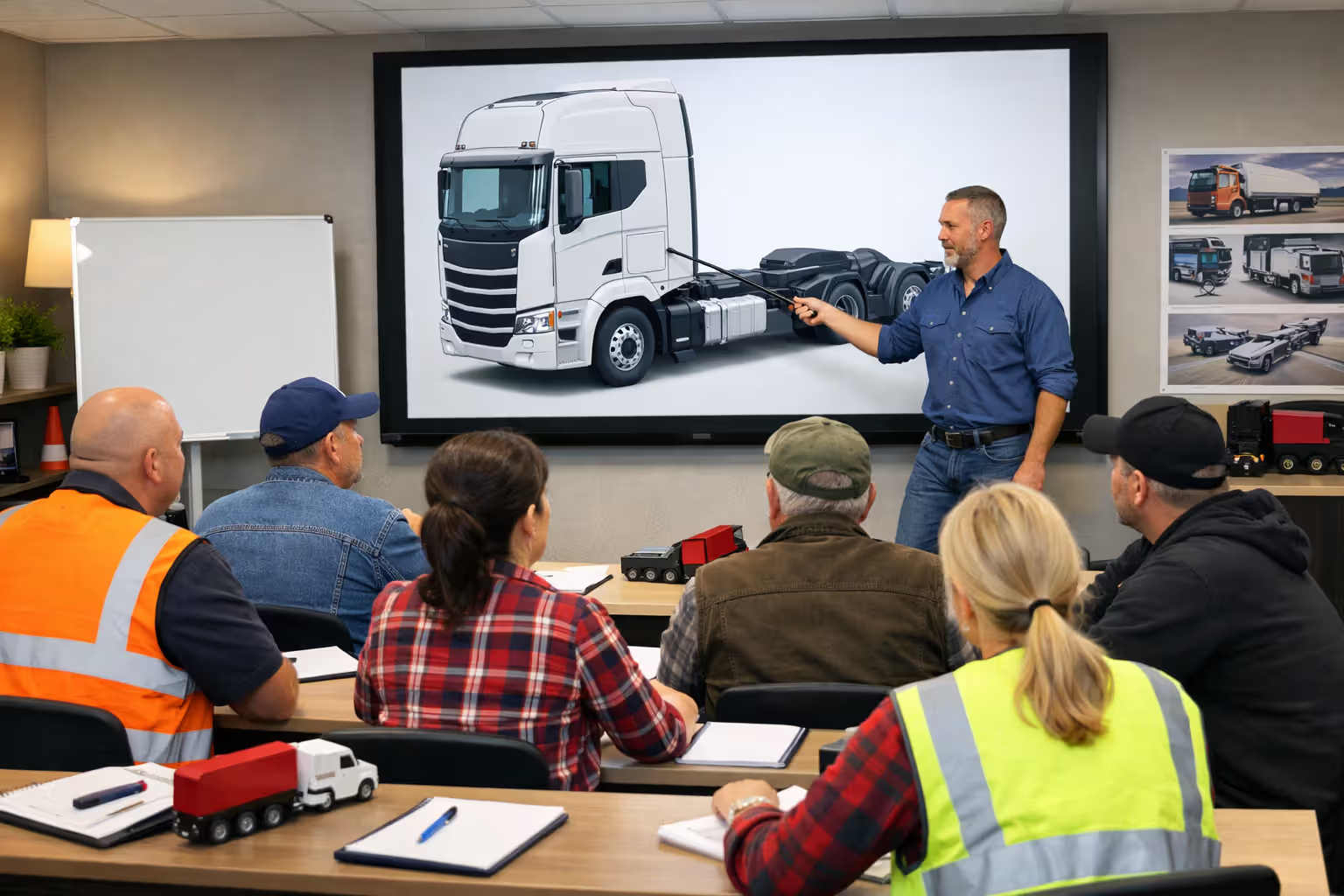
February 7, 2022 marked a turning point for commercial driver preparation. That's when FMCSA's Entry-Level Driver Training mandate took full effect, fundamentally changing who can teach new drivers and what they must learn.
Here's who the rule affects: first-time CDL applicants seeking Class A or B licenses, anyone upgrading between license classes, and drivers adding hazmat, passenger, or school bus endorsements to existing credentials. All must complete coursework through an FMCSA-approved provider that appears on the Training Provider Registry. No exceptions.
The curriculum splits into two components. Theory portions address vehicle controls, shifting techniques, backing fundamentals, how drivers should scan their environment, federal hours-of-service regulations, proper cargo securement methods, and spotting road hazards before they become emergencies. Behind-the-wheel segments start on closed ranges where students practice straight-line backing, offset backing, alley dock positioning, and parallel parking. Then instruction moves to public roads where students navigate actual traffic, highway merges, urban intersections, and changing weather conditions.
What surprises many people: FMCSA deliberately avoided setting minimum hour requirements for most license categories. Instead, the regulation demands "proficiency-based" training—students keep practicing until they can consistently demonstrate every required skill. That flexibility means training duration varies wildly.
The best safety program is one where training never stops. A CDL gets a driver on the road, but it’s the carrier’s commitment to continuous education, mentorship, and skill verification that keeps everyone on the road alive. Compliance is the floor — excellence is the standard.
— Ray Martinez
Most reputable Class A programs run 160 to 240 hours combining classroom and road time. Class B instruction typically spans 80 to 120 hours. But a student who picks up skills quickly might finish sooner, while someone struggling with double-clutching or lane positioning needs additional practice.
Training providers face their own requirements. Instructors must meet specific qualification standards. Schools maintain detailed lesson plans matching federal curriculum mandates. Records stay on file for three years. State licensing agencies audit providers periodically, and schools failing compliance checks get removed from the registry—which immediately disqualifies their graduates from testing.
Author: Marcus Delaney;
Source: capeverde-vip.com
One detail trips up experienced drivers switching companies: the ELDT rule only applies to credentials issued after February 7, 2022. Hold a valid CDL or even just a learner's permit before that date? You're grandfathered. Renewals and upgrades don't trigger the training requirement, though you'll still face knowledge and skills testing.
After finishing coursework, the training provider enters a completion certificate into the TPR database. Only then can applicants schedule their state CDL skills examination. No TPR certificate, no test appointment.
| CDL Class | Theory Hours Required | Behind-the-Wheel Hours | Range Training | Public Road Training | Typical Career Paths |
| Class A | Proficiency-based (programs average 40–80) | Proficiency-based (programs average 80–160) | Coupling procedures, uncoupling sequences, various backing scenarios, thorough pre-trip walkarounds | Interstate highway merging, dense urban traffic, adverse weather exposure | Over-the-road tractor-trailers, liquid tankers, flatbed hauling, long-distance operations |
| Class B | Proficiency-based (programs average 20–40) | Proficiency-based (programs average 40–80) | Straight-truck backing patterns, comprehensive pre-trip checks | Regional delivery routes, mixed traffic environments | Dump trucks, box delivery vehicles, transit buses, heavy-duty tow trucks |
| Class C | Proficiency-based (programs average 10–20) | Proficiency-based (programs average 20–40) | Vehicle-specific maneuvering | Passenger transport scenarios, hazmat-specific routing | Passenger vans carrying 16+ occupants, hazmat delivery operations |
Ongoing Training Mandates Trucking Companies Must Implement
That shiny new CDL doesn't mean training stops. Not even close. Federal regulations (specifically Part 391) place responsibility squarely on motor carriers to verify drivers possess the skills and knowledge needed for their specific operations before letting them haul freight.
Consider what changes between driving schools and real-world trucking. Training programs use standard equipment in controlled settings. Your fleet might operate specialized trailers, serve unique customers with particular delivery requirements, run electronic logging devices the driver's never seen, or deploy collision avoidance technology that needs explanation. A driver transitioning from dry van work to refrigerated freight needs instruction about temperature monitoring protocols, proper pre-cooling procedures, and preventing cross-contamination between food loads. Someone moving from day cabs to sleeper berths should learn about proper berth usage, managing idle time during rest periods, and planning extended trips efficiently.
Safety program implementation means creating documented, recurring training that reinforces essential skills while introducing regulatory changes and emerging risks. Many carriers run monthly safety meetings, though federal rules don't mandate any particular schedule. What matters? Demonstrating continuous safety emphasis, not satisfying an annual checkbox.

Author: Marcus Delaney;
Source: capeverde-vip.com
Annual Safety Training Documentation Requirements
Every training session needs documentation capturing the date, specific topics addressed, who provided instruction, and which drivers attended. Generic sign-in sheets labeled "safety meeting" won't cut it during audits or litigation. Effective records specify exact content: "following distance calculations and space cushion management," "winter weather hazard recognition," or "June 2024 hours-of-service regulation amendments."
Attendance rosters prove presence, not comprehension. Smart carriers incorporate knowledge verification—brief quizzes, scenario-based discussions, or hands-on demonstrations—and file those results in driver qualification folders. When plaintiff attorneys come calling after crashes, they scrutinize whether your training involved genuine learning or just collecting signatures.
Vehicle-Specific and Technology Training Obligations
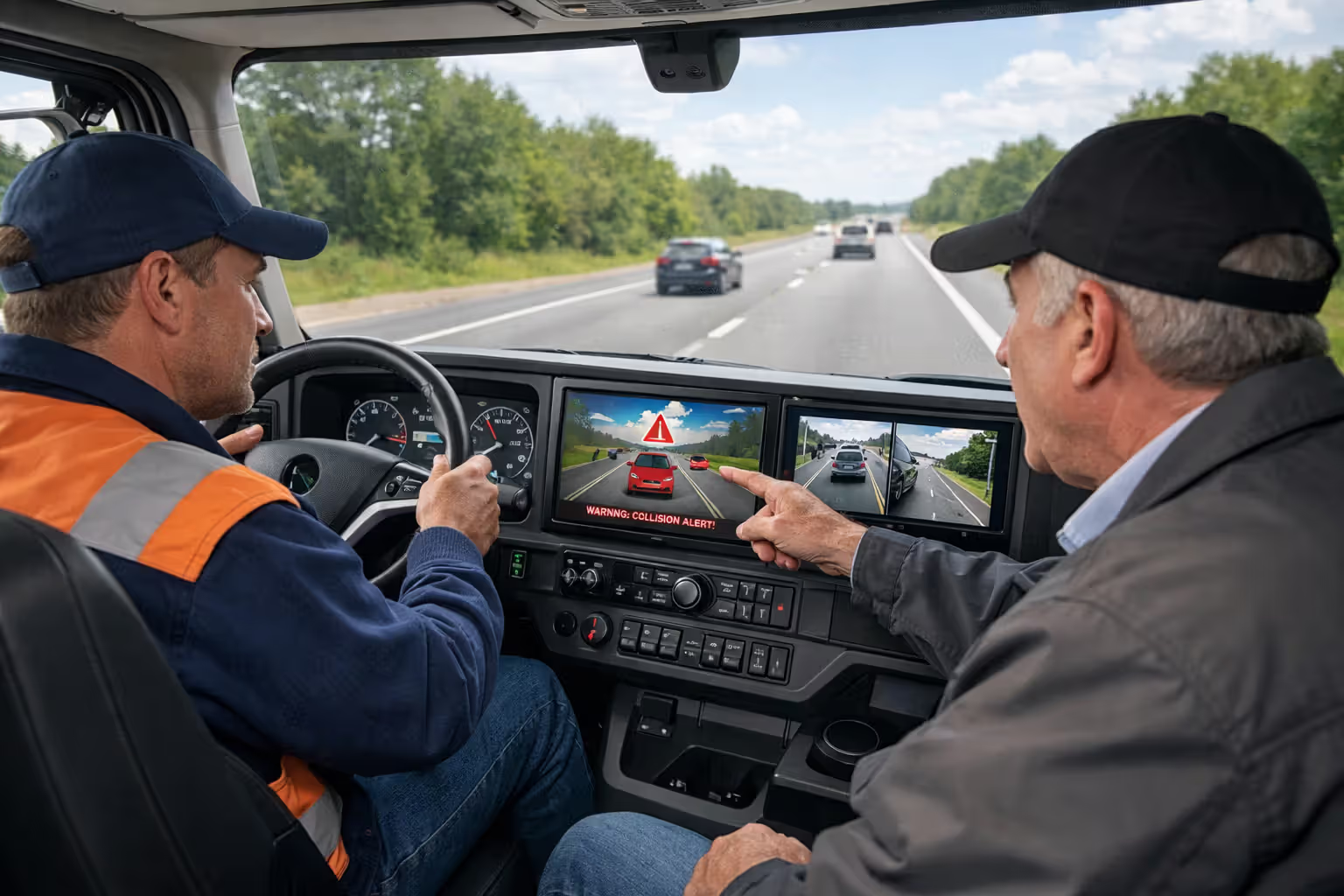
Collision mitigation systems, lane departure alerts, automatic emergency braking, and adaptive cruise control only protect drivers who understand how they function. Assigning someone to a truck equipped with advanced safety tech without explanation creates crash risk and negligence exposure simultaneously. Proper training covers system capabilities, inherent limitations, warning signal meanings, and the driver's monitoring responsibilities.
Specialized equipment demands goes beyond general CDL competencies. A driver who's proficient pulling 53-foot dry vans might struggle with a lowboy's off-tracking characteristics, a pneumatic tanker's discharge procedures, or a car hauler's load distribution requirements. Skills don't automatically transfer between equipment types.
Driver Qualification File Requirements and Enforcement Penalties
Federal law requires motor carriers to maintain specific documents for every driver. These driver qualification files must contain: the employment application, driving records from every state where the person held licenses during the preceding three years, road test certificates or acceptable equivalents, annual driving record reviews, yearly MVR updates, current medical examiner certificates, and any variance or exemption documentation.
Carriers must either conduct their own road test demonstrating the driver can safely operate your vehicle types, or accept equivalent documentation. Many companies treat a current CDL plus recent tractor-trailer experience as meeting this requirement, either completing their own road test certificate or accepting one from the driver's previous employer issued within the past three years.
Annual reviews require examining each driver's safety performance—crashes, traffic citations, vehicle inspection results, and policy compliance. The reviewing official (usually a safety director or operations manager) signs and dates the evaluation. The driver signs acknowledging they've reviewed it.
Roadside inspections increasingly include DQ file spot-checks. Inspectors may request medical certificates, hazmat endorsement proof, or ELDT completion verification. Missing documents trigger violations that damage your Safety Measurement System scores, increasing audit probability and potentially spiking insurance premiums.
FMCSA compliance reviews examine DQ files exhaustively. Investigators hunt for missing paperwork, expired medical cards, unsigned annual reviews, and unexplained employment gaps. Each deficient file generates a separate violation. A carrier operating 50 trucks with 30% file deficiency rates faces 15 violations before auditors examine vehicle maintenance, hours-of-service, or drug testing compliance.

Author: Marcus Delaney;
Source: capeverde-vip.com
The DataQs system lets carriers challenge inspection and crash reports containing errors, but it doesn't excuse documentation gaps. You must correct deficiencies immediately and implement systems preventing recurrence.
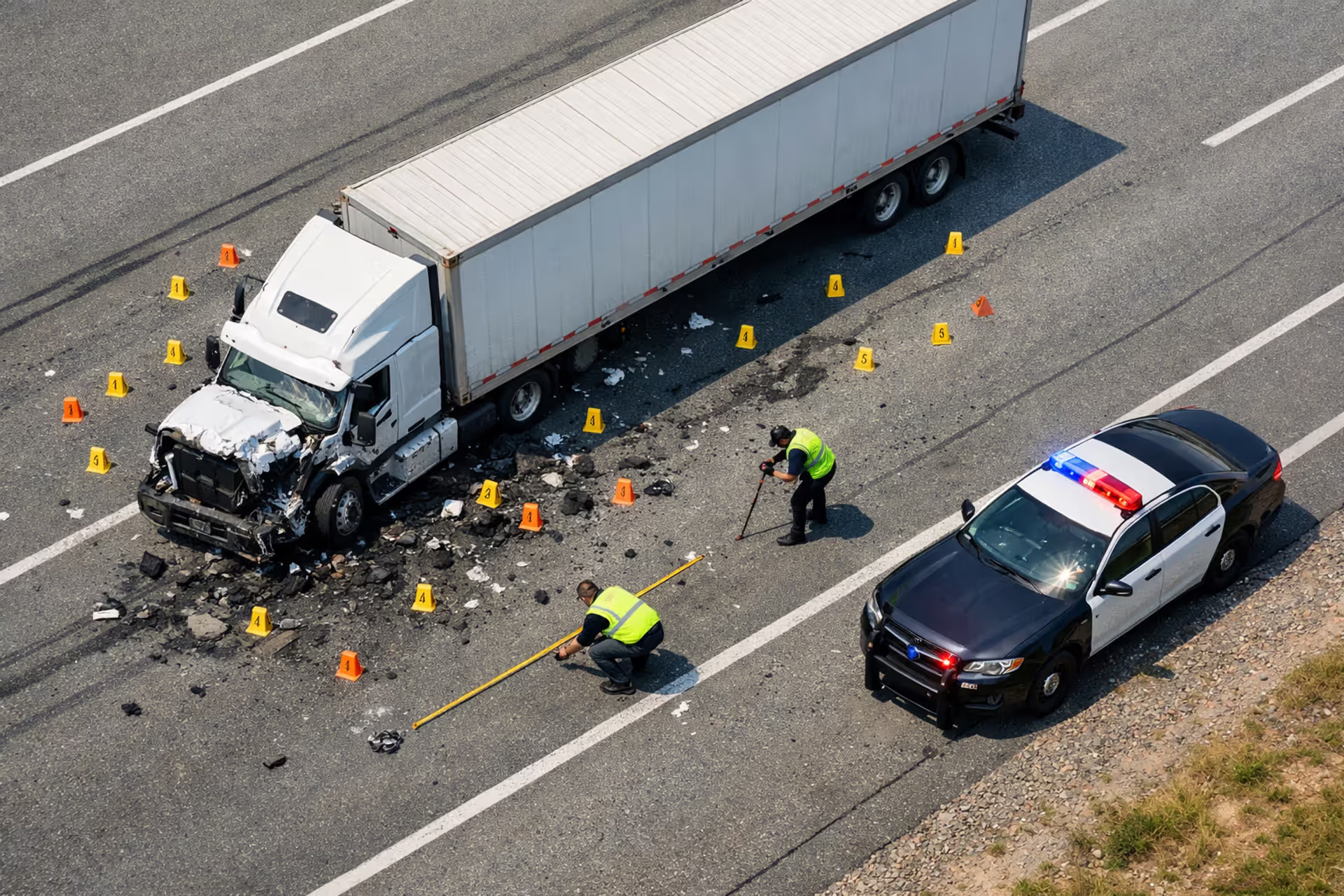
How Training Deficiencies Create Legal Liability in Accident Claims
Commercial vehicle crashes trigger immediate discovery requests from plaintiff attorneys. They want personnel files, training documentation, and driver qualification folders before the paint dries. Documentation gaps suggest negligent hiring, retention, or supervision—claims that can expose trucking companies to punitive damages far exceeding standard negligence awards.
Picture a rollover crash involving a driver who never received cargo securement or load distribution training. Or a pedestrian struck in a blind-spot zone by a driver whose file contains zero mirror-adjustment or blind-spot awareness documentation. The legal question shifts from whether the driver made a mistake to whether your company adequately prepared them for that specific scenario.
"Training records are the first thing we examine in trucking litigation," explains Michael Leizerman, a transportation attorney with 25 years of experience representing crash victims. "A company that can produce detailed, individualized training documentation demonstrating they prepared the driver for the specific circumstances of the crash is in a far stronger position than one with generic sign-in sheets or nothing at all."
Negligent training claims argue your company knew or should have recognized the driver lacked necessary abilities and failed to provide appropriate instruction. If a driver's previous employer noted backing difficulties in their reference check, and you assigned them to tight urban delivery routes without additional training, that decision becomes Exhibit A demonstrating recklessness.
Settlement negotiations often hinge on safety program strength. Defense attorneys armed with comprehensive training documentation can argue your company acted responsibly even though the driver erred. Sparse or missing records force higher settlement offers because corporate negligence becomes nearly indefensible at trial.
Accident prevention legal duties extend beyond initial hiring decisions. A driver involved in multiple preventable crashes who receives no remedial training demonstrates your company's indifference to public safety—the exact element juries need to award punitive damages.
Building a Defensible Safety Program: Documentation Best Practices
Paper trails protect carriers when enforcement actions or lawsuits arrive. Every training event should generate documentation containing the date, duration, instructor identity, detailed topic outline, materials distributed, attendee names, and assessment results. Store records where you can retrieve them instantly—auditors expect files produced within minutes, not days.
Training logs need sufficient detail that outsiders understand what actually happened. "Defensive driving" tells me nothing. "Following distance calculation methods, hazard recognition exercises, emergency braking procedures" paints a clear picture. Include titles of videos shown, copies of handouts distributed, or descriptions of scenarios discussed.
Attendance records should align with payroll data. If a driver was running a dedicated route during your mandatory safety meeting, document the makeup training session. Signatures confirm bodies in seats but not engagement—consider adding brief quizzes or requiring drivers to submit one question about the material covered.
Documentation isn’t bureaucracy — it’s your shield. In thirty years of defending motor carriers, I’ve watched cases worth millions turn on whether a company could prove it trained a driver on the exact skill that failed in the crash. The carriers who document everything settle for less or win outright.
— Henry Seaton
Competency assessments provide objective proof that training accomplished its goal. After rolling out new ELD systems, have drivers demonstrate logging in, recording duty status changes, and handling malfunctions while a supervisor watches and documents proficiency. Behind-the-wheel evaluations should happen periodically throughout employment, not just at hiring, especially following crashes or near-misses.
Policy acknowledgments create records that drivers received and understood company rules. When updating your safety manual, require signed acknowledgment of each modification. Generic statements—"I received the handbook"—lack the power of specific ones: "I understand the company prohibits handheld device use while operating and the consequences for violations including termination."
| Document Type | Retention Period | Regulatory Authority | Audit Priority Level |
| Driver qualification files | Three years following driver separation | 49 CFR 391.51 | Critical—inspectors check first |
| Training attendance rosters | Three years minimum (recommended: employment duration plus three years) | Litigation defense strategy | High—proves safety commitment |
| Road test certifications | Three years after driver separation | 49 CFR 391.51 | Critical—frequently missing |
| Medical examiner certifications | Three years post-expiration | 49 CFR 391.51 | Critical—common violation |
| Annual driving record evaluations | Three years following driver separation | 49 CFR 391.51 | Critical—required annually |
| Safety meeting documentation | Three years minimum (recommended: five years) | Litigation defense strategy | High—demonstrates ongoing emphasis |
| Competency evaluation records | Employment duration plus three years | Litigation defense strategy | Medium—shows genuine verification |
| Policy acknowledgment forms | Employment duration plus three years | Litigation defense strategy | Medium—proves notice |
Retention schedules must account for both regulatory minimums and litigation defense realities. While FMCSA mandates three-year retention for most DQ file components, lawsuits can be filed years after incidents occur. Many carriers keep training records five to seven years or longer.
Audit-ready systems enable rapid retrieval. Whether you're using paper files, digital scanning, or fleet management software, your safety director should produce any driver's complete training history within fifteen minutes. Organize files identically across all drivers so inspectors and attorneys find what they need without hunting.
Common Compliance Mistakes That Trigger DOT Violations
Expired medical certificates top the list of DQ file violations inspectors discover. Drivers must maintain valid medical cards, and carriers must obtain copies before allowing operation. Some companies rely on drivers to provide updated certificates, but federal regulations place that burden on the carrier. Implement reminder systems flagging expiring certifications 30 days out.
Inadequate behind-the-wheel verification happens when carriers treat a CDL as proof someone can operate their specific equipment. A driver might hold a Class A license but have minimal experience with manual transmissions, mountain grades, or the particular trailer configurations your fleet runs. Road tests or equivalent documentation must reflect actual vehicle types you operate.
Missing safety meeting records create both enforcement exposure and litigation vulnerability. Carriers sometimes conduct informal coaching sessions or one-on-one conversations without documenting what occurred. If it's not written down with dates and signatures, it didn't happen—at least not according to auditors or juries.
Failure to train on new equipment happens more often than it should. A carrier purchases trucks equipped with collision mitigation systems but assumes drivers will figure them out independently. Drivers disable unfamiliar systems or ignore warnings they don't understand, defeating the safety purpose and creating massive liability if crashes occur.
Author: Marcus Delaney;
Source: capeverde-vip.com
Inadequate hazmat training affects drivers holding tank endorsements who transport reportable quantities of hazardous materials. Beyond the CDL endorsement test, carriers must provide function-specific training covering loading procedures, securement requirements, proper placarding, and emergency response protocols every three years. Training certificates must be retained and available during inspections.
Another frequent mistake: failing to verify ELDT completion for drivers hired after February 2022 who obtained CDLs post-deadline. The TPR system lets employers confirm drivers completed required coursework, but carriers must actually check. Hiring someone claiming to have a CDL who never completed ELDT creates regulatory violations and potential civil liability if they were inadequately trained.
Driver qualification enforcement intensifies when patterns emerge during audits. A carrier with numerous expired medical certificates, missing annual reviews, or absent training records signals systemic disregard for safety. Enforcement officials escalate penalties and may pursue operating authority suspension or revocation in severe cases.
Frequently Asked Questions About Driver Training Compliance
Meeting truck driver training requirements protects public safety, satisfies regulatory mandates, and builds legal defenses when crashes inevitably occur. The ELDT rule establishes baseline entry standards, but motor carriers shoulder ongoing responsibility for developing and maintaining driver competency throughout their employment tenure. Comprehensive documentation of every training event—from initial orientation through annual refreshers and equipment-specific instruction—creates the evidence you'll need demonstrating responsible safety practices during audits and litigation.
Carriers treating training as merely a regulatory checkbox miss opportunities to reduce crashes, lower insurance expenses, and improve driver retention rates. Those building robust safety programs with individualized instruction, meaningful assessments, and thorough recordkeeping gain competitive advantages while minimizing enforcement and legal risks. The investment in proper training and documentation delivers returns when DOT investigators or plaintiff attorneys scrutinize your safety practices under a microscope.