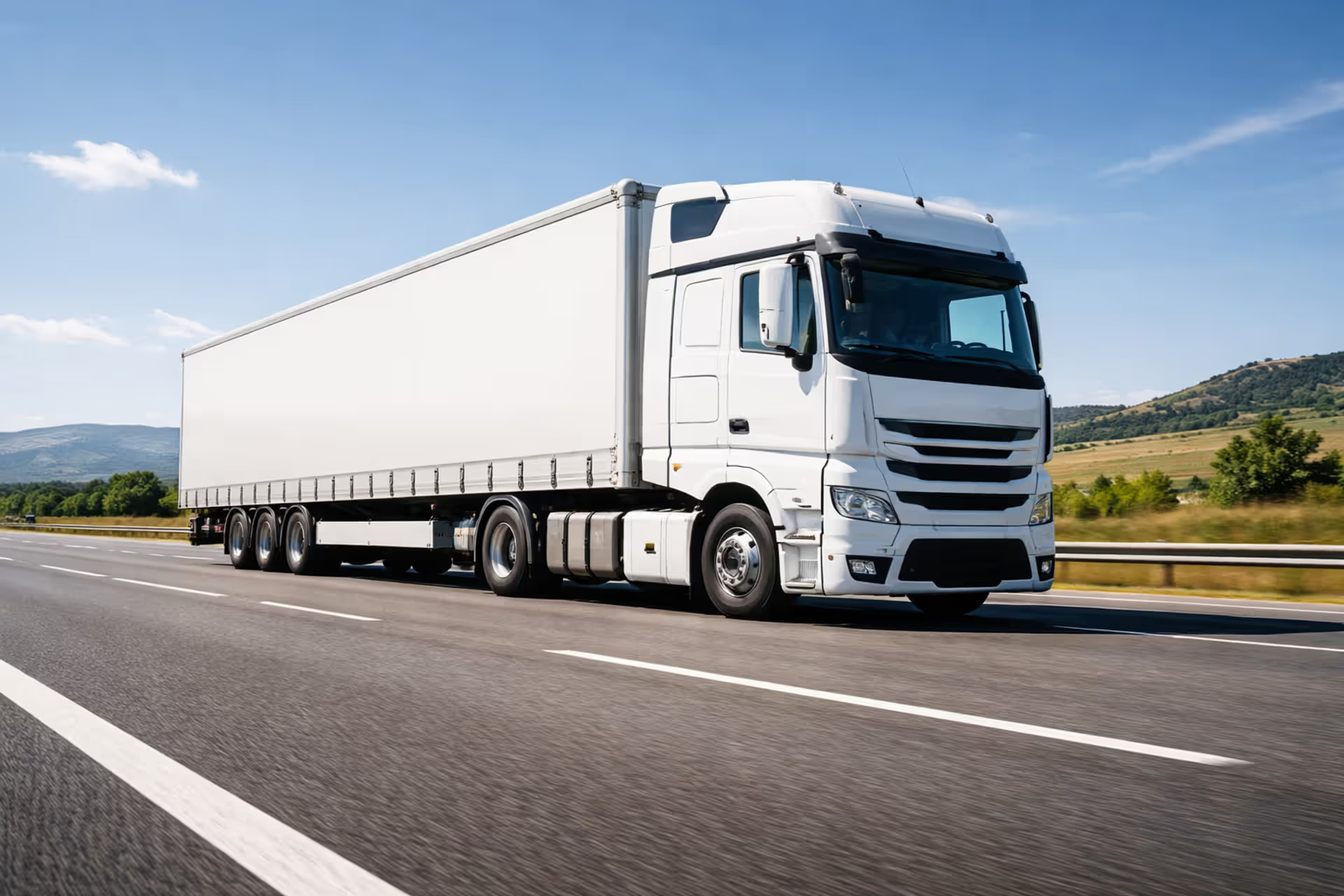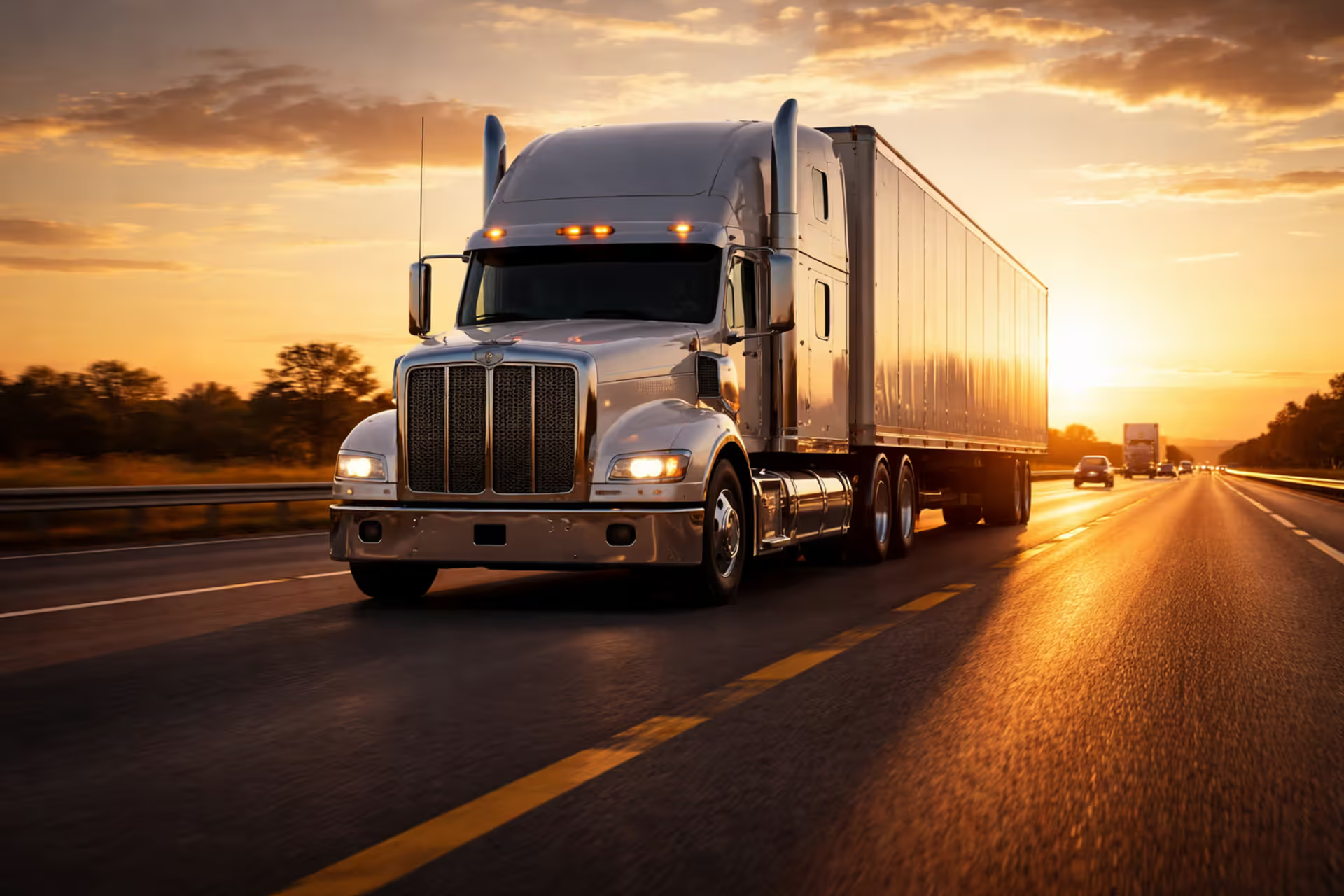
Large 18-wheeler semi-truck driving on a wide highway at sunset with golden light and long shadows on the road
What Happens When a Truck Driver Causes an Accident: Liability, Claims, and Your Legal Options

Content
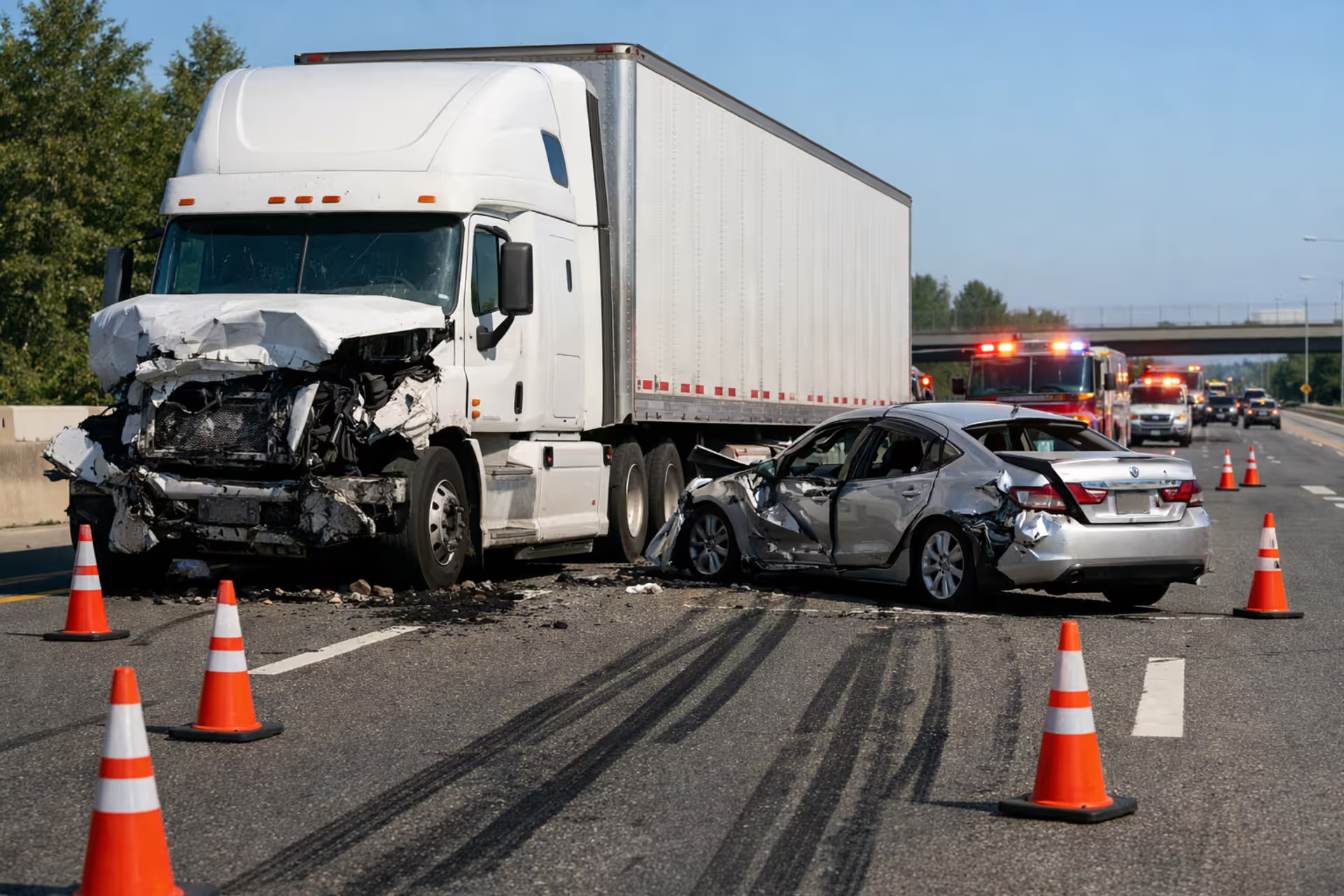
When an 80,000-pound commercial truck collides with a passenger vehicle, the consequences extend far beyond the typical fender-bender. The aftermath involves multiple insurance carriers, federal regulations, corporate legal teams, and compensation amounts that can reach into the millions. Understanding how fault gets established, who bears responsibility, and what your claim is actually worth makes the difference between a fair settlement and leaving money—and justice—on the table.
How Fault Is Determined After a Truck Driver Accident
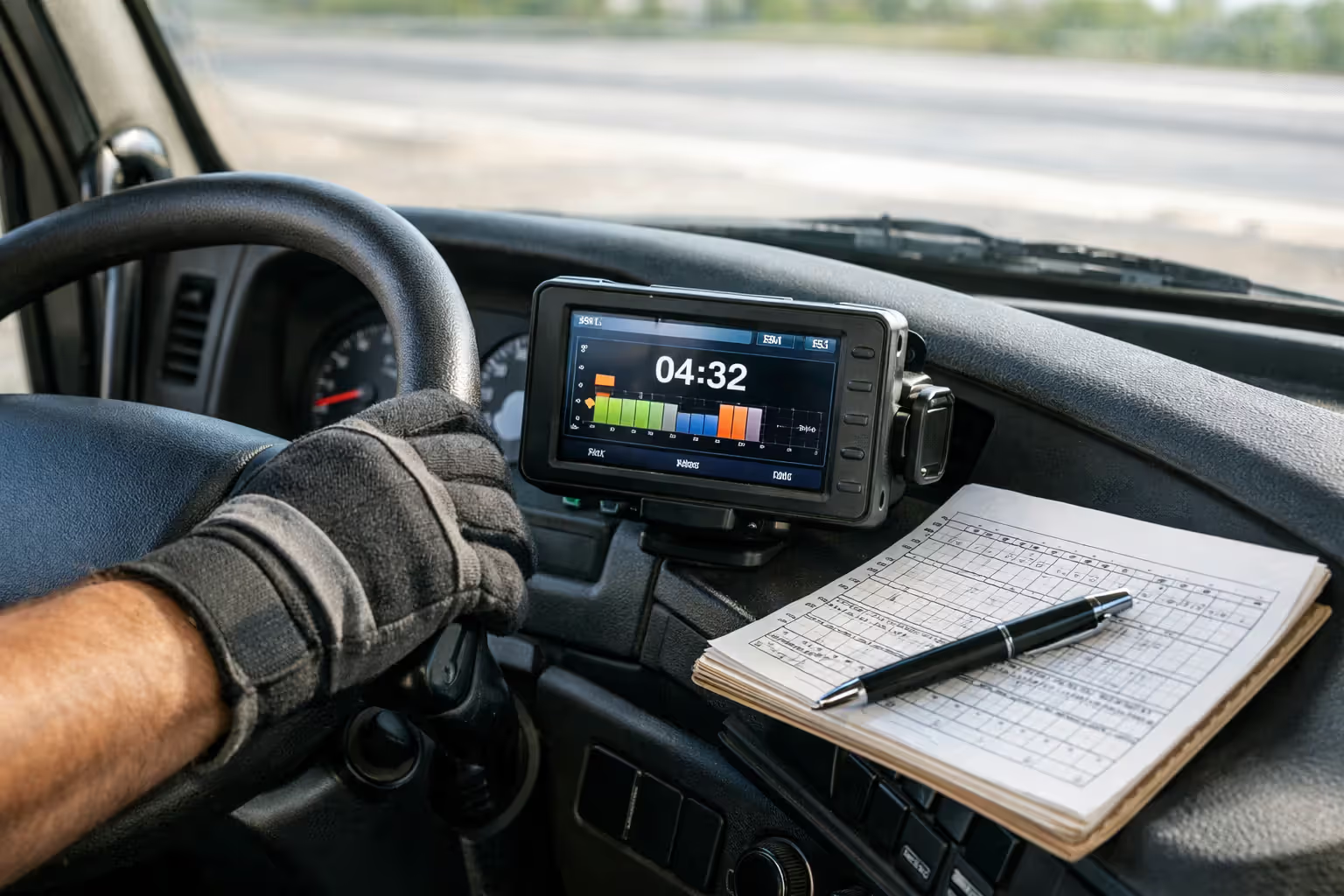
Establishing liability in commercial trucking collisions requires more than a police officer's opinion at the scene. Investigators dig into electronic logging devices (ELDs), maintenance records, driver qualification files, and hours-of-service logs to build a complete picture of what went wrong.
The truck's electronic control module—often called the "black box"—records critical data: speed, brake application, engine RPM, and sudden decelerations. This data doesn't lie. A driver might claim he braked hard to avoid a collision, but the ECM will show whether his foot actually touched the pedal and when.
Hours-of-service logs reveal whether the driver exceeded the 11-hour driving limit or failed to take mandatory rest breaks. Fatigue-related crashes often show a pattern: a driver who logged 10.5 hours, took a suspiciously short break, then drove another full shift before the collision. Pre-trip inspection reports matter too—if a driver signed off on brakes he never actually checked, that negligence becomes documented evidence.
Common Violations That Establish Driver Liability
Certain violations immediately shift fault to the truck driver. Speeding citations, following too closely, improper lane changes, and distracted driving top the list. But commercial drivers face additional scrutiny under federal law.
Driving under the influence carries a lower threshold for commercial operators: a 0.04% blood alcohol content versus 0.08% for regular drivers. Texting while driving violates FMCSR regulations explicitly. Even hands-free phone use becomes problematic if records show a driver was on a call during the collision.
Logbook falsification—recording rest periods that never happened—demonstrates willful disregard for safety rules. Some drivers still maintain paper logs alongside electronic systems, creating discrepancies that reveal deliberate violations. When investigators find two sets of books, liability becomes nearly indefensible.
Role of Federal Motor Carrier Safety Regulations (FMCSR)
The FMCSR establishes baseline safety standards that every commercial driver and trucking company must follow. Violations of these regulations create what attorneys call "negligence per se"—breaking the rule proves negligence automatically.
Part 395 governs hours of service, limiting drivers to 60 hours over seven consecutive days. Part 392 covers driver behavior, prohibiting texting, requiring seatbelt use, and banning alcohol consumption within four hours of driving. Part 396 mandates vehicle maintenance schedules and inspection requirements.
When a truck driver causes an accident while violating any FMCSR provision, that violation becomes powerful evidence. Defense attorneys can't argue the driver exercised reasonable care if he broke federal safety laws designed specifically to prevent that type of crash.
Author: Marcus Delaney;
Source: capeverde-vip.com
Who Can Be Held Liable Beyond the Truck Driver
The driver's actions matter, but commercial trucking creates a web of liability that extends to multiple parties. Deep-pocket defendants often carry the insurance coverage that makes full compensation possible.
Trucking companies face vicarious liability for employee drivers under the doctrine of "respondeat superior"—the employer answers for the employee's negligence during work duties. But liability extends further when companies negligently hire drivers with poor safety records, fail to provide adequate training, or pressure drivers to meet unrealistic delivery schedules that force hours-of-service violations.
Maintenance contractors bear responsibility when brake failures, tire blowouts, or steering malfunctions cause collisions. If a third-party shop performed recent repairs and those repairs failed, that company enters the liability chain. Truck manufacturers face claims when design defects or manufacturing flaws contribute to crashes—defective braking systems, faulty hitches, or inadequate mirrors.
Companies that load freight onto trailers may become defendants when cargo shifts unexpectedly because of improper securement methods, creating hazardous driving conditions that even experienced operators cannot safely manage. Picture a flatbed hauling steel coils—if those aren't strapped and blocked correctly according to Department of Transportation standards, a sudden lane change can send thousands of pounds sliding sideways, jackknifing the entire rig.
Leasing companies that own the truck but lease it to an operator sometimes try to dodge responsibility. However, federal regulations require lessors to maintain insurance coverage, and courts increasingly hold them accountable for maintenance failures.
The trucking industry’s safety record will only improve when we hold every link in the chain accountable—not just the driver behind the wheel, but the company that hired him, the mechanic who signed off on faulty brakes, and the dispatcher who demanded he keep driving. Accountability is not punishment; it is prevention
— Ray LaHood
Types of Compensation Available in Truck Driver Accident Cases
Commercial truck collisions generate substantially higher damages than typical car accidents. The physics of mass and velocity create catastrophic injuries: spinal cord damage, traumatic brain injuries, multiple fractures, and internal organ damage.
Economic damages include all medical expenses—emergency transport, surgery, hospitalization, rehabilitation, prescription medications, and future medical care. When injuries permanently alter your ability to work, compensation must account for decades of reduced earnings, not merely the paycheck you missed during recovery. A 35-year-old construction worker who suffers a spinal injury may need retraining for sedentary work that pays $25,000 less annually—over 30 working years, that's $750,000 in lost income alone.
Damage calculations include more than fixing your wrecked car. Personal belongings destroyed in the crash carry value—the laptop computer, tools in your truck bed, child safety seats, even clothing and eyeglasses. Rental car costs during the weeks or months you need alternative transportation add up quickly.

Author: Marcus Delaney;
Source: capeverde-vip.com
Claims for physical and emotional suffering, reduced quality of life, permanent scarring, and disability account for harm that medical bills don't capture. A facial scar that affects your confidence in social situations deserves compensation. The loss of mobility that prevents you from playing catch with your children carries real value, even though no receipt exists for it.
When a truck driver's behavior crosses the line from mere carelessness into recklessness—driving while intoxicated, using methamphetamine to stay awake, or deliberately creating false logbook entries to drive beyond legal limits—additional damages specifically designed to penalize bad actors and prevent repeat offenses may apply. A trucking company with a documented pattern of ignoring maintenance requirements might face penalty awards worth millions more than the victim's actual losses.
| Comparison Factor | Truck Collision Cases | Standard Auto Accidents |
| Typical Settlement Range | Six-figure amounts from $100,000-$500,000 common; severe injuries regularly produce million-dollar-plus recoveries | Most cases resolve between $15,000-$75,000 |
| Insurance Policy Limits | Minimum federal requirements begin at $750,000; many carriers purchase $1-5 million in coverage | State-mandated minimums range from $25,000-$100,000 per individual |
| Parties Who May Be Sued | Driver, employer company, maintenance contractors, part makers, freight loaders often all face claims | Typically just the at-fault driver plus their insurance company |
| Investigation Depth | Federal regulation compliance audits, electronic data forensics, corporate practice reviews, specialized expert analysis required | Basic police reports, witness accounts, scene documentation generally sufficient |
| Time to Final Resolution | One to three years common, with court proceedings often necessary | Three months to one year, frequently settling without lawsuits |
Federal regulations require trucks transporting non-hazardous freight to carry minimum liability coverage of $750,000. Most established carriers purchase multi-million-dollar policies. This substantial insurance difference explains why truck accident settlements routinely achieve six and seven figures while standard collision claims often plateau below $100,000.
Critical Mistakes That Weaken Your Truck Accident Claim
Victims often sabotage their own claims through well-intentioned but legally damaging actions. Insurance adjusters count on these mistakes to reduce payouts.
Delaying medical treatment sends a message that your injuries weren't serious. Even if you feel "okay" immediately after the crash, adrenaline masks pain. A gap of several days or weeks between the accident and your first doctor visit gives insurers ammunition to argue your injuries came from something else.
Giving a recorded statement to the trucking company's insurer rarely helps your case. Insurance representatives receive specialized training in extracting statements they'll later use against you. They phrase questions to produce answers that suggest shared fault: "The sun was in your eyes, wasn't it?" or "You looked down at your phone for just a second, right?" Decline politely and suggest they contact your attorney for information.
Accepting a quick settlement offer almost always leaves money on the table. Insurers rush to close claims before victims understand the full extent of their injuries. That $25,000 check looks appealing until you discover you need a third surgery six months later. After signing a settlement agreement and releasing all claims, no legal mechanism exists to recover additional compensation later.
Posting on social media creates discoverable evidence. Defense lawyers scan your Instagram and Facebook looking for any image that contradicts injury claims—maybe you're photographed standing at a wedding when you claimed mobility problems, or smiling with friends during a holiday when you described debilitating depression. They'll screenshot everything and present it to the jury.
Missing statute of limitations deadlines destroys your claim permanently. Most states allow two to three years to file a truck accident lawsuit, but some impose shorter windows. When this filing deadline expires, courts dismiss cases automatically regardless of evidence strength or injury severity.
I've seen trucking companies offer $50,000 to settle claims ultimately worth $500,000 or more. They're counting on victims not understanding federal regulations, corporate liability, or how to value future medical needs. Once we file suit and start discovery, those offers typically increase tenfold.
— Michael Richardson
When You Need a Truck Driver Accident Attorney vs. Handling It Yourself
Minor collisions with clear fault and minimal injuries sometimes settle fairly without legal representation. A bumper tap that causes $3,000 in vehicle damage and a mild neck strain probably doesn't require an attorney.
But truck accidents rarely fall into that category. When injuries require hospitalization, surgery, or extended treatment, the stakes justify legal representation. Medical bills exceeding $25,000 signal a claim complex enough to warrant professional handling.
Multiple liable parties create complications that self-represented claimants can't navigate effectively. Figuring out whether to sue the driver, the trucking company, the maintenance contractor, or all three requires legal expertise. Missing a liable party means missing available insurance coverage.
Corporate legal teams defend trucking companies aggressively. These aren't individual drivers with basic insurance—they're commercial operations with in-house counsel and hired defense firms. Going up against experienced attorneys without your own representation puts you at a severe disadvantage.
Disputed liability scenarios demand attorney involvement. When the trucking company claims you caused the accident or contributed to it, you need someone who knows how to counter those defenses with evidence and expert testimony.
Lowball settlement offers that don't cover your damages signal bad faith. If your medical bills alone exceed the insurer's offer, they're betting you don't know your claim's true value. An attorney can often multiply the settlement amount simply by demonstrating willingness to litigate.

Author: Marcus Delaney;
Source: capeverde-vip.com
How Truck Driver Accident Lawyers Build Your Case
The investigation begins immediately. Attorneys send spoliation letters to the trucking company demanding preservation of evidence—the black box data, maintenance records, driver qualification files, hours-of-service logs, and dispatch communications. Companies must preserve this evidence once on notice, and destroying it creates legal penalties.
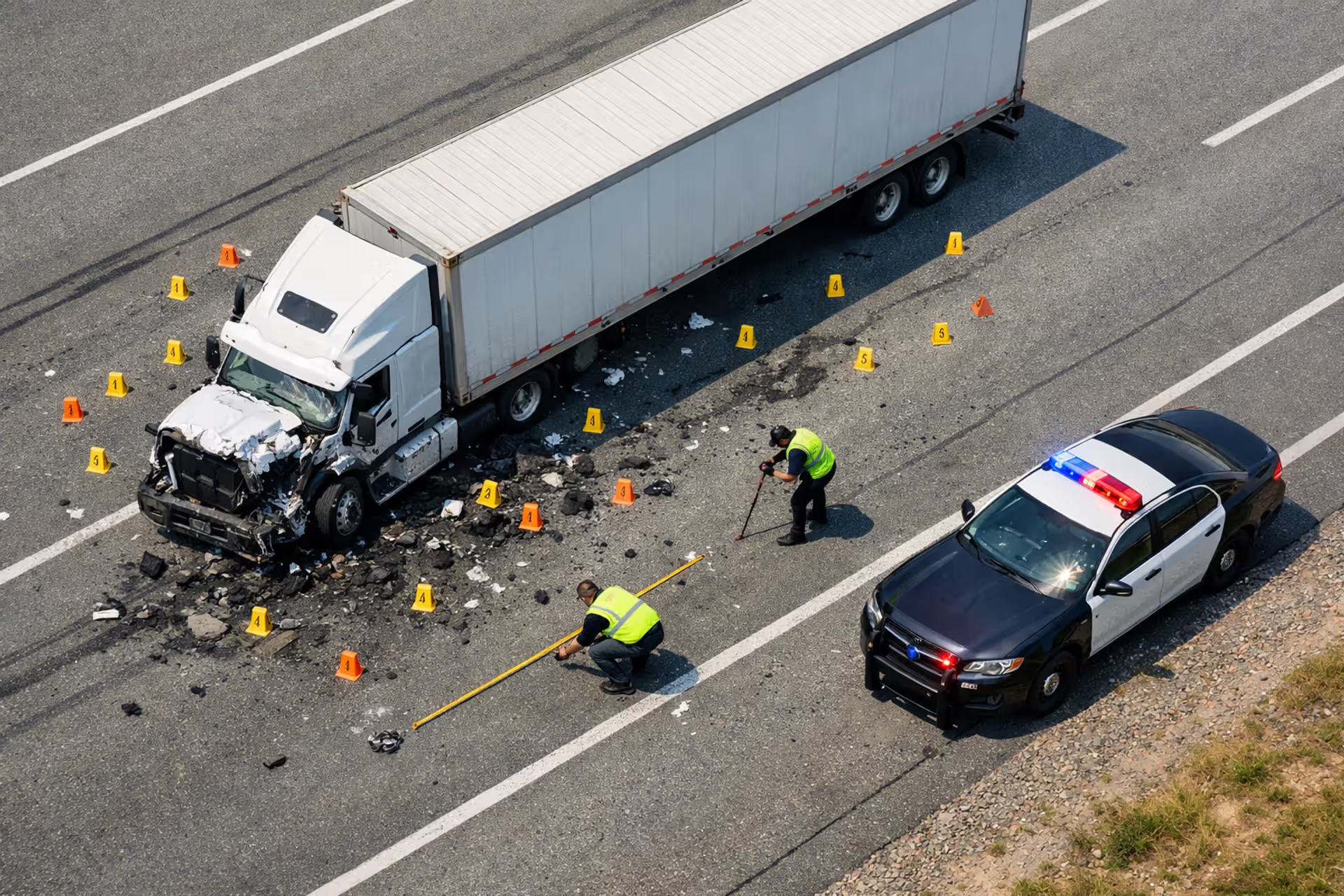
Scene investigation happens quickly before conditions change. Attorneys or investigators photograph skid marks, road conditions, traffic controls, and sight distance obstructions. They measure distances, document weather conditions, and interview witnesses before memories fade.
In thirty years of investigating highway fatalities, I have learned one painful truth: almost every catastrophic truck crash was preventable. Somewhere a regulation was ignored, a warning was dismissed, or a shortcut was taken. The evidence is always there—you just have to know where to look and preserve it before it disappears
— John Kilduff
Expert witnesses provide specialized testimony that juries need to understand technical issues. Reconstruction specialists examine crash scene evidence to establish vehicle velocities, impact trajectories, and the chronological sequence of collision events. Professionals with commercial trucking backgrounds explain industry safety protocols, company operational standards, and federal rule violations. Healthcare specialists describe injury mechanisms, necessary treatments, and anticipated long-term outcomes. Financial analysts project diminished future earnings and calculate lifetime care expenses.
Discovery forces the trucking company to produce internal documents. Attorneys request driver personnel files, safety records, training materials, maintenance logs, and corporate communications. These documents often reveal systemic safety violations—companies that routinely pressure drivers to exceed hours-of-service limits or skip vehicle inspections.
Depositions put witnesses under oath before trial. Attorneys question the truck driver, company safety directors, maintenance personnel, and supervisors. Inconsistent statements and damaging admissions become locked-in testimony that can't be changed at trial.
Negotiation tactics leverage the strength of your case. Attorneys present demand packages with detailed evidence of liability and damages. They counter lowball offers with trial-ready cases that make settling more attractive than risking a jury verdict. Most cases settle before trial, but the settlement value depends on the insurance company believing you're prepared to litigate.
If settlement negotiations fail, litigation proceeds through motions, additional discovery, and eventually trial. Trials last several days to weeks depending on complexity. Juries in truck accident cases often award substantial verdicts, particularly when evidence shows corporate disregard for safety.
Frequently Asked Questions About Truck Driver Accident Claims
The period following a serious truck collision tests your physical, emotional, and financial resilience. Medical appointments, insurance paperwork, and mounting bills create overwhelming stress while you're trying to heal.
Focus first on your medical recovery. Follow treatment plans, attend all appointments, and document everything. Your health matters most, and thorough medical records strengthen your legal claim simultaneously.
Preserve evidence from the accident. Keep damaged personal items, save all accident-related receipts, and maintain a journal documenting pain levels, limitations, and how injuries affect daily life. These details fade from memory but prove valuable during settlement negotiations.
Avoid discussing the accident on social media or with anyone except your attorney and immediate family. Insurance adjusters and defense attorneys monitor online activity and twist innocent statements into admissions of fault or exaggerations of injury.
Choose an attorney with specific experience handling truck accident cases. General personal injury lawyers might lack the specialized knowledge of federal trucking regulations, commercial insurance policies, and corporate liability theories that maximize recovery in these cases. Ask about their track record with trucking claims specifically.
Remember that insurance companies profit by paying less than your claim is worth. Their initial offers rarely reflect fair compensation. An experienced attorney levels the playing field, ensuring the trucking company and its insurers take responsibility for the harm their driver caused. You deserve compensation that covers not just today's expenses but the long-term impact of injuries that may affect you for years or even the rest of your life.