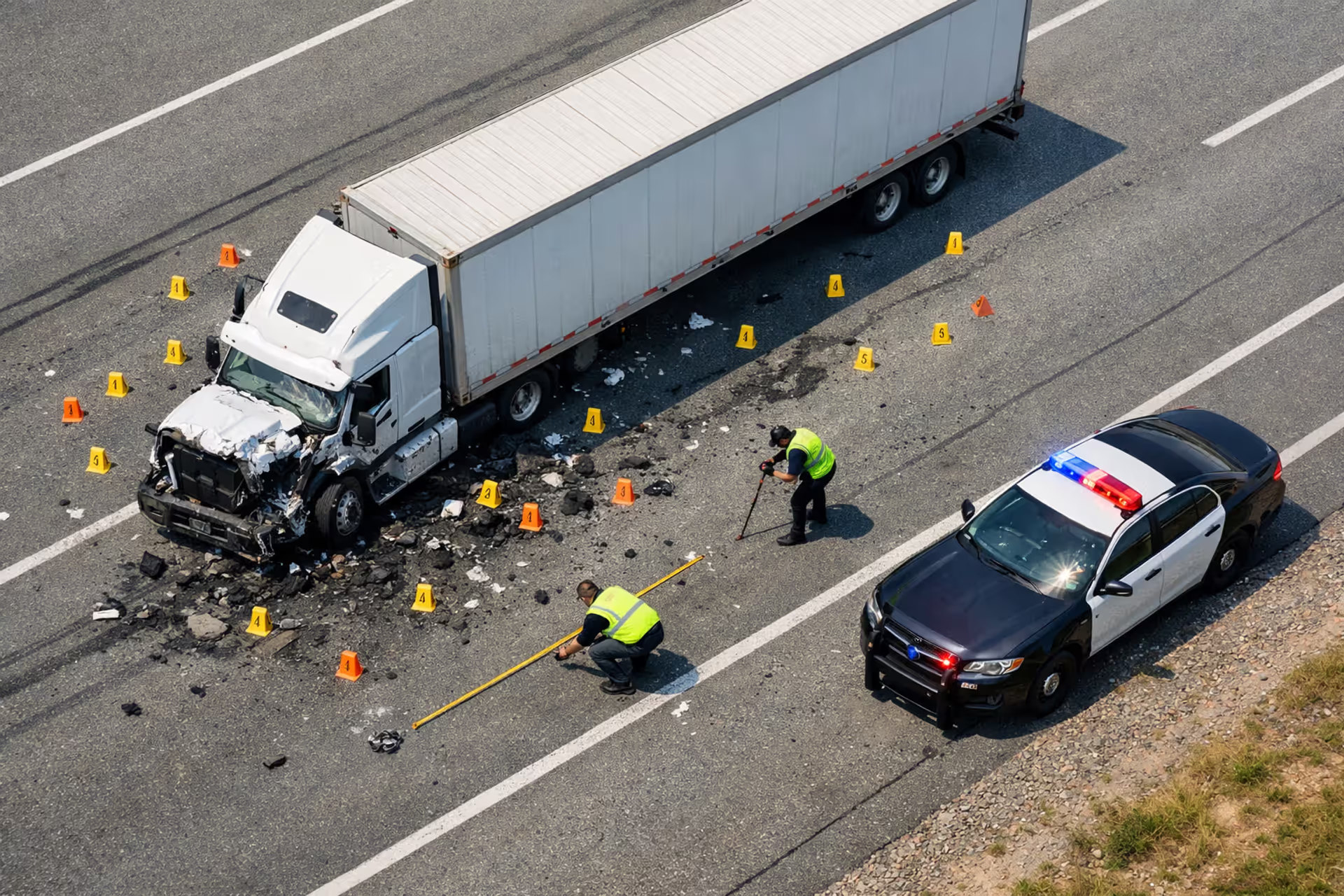
Aerial drone view of investigators examining a damaged semi-truck on a highway with evidence markers and skid marks on the pavement
How the Truck Accident Investigation Process Works: A Complete Timeline
Content
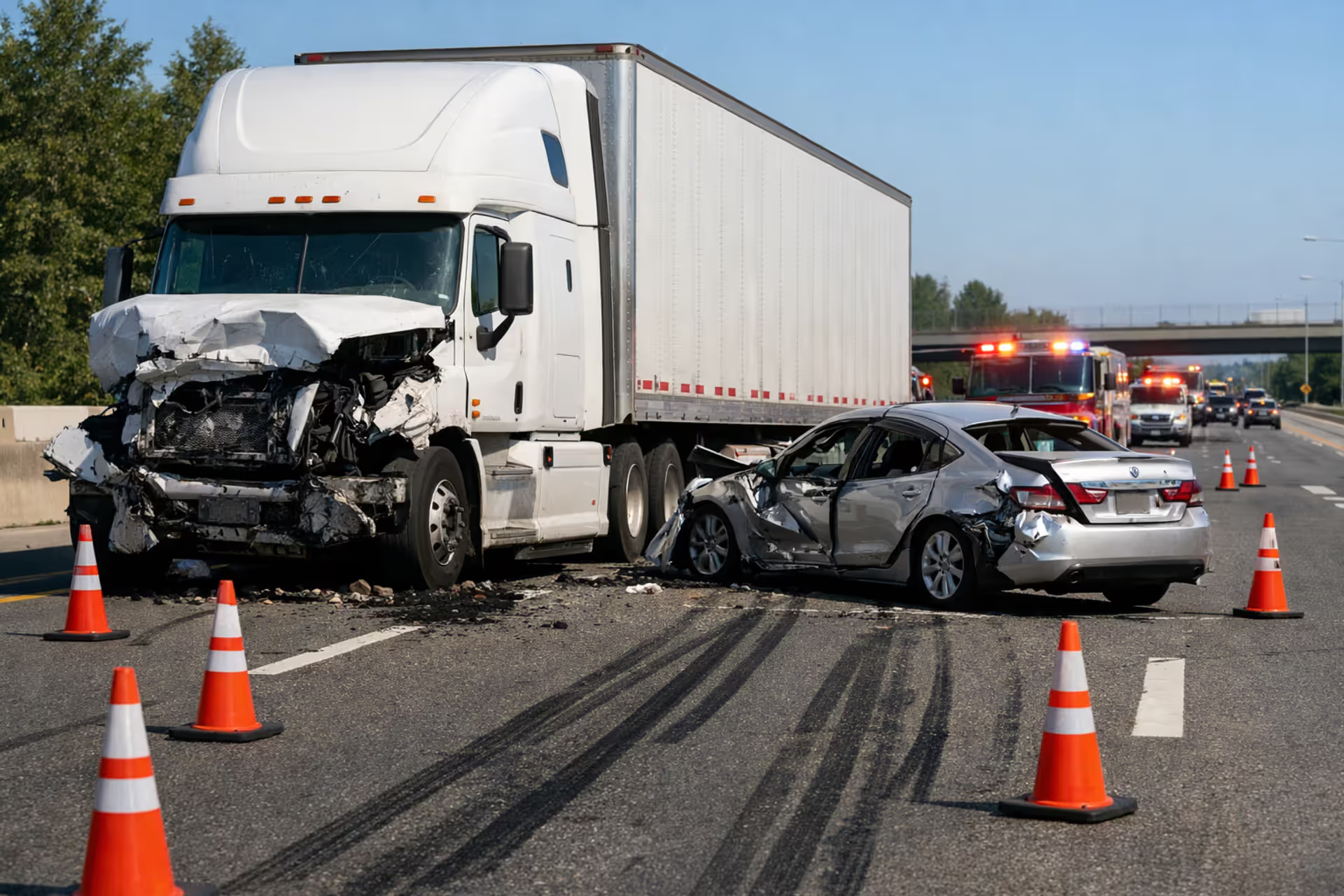
A semi-trailer weighing as much as 40 tons slams into a sedan at highway speed. The immediate scene—debris scattered across three lanes, fluids pooling on asphalt, steam rising from crumpled hoods—represents just the visible damage. Behind the chaos, investigative wheels are already turning. Within the hour, multiple agencies will arrive. Evidence will either be locked down or lost. And the procedural choices made in those first few hours often matter more than any courtroom argument months later.
If you've been hurt in a crash involving a big rig, or if you're handling claims for an insurance carrier or defending a trucking operation, you'll need to understand this process. Investigators don't just show up, take photos, and leave. They follow specific protocols, work under strict timeframes, and collect evidence types that most people never consider. Miss a deadline? That critical data gets erased. Wait too long to inspect a vehicle? It's already been repaired and put back on the road.
Let's walk through exactly how these investigations unfold, who does what, and where things typically go wrong.
What Happens in the First 24 Hours After a Truck Crash
That opening day sets everything in motion. State troopers or local police roll up within 10-20 minutes if it's a major highway. Smaller county roads? Could be 45 minutes before anyone arrives. Either way, they're immediately securing lanes, setting up flares, and trying to keep gawkers from causing secondary crashes.
First responders treat injuries—that's priority one. But here's what many people don't realize: paramedics and EMTs write reports too. They document what drivers said at the scene. "I never saw him" or "My brakes didn't work" or "I only looked down for a second." These statements get recorded before lawyers arrive, before insurance companies call, before anyone's had time to think about liability. They're remarkably honest, and they're admissible.
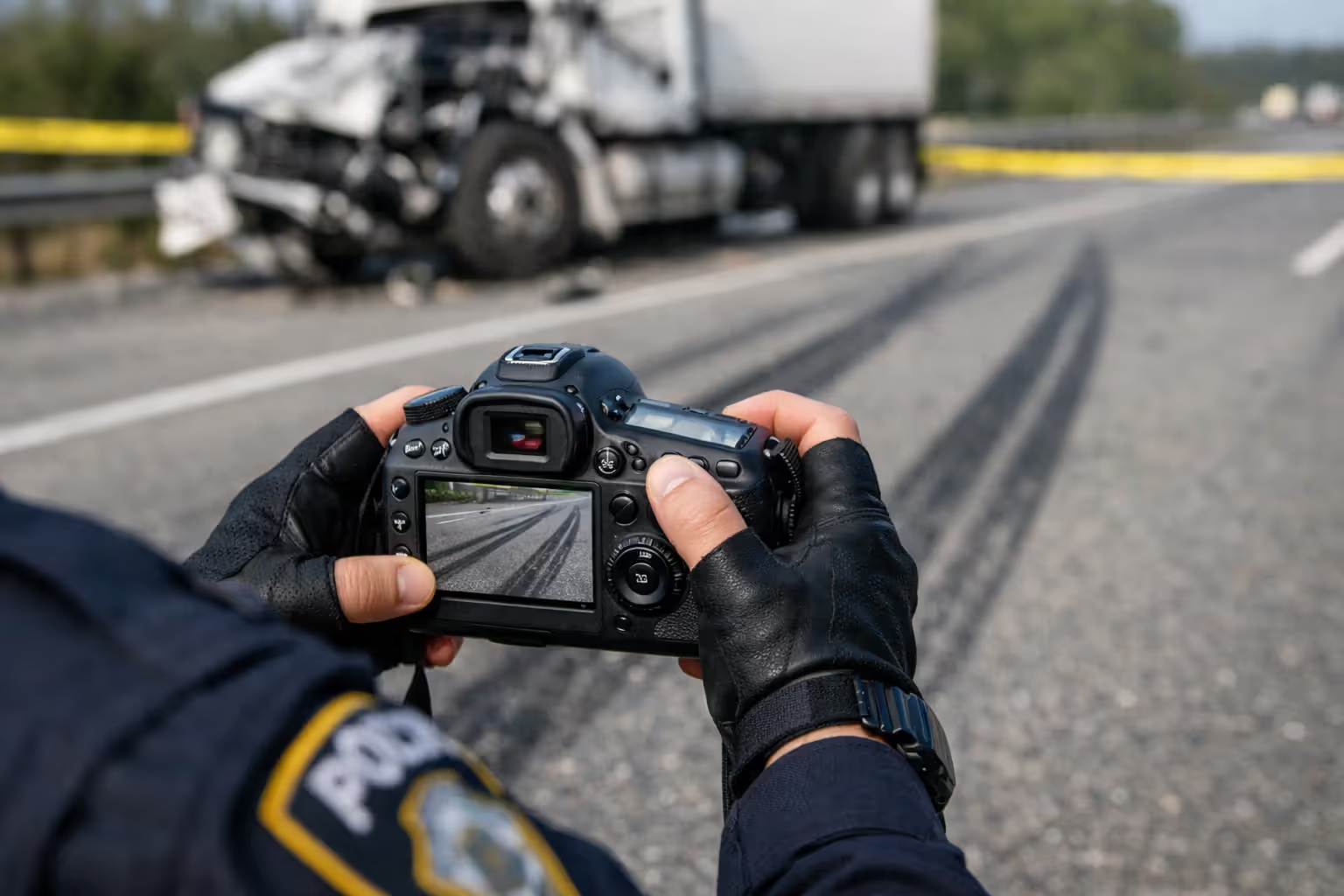
Police start photographing everything. Vehicle positions relative to lane markings. Skid patterns. Gouge marks in pavement. Scattered cargo. They'll measure distances using rolling wheels or laser devices. Good investigators take 100+ photos. Less thorough ones might snap a dozen and call it done. Quality varies wildly depending on who responds.
Here's where it gets time-sensitive: Should they impound the truck? Fatal crashes almost always trigger impoundment. Serious injuries usually do. Minor property damage only? The truck might get towed to a private lot and released within 24 hours. Once it leaves police custody, accessing it becomes exponentially harder.
People at the scene start disappearing fast. That driver who stopped and saw the truck drift across the centerline three miles back? He's got somewhere to be. Nobody got his name. Happens constantly. Officers try to corral witnesses, but rush hour crashes with dozens of stopped cars make this nearly impossible. By the time an attorney gets hired two weeks later, those witnesses are long gone.
And then there's the 800-pound gorilla: evidence preservation. The trucking company gets notified. Their safety director starts making calls. Federal rules require them to preserve certain records for specific timeframes—six months for logbooks, a year for maintenance files—but those are normal business retention periods. Once they know litigation's brewing? Everything needs to be frozen. Electronic logs, dash cam videos, GPS tracking data, the truck's engine computer, driver personnel files, training records, prior safety violations, even email chains discussing that particular driver's performance.
Some carriers immediately secure everything. Others drag their feet. A few play games—"Oh, that data auto-deletes after 30 days and, gosh, it's been 31 days, sorry." That's spoliation, and judges hate it, but the data's still gone.
Attorneys who know what they're doing send preservation letters by email, fax, and certified mail within 24-48 hours. They specifically list every evidence category that needs protecting. Generic "preserve all evidence" letters don't cut it—you need to identify black box data, ELD records, maintenance logs, drug test results, dash cams, driver-facing cameras, cargo documentation, bills of lading, and more. Be specific or watch it vanish.
Author: Jason Calloway;
Source: capeverde-vip.com
Who Investigates Commercial Trucking Accidents and Their Specific Roles
Multiple players enter the picture, often tripping over each other. Who takes the lead depends on crash severity, location, and whether federal regulations got violated.
Federal Motor Carrier Safety Administration (FMCSA) Involvement
FMCSA investigators show up when people die, when serious injuries stack up, or when a carrier's safety record already has red flags. They're not investigating the crash itself so much as auditing the entire operation. Did the company follow hours-of-service rules? Are driver qualification files complete? Has the carrier been falsifying inspection reports?
These investigators have authority to pull years of records. They'll audit 50 different driver files looking for patterns. They'll review the company's drug testing program. They'll inspect the maintenance facility and examination technicians' certifications. Find violations? Fines start at $16,000 per incident and climb from there. Serious enough patterns can shut down a carrier entirely.
FMCSA investigation timelines stretch 12-18 months. They're thorough but slow. Their findings affect the carrier's safety rating, which impacts insurance costs and customer contracts. You might see a crash that looked like simple driver error trigger revelations that the company systematically pressured drivers to falsify logs. Those bigger patterns emerge through federal investigations.
State Police vs. Local Law Enforcement Jurisdiction
State highway patrol handles interstate crashes and major state routes. They've got commercial vehicle enforcement units with specialized training. These troopers inspect trucks daily—they know what proper brake adjustment looks like, understand cargo securement standards, and can spot logbook violations.
County deputies and city cops get trucks crashes too, especially on local roads. Most mean well but lack specific training. A deputy who handles one commercial vehicle crash per year can't match the expertise of a trooper who's inspected 500 trucks this month. The difference shows up in report quality. State police reports might run 8-10 pages with detailed diagrams, measurements, and regulatory analysis. Local reports? Two pages, basic information, minimal technical detail.
This matters more than you'd think. Reconstruction experts working six months later rely heavily on what got documented initially. Poor measurements, missing photos, incomplete scene diagrams—those gaps can't be filled later. The crash scene has changed. Weather's different. Traffic patterns have shifted. You're stuck with whatever the responding officer captured.
Independent Crash Reconstruction Specialists
These are the experts attorneys hire when stakes are high enough to justify $15,000-$30,000 in investigation costs. They bring engineering degrees, specialized certifications (ACTAR accreditation is the gold standard), and equipment police don't have.
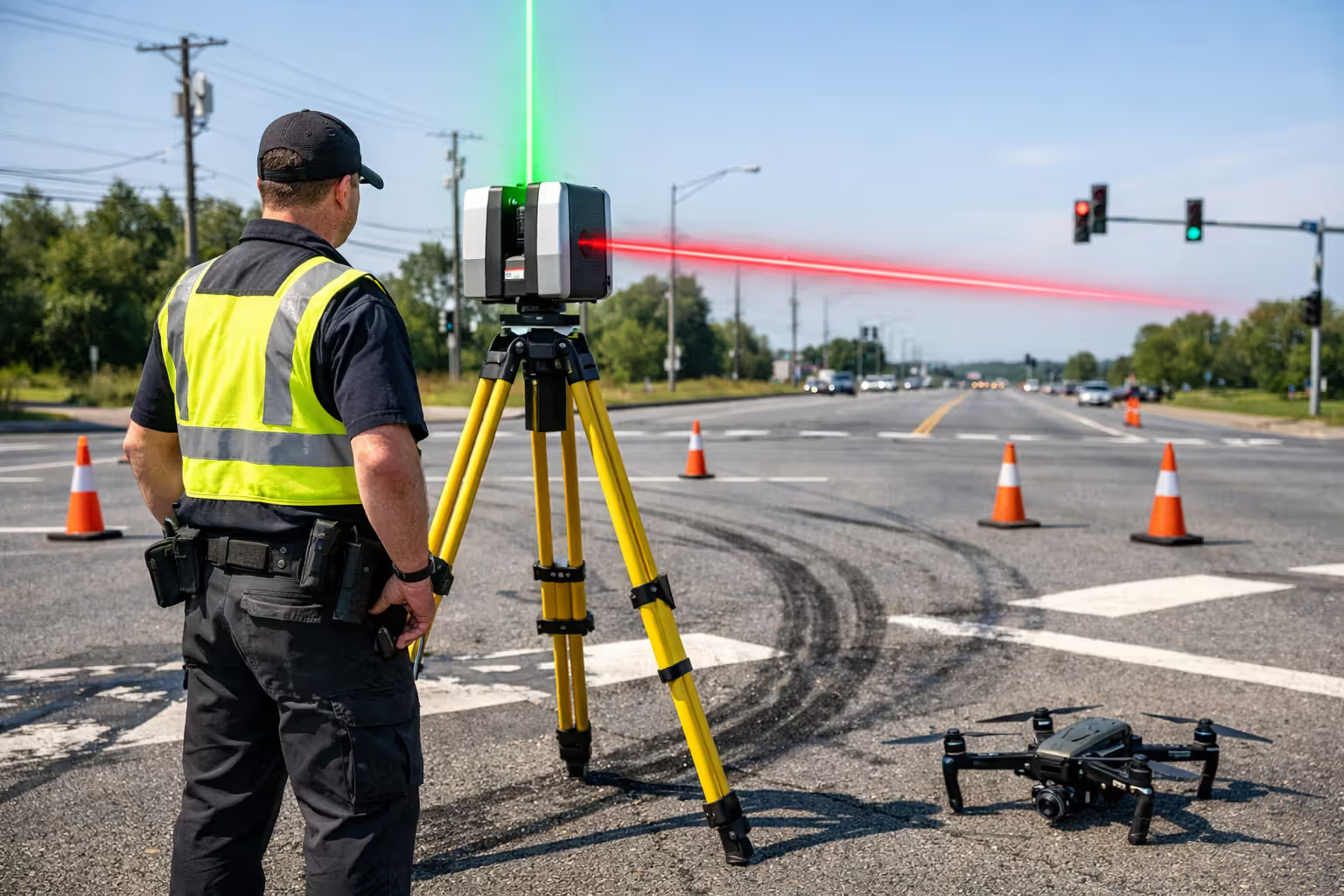
We're talking 3D laser scanners that map scenes to millimeter accuracy. Drones for aerial photography. High-speed cameras for test recreations. Specialized software that models crash dynamics based on physics principles. One expert I know uses photogrammetry to create virtual reality reconstructions that let juries "stand" at the driver's eye position and see exactly what was visible.
Timing creates problems though. Defense counsel for the trucking company hires experts within days. They get fresh scene access, can inspect the truck before repairs, download black box data before anyone touches it. Plaintiff's attorneys—representing injured folks—often don't get retained for 3-4 weeks. Their experts arrive to find the scene altered, the truck released, and critical evidence already disappearing.
The investigation of a serious truck accident is not a single event — it is a race against time. Evidence begins to decay, disappear, or get destroyed from the very first moment after impact. The quality of the outcome depends almost entirely on what gets preserved in those critical early hours and days, not on what lawyers argue months later in a courtroom
— Dr. John C. Glennon
Critical Evidence Collected During Trucking Accident Investigations
Think investigators just grab the obvious stuff—photos, statements, police report—and call it done? Not even close. Dozens of evidence categories exist, each with different preservation requirements, each controlled by different parties, each creating unique challenges for access.
Start with physical items. The vehicles themselves, obviously. But also tire fragments (showing tread depth and defects). Cargo pieces (revealing how load was secured). Road surface samples (for friction coefficient testing). Light bulb filaments (showing which lights were on at impact). Broken glass patterns. Paint transfers. Even soil samples from adjacent fields if a vehicle left the roadway.
Then you've got paper trails. Driver logs—both the official ones submitted to the company and the rough notes drivers keep for themselves. Maintenance records showing when brakes were last adjusted, when tires were replaced, who performed inspections. Pre-trip inspection forms (often rushed through or falsified). Bills of lading describing cargo weight. Load securement documentation. Fuel receipts showing where the driver stopped. Weigh station tickets.
Electronic evidence goes way beyond the black box. Cell phone records show calling and texting activity—not just that a call happened, but how long it lasted, when it connected, tower locations. Fleet management systems track vehicle location every 30 seconds. Forward-facing dash cams capture road conditions. Driver-facing cameras record whether the driver was eating, smoking, checking a phone, nodding off. Some carriers install sensors that detect hard braking, rapid lane changes, following too closely—all time-stamped and uploaded to servers.
Biological samples matter more than people realize. Federal rules mandate drug and alcohol testing after crashes meeting certain criteria—fatalities, injuries requiring immediate treatment away from the scene, or any vehicle towed from the scene. Tests must happen within two hours for alcohol, 32 hours for drugs. Miss those windows? You've lost that evidence forever. No retesting weeks later, no "we couldn't locate the driver for three days." The deadline's the deadline.
And don't overlook environmental context. Weather data from the National Weather Service, accurate to specific times and locations. Traffic camera footage—many states retain this 30-90 days. Nearby business surveillance systems. Ring doorbells. Residential cameras. I've seen cases where a homeowner's driveway camera a quarter-mile from the crash showed the truck speeding past 90 seconds before impact.
Evidence Preservation Requirements in Truck Accident Cases
| Type of Evidence | Preservation Requirement | Access Controlled By | Risk of Loss |
| ECM/black box recordings | 6+ months (state-dependent) | Motor carrier | Severe—overwrites automatically |
| Hours-of-service logs | 6 months federally mandated | Trucking company | Moderate—routine disposal |
| Vehicle maintenance files | 1 year federal minimum | Carrier/maintenance shop | Moderate—routine disposal |
| Post-crash drug/alcohol testing | 5 years federal requirement | Carrier/testing lab | Low—regulated carefully |
| Video footage (dash/driver cams) | 30-90 days typically | Motor carrier | Critical—automatic deletion |
| Actual vehicles | Until legal release | Police/impound facility | Moderate—repair pressure, storage costs |
| Driver cell phone data | 12-24 months varies | Wireless provider | Moderate—subpoena required |
| Shipping/cargo paperwork | 6+ months | Shipper and carrier | Moderate—routine disposal |
How Black Box Data and Electronic Logging Devices Are Retrieved and Analyzed
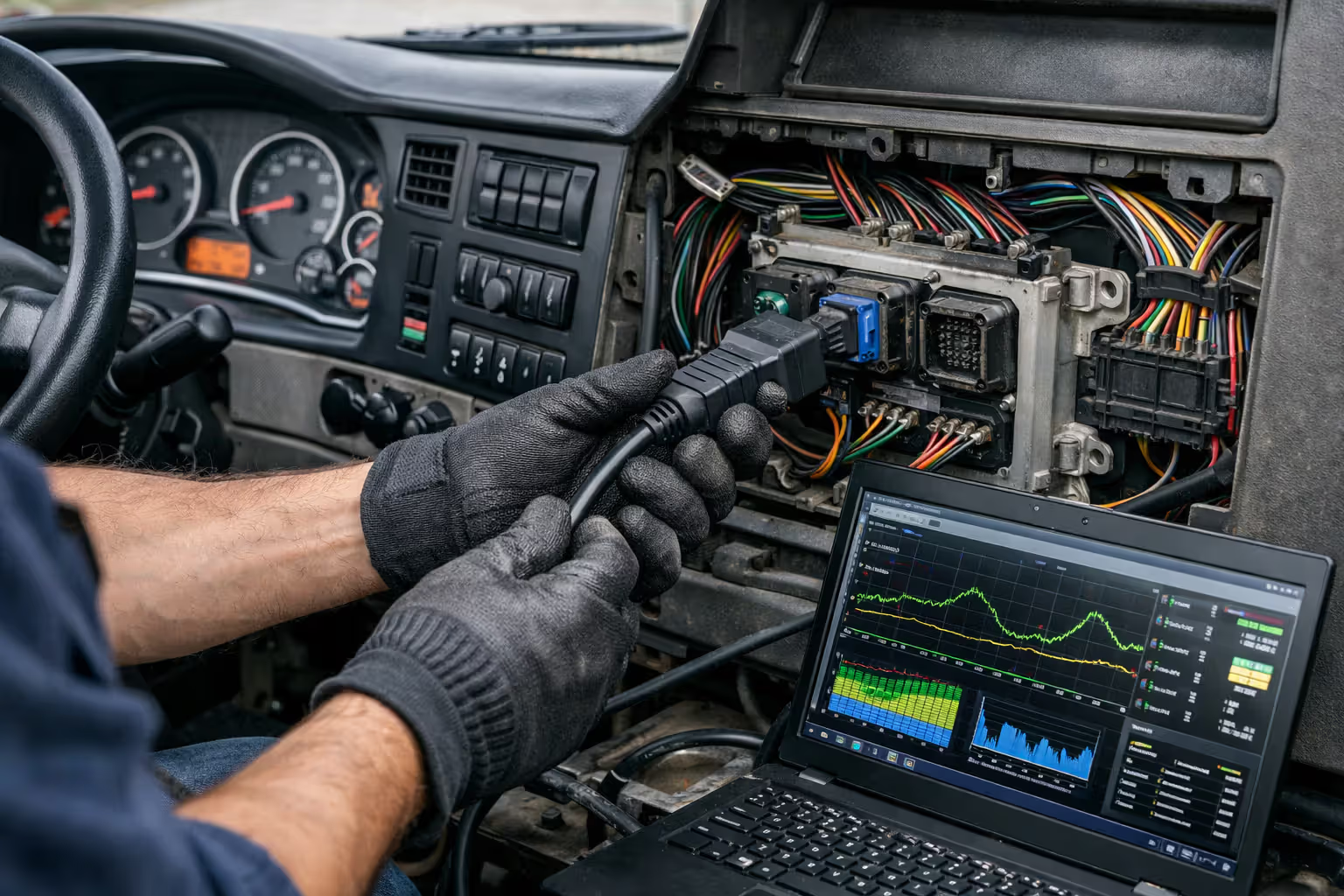
Every commercial truck manufactured after the mid-1990s has an electronic brain recording operational data constantly. These engine control modules—basically the vehicle's black box—capture information human observers can't possibly track. And here's the thing: this data doesn't lie.
The ECM monitors 50+ parameters every second. Engine RPM. Throttle position. Brake pedal force. Vehicle speed. Cruise control status. ABS activation. Transmission gear. Even GPS coordinates on newer systems. Most importantly, it creates a "snapshot" when certain triggering events occur—sudden deceleration, hard braking, airbag deployment. That snapshot preserves the final 30-60 seconds before impact in granular detail.
Author: Jason Calloway;
Source: capeverde-vip.com
Want to know if the driver was speeding? ECM shows exact speed. Wonder if they tried to brake? The data reveals when they pressed the pedal, how hard, and whether the truck's systems responded properly. Question whether they were paying attention? If cruise control stayed engaged until impact while traffic ahead slowed to a crawl, that paints a picture.
Extracting this data requires proprietary tools. Each truck manufacturer—Freightliner, Volvo, International, Kenworth, Peterbilt—uses different systems with different software. You can't just plug in any laptop. You need the correct interface cable, the right software version, and training on proper download procedures. Mistakes during extraction can corrupt files or miss crucial parameters.
Timing becomes absolutely critical here. Some ECM systems have limited memory. They overwrite older data as new information comes in. If the truck keeps running after the crash—say it was drivable and the driver moved it to the shoulder—that continued operation may overwrite pre-crash data. Every mile driven is another mile of data potentially lost.
Electronic logging devices, separate from the ECM, track hours-of-service compliance. ELDs became mandatory in December 2017 for most carriers. They automatically record driving time, location, miles traveled, and engine hours. Unlike paper logs where drivers could fudge numbers, ELDs pull data directly from the truck's systems.
ELD records show whether the driver was legal at the time of the crash. Were they on their 11th consecutive hour of driving? Had they taken the required 30-minute break? Were they operating during their mandated 10-hour rest period? Violations create both liability and powerful evidence of negligence—the driver knew they were breaking safety rules designed specifically to prevent fatigue-related crashes.
Combined ECM and ELD data creates a comprehensive timeline. The ELD shows the driver had been on duty 13 hours. The ECM shows the truck traveling 72 mph in a 65 zone. Then the ECM captures the critical moment: no brake application, no throttle reduction, no steering input, cruise control engaged—right until impact. That's not mechanical failure. That's a driver who never saw the stopped traffic ahead.
Thomas Richardson, an accident reconstructionist with 22 years examining truck crashes, puts it bluntly: "We had a case where the carrier claimed their ECM was 'damaged beyond recovery' in the fire that followed the crash. Their expert said the heat destroyed the data. We eventually proved through vendor records that someone had accessed that module two days after the crash and performed a full reset. You can't accidentally reset these systems—it requires deliberate actions with diagnostic tools. That spoliation cost them an eight-figure verdict."
Common Data Points That Determine Fault
Certain parameters directly establish what happened. Brake application timing shows whether the driver reacted appropriately to hazards. If the ECM shows zero brake pressure until 0.8 seconds before impact, but a reasonable driver would've braked four seconds earlier, that gap quantifies negligence.
Throttle position reveals aggressive driving or inattention. You shouldn't be accelerating when approaching stopped traffic. Yet ECMs frequently show throttle at 60-80% right until the crash—drivers still trying to maintain highway speed despite traffic conditions changing ahead.
Cruise control data is devastating for defendants. Cruise control engaged at impact means the driver delegated speed control to the computer instead of actively managing velocity based on conditions. It suggests complacency, autopilot mode, not actively supervising the vehicle.
Steering inputs—or lack thereof—show awareness. Hard steering just before impact proves the driver saw the hazard but reacted too late. No steering input suggests they never looked up from their phone, never noticed the traffic pattern changing, never saw the vehicle they were about to destroy.
Electronic data recorders have fundamentally changed truck crash litigation. A driver can deny speeding, a carrier can claim perfect maintenance, but the data captured in the final seconds before a collision tells an objective story that no witness testimony can contradict or embellish
— Ronald D. Huston
The Police Report: What Investigators Document and Why It Matters
The official crash report becomes the foundation document everyone references. Insurance adjusters read it first. Attorneys request it immediately. Judges admit it into evidence. But here's what most people miss: police reports for commercial vehicles are completely different animals from regular car crash reports.
Standard forms have additional sections for commercial vehicles. USDOT number fields. Interstate versus intrastate operating authority. Cargo type and weight. Placards and hazmat classifications. Vehicle configuration—was it a tractor-trailer, double trailer, tanker, flatbed? All of this information determines which federal regulations apply and who has jurisdiction to investigate further.
The narrative section quality varies wildly. I've seen reports from experienced commercial vehicle investigators that read like engineering analyses—detailed discussion of sight distances, brake fade, offtracking characteristics of long combination vehicles, specific regulatory violations. Then I've read reports from small-town officers who wrote three sentences: "Truck hit car. Car driver injured. Truck driver said he didn't see the car."
That variance directly impacts case value. Thorough reports documenting regulatory violations, driver admissions, and physical evidence supporting negligence help settle cases. Sparse reports force plaintiffs to prove everything through expensive expert testimony. The difference can be $500,000 in litigation costs.
Crash diagrams show vehicle positions, roadway geometry, sight obstructions, and final rest positions. Good diagrams are drawn to scale with measurements noted. Poor diagrams are rough sketches—vehicles sized wrong, positions estimated rather than measured. Reconstruction experts rely heavily on these diagrams months or years later when the scene's changed. Inadequate diagrams cripple their analysis.
Citations matter but aren't determinative. Officers issue tickets based on what they can prove at the scene. Sometimes that means the truck driver gets cited even though further investigation reveals the car driver caused the crash. Other times nobody gets cited because the officer couldn't determine fault with available evidence. Lack of a citation doesn't prevent civil liability—it just means the officer couldn't or wouldn't make a determination at the scene.
Officers document witness statements, but they're not stenographers. They summarize what witnesses said rather than quoting verbatim. "Witness stated the truck was speeding" might have actually been "That truck was flying!" The nuance gets lost. Smart attorneys track down those witnesses directly and get their actual words.
Reports contain errors more often than you'd expect. Wrong VINs transposed from registration cards. Incorrect driver names. Mixed-up insurance information between multiple vehicles. Street names spelled wrong. Direction of travel reversed in the diagram. These aren't deliberate falsifications—just human error when documenting complex scenes under time pressure. But they require correction through supplemental investigation and amended reports.
The report's conclusions about fault represent the officer's opinion based on scene evidence, not legal findings. They carry weight, certainly. But they're not binding on insurance companies or courts. I've seen dozens of cases where police blamed the car driver but civil litigation proved the trucker was negligent through evidence the officer didn't collect or analyze.
Accident Reconstruction: How Experts Recreate What Happened
Reconstruction specialists apply physics to answer questions police reports leave open. How fast was the truck actually traveling? Could the driver have stopped in time if he'd braked when he first saw the hazard? Did the trailer's loaded weight affect braking distance? Would properly maintained brakes have prevented the crash?
The process starts with collecting every scrap of data produced by others. Police reports, crash scene photos, ECM downloads, witness statements, surveillance footage, weather records. Experts review everything, looking for inconsistencies and gaps. Then they visit the scene—often months after the crash—to document conditions police missed.
Scene inspections measure physical features. Road width, lane dimensions, shoulder width, gradient percentages, curve radii. Sight distances from various positions. Obstructions like vegetation, signage, parked vehicles, terrain. Friction coefficients using specialized drag sleds. Lighting conditions if it was a nighttime crash. Good reconstruction experts visit the scene multiple times at different times of day and in varying weather.
Modern experts use 3D laser scanning technology that captures millions of data points. These scanners create digital models of entire intersections, accurate within 2-3 millimeters. You can measure anything in the scan afterward—how far that tree branch extended over the road, the precise angle of that no-passing line, the height of that truck's mirror above the pavement. It's like preserving the scene in amber.
Speed calculations come from multiple methodologies. Skid mark length combined with road surface friction yields minimum speed at the start of braking. Crush damage to vehicles—measured in millimeters of deformation—indicates impact forces, which reveal velocity. ECM data provides direct readings. Experts use different methods and compare results. If all three calculations show 73-75 mph, that's reliable. If they're wildly different, something's wrong with the assumptions.
Sight distance studies answer "what could the driver see and when?" questions. Experts put their eye position at the same height as the truck driver's seat—about 7-8 feet above the road for tractor-trailers. They measure distances to various landmarks, accounting for hills, curves, and obstructions. These studies establish whether adequate sight distance existed for the driver to perceive the hazard, recognize it required action, decide what action to take, and physically respond.
Author: Jason Calloway;
Source: capeverde-vip.com
Time-distance calculations establish vehicle positions second-by-second before impact. If the truck was traveling 75 mph (110 feet per second) and the crash happened at 3:47:22 PM, where was the truck at 3:47:18 PM? Four seconds earlier means 440 feet back. Was there a curve or hill at that position? What could the driver see from there? These calculations allow frame-by-frame reconstruction of the crash sequence.
Computer simulations test different scenarios. Sophisticated software models vehicle dynamics—how trucks accelerate, brake, steer, and respond to driver inputs. Experts can demonstrate that a truck traveling 70 mph on wet pavement cannot stop in 300 feet even with perfect brakes and an alert driver. Or that a trailer's rear end offtracking (following a tighter radius than the tractor on turns) would inevitably strike a vehicle in the adjacent lane given the curve radius and vehicle speeds.
Reconstruction often uncovers causation factors beyond driver behavior. Road design defects like inadequate sight distance on curves. Missing warning signs before sharp turns. Faded pavement markings at complex intersections. Brake component failures showing defective parts or improper maintenance. Cargo loading errors that shifted the truck's center of gravity. Tire defects like tread separation. These additional factors might add defendants and completely change case strategy.
Timeline: How Long Does a Complete Truck Accident Investigation Take?
Simple crashes wrap up quickly. Minor property damage, no injuries, clear liability? The police report gets finalized in 30 days. Insurance companies exchange information. Claims settle in 60-90 days. Done.
Serious injury crashes take 6-18 months for thorough investigation. Fatal crashes? Add another 6-12 months, especially if federal agencies get involved. Multiple fatalities with complex causation—think about that chain-reaction pileup in fog with 40 vehicles—can take two to three years before all investigations conclude.
Several factors extend timelines dramatically. Number of vehicles involved multiplies witness interviews and evidence analysis. Deaths mean autopsy reports, toxicology results (which take 8-12 weeks), and potential criminal investigations running parallel to civil inquiries. Disputes over mechanical defects require engineering analysis that takes months. Cases where the driver died lose a key witness who could explain their perspective.
Weather creates practical delays. Winter crashes up north might prevent detailed scene documentation until spring snowmelt—three to four months later. But then the scene looks completely different. Seasonal foliage changes affect sight distances. Road surface conditions bear no resemblance to the crash date. Experts sometimes return to scenes multiple times trying to replicate relevant conditions.
FMCSA investigations crawl. Twelve to eighteen months is typical for comprehensive carrier audits. They're examining years of records, interviewing dozens of current and former employees, reviewing hundreds of driver files. Thorough but painfully slow. Their reports often emerge long after civil cases have settled or been tried.
Preliminary reports come first—basic facts, vehicle information, involved parties, brief narrative. State police typically produce these within 30 days. Federal preliminary reports take 60-90 days. Full investigative reports with detailed analysis, expert opinions, and causation conclusions arrive much later—6-12 months for state investigations, 12-24 months for federal.
Private investigations move on different schedules. Defense attorneys for trucking companies hire experts immediately—within days or a week. Those experts get first crack at fresh evidence. Plaintiffs often don't retain attorneys until weeks or months post-crash because they're hospitalized, recovering, or researching attorneys. By the time plaintiff experts enter the case, they're already behind. The scene's changed. Physical evidence is less accessible. Memories have faded.
This timeline creates strategic pressure. Statutes of limitations—typically two to three years depending on the state—require filing suit by specific deadlines. You can't wait for every investigation to conclude before filing. Attorneys often file lawsuits earlier than they'd prefer just to preserve rights, then continue investigating through the discovery process.
Common Mistakes That Compromise Trucking Accident Evidence
Evidence disappears through neglect more often than deliberate destruction. Routine business processes erase data unless someone intervenes quickly. I've watched cases evaporate because critical evidence vanished before anyone tried to preserve it.
The biggest error? Waiting too long to send preservation demands. Attorneys sometimes delay, thinking they need to "investigate first" before sending letters. Wrong. Send preservation letters immediately—within 24-48 hours of the crash. You can send them to five different companies and later determine only two were actually involved. Better to over-preserve than lose evidence because you waited to confirm details.
Generic preservation letters fail constantly. "Please preserve all evidence related to the crash" sounds comprehensive but lacks the specificity needed. You must list every evidence category: ECM data, ELD records, GPS tracking logs, dash cam footage, driver-facing camera footage, maintenance records, inspection reports, driver personnel files, training records, prior safety violations, drug and alcohol testing records, bill of lading, cargo documentation, load securement photos, and on and on. Specific lists prevent the carrier from claiming "we didn't know you wanted that."
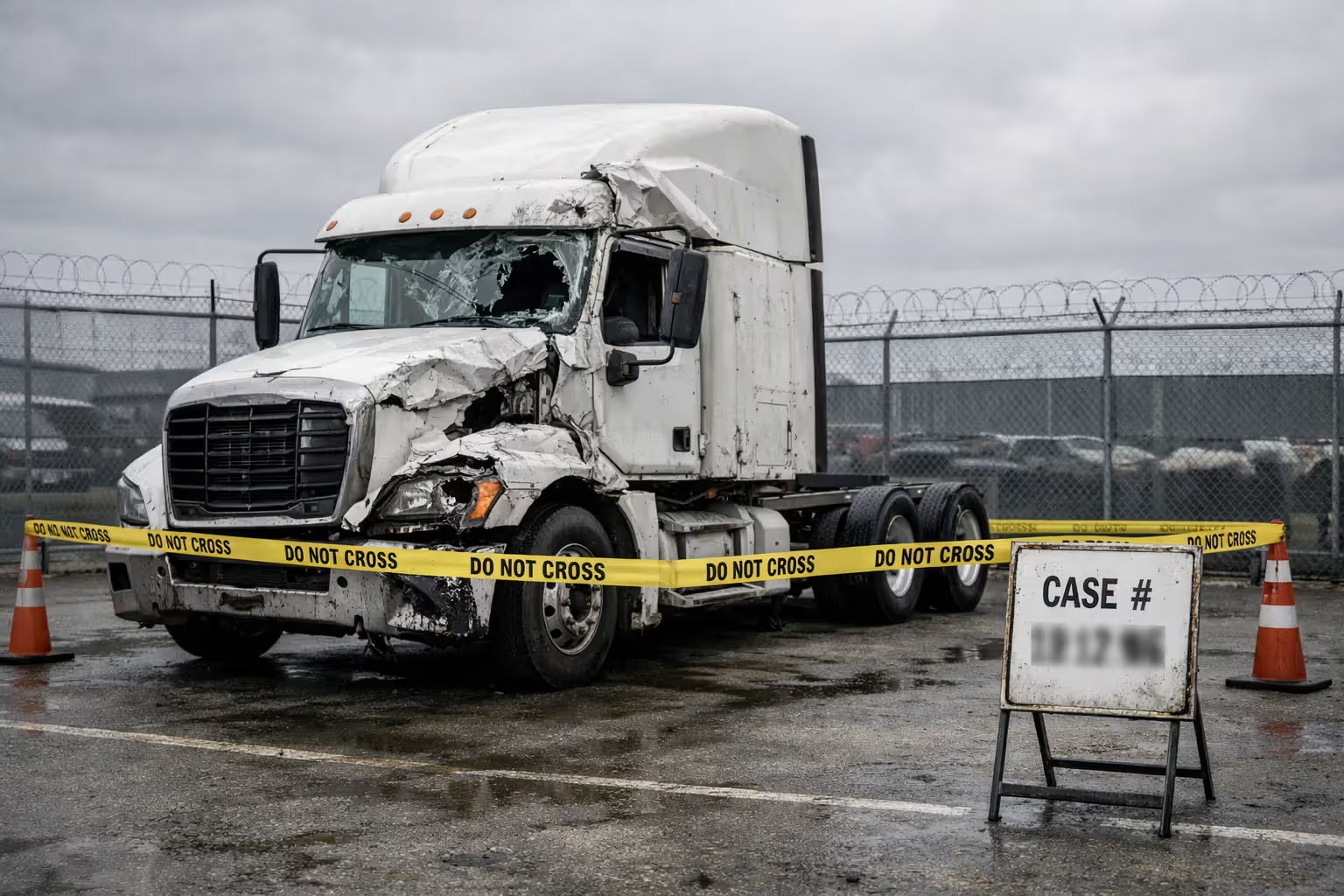
Failing to secure the physical truck destroys irreplaceable evidence. Once that truck leaves police impound and gets released back to the carrier, you're fighting an uphill battle for access. The carrier has every incentive to put it back in service immediately—they're losing revenue every day it sits. Crash damage gets repaired. Tires get replaced. Brake components get serviced. Lights get fixed. All that physical evidence disappears.
Smart attorneys file emergency motions for inspection if the truck's about to be released. Court orders keep the truck available until all parties have examined it. Without those orders, carriers frequently repair vehicles within a week, claiming economic hardship from the truck being unavailable. Once repaired, you've lost the chance to measure crush damage, examine brake adjustment, inspect tire tread depth, verify light operation, and document pre-crash condition.
Poor scene documentation by police limits everything that follows. When officers don't measure skid marks precisely—pacing them off rather than using measuring wheels or lasers—reconstruction experts lose accuracy. When officers don't photograph all relevant sight obstructions, you can't prove what the driver could or couldn't see. When officers fail to document weather conditions, debris patterns, or vehicle damage progression, gaps emerge that experts can't fill months later.
Author: Jason Calloway;
Source: capeverde-vip.com
Post-crash drug testing deadlines get blown more often than you'd think. Federal rules require testing within 32 hours, but compliance isn't universal. Some carriers delay hoping substances clear the driver's system. Others don't recognize the crash met testing thresholds. Smaller carriers lack written testing policies and simply forget. Once the 32-hour window closes, you've lost biological evidence permanently. Can't retest weeks later. Can't assume the driver was clean. The evidence just doesn't exist.
ECM downloads performed incorrectly yield garbage data. Different truck makes require different software and interface cables. Technicians need training on specific procedures for each manufacturer's system. Using the wrong software version can corrupt data or fail to extract important parameters. I've seen "expert" downloads that captured only eight of 40 available parameters because the technician didn't know how to configure the software properly.
Early vehicle release happens constantly, especially in non-fatal crashes. Insurance adjusters pressure tow yards to release vehicles quickly to minimize storage fees ($50-100 per day adds up). Carriers need their equipment back in service. Defense counsel hasn't been hired yet, so there's no attorney arguing for preservation. The truck gets released five days after the crash, repaired within two weeks, and back hauling freight before plaintiff's attorney even gets retained. That physical evidence is gone forever.
Missing non-obvious evidence sources costs cases. Businesses near the crash scene have surveillance cameras, but nobody asks for footage until three months later when it's already been overwritten. Witnesses who didn't stop at the scene never get identified until someone canvasses neighborhoods weeks afterward—by then, memories have faded. Cell phone companies purge detailed location data after 18 months unless subpoenaed earlier. Adjacent vehicles might have dash cams, but those drivers are never tracked down. Evidence exists but only for limited windows before it vanishes.
Frequently Asked Questions About Truck Accident Investigations
Truck crash investigations follow predictable patterns—immediate scene response, multi-agency involvement, evidence preservation battles, expert reconstruction, and months or years of analysis before full conclusions emerge. Success requires understanding what evidence exists, where it's located, who controls access, and how to secure it before routine business processes erase it permanently.
Victims start at a disadvantage. Trucking companies control most physical evidence. They've got in-house safety departments and insurance company resources backing them. They hire experts within days while injured victims are still hospitalized. Leveling this playing field requires moving fast—sending preservation demands within 48 hours, filing emergency motions for vehicle inspection, retaining qualified counsel who understands the unique aspects of trucking litigation.
The investigation determines everything that follows. It establishes whether the crash resulted from unavoidable circumstances or preventable negligence. It reveals whether isolated driver error or systemic carrier safety failures caused the collision. Those determinations drive insurance settlements, litigation outcomes, regulatory sanctions, and whether any accountability exists for the harm caused.