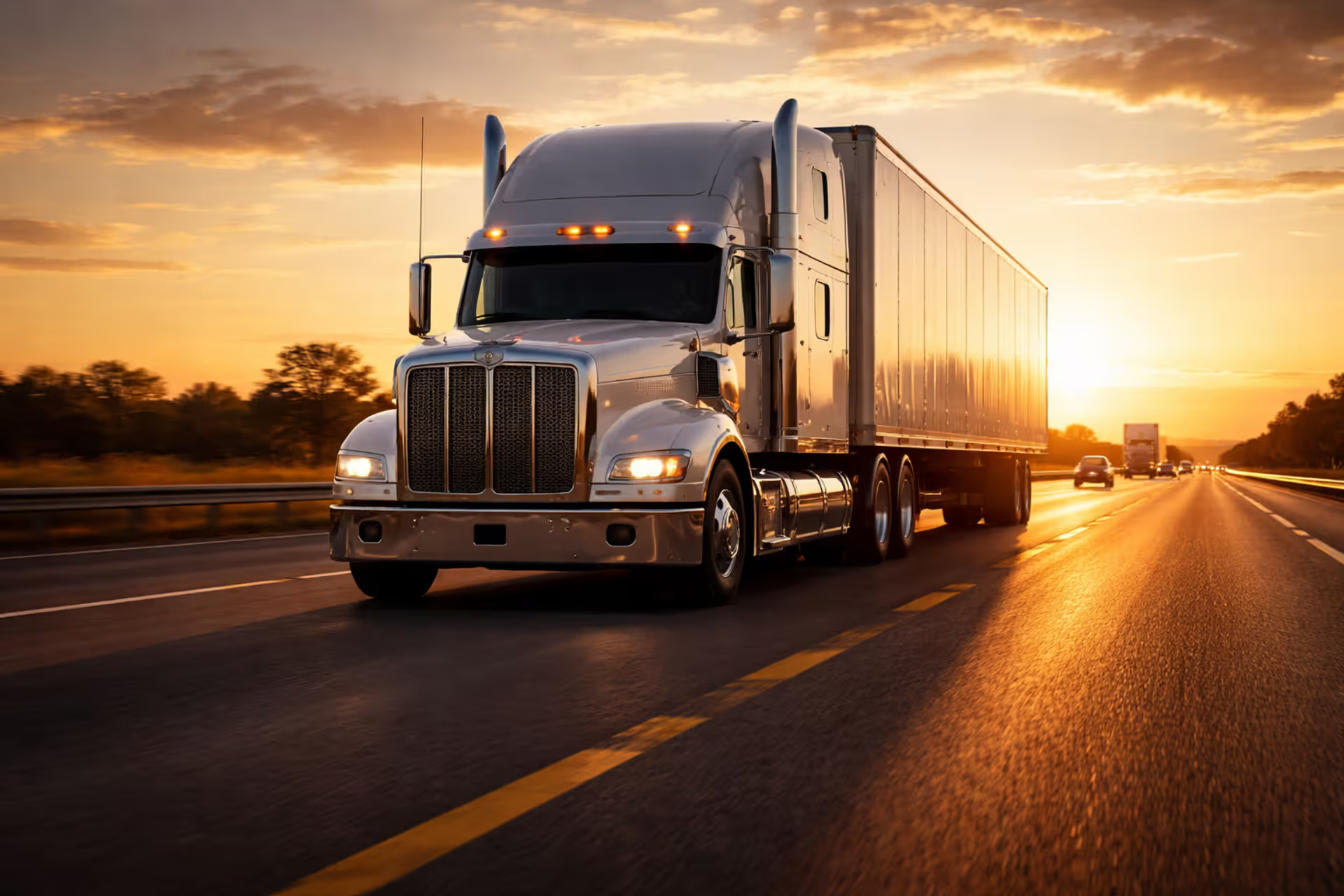
Large semi truck driving next to a small passenger car on a wet highway at sunset showing massive size difference between vehicles
Semi Truck and Car Accident: Causes, Liability, and What to Do Next

Content
Picture this: a tractor-trailer hauling 40 tons of cargo slams into a compact sedan at 65 mph. The outcome? Almost never good for the people in the smaller vehicle. These wrecks create legal nightmares that make regular fender-benders look simple—you're dealing with federal transportation laws, commercial insurance policies with multiple carriers, and liability that might stretch across five different companies.
Most people don't realize how different these cases are until they're living through one. The trucker's employer will have lawyers on-site faster than you'd think possible, and they'll be working to limit what you can recover before you've even left the hospital.
Why Semi Truck Collisions With Passenger Vehicles Are So Devastating
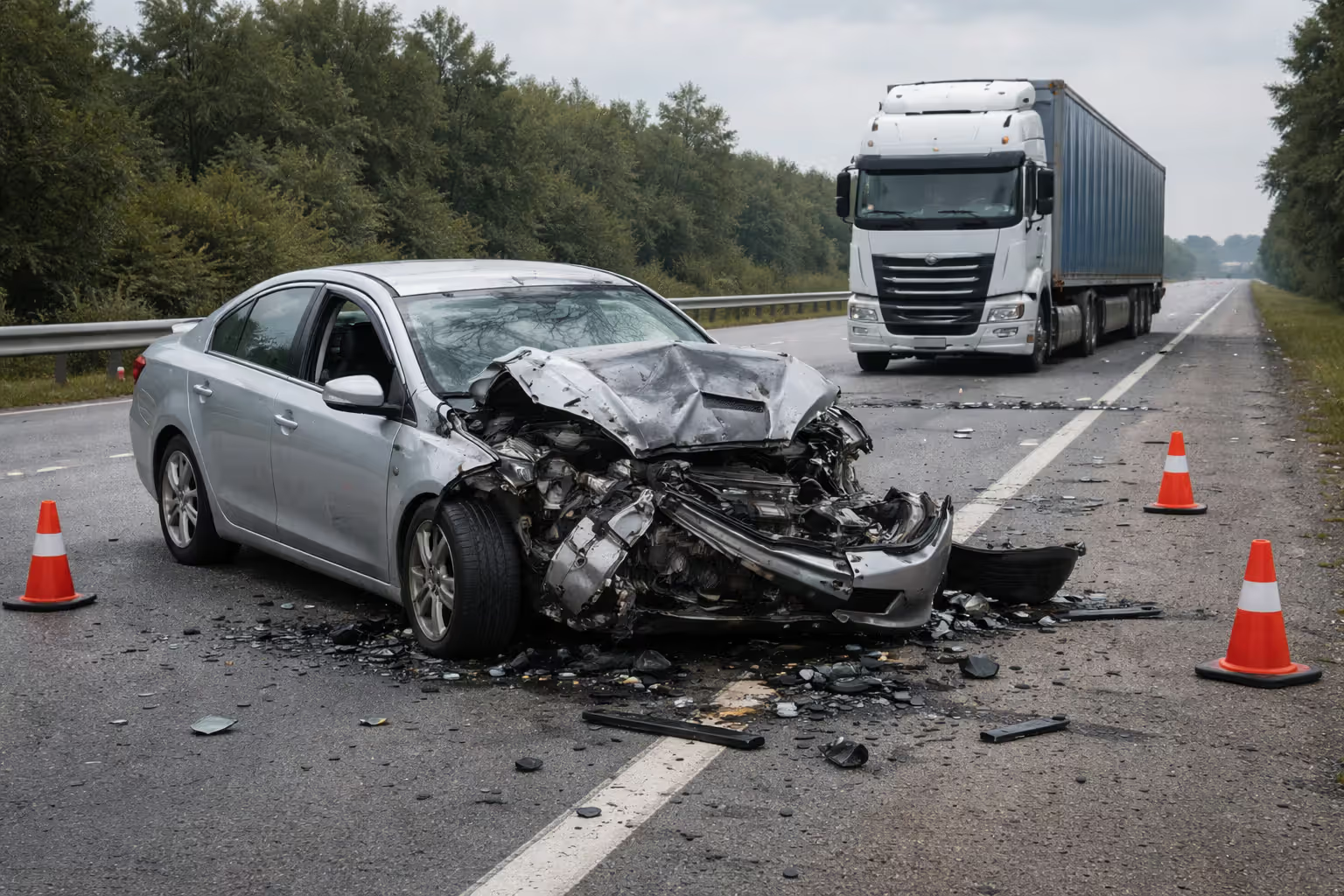
Here's what the numbers actually mean: that big rig barreling down the interstate? It can legally weigh up to 80,000 pounds when fully loaded. Your Honda Accord tips the scales at maybe 3,500 pounds. Do the math—that's a 23-to-1 weight mismatch, and physics doesn't care about fairness.
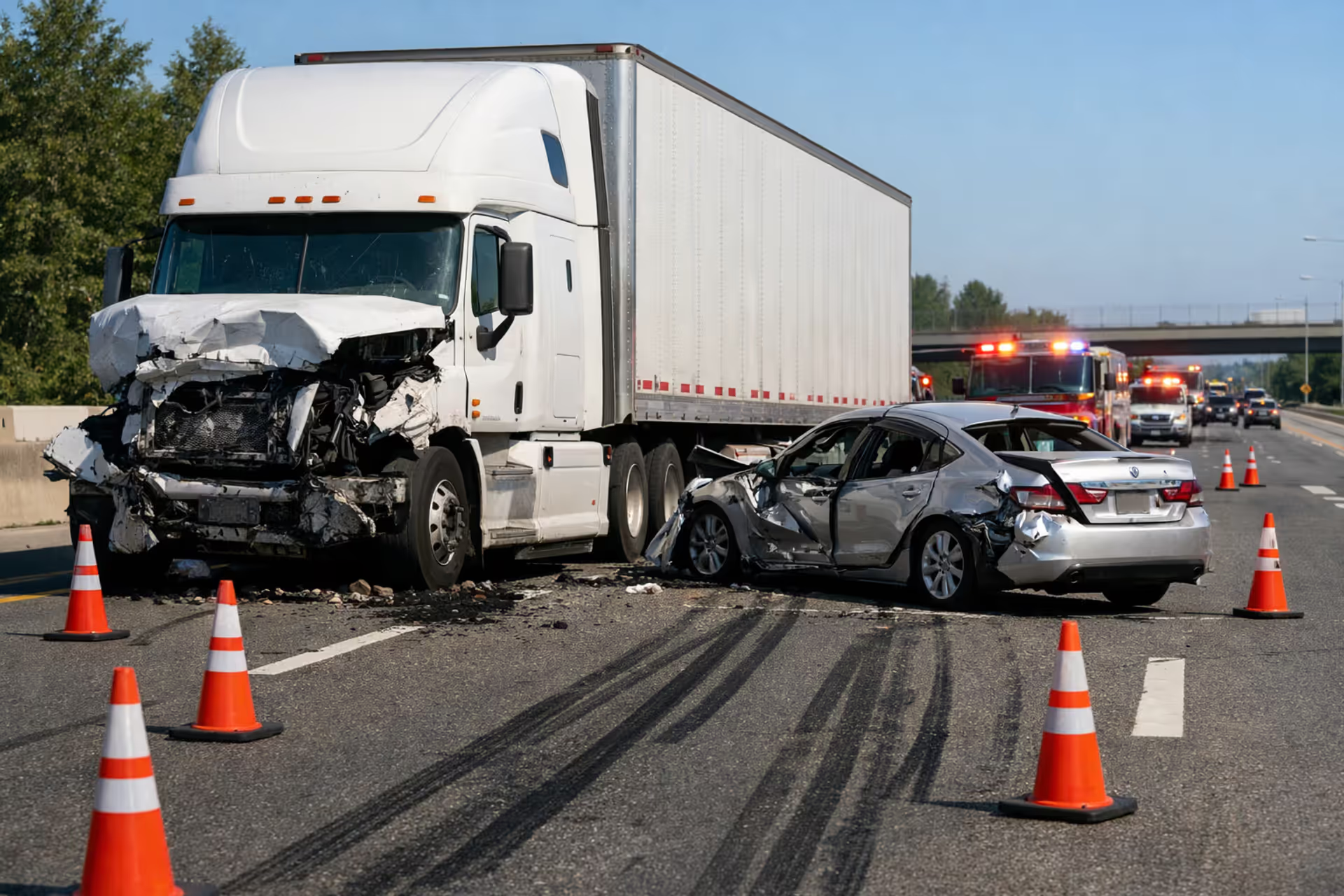
When these two vehicles meet violently, nearly every ounce of destructive energy gets absorbed by the smaller vehicle and everyone inside it. The truck driver, sitting eight feet off the ground in a cabin built like a tank, usually walks away. Maybe a bruise, maybe whiplash. Meanwhile, the car's occupants are facing traumatic brain injuries, shattered spines, crushed limbs, or worse.
Motorcyclists? They're playing the worst odds imaginable. Without any metal cage protecting them, survival often comes down to pure luck and the specific angle of impact. A rider can do everything right—full gear, defensive riding, sober and alert—and still die because a trucker failed to check his mirror.
The underride scenario deserves special mention because it's the stuff of nightmares. This happens when a car's front end goes underneath a trailer. The trailer's bottom edge slices through the windshield area like a guillotine. Federal law requires rear underride guards, but they fail constantly in real crashes. Side guards? Those aren't even mandatory, despite dozens of preventable deaths every year.
And let's talk stopping distance. Under perfect conditions—dry pavement, new brakes, alert driver—a loaded semi needs roughly 525 feet to stop from 65 mph. A passenger car? About 316 feet. That's a 209-foot difference where nothing can prevent a crash. Add in rain, worn brake pads, or a distracted driver, and that gap becomes a chasm.
Author: Rebecca Thornton;
Source: capeverde-vip.com
Leading Causes of Semi Truck and Car Accidents
Driver-Related Factors
Federal rules say truckers can't drive more than 11 hours after 10 hours off duty. Sounds reasonable, right? Except companies pay by the mile, not the hour. Drivers facing a mortgage payment might fudge their electronic logs or use two different logging systems—one official, one real. Yes, that's illegal. Yes, it happens constantly.
Fatigue doesn't just make you sleepy. It demolishes reaction time and decision-making ability. A driver who's been behind the wheel for 10 straight hours has reflexes comparable to someone with a 0.08% blood alcohol level—legally drunk. Microsleep episodes, where the brain shuts down for 3-5 seconds, are terrifyingly common. At highway speed, that's enough time to travel 150 yards with zero awareness.
Distraction has evolved way beyond the old CB radio stereotype. Modern truck cabs feature GPS displays, electronic logging tablets, fleet tracking systems, dispatch messaging apps, and personal phones. A 2019 Virginia Tech study found that texting increases crash risk by 23 times for commercial drivers. That's not a typo—twenty-three times. Even supposedly "safer" hands-free calling triples crash risk because your brain is somewhere else.
Drug use? Not just the stimulants you're imagining. Sure, some drivers still take amphetamines to stay awake through impossible schedules. But prescription medications cause problems too. Pain pills, anxiety meds, even over-the-counter sleep aids can impair driving. Post-crash toxicology screens frequently show substances in drivers' systems, even when they passed roadside sobriety checks.
Mechanical Failures and Maintenance Issues
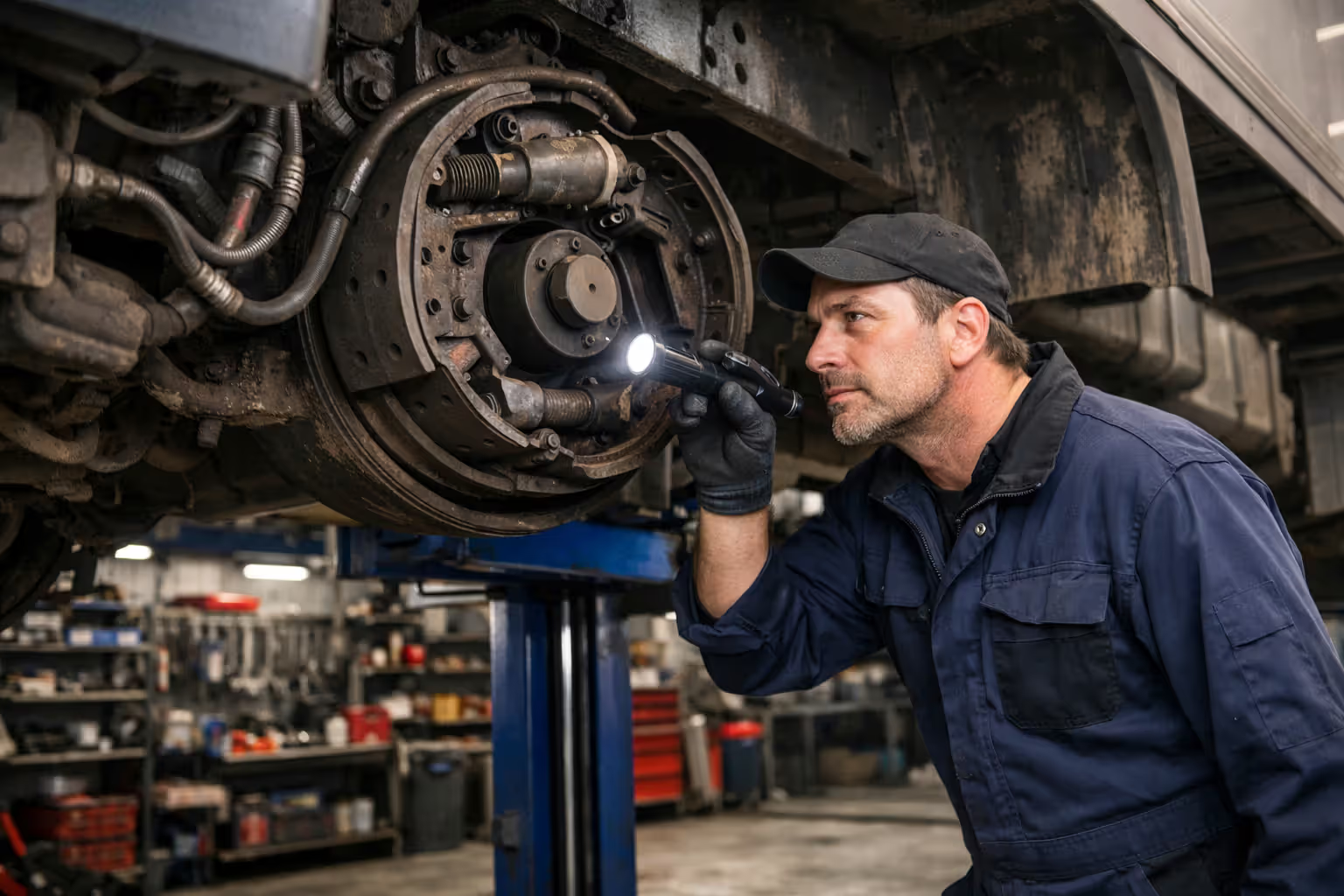
Commercial trucks need constant mechanical attention. Those brakes generate incredible heat going down mountain grades—brake drums can glow red-hot. If one component fails during a descent, the whole system can collapse within minutes. You get a runaway 80,000-pound missile with no way to stop.
Tire blowouts cause carnage at highway speeds, especially on the steering axle. The driver suddenly fights to maintain control while other motorists panic and swerve. Many trucking outfits run tires until they're nearly bald because new commercial tires cost $400-500 each, and an 18-wheeler needs, well, 18 of them.
The maintenance shortcuts are worse than most people imagine. Companies delay brake jobs to squeeze another month out of worn components. They skip thorough pre-trip inspections because those take time. They push oil changes past recommended intervals. Every shortcut saves a few hundred dollars—and creates another opportunity for catastrophic failure.
Third-party repair shops introduce another variable. Some use discount brake pads that wear out in half the time. Others don't properly torque wheel nuts. A brake service that saves $300 can cause a crash that costs $3 million in damages and destroys lives.
Author: Rebecca Thornton;
Source: capeverde-vip.com
Road and Weather Conditions
Watch a semi navigate icy roads and you'll understand the problem. That high center of gravity makes them prone to tipping over on curves that wouldn't faze a car. Empty trailers catch crosswinds like sails, shoving the truck sideways. Snow and ice reduce braking effectiveness far more dramatically than with passenger vehicles.
Construction zones compress traffic into narrower lanes. Trucks need every inch of those lanes plus some, and when traffic suddenly stalls, their stopping distance becomes the critical factor. Add poor lighting in nighttime work zones, and you've created a perfect storm for rear-end collisions.
Crash patterns you'll see repeatedly:
- Rear-end impacts: The truck doesn't stop in time for slowed traffic—by far the most common scenario, especially in construction zones
- Underride collisions: Car ends up beneath the trailer in either a rear or side impact, with devastating results for occupants
- Blind spot crashes: Trucker changes lanes directly into a vehicle they never saw in the massive blind zones beside the cab and trailer
- Jackknife situations: The trailer swings out perpendicular to the cab during hard braking, sweeping across multiple lanes like a scythe
- Wide turn accidents: Truck swings wide to make a right turn and crushes a vehicle in the right lane that tried to pass
- Rollover incidents: Excessive speed on curves or improperly loaded cargo causes the truck to tip, often striking multiple vehicles
The physical forces involved in a crash between a fully loaded tractor-trailer and a passenger vehicle are almost incomprehensible. We’re not talking about fender-benders—we’re talking about collisions where the laws of physics virtually guarantee catastrophic outcomes for the occupants of the smaller vehicle. Prevention through strict regulatory enforcement is the only real solution
— Mark Rosekind
Who Is Liable After a Semi Truck and Pickup Truck Accident?
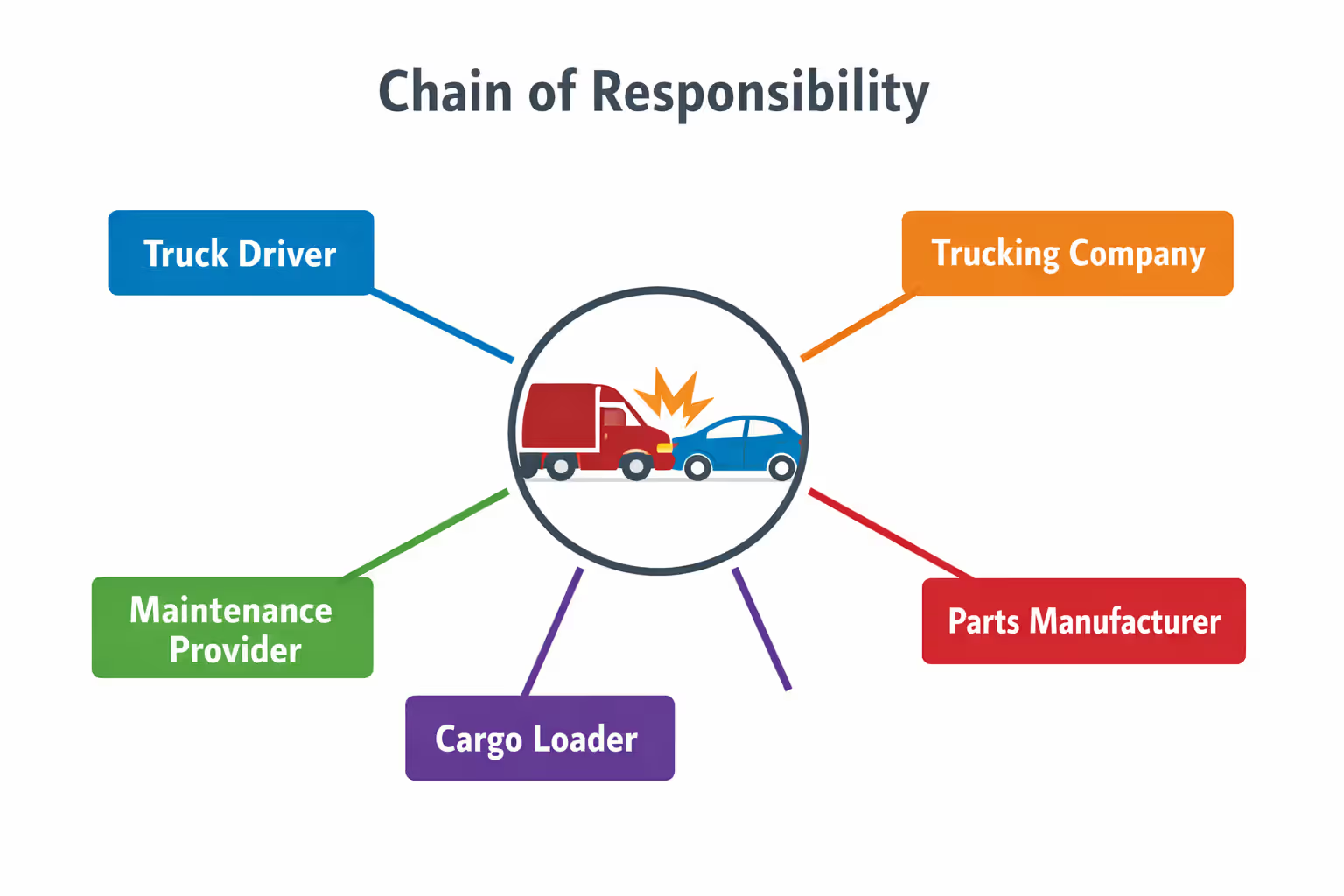
Here's where these cases get complicated in ways that make insurance adjusters nervous. Liability rarely stops with just the driver. Federal employment law and transportation regulations create a responsibility chain that can stretch across half a dozen companies.
Trucking companies can't just claim their driver screwed up and wash their hands of responsibility. Under the legal principle of respondeat superior, employers are on the hook for their employees' negligent actions during work. But that's just the start. Companies face direct liability for their own failures: hiring drivers with terrible safety records, providing inadequate training, or pressuring drivers to meet impossible delivery schedules that require breaking hours-of-service rules.
The "independent contractor" classification deserves scrutiny. Companies love classifying drivers this way to dodge liability, but courts aren't buying it when the company controls dispatch, routes, schedules, and equipment. If it walks like an employment relationship and quacks like one, judges will treat it as one.
Potential Liable Parties in Semi Truck Accidents
| Potentially Responsible Party | How They Might Be At Fault | What Evidence Proves It |
| Truck Driver | Excessive speed, driving exhausted, texting while driving, operating under the influence | Electronic logs, cell phone records, blood test results |
| Trucking Company | Hired driver with suspended license, failed to provide proper training, pushed driver to violate federal hours limits | HR files, training documentation, FMCSA compliance reports |
| Maintenance Company | Failed to replace worn brakes, improperly repaired steering system, missed dangerous tire damage | Service records, inspection checklists |
| Cargo Loading Company | Overloaded truck beyond legal weight, distributed weight unevenly causing instability | Bills of lading, weight tickets, loading documentation |
| Manufacturer | Defective brake system, recalled steering component never fixed, tires with known failure rate | Recall bulletins, engineering analysis, testing results |
Maintenance providers who service trucks assume real liability. When a repair shop certifies that brakes pass inspection, then those brakes fail catastrophically two weeks later, that shop shares responsibility for resulting injuries and deaths.
Cargo loading companies must follow strict federal securement regulations. Weight needs proper distribution front-to-back and side-to-side. Improperly loaded trailers handle unpredictably and can tip over during routine maneuvers. A cargo loader who saves 15 minutes by skipping proper procedures can cause a rollover that kills a family.
Parts manufacturers get pulled into lawsuits when defective components contribute to crashes. Recent years brought major recalls for steering assemblies that crack, brake systems that fail prematurely, and tire models with abnormally high blowout rates. If a recalled part caused your crash and the company never fixed it, that manufacturer has liability exposure.
Even government agencies can share fault when dangerous road design, missing signage, or poor maintenance contributes to a crash. These claims face stricter rules and shorter filing deadlines, but they're viable when road conditions played a causal role.
Author: Rebecca Thornton;
Source: capeverde-vip.com
Immediate Steps to Take Following a Car and Semi Truck Collision
What you do in the first hour after the crash matters enormously—for both your health and your legal case. First move: call 911, period. Don't decline the ambulance because you're worried about the cost. Some injuries—internal bleeding, brain trauma, spinal cord damage—show no immediate symptoms. People have walked away from crashes feeling "fine" only to collapse hours later from internal injuries.
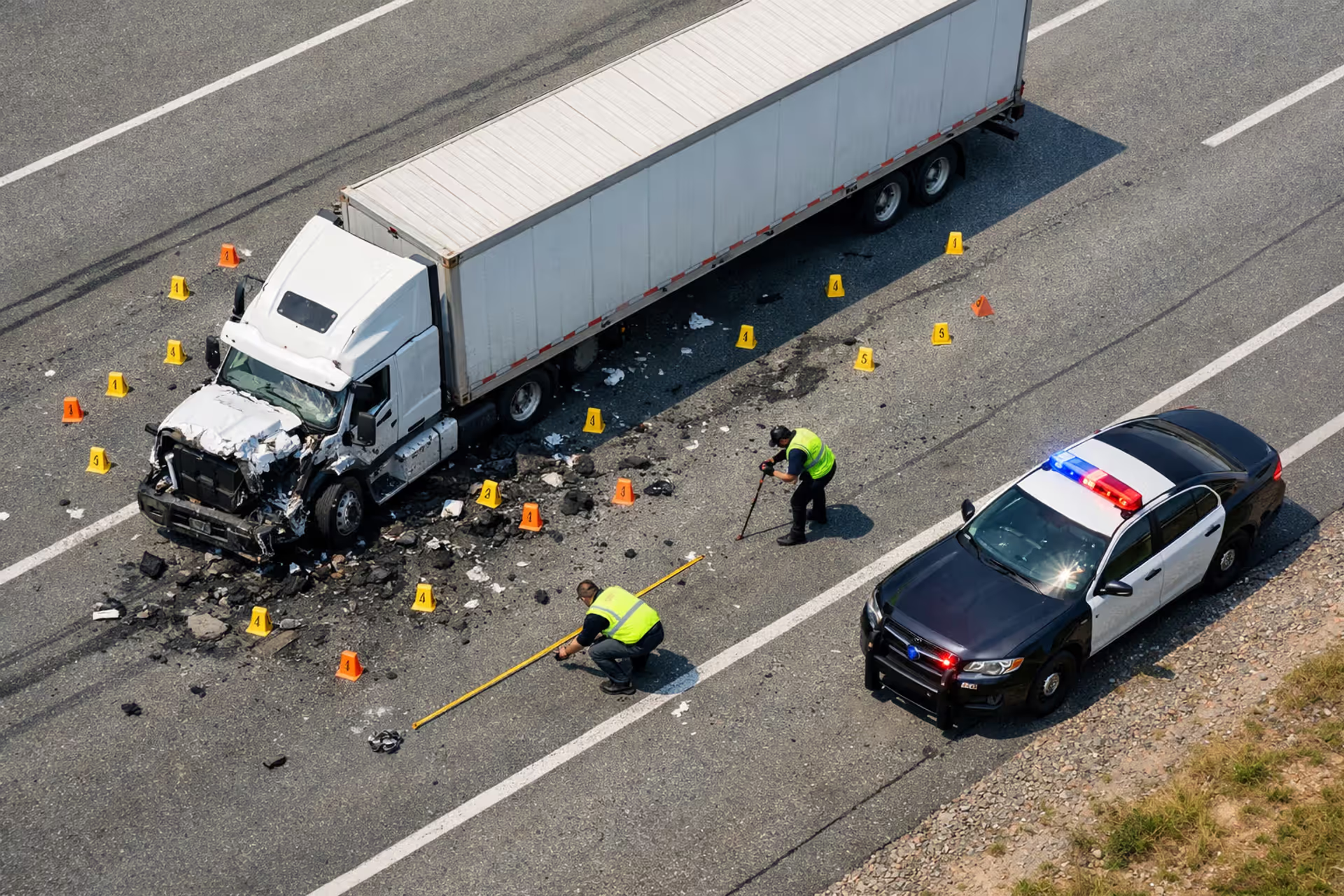
If you're physically capable, start documenting immediately. Use your phone to photograph everything: all vehicles from multiple angles, property damage, skid marks, road conditions, traffic controls, weather conditions. Get clear shots of the truck's DOT number (usually on the cab door), license plate, company name, and any trailer identification. Photograph the driver's commercial license and insurance card.
Witness information is gold—get names, phone numbers, and email addresses from everyone who saw what happened. Trucking companies dispatch investigators within hours of serious crashes. Those investigators will interview witnesses and collect evidence before you've even gotten home from the hospital. Witnesses who clearly saw critical facts may become unreachable after a few days.
Don't let anyone touch your vehicle until your attorney says it's okay. Accident reconstruction experts may need to inspect it. Crush damage patterns tell a story about impact forces and speed. In motorcycle crashes, your gear (helmet, jacket, pants) provides crucial evidence—don't throw it away, no matter how damaged.
Here's what not to do: don't give recorded statements to any insurance company without a lawyer present, including your own carrier. Adjusters know exactly which questions to ask to get answers they'll use against you later. That offhand comment "I'm okay" that you make while in shock and disoriented? Expect to see that quoted in their denial letter six months from now when you're still in physical therapy.
Never sign documents from the truck company's insurer. Those initial settlement offers and releases come while you're still processing the trauma, before you know the full extent of your injuries, and they're designed to close your claim for pennies on the dollar.
You do need to notify your own insurance carrier, but keep it brief: date, time, location, "I was struck by a commercial truck," and nothing more. Don't discuss injuries, fault, or what happened in detail until you've talked with an attorney.
In trucking accident litigation, the first 72 hours determine the trajectory of the entire case. Critical electronic data can be overwritten, witnesses scatter, and physical evidence deteriorates. The carriers know this—they have rapid response teams deployed before victims even reach the hospital. Leveling that playing field requires equally swift legal action
— Joseph Fried
How Insurance Claims Differ in Semi Truck Accident Cases
Commercial truck insurance exists in a completely different universe than your personal auto policy. Federal regulations require minimum coverage of $750,000 for most freight and $5 million for hazardous materials. Most trucking companies carry at least $1 million in primary coverage, often with additional umbrella policies stacked on top.
Those big policy limits attract fierce defense efforts. Insurance companies assign their toughest adjusters and hire specialized defense firms that do nothing but trucking cases. They understand that most injured people lack the resources for multi-year litigation and will eventually accept whatever's offered out of desperation.
Multiple potentially liable parties means multiple insurance policies might apply to your claim. A single crash could involve the driver's occupational accident policy, the trucking company's commercial liability coverage, the maintenance shop's garage liability insurance, the cargo company's policy, and manufacturer's product liability coverage. Identifying every applicable policy requires investigation that goes way beyond what adjusters will volunteer.
Electronic control module data and electronic logging devices provide objective evidence about the truck's operation. This data shows exact speed, braking patterns, engine performance, hard turns, and hours-of-service compliance. It can prove or disprove what the driver claims happened. Trucking companies have been caught downloading this data immediately after crashes and then claiming it was "lost" or "corrupted." You need a lawyer who knows how to preserve this evidence through immediate legal demands before it disappears.
Federal Motor Carrier Safety Regulations create liability pathways that don't exist in regular car crashes. Violations establish negligence per se in many jurisdictions—the regulatory violation itself proves negligence without needing additional evidence. A driver who exceeded hours-of-service limits is negligent by definition, regardless of other factors.
Evidence destruction happens more often than you'd think. Logbooks disappear. Electronic data gets "corrupted." Maintenance records vanish. Video footage from terminal cameras becomes "unavailable." Courts can sanction companies for destroying evidence, but only when your attorney acts fast enough to preserve it through spoliation letters and emergency court orders.
Compensation Available for Motorcycle Semi Truck Accident Victims
Economic damages cover your actual financial losses with proof. Hospital bills, surgery costs, rehabilitation expenses, prescription medications, medical equipment, home modifications for disabilities, and future medical care all get compensated. Serious injuries often require lifetime care—attendant care alone can run $200,000+ annually for catastrophically injured people.
Lost income covers the paychecks you missed during recovery. Lost earning capacity addresses permanent disabilities that prevent you from returning to your old job or reduce your earning potential. Consider a 32-year-old electrician who suffers a spinal cord injury that leaves him unable to work. He's losing 30+ years of future earnings—that number reaches into the millions when properly calculated with present value adjustments.
Property damage compensation covers vehicle replacement or fair market value, plus damaged personal property. For motorcyclists, this includes expensive protective gear, custom parts, and accessories that typically exceed what insurance adjusters initially offer.
Non-economic damages compensate for things you can't quantify with receipts. Physical pain and suffering, emotional distress, anxiety, depression, PTSD from the traumatic event, loss of enjoyment of life when you can't participate in activities you loved, disfigurement, and disability all fall into this category. These damages often exceed economic damages in catastrophic injury cases.
Loss of consortium claims compensate spouses separately for how the injury damaged their marriage—loss of companionship, affection, sexual relations, and household services. These claims are separate from the injured person's claim.
Wrongful death cases allow surviving family members to recover when crashes prove fatal. Funeral and burial costs, lost financial support the deceased would have provided, lost benefits, loss of inheritance, and compensation for loss of love, companionship, guidance, and support get included. Children losing parents face decades without that irreplaceable guidance and support.

Author: Rebecca Thornton;
Source: capeverde-vip.com
Punitive damages apply when defendants acted with gross negligence or willful disregard for safety. A company that deliberately ignores safety violations, allows drivers to falsify hours logs, or knowingly operates trucks with critical defects may face punitive awards designed to punish and deter such conduct. These can exceed compensatory damages by factors of two, three, or more.
According to Harry Adler, Executive Director of the Truck Safety Coalition: "The trucking industry has lobbied successfully for minimal safety rules and weak enforcement. When people get hurt or killed, victims face well-funded defendants who'll spend whatever it takes to avoid paying. The only way to level that playing field is with legal counsel who truly understands the regulations and the industry's standard defense playbook." (Source: Truck Safety Coalition Policy Brief, 2022)
Common Mistakes That Weaken Your Semi Truck Accident Claim
Delaying medical treatment creates ammunition for insurance companies. If you wait three weeks to see a doctor, adjusters will argue your injuries must not be that serious, or perhaps something else caused them. Pain requires documented treatment—skipping appointments or ignoring your doctor's recommendations damages your credibility and your case.
Those quick settlement offers that arrive within days or weeks of the crash? They're calculated to close your claim before you understand what you're actually facing. Settlements are final and binding. You can't reopen the case when complications develop or you need additional surgery six months down the road. That $45,000 that seemed generous becomes a cruel joke when you're facing $180,000 in medical bills and permanent disability.
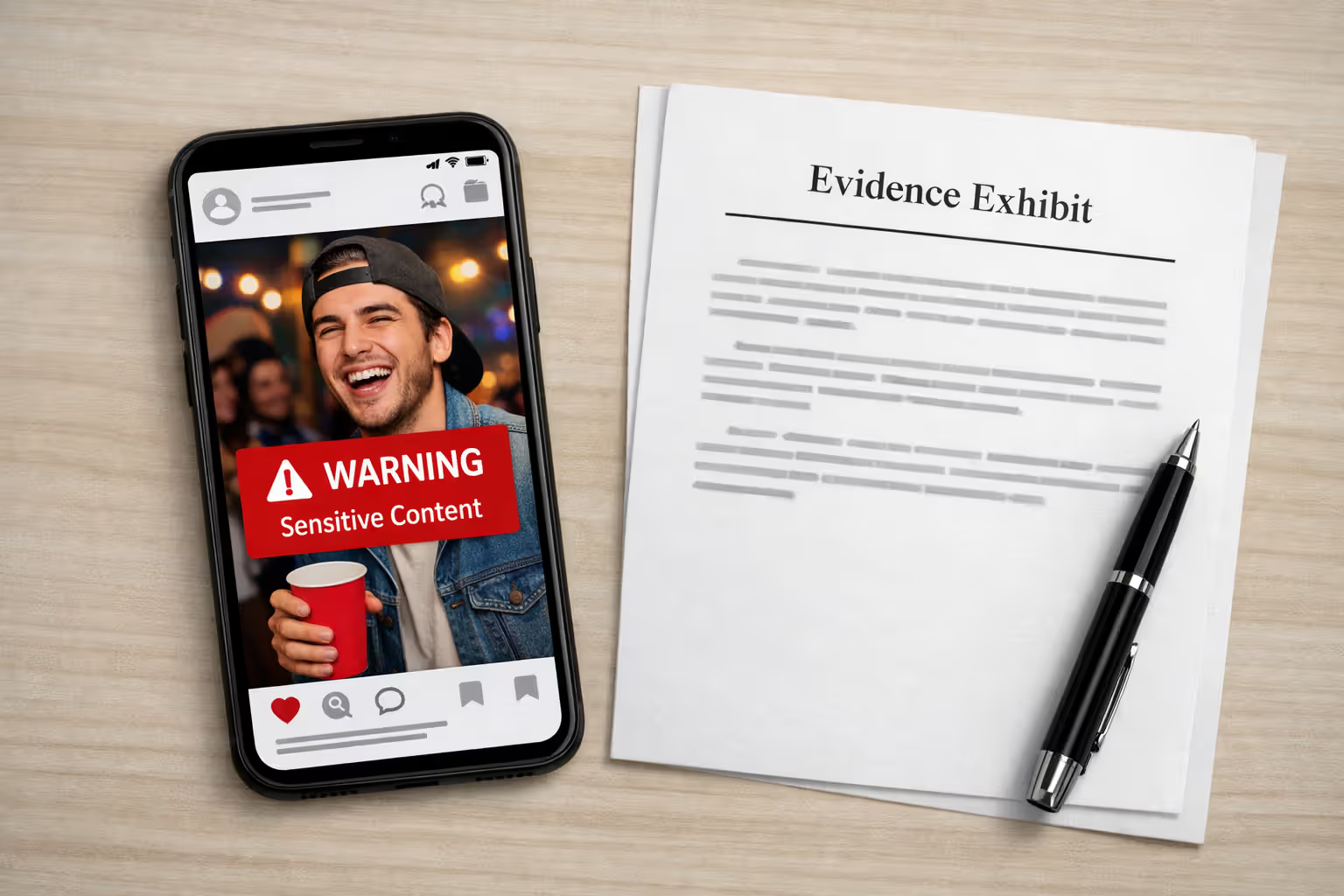
Social media becomes exhibit A for defense attorneys. Photos of you at your nephew's birthday party get presented as "proof" you're not really suffering. A Facebook check-in at the grocery store contradicts disability claims. Privacy settings won't protect you—defense lawyers routinely get court orders for complete social media access, including "deleted" posts.
Author: Rebecca Thornton;
Source: capeverde-vip.com
Every state has filing deadlines called statutes of limitations, typically two to three years for injury claims. Some states have shorter periods. Government entity claims often require formal notice within 60 to 180 days—miss that deadline and your claim dies even if the government was 100% at fault. Miss the filing deadline by even one day and courts will dismiss your case without considering the merits.
Handling these claims without specialized attorneys is false economy. General practice lawyers lack the detailed knowledge of federal trucking regulations, industry practices, and technical evidence necessary to maximize recovery. The trucking company will have defense attorneys who handle nothing but trucking cases—you need equivalent expertise, not someone who does divorce law three days a week.
Inconsistent statements about the crash undermine everything. Trauma affects memory and that's understood, but major inconsistencies about basic facts let defense lawyers argue you're lying or exaggerating. If you're uncertain about specific details, say so—"I don't remember" is far better than guessing and contradicting yourself later.
Failing to preserve physical evidence means it's gone forever. That cracked helmet you tossed could have proven impact severity. The dashcam footage you didn't save got automatically overwritten. Your torn riding jacket showed impact patterns. Physical evidence has a short lifespan without prompt preservation and documentation.
Frequently Asked Questions
The hours and days following a collision between a commercial truck and a passenger vehicle represent a critical window where your actions—or inaction—shape your financial future for years or decades. While you're still processing the trauma, insurance companies are already strategizing to minimize what they'll pay. Trucking companies dispatch investigators who download electronic evidence and interview witnesses before you've even processed what happened.
Your primary focus needs to be on healing, but protecting your legal options requires immediate action. Consulting with an attorney who focuses specifically on trucking accidents, understands the federal regulatory framework inside and out, and has resources to conduct thorough investigations gives you the best shot at full compensation. These cases are too complex, the defense tactics too sophisticated, and the stakes too high to handle alone or with generalist counsel who does a little bit of everything.
The physical trauma heals first, if it heals. The emotional scars take longer. But the financial consequences can extend for decades—lost earning capacity, ongoing medical needs, permanent disability accommodations. Proper legal representation ensures that companies and individuals who caused the crash through negligence or regulatory violations actually face accountability, and that you receive compensation truly sufficient for both immediate expenses and long-term needs.
The trucking industry banks on victims being overwhelmed and under-informed. They count on people accepting the first offer because they're desperate. Knowledge of your rights and prompt action with qualified legal counsel are your most powerful tools for achieving justice and beginning to rebuild your life after a crash that changed everything.