Night view from inside a truck cabin showing a dark empty highway illuminated by headlights with a dashboard clock displaying late night hours
Hours of Service Violations: Penalties, Enforcement, and Legal Consequences for Commercial Drivers

Content
Break federal driving time limits, and you're looking at problems that multiply fast. The citation itself? That's just the start. Points stack up on your CDL record. Your insurance gets expensive—or disappears entirely. And if you're unlucky enough to have an accident while over your hours, you've handed plaintiff attorneys the evidence they need to destroy you in court.
Trucking companies face their own version of this nightmare. Their drivers' violations become their liability, their fines, their lost contracts with shippers who won't work with carriers sporting poor safety ratings.
Here's what actually happens when someone crosses these regulatory lines, how enforcement catches violations, and why the consequences reach further than most drivers realize.
What Qualifies as an Hours of Service Violation Under FMCSA Rules
FMCSA didn't pick these time limits randomly. Property-carrying drivers get specific windows for driving and rest. Step outside those windows, and you've created a violation that goes straight into federal databases.
Take the 11-hour driving window. You finish a 10-hour break, start your day, and from that moment you can drive for 11 hours maximum. Hit 11 hours and 1 minute behind the wheel? That's a violation. Doesn't matter if you were pulling into a rest area or had just one more mile to the delivery dock.
The 14-hour rule confuses people because it works differently. Once you start any kind of work after your break—even just doing a pre-trip inspection—a 14-hour countdown begins. You must finish all driving before those 14 hours expire. Spent two hours waiting at a shipper? Those two hours still count against your 14, even though you weren't driving. The clock doesn't pause. It doesn't stop for lunch. It certainly doesn't care about your appointment time at the receiver.
After eight hours of actual driving, regulations require a 30-minute break. Not 29 minutes. Not 25 minutes while slowly rolling through construction traffic. Thirty consecutive minutes with the truck stationary and you logged as on-break. Skip it, and you've violated the rule even if you felt perfectly alert.
The weekly limits—60 hours across seven consecutive days, or 70 hours across eight days depending on your carrier's operation—create another trap. Drivers sometimes lose track across multiple short runs. By Thursday afternoon, they've already burned through their weekly allowance but don't realize it until an inspection pulls their full log history.
Sleeper berth splits offer flexibility but demand precision. Log seven hours in the sleeper, and you need at least two more consecutive hours off-duty to complete your break. Get that math wrong—maybe you take only 90 minutes off-duty—and your entire rest period doesn't count. You've been driving with no valid break, creating violations for every subsequent driving segment.
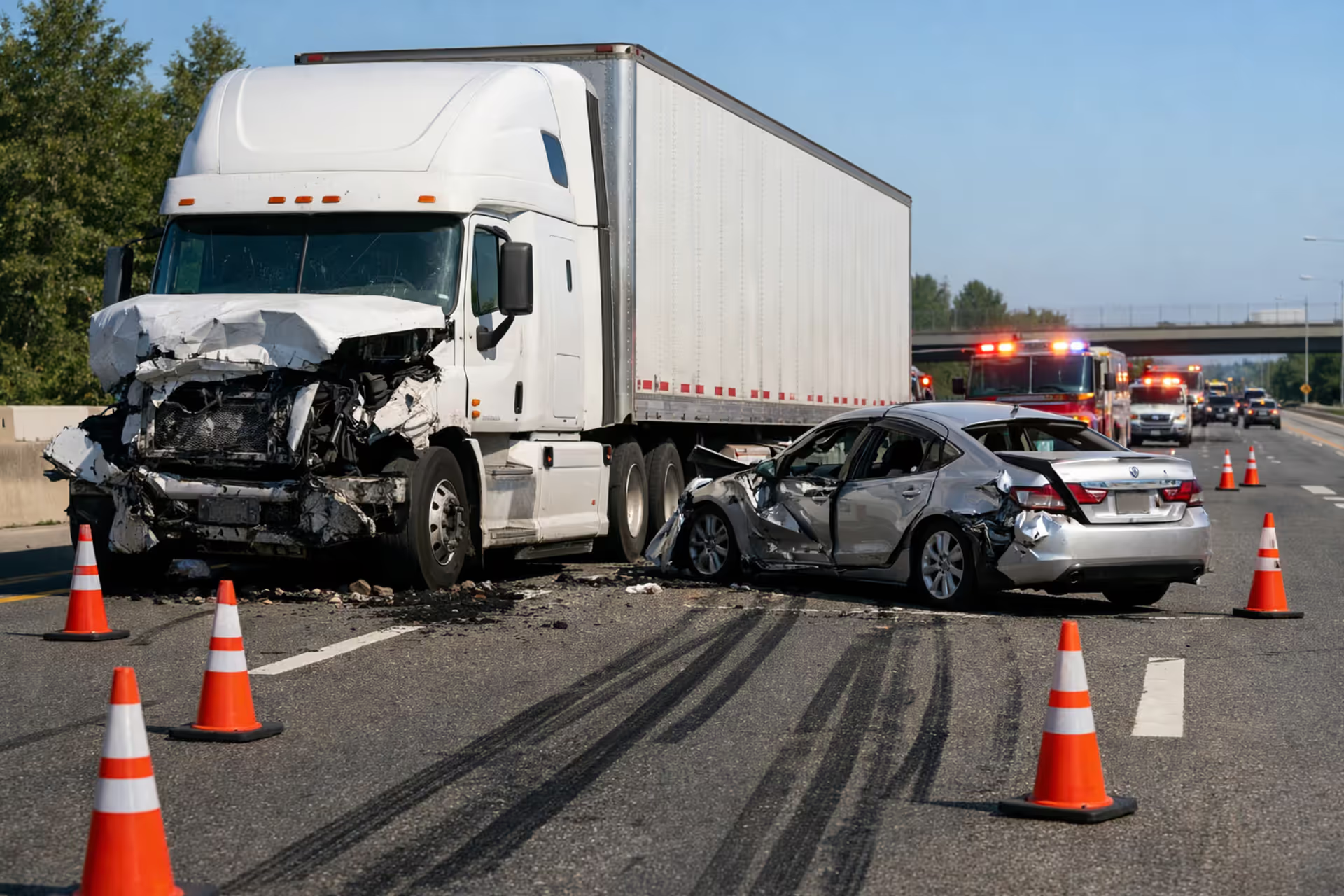
Fatigue is the silent killer on our highways. When a driver pushes past regulated hours, reaction times deteriorate to levels comparable with alcohol impairment. The rules exist not as bureaucratic obstacles, but as the last line of defense between exhausted operators and catastrophic outcomes that devastate families forever
— Ray LaHood
Common HOS Rule Breaks That Trigger Citations
Roadside inspections reveal patterns. Inspectors see drivers who edit their ELD records to manufacture extra driving time. They compare timestamps from weigh stations against logged locations. They review fuel purchases against the duty status shown at that exact time. When a driver bought fuel in Kentucky at 2:47 PM but the log shows them off-duty in Tennessee at 2:47 PM, the discrepancy is obvious.
Form and manner violations are the paperwork side of this equation. Your ELD stopped working? You need supporting documents showing when it broke, what you did about it, and proper paper logs from that point forward. Operating without those documents generates citations even if you didn't exceed any driving limits.
Then there's falsification, which crosses from mistake into fraud territory. Logging sleeper berth time while actually driving. Showing off-duty status during hours you spent in the driver's seat covering miles. Inspectors have tools that make this obvious—GPS coordinates, vehicle movement data, timestamps from transponders. The technology doesn't lie, and neither should your logs.
Author: Jason Calloway;
Source: capeverde-vip.com
The Difference Between Minor and Egregious Violations
FMCSA sorts violations into categories that determine your penalty. Drive 30 minutes past your 11-hour limit? That's minor—you'll get cited and receive points, but it's treated as an error rather than deliberate rule-breaking.
Push three hours past your limit, though, and you've crossed into serious violation territory. At this level, inspectors issue immediate out-of-service orders. Your truck sits until you complete the required rest period, and the violation carries substantially higher severity weights in the CSA system.
Egregious violations represent willful disregard. Anything more than three hours beyond the limit qualifies. So does driving eight consecutive hours without taking that mandatory 30-minute break. These trigger mandatory minimum civil penalties—$2,923 per occurrence for the driver, with FMCSA having zero discretion to reduce that amount.
The distinction matters because egregious violations put your CDL at immediate risk and make you radioactive to quality carriers who screen violation histories before hiring.
Driver Penalties and Career Consequences for HOS Violations
Citations hit your wallet immediately. Depending on severity, individual drivers face civil penalties from $200 up to $2,923 per violation. States often add their own fines under local traffic codes, potentially doubling the financial damage.
Beyond the immediate fine, every violation feeds into the CSA system with severity weights that stick to your record for three full years. A single serious violation adds enough points to make you look risky to carriers who actually care about safety scores. Multiple violations, and you've essentially branded yourself as someone who can't—or won't—follow the rules.
| Violation Severity | Driver Fine Range | CSA Points Applied | CDL Suspension Risk |
| Minor infractions (under 30 minutes excess) | $200–$500 | 4-point severity weight | None for isolated incidents |
| Moderate overages (30 minutes to 2 hours) | $500–$1,000 | 7-point severity weight | 60-day suspension if pattern develops |
| Serious breaches (2–3 hours beyond limit) | $1,000–$2,000 | 10-point severity weight | 120-day suspension after multiple occurrences |
| Egregious violations (exceeding 3+ hours) | $2,923 minimum (no reduction allowed) | 10-point severity weight | One year suspension, possibly permanent for repeat egregious violations |
Your CDL faces disqualification once violations accumulate. Get hit with two serious violations inside a three-year window? You're looking at 60 days off the road. Three serious violations mean 120 days without driving. These suspensions apply across all states—you can't get around them by applying for a license elsewhere.
Employment options shrink dramatically once violations appear in the PSP system that carriers check before hiring. Major trucking companies have automated screening that rejects applicants with recent HOS violations. You're left competing for positions at smaller outfits that pay less and typically assign the worst routes.
Insurance underwriters review these violation histories too. Drivers with multiple citations face premium surcharges that price them out of good positions, or outright denial that forces them toward high-risk insurance pools with limited capacity and higher costs.

Author: Jason Calloway;
Source: capeverde-vip.com
How FMCSA Enforcement Cases Target Repeat Offenders
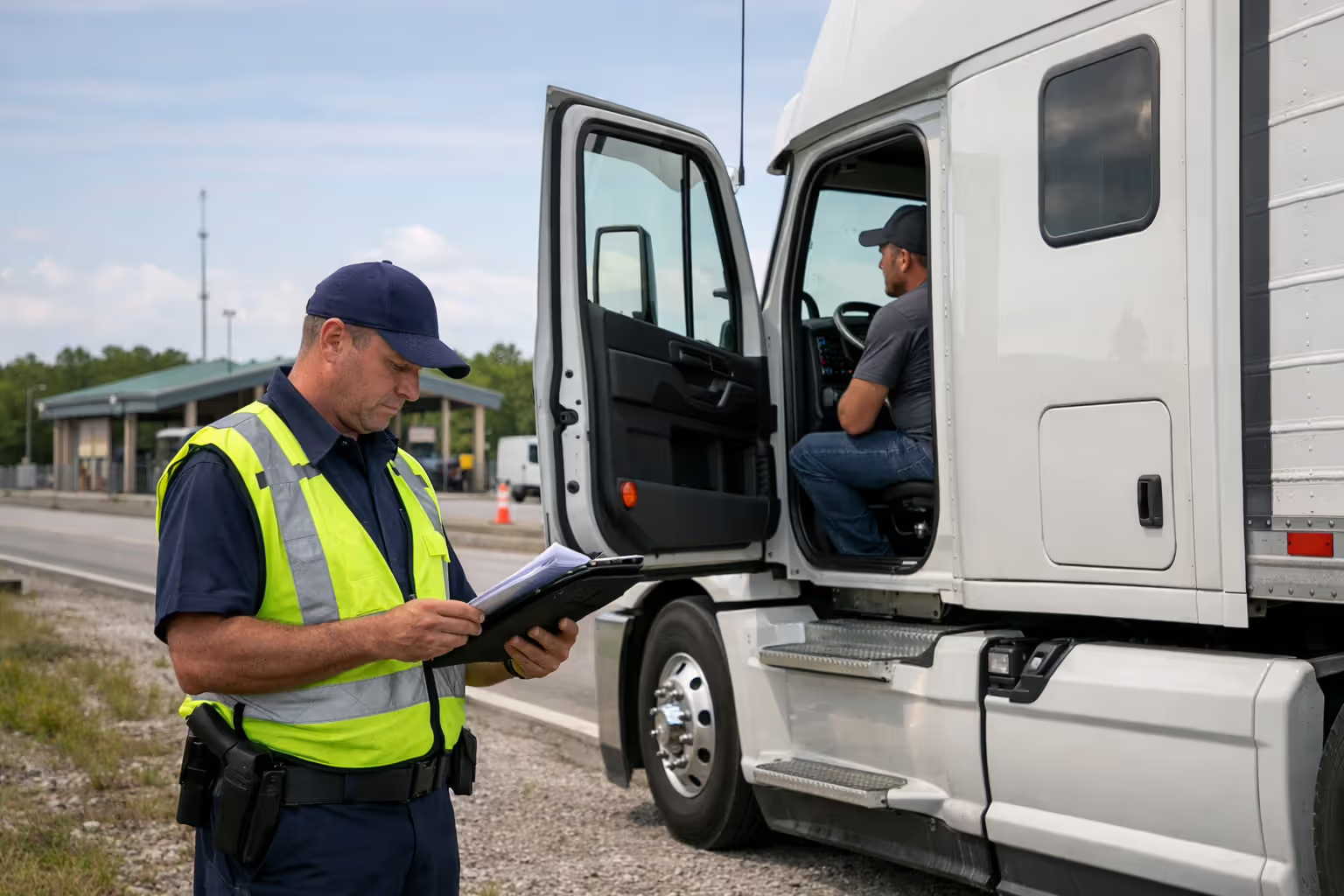
Enforcement starts at roadside, where inspectors conduct examinations ranging from quick credential checks to comprehensive vehicle and log reviews. Level I inspections include full examination of your electronic logs—not just today, but the previous seven days.
Roadside Inspections and ELD Audits
Inspectors download ELD data using standardized protocols that every compliant device supports. They look for specific red flags: unidentified driving events that occur when the truck moves without anyone logged in. One or two might be legitimate mistakes. Five or six suggests drivers are swapping trucks without documenting it, or running segments off-record.
Edit frequency tells a story. Sure, legitimate corrections happen—you forgot to switch from on-duty to driving, then fixed it later. But when inspectors see dozens of manual edits, particularly ones that conveniently extend available hours right before you would have run out, they dig deeper. They cross-reference those edits against fuel receipts, bills of lading, and weigh station records. Discrepancies between physical evidence and logged data trigger citations and often full investigations.
Claiming ELD malfunction requires proof. Inspectors want to see documentation of when it broke, who you notified, what repair steps you initiated, and whether you properly switched to paper logs. Continue driving on a malfunctioning ELD beyond eight days without getting it fixed? You'll catch violations for both the HOS issues and ELD non-compliance.

Author: Jason Calloway;
Source: capeverde-vip.com
Author: Jason Calloway;
Source: capeverde-vip.com
Pattern-of-Violation Investigations
The Safety Measurement System watches for patterns across time. When your violation rate crosses certain thresholds—or your carrier's fleet shows systematic non-compliance—FMCSA initiates compliance reviews that examine months of records.
Investigators analyze whether violations cluster around specific customers, routes, or delivery windows. When they notice that a carrier's drivers consistently violate HOS approaching one particular shipper's facility, it reveals operational pressure to meet unrealistic schedules. That's evidence of systemic problems, not individual driver errors.
The DataQs challenge process allows drivers and carriers to dispute violations they can prove were erroneous. Success requires substantial documentation: GPS records timestamped to the minute, toll booth receipts, witness statements. The review takes 30 to 45 days minimum, during which the disputed violation remains on your record affecting your CSA scores.
Carriers receiving conditional or unsatisfactory safety ratings face immediate business restrictions. Many shippers include satisfactory safety ratings as contract requirements, so a downgrade can mean losing customer accounts overnight.
Company Liability: Fines and Sanctions for Motor Carriers
Motor carriers bear responsibility for their drivers' violations even when company policy explicitly prohibits such conduct. FMCSA's position is straightforward: carriers must implement monitoring systems effective enough to actually prevent violations, not just have policies that theoretically discourage them.
Civil penalties for carriers start at $1,000 per violation and climb steeply. Requiring or permitting a driver to operate beyond legal limits carries penalties up to $16,864 per occurrence. The difference between "requiring" and "permitting" is largely semantic—if your dispatch schedules make compliance mathematically impossible, you've created a permission structure regardless of what your policy manual says.
| Violation Category | Initial Penalty Range | Repeat Offender Range | Statutory Maximum |
| Insufficient log maintenance requirements | $1,000–$3,000 | $5,000–$11,000 | $16,864 per instance |
| Requiring or permitting rule violations | $3,000–$7,000 | $11,000–$16,864 | $16,864 per instance |
| Driver coercion cases | $16,864 (no reduction permitted) | $16,864 and up | $16,864 per proven incident |
| ELD record-keeping failures | $1,500–$4,000 | $7,000–$11,000 | $16,864 per instance |
When FMCSA identifies systematic non-compliance—violations occurring across multiple drivers over sustained periods—penalties multiply exponentially. A carrier running 50 drivers who each commit one violation monthly faces annual exposure exceeding $800,000, and that's before considering enhanced penalties for patterns.
Out-of-service orders stop operations immediately. No trucks move. No revenue gets generated. The carrier must submit comprehensive safety management plans, provide retraining documentation, and sometimes replace management personnel before FMCSA lifts the order.
Safety rating downgrades from satisfactory to conditional or unsatisfactory trigger cascading problems. Federal regulations flatly prohibit carriers rated unsatisfactory from operating in interstate commerce. Conditional ratings require compliance reviews and documented improvement within strict timeframes.
Insurance carriers respond to violation patterns by raising premiums anywhere from 30% to 200%, or declining to renew coverage entirely. Finding replacement coverage at that point is difficult. High-risk insurers impose restrictive terms: lower liability limits, higher deductibles, and sometimes monitoring requirements that cost extra.
The trucking industry’s biggest legal exposure isn’t the crash itself — it’s the paper trail that proves the carrier knew its driver was exhausted and did nothing to stop it. ELD data, dispatch logs, and text messages become a plaintiff attorney’s most powerful weapon in the courtroom
— Kevin Burch
Hours of Service Violations and Fatigue Accident Liability in Court
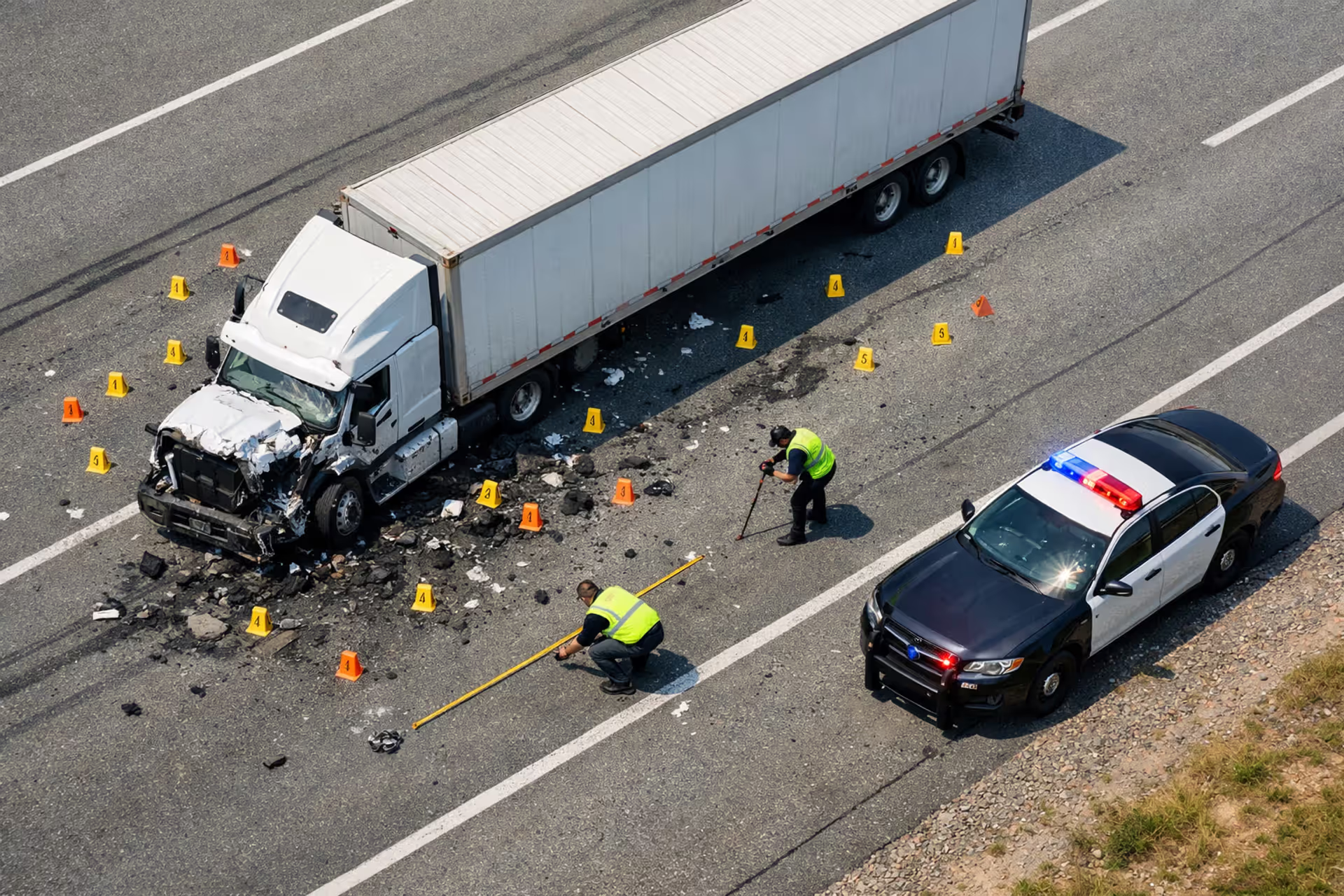
When crashes happen, violation records become the foundation of plaintiff cases. Attorneys subpoena complete driving records, months of ELD data, and dispatch communications to build their negligence claims.
How HOS Violations Strengthen Negligence Claims
Negligence per se doctrine applies when defendants violate safety statutes designed to prevent exactly the type of harm that occurred. An HOS violation in a fatigue-related crash satisfies this legal standard automatically, shifting the burden to defendants to prove the violation somehow didn't contribute to the accident.
Juries react viscerally to violation evidence. Mock trial research consistently shows that jurors interpret HOS violations as deliberate decisions to prioritize profit over public safety. This perception doesn't just increase liability findings—it dramatically inflates damage awards.
Expert witnesses reconstruct driving schedules showing cumulative fatigue effects. Even when a driver technically completed 10 hours off-duty, experts examine sleep quality factors: Was that rest period in a sleeper berth at a truck stop next to a busy interstate, or in proper facilities? The difference matters, and plaintiff attorneys exploit every detail.
An hours of service violation in a fatigue-related crash transforms what might be a $2 million settlement into an $8 million jury verdict. It demonstrates the carrier knew the rules, understood the risks, and chose to ignore both. That's exactly what punitive damages are designed to address.
— Michael Leizerman, Transportation Trial Attorney, Leizerman Law Firm
Punitive damages enter the picture when violations are egregious or repeated. Courts have awarded punitive damages three to five times compensatory damages in cases where carriers demonstrated patterns of requiring drivers to exceed limits.
Corporate compliance policies don't function as liability shields. Courts examine whether those policies received actual enforcement. A carrier with written HOS compliance procedures but no monitoring system, no disciplinary actions for violations, and dispatch practices that make compliance impossible cannot hide behind paper policies that nobody follows.
Insurance Implications and Claim Denials
Commercial auto policies contain compliance warranties requiring adherence to FMCSA regulations. Material violations of these warranties provide legal grounds for coverage denial.
Insurers investigate aggressively following serious crashes. They examine months of ELD records, not just the day of the accident. Patterns of violations discovered during these investigations give insurers leverage to deny claims entirely, or seek reimbursement after paying third-party claims.
Umbrella and excess policies frequently exclude coverage for losses arising from willful violations of safety regulations. When underlying primary policies pay their limits, excess carriers may refuse additional coverage if they can prove knowing non-compliance.
Some carriers face complete policy rescission—cancellation retroactive to inception—when insurers discover systematic log falsification or widespread violation patterns. This forces carriers to repay all claims the insurer previously covered, potentially creating millions in unexpected liability.
Real FMCSA Enforcement Cases: Penalties Issued in 2023–2024
Recent enforcement demonstrates FMCSA's aggressive stance toward repeat offenders. March 2023 saw a Texas-based carrier settle for $287,000 after investigators documented 87 separate HOS violations across their fleet. The investigation uncovered dispatch software that calculated routes assuming drivers would exceed the 11-hour limit—the software literally planned violations into every route.
A Pennsylvania carrier paid $425,000 in August 2023 after investigators found systematic pressure on drivers to falsify logs. Text messages between dispatchers and drivers explicitly instructed them to edit ELD records to show compliant hours while actually exceeding limits. The digital paper trail made defense impossible.
FMCSA issued imminent hazard out-of-service orders to 14 carriers in 2023 specifically for combinations of HOS violations and unsafe vehicles. These orders immediately halted all operations, stranding freight and terminating existing contracts.
Individual driver penalties have escalated too. February 2024 brought a $15,000 civil penalty against a driver who accumulated seven egregious violations within six months, including one instance of driving 17 consecutive hours. FMCSA permanently revoked his CDL.
Coercion cases are trending upward. FMCSA received 1,247 coercion complaints in 2023. They substantiated 23% after investigation. Proven coercion cases result in that minimum $16,864 penalty per instance and typically trigger comprehensive compliance reviews of the carrier's entire operation.
The agency has also targeted ELD manipulation schemes. Several recent cases involved drivers using third-party apps designed to interfere with ELD functionality. These violations carry enhanced penalties because they demonstrate intentional circumvention of safety technology rather than simple mistakes.

Author: Jason Calloway;
Source: capeverde-vip.com
Frequently Asked Questions About Hours of Service Violations
Hours of service violations create problems that multiply far beyond the initial citation. A single serious violation can end a driving career, expose carriers to catastrophic liability, and transform a routine accident into an eight-figure judgment.
Drivers need to treat HOS compliance as absolutely non-negotiable. When dispatch pressures conflict with legal limits, document everything and refuse to operate illegally. Missing a delivery window causes temporary inconvenience. Losing your CDL or facing manslaughter charges after a fatal crash destroys your entire future.
Carriers need robust monitoring systems that identify violations before they accumulate into patterns. Automated alerts when drivers approach limits, regular audits of ELD data, dispatch training on realistic scheduling—these systems prevent most violations. Their cost is trivial compared to the penalties, insurance increases, and liability exposure that violations generate.
The enforcement environment gets tighter every year. FMCSA's technology improvements allow faster identification of violation patterns, and penalties increase annually through inflation adjustments. Drivers and carriers who treat HOS rules as suggestions rather than hard limits will find their operations increasingly unsustainable as enforcement continues intensifying.