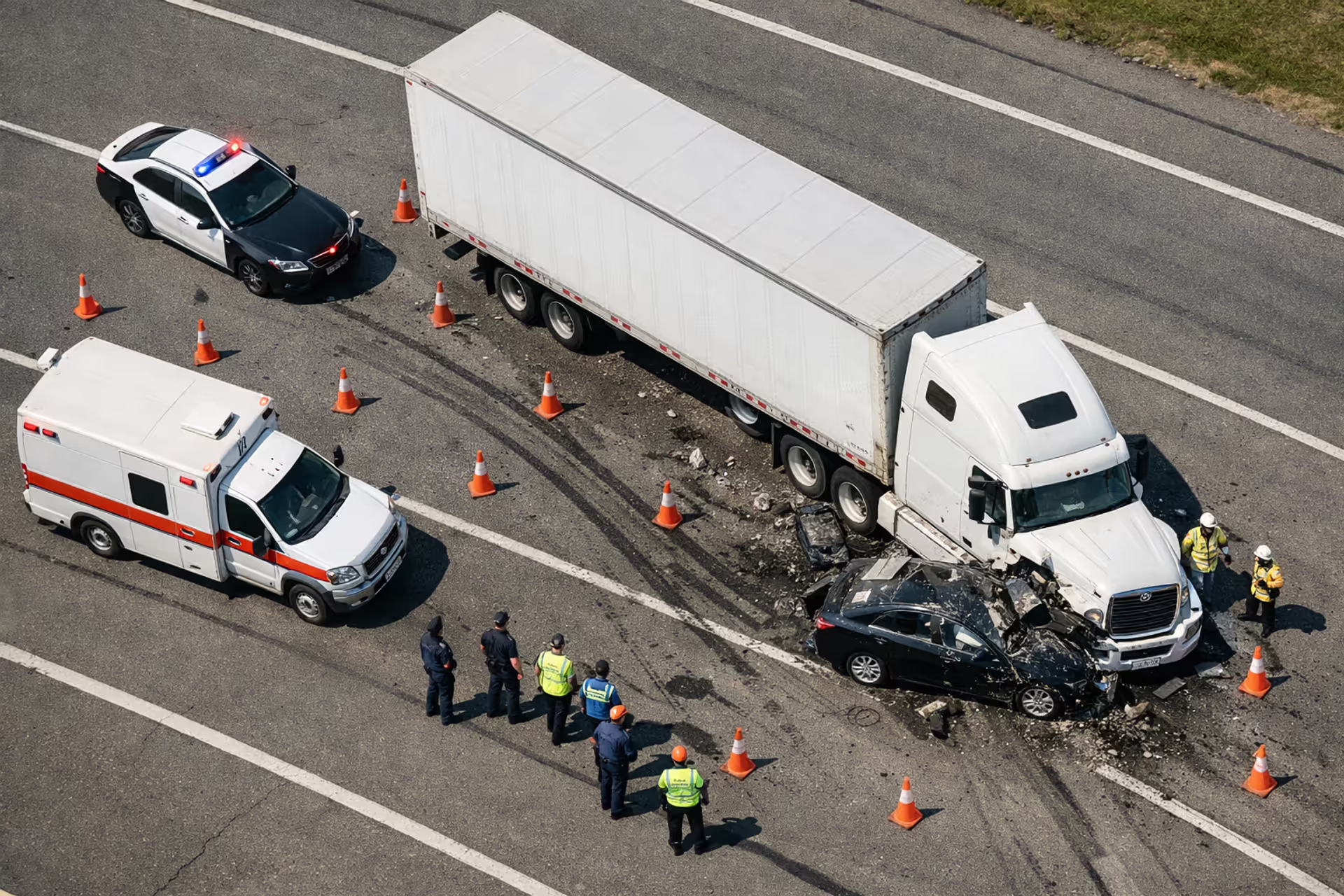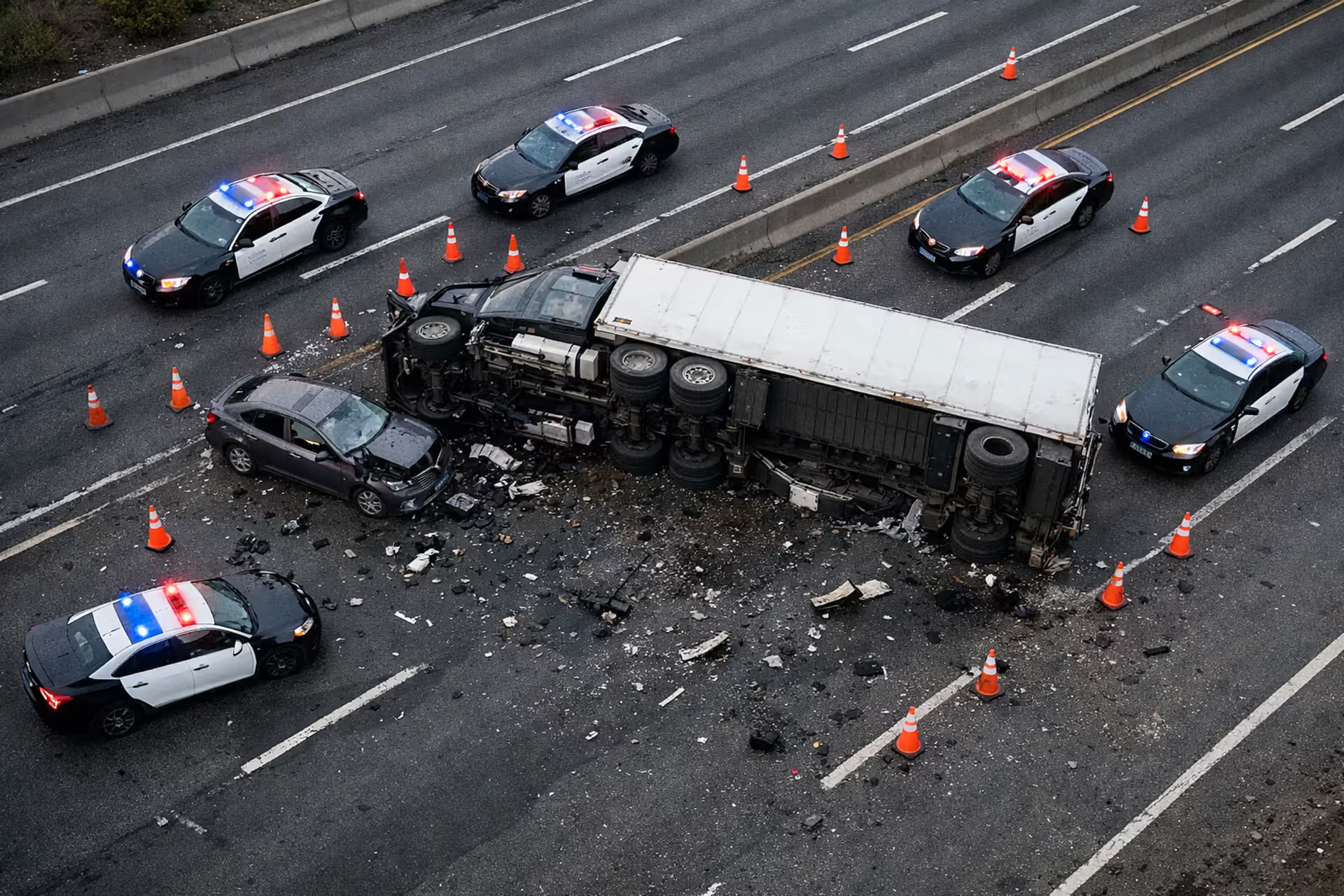
Aerial view of a commercial truck accident scene on a highway with an overturned tractor-trailer, damaged passenger car, and emergency vehicles
Commercial Truck Crash Liability: Who Pays When Big Rigs Cause Accidents?
Content
When an 80,000-pound tractor-trailer slams into a passenger vehicle, the aftermath isn't anything like a typical fender-bender. You won't be exchanging insurance cards and going your separate ways. Instead, you're entering a world where corporate attorneys mobilize within hours, where million-dollar insurance policies come into play, and where determining who's actually responsible can take months or even years.
Here's something that might surprise you: commercial trucks make up only 4% of all vehicles on U.S. highways, yet they're involved in 9% of deadly crashes, according to FMCSA data. Victims who survive these collisions often face devastating injuries, mounting medical bills, and insurance companies with seemingly unlimited resources dedicated to minimizing payouts. Understanding how fault gets assigned—and what evidence matters most—can mean the difference between adequate compensation and financial ruin.
How Liability Gets Determined After a Commercial Trucking Accident
The investigation that follows a serious truck crash looks nothing like what happens after regular car accidents. Multiple teams converge on the scene: state police accident reconstructionists, federal investigators (if fatalities occurred), insurance company specialists representing various policies, and legal teams protecting corporate interests.
Today's big rigs aren't just trucks—they're essentially computers on wheels. Electronic logging devices track every single hour a driver works. Engine control modules store detailed records about speed, throttle position, and brake applications in the seconds before impact. GPS systems document every stop and route deviation. Many carriers now equip their fleets with multi-camera systems capturing both road conditions and what the driver's doing throughout the entire trip.
But investigators don't stop at the crash site. They'll dig through employment files showing whether drivers were properly qualified and trained. They'll examine maintenance records and repair invoices going back months or years. They'll review shipping documents showing cargo weight and how it was distributed. They'll even pull communication logs between drivers and dispatchers. This exhaustive evidence review matters because proving commercial truck crash liability often depends on uncovering specific regulatory violations or documented patterns of negligence that surface-level investigations completely miss.
Federal Motor Carrier Safety Regulations and Their Role
The Federal Motor Carrier Safety Administration doesn't mess around—they've created an extensive rulebook governing everything about commercial transportation. These regulations spell out exactly how long drivers can stay behind the wheel (currently 11 hours after a 10-hour break), what brake performance standards trucks must meet, how cargo needs to be secured, and dozens of other operational requirements.
When investigators find violations of FMCSA rules, that evidence carries serious weight. Crashes where drivers exceeded mandatory rest periods, companies skipped required pre-employment drug tests, or vehicles had brake systems below federal standards—these violations establish what courts call "negligence per se." Essentially, the violation itself proves negligence without needing additional evidence.
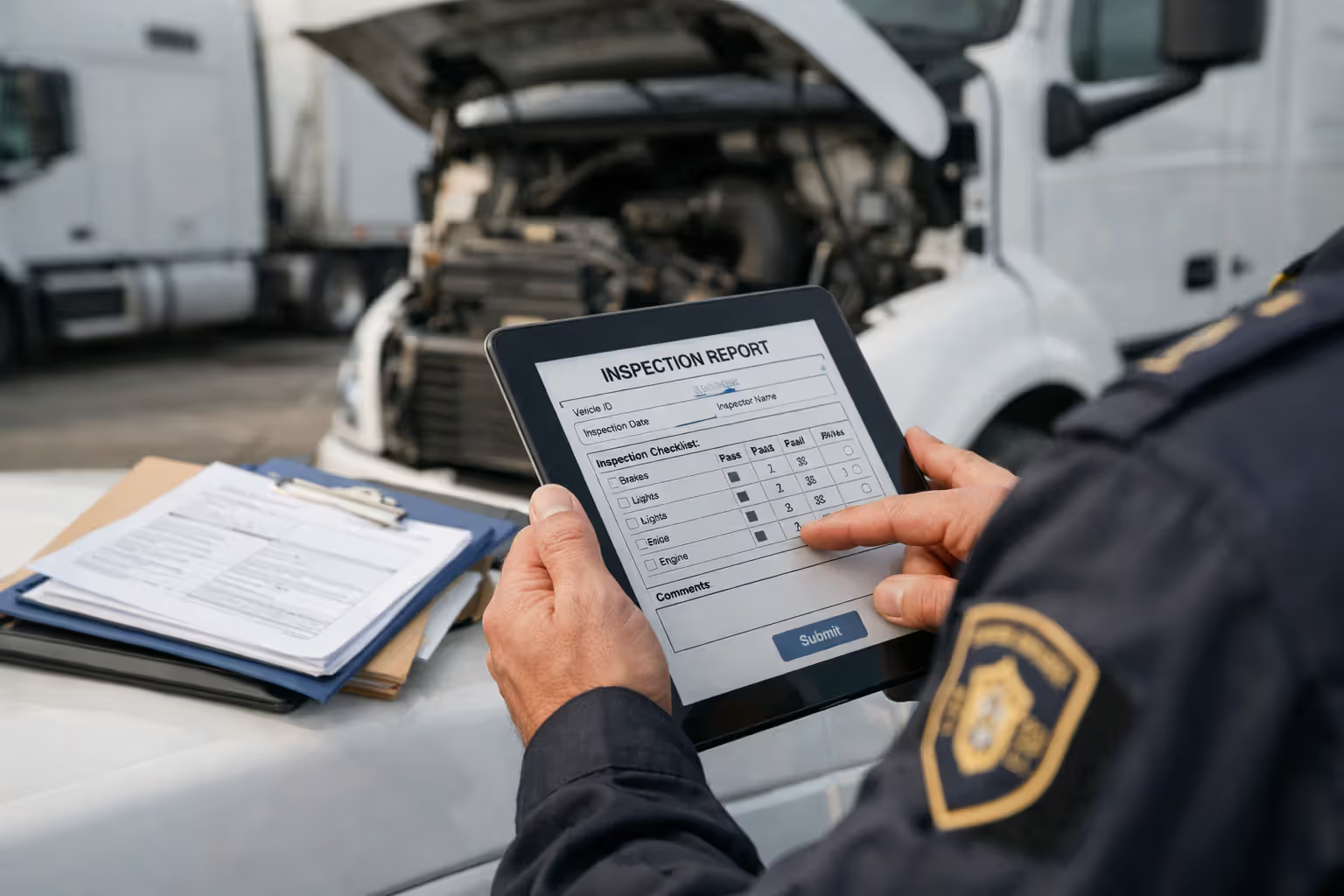
These regulations also force companies to keep detailed documentation. Transportation companies must preserve driver inspection reports, complete maintenance histories, and training records. Missing paperwork, incomplete files, or patterns showing systematic rule-breaking become powerful ammunition for proving employer responsibility in court.
Author: Jason Calloway;
Source: capeverde-vip.com
Common Evidence Used in Accident Investigation
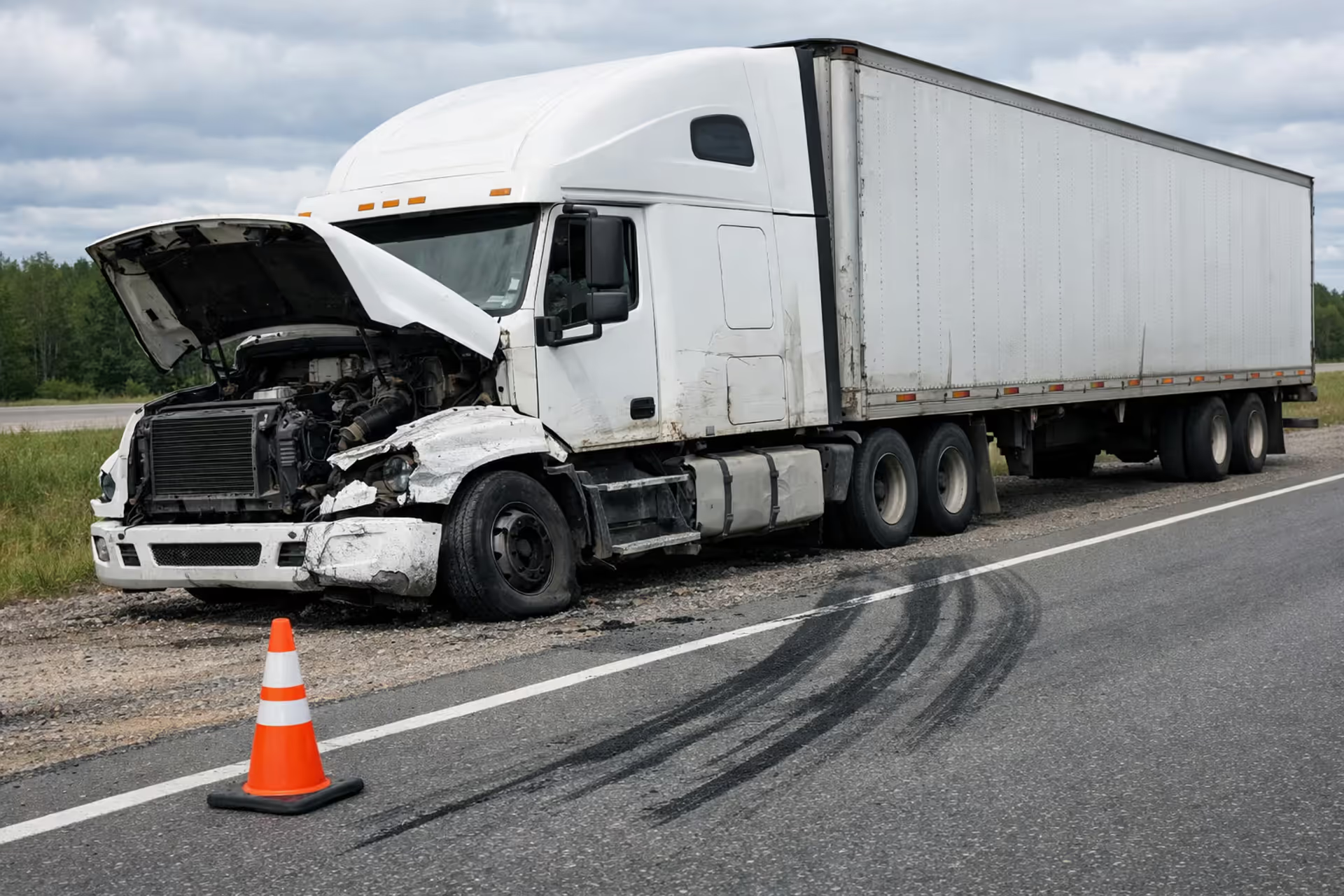
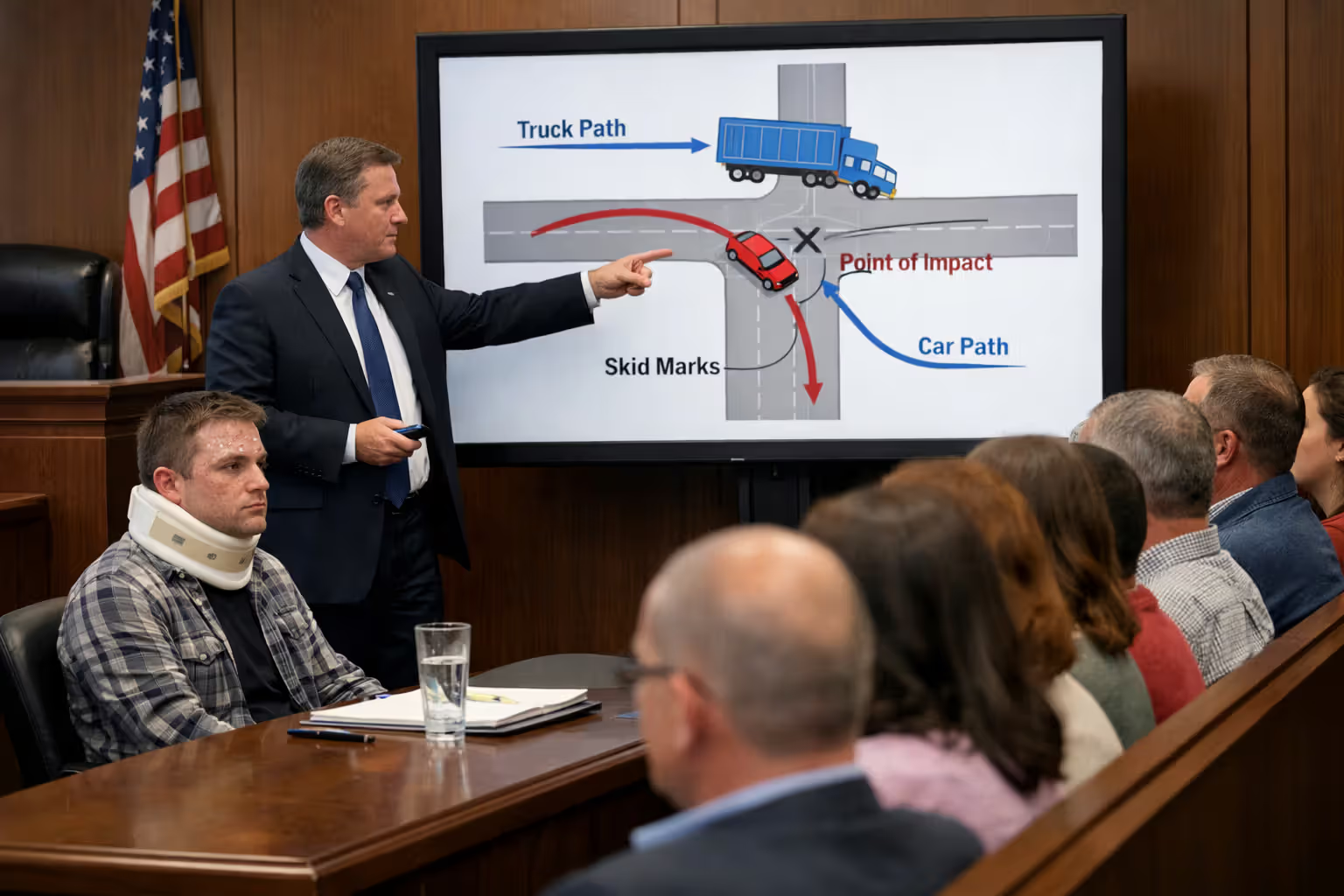
Physical evidence at crash scenes tells stories that witnesses sometimes can't. Skid marks reveal braking sequences and approximate speeds before impact. Damage patterns indicate collision angles and forces. Cargo distribution affects how trucks handle during emergency maneuvers.
Digital evidence has completely transformed how investigators reconstruct accidents. Commercial trucks now generate massive amounts of operational data. Fleet management platforms track everything from hard braking events to whether drivers buckled their seat belts. Some carriers install driver-facing cameras recording facial expressions and eye movements—potentially capturing drowsiness or distraction in those critical seconds before crashes.
Evidence from uninvolved third parties frequently becomes crucial. Traffic cameras operated by cities, dashcams from other motorists, even home security systems have all captured footage that proved decisive in determining fault. Cell tower records can show whether drivers were actively using phones. Fuel receipts document actual stops—sometimes contradicting falsified logbook entries.
The black box in a commercial truck tells a story that no witness can dispute. Speed, braking force, steering input — it’s all recorded with scientific precision. In my experience, more trucking cases are won or lost based on electronic data than on any single eyewitness account. The carriers who destroy or fail to preserve that data face the harshest consequences in court
— Robert J. Mongeluzzi
When Trucking Companies Are Held Responsible for Driver Actions
Corporate responsibility for trucking accidents operates through legal principles that catch many people off guard. There's this doctrine called respondeat superior—which basically means "let the master answer"—that holds employers liable for what their employees do on the job. So when a driver causes a crash while hauling freight, making deliveries, or otherwise conducting company business, the employer typically faces liability even if company management did absolutely nothing wrong themselves.
This vicarious liability applies whether companies run exemplary safety programs or not. They could provide the best training available, maintain equipment perfectly, and still face liability. The reasoning? Organizations profiting from commercial operations must accept legal responsibility for the risks those operations create.
But companies also face what's called direct liability for their own screwups. Negligent hiring happens when organizations don't properly verify driving histories, confirm commercial license validity, or investigate suspicious gaps in employment applications that might conceal disqualifying incidents. Federal law actually mandates pre-employment screening including background checks and queries to former employers about past safety performance, drug test results, and crash involvement.
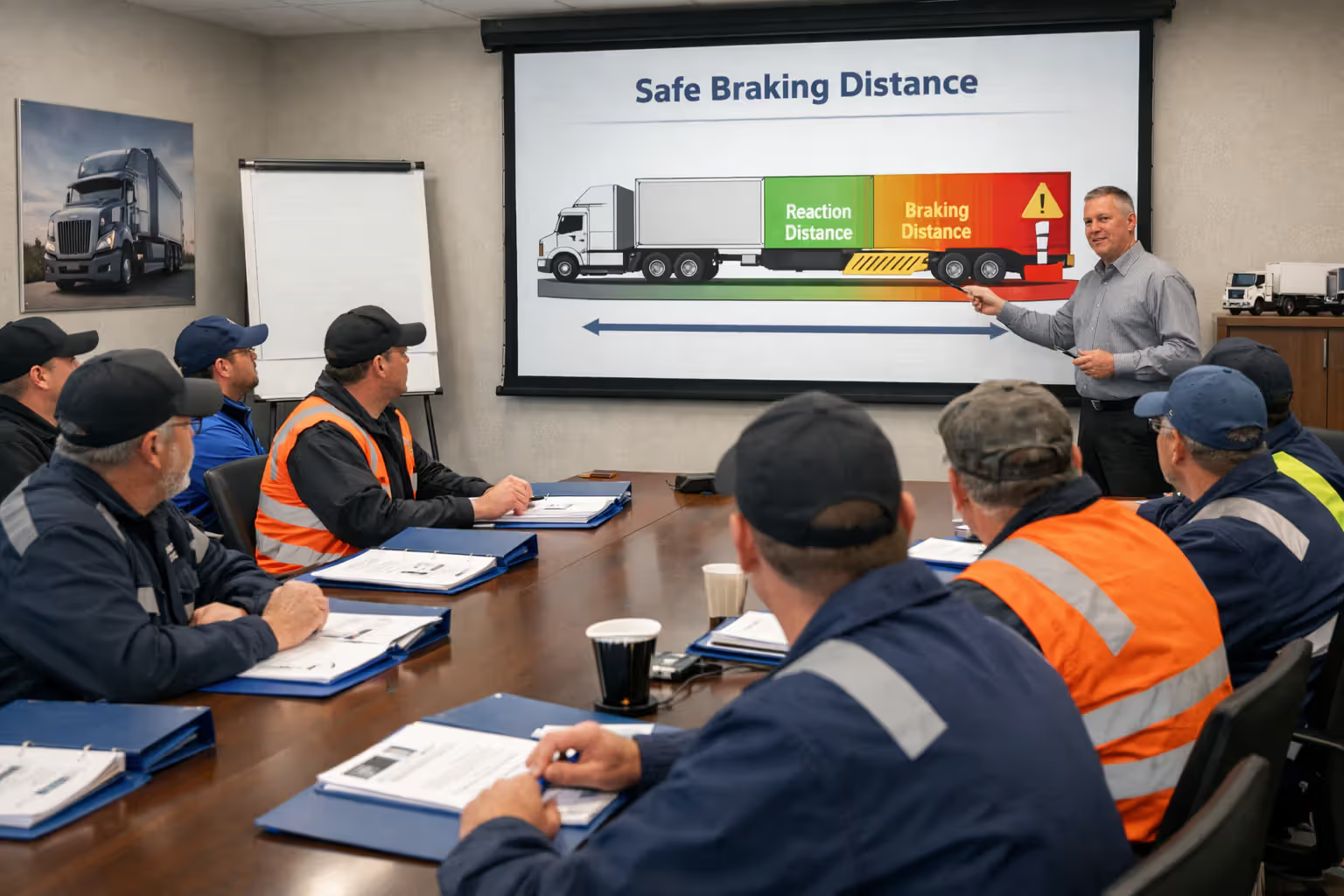
Inadequate training creates liability when companies rush drivers through cursory orientation programs without sufficient supervised road time with experienced trainers. Court records document cases where companies provided just a few days of training before sending inexperienced drivers on solo cross-country hauls—training deficiencies that proved catastrophic when those drivers later caused fatal crashes.
Author: Jason Calloway;
Source: capeverde-vip.com
There's also negligent supervision, which addresses ongoing management oversight. Companies that ignore driver logs showing repeated violations, dismiss customer complaints describing reckless driving, or fail to monitor deteriorating safety scores create substantial liability exposure. When post-crash investigations uncover violation patterns that management knew about but ignored, juries often award massive punitive damages on top of basic compensation.
The independent contractor classification complicates things significantly. Some transportation operations label drivers as independent contractors instead of employees, hoping to dodge vicarious liability entirely. But courts look past contract language to examine actual working relationships. When companies dictate specific routes, control scheduling, specify equipment requirements, and direct how work gets done, judges often determine that employment relationships exist no matter what the contracts say.
Driver Negligence vs. Mechanical Failure: Sorting Out Fault
Figuring out whether human error or equipment malfunction caused a crash requires systematic analysis. Among driver negligence categories, fatigue ranks among the most prevalent and dangerous. Despite regulatory limits on driving duration, some operators falsify electronic logs or simultaneously work for multiple companies. Others technically comply with regulations but start shifts already exhausted from poor sleep habits or undiagnosed sleep apnea.
Distracted driving incidents have exploded with smartphone adoption becoming universal. Drivers text, browse social media, stream videos, or interact with dispatch apps while barreling down highways at 70 mph. Subpoenaed phone records routinely show devices were actively being used at the exact moment crashes occurred. Even hands-free phone conversations significantly compromise reaction times and hazard detection.
Impairment goes beyond alcohol intoxication. Commercial drivers sometimes use methamphetamines to stay alert during extended hauls, take prescription medications causing drowsiness, or consume marijuana in states where recreational use is legal—not realizing that federal regulations prohibit any marijuana use by commercial operators. Post-accident toxicology testing frequently discovers impairment that wasn't obvious during initial investigations.
Mechanical failures shift liability toward maintenance providers and equipment manufacturers. Brake system problems account for roughly 30% of truck-related mechanical failures. Commercial brake systems require regular adjustments and inspections. When companies postpone scheduled maintenance to save money or drivers skip mandatory pre-trip inspections, resulting brake failures become foreseeable outcomes rather than unpreventable accidents.
Tire blowouts trigger loss of vehicle control, especially when steering axles are affected. Proper tire maintenance includes regular pressure checks, tread depth measurements, and replacement before tires reach age limits. Investigators must determine whether tires carried appropriate load ratings, maintained correct inflation, and were free from manufacturing defects.
Third-party liability emerges when maintenance contractors, parts distributors, or equipment manufacturers bear responsibility. Sometimes repair shops incorrectly install brake components. Parts suppliers occasionally distribute counterfeit replacements. Manufacturers sometimes hide known design defects. When these situations occur, these third parties may share liability or even bear primary responsibility.
| What Caused the Crash | Who Might Be Liable | Evidence You'll Need |
| Driver exhaustion/fatigue | Driver and/or trucking company | Electronic log records, paper logs, sleep study results, messages from dispatchers |
| Distracted driving | Driver and/or trucking company | Cell phone usage records, witness statements, in-cab camera footage |
| Improper cargo loading | Shipping company, trucking company, loading facility workers | Bill of lading, crash scene photos, weight distribution engineering analysis |
| Brake system failure | Trucking company, maintenance contractor, parts manufacturer | Service history records, inspection reports, parts purchase receipts |
| Insufficient maintenance | Trucking company, contracted maintenance provider | Maintenance schedule records, inspection reports, replacement parts receipts |
| Hiring unqualified drivers | Trucking company | Employment application, background check records, training completion records |
Insurance Claims in Corporate Trucking: What Makes Them Different
Commercial transportation insurance operates in a completely different universe than personal auto coverage. Federal law requires minimum coverage of $750,000 for most interstate operations, with higher minimums for hauling hazardous materials. Many carriers purchase $1 million primary policies supplemented by umbrella coverage extending to $5 million or more.
While these massive limits reflect the catastrophic damage potential from truck crashes, they also trigger aggressive defense strategies. Insurance claims in corporate trucking involve dedicated adjuster teams, specialized defense attorneys, and professional investigators all working to minimize payouts. Unlike personal injury claims where adjusters might resolve straightforward cases through brief negotiations, commercial claims typically demand exhaustive documentation and prolonged negotiations even when liability seems obvious.
Multiple potentially responsible parties complicate the claims process enormously. A single collision might implicate the truck operator's personal liability coverage, the transportation company's commercial policy, the cargo owner's insurance, a maintenance contractor's garage liability policy, and a component manufacturer's product liability coverage. Each insurer conducts its own investigation, and each tries to shift primary responsibility to other parties.
Commercial carrier adjusters are highly trained professionals with expertise in federal transportation regulations, accident reconstruction, and claim valuation. They understand that initial emergency treatment doesn't reveal the full scope of injuries like traumatic brain damage or spinal cord injuries. They're trained to exploit policy language, coverage defenses, and procedural requirements to reduce settlement amounts.
Claim resolution timelines stretch much longer than personal auto claims. Commercial insurers rarely offer quick settlements on serious injury claims. They'll wait for victims to reach maximum medical improvement—sometimes requiring 18 to 24 months post-accident—before fully understanding total damages. They conduct extensive surveillance operations, retain medical experts to challenge treatment records, and prepare litigation strategies from day one.
Insurance companies in trucking cases don’t just defend claims — they wage wars of attrition. They know that an injured person facing two years without income will eventually accept a fraction of what their case is worth. The single greatest mistake a victim can make is engaging with a commercial carrier’s adjuster without understanding the full scope of what they’re owed
— Lisa A. Banks
Policy exclusions and coverage limitations add yet more complexity. Some policies exclude coverage when drivers violate hours-of-service regulations or operate outside approved geographic zones. Others contain specific exclusions for particular cargo types or operational activities. Figuring out what coverage actually applies—and identifying coverage gaps—requires meticulous policy analysis and insurance law expertise.
Factors That Influence Legal Outcomes in Trucking Accident Cases
Injury severity profoundly influences case results. Crashes causing permanent disabilities, traumatic brain injuries, or fatalities generate substantially higher jury verdicts and settlement amounts than temporary soft-tissue injuries. Juries respond emotionally to life-altering consequences, and insurance companies calibrate settlement offers based on anticipated jury reactions.
Comparative negligence principles vary across states and dramatically affect potential recovery. Pure comparative negligence jurisdictions allow victims to recover damages reduced by their fault percentage—even 90% fault still permits 10% recovery. Modified comparative negligence states completely bar recovery when victim fault exceeds 50% or 51%, depending on specific state law. Consider a victim who failed to signal before changing lanes immediately before a fatigued truck driver drifted into their lane—that victim might be assigned 30% comparative fault, reducing a $1 million judgment to $700,000.
Legal representation quality matters enormously in commercial transportation cases. These cases demand substantial resources to retain accident reconstruction engineers, trucking industry expert witnesses, vocational economists to calculate lifetime earning capacity losses, and medical specialists to explain complex injuries. Attorneys experienced with federal motor carrier regulations understand which evidence to pursue and how to counter sophisticated defense strategies. Research shows that represented claimants in truck accident litigation recover settlements averaging 3.5 times higher than unrepresented claimants with comparable injuries.
"Commercial transportation liability litigation presents layers of complexity that general practice attorneys frequently underestimate," notes Michael Richardson, a board-certified truck accident attorney with two decades of specialized experience. "Between federal regulatory frameworks, multiple insurance policy interactions, corporate liability theories, and sophisticated defense tactics, these cases demand specialized knowledge and substantial resources to prosecute effectively."
Settlement versus trial decisions involve strategic risk calculation. Trials offer potential for higher jury verdicts but carry risks of complete defense verdicts or awards below existing settlement offers. Trials also extend resolution timeframes by years. Defense counsel use these delays strategically, recognizing that financially desperate victims often accept inadequate settlements rather than endure years waiting for trial dates.
Statutory damage caps exist in certain states, limiting non-economic damages (pain and suffering compensation) regardless of jury verdict amounts. These caps typically don't restrict economic damages like medical expenses and lost income, but they can substantially reduce total recovery in catastrophic injury cases involving permanent disabilities.
Punitive damages become available when defendant conduct was grossly negligent or intentional. A company that knowingly permitted an unqualified driver to operate despite multiple documented safety violations, or that systematically pressured drivers to violate hours-of-service regulations, might face punitive damages designed to punish misconduct and deter future violations. These awards can exceed compensatory damages by multiples, creating seven- or eight-figure total verdicts.
Author: Jason Calloway;
Source: capeverde-vip.com
What Accident Victims Should Do to Protect Their Claim
The first few moments and days after a commercial truck collision are absolutely critical for preserving your claim's value. If you're physically able, photograph everything at the scene: where vehicles ended up, all visible damage, tire marks on the pavement, road conditions, traffic signs or signals, and the truck's DOT number and company markings. These photographs preserve perishable evidence before tow trucks remove vehicles and traffic resumes.
Gather the truck operator's information: full legal name, commercial driver's license number, employer identification, and insurance policy details. Don't discuss who's at fault or make apologetic statements—comments at crash scenes can be weaponized against you later. If the operator says anything about being exhausted, unfamiliar with the route, or experiencing mechanical problems, document those admissions immediately while memory remains fresh.
Collect witness information. Get full names and contact numbers from anyone who saw the collision. Witnesses scatter quickly from crash scenes, and insurance companies rarely track down witnesses whose accounts support victim versions of events. Independent third-party witnesses typically provide the most persuasive trial testimony.
Get immediate medical assessment even if you feel relatively okay. Adrenaline surges mask injury symptoms, and many serious medical conditions don't produce immediate warning signs. Gaps between crash dates and initial medical treatment give insurance companies ammunition to argue injuries weren't actually crash-related. Follow through with all recommended treatment and attend every scheduled appointment—insurance companies scrutinize medical records for evidence of treatment non-compliance to argue injuries weren't genuinely serious.
Consult an attorney experienced specifically with commercial truck accidents before talking with insurance adjusters. The trucking company's insurer will reach out quickly, often within 24 hours. Adjusters project friendliness and concern, but their actual objective involves gathering recorded statements that minimize both liability and damage amounts. Once you've established legal representation, all communication should flow exclusively through your attorney.
Preserve physical evidence on your own. Keep damaged clothing, photograph visible injuries as they change, and maintain daily journals documenting pain levels, activity limitations, missed life events, and emotional impacts. This contemporaneously created documentation proves far more credible than testimony provided years later about how injuries affected your daily life.
Never sign documents from insurance companies without attorney review. Some forms contain releases barring all future claims or authorize unrestricted access to complete medical histories unrelated to the crash. Others represent lowball settlement offers with language releasing all parties from any liability—accepting these offers typically terminates your claim permanently regardless of payment inadequacy.
Stay off social media or at least avoid posting anything about the crash, your injuries, or your daily activities. Insurance companies routinely monitor claimants' social media profiles. A photo showing you at a family celebration gets twisted into evidence you're exaggerating injury severity. Images where you're smiling become "proof" you're not experiencing genuine emotional distress.
Frequently Asked Questions About Commercial Truck Crash Liability
Commercial truck crash liability involves intricate interactions between federal regulatory frameworks, corporate responsibility doctrines, insurance coverage structures, and legal strategic considerations. The hours and days immediately following crashes are critical for evidence preservation and claim protection. Understanding who bears legal responsibility—and how that responsibility gets established through investigation processes, documentation requirements, and legal procedures—empowers victims to make informed decisions about pursuing their claims.
The financial stakes in transportation accident litigation justify meticulous attention to procedural details and experienced legal representation. Trucking companies and their insurance carriers deploy sophisticated defense teams working to minimize financial exposure from the moment crashes occur. Victims who understand these processes, preserve crucial evidence, and retain qualified specialized representation position themselves optimally for fair compensation reflecting the genuine costs of their injuries and losses.