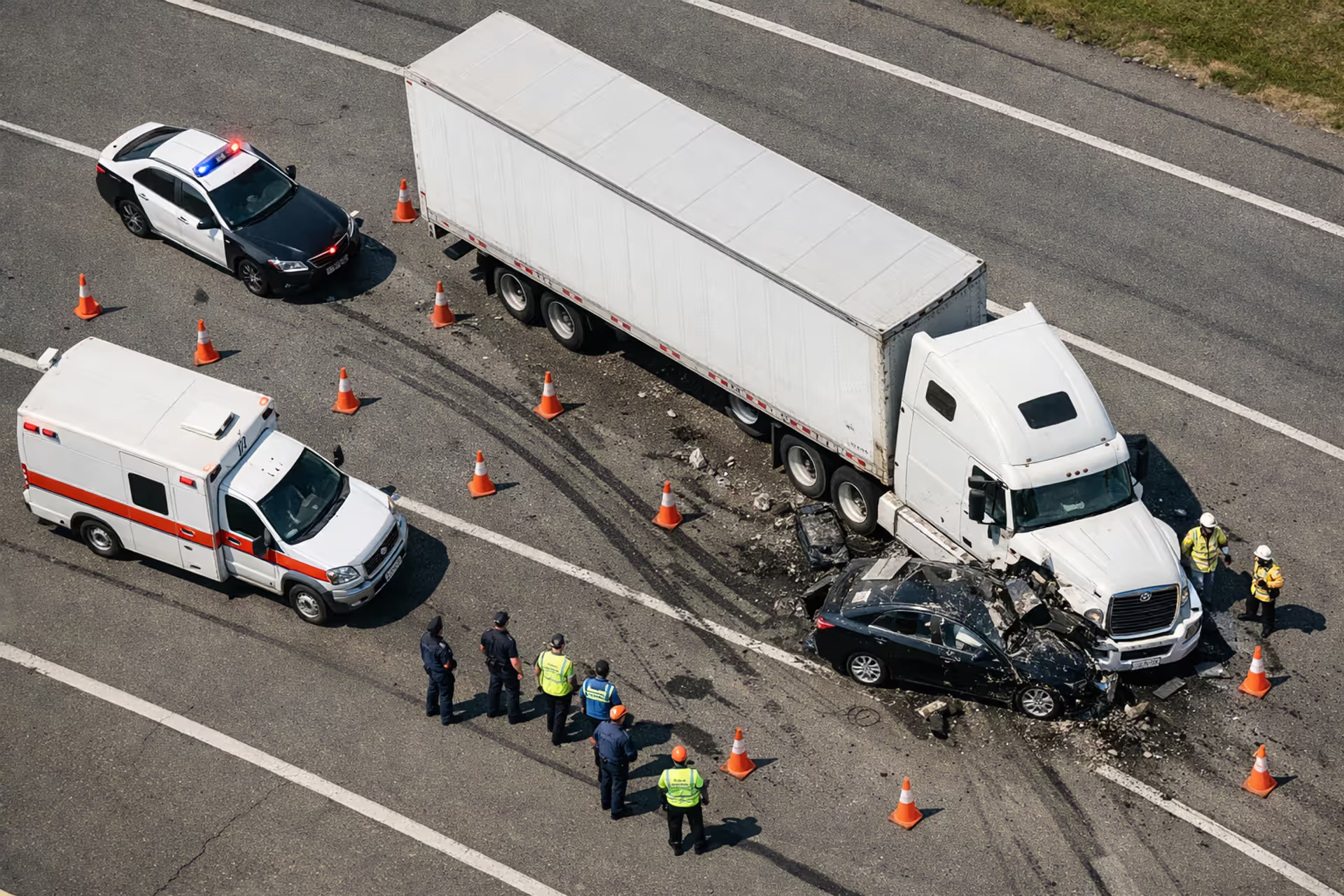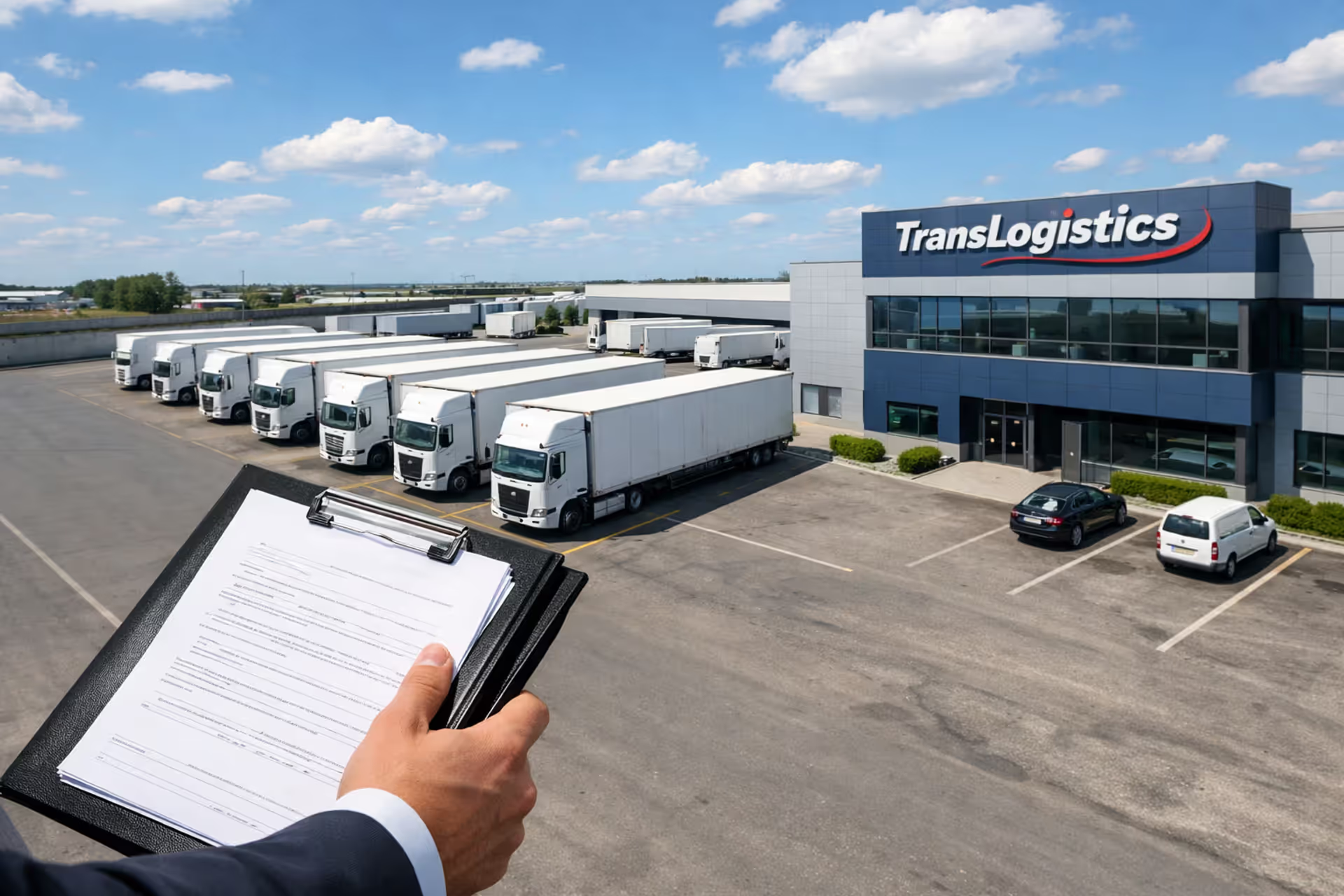
Aerial view of a commercial trucking terminal with semi-trucks parked in a row and a fleet manager holding insurance documents
Trucking Company Insurance: Coverage Requirements and Liability Protection for Your Fleet

Content
Operating a commercial trucking business without proper insurance isn't just risky—it's illegal. Federal regulations mandate specific coverage levels before you can haul a single load across state lines. Yet many fleet managers discover their policies contain dangerous gaps only after filing a claim. Understanding exactly what coverage you need, where liability falls when something goes wrong, and how to structure your insurance portfolio can mean the difference between a manageable claim and bankruptcy.
Federal and State Insurance Minimums for Commercial Trucking Operations
The Federal Motor Carrier Safety Administration (FMCSA) sets baseline insurance requirements that vary dramatically based on what you haul and how much your trucks weigh. These aren't suggestions—they're prerequisites for obtaining your operating authority. Carriers operating without adequate coverage face immediate out-of-service orders and hefty fines.
FMCSA Coverage Requirements by Vehicle Type
The type of freight you transport determines your minimum liability coverage. General freight haulers operating vehicles over 10,001 pounds need $750,000 in liability insurance for interstate commerce. That sounds substantial until you consider that a single serious accident can generate millions in medical bills, property damage, and legal fees.
These minimums represent the floor, not the ceiling. Most brokers and shippers require $1,000,000 in general liability regardless of federal minimums. Hauling for major retailers often means meeting $2,000,000 requirements. Your certificate of insurance becomes a business qualification tool, not just a compliance document.
| Operation Type | Vehicle Weight | Minimum Liability Coverage | Special Requirements |
| General Freight | 10,001+ lbs | $750,000 | BMC-91 or BMC-34 filing |
| Household Goods | Any weight | $300,000 (in-state) / $750,000 (interstate) | Released value protection required |
| Hazardous Materials | Any quantity requiring placards | $1,000,000 (non-bulk) / $5,000,000 (bulk/certain materials) | MCS-90 endorsement mandatory |
| Passengers (8-15) | Any weight | $1,500,000 | Additional medical payments coverage |
| Passengers (16+) | Any weight | $5,000,000 | Enhanced passenger liability |
State-Specific Additional Insurance Mandates
Federal requirements don't preempt state laws—they stack on top of them. California requires all motor carriers to carry at least $750,000 in liability coverage even for intrastate operations under 10,001 pounds, a scenario where federal law might not apply. Texas mandates additional uninsured motorist coverage for certain commercial vehicles. Florida has specific requirements for any carrier operating within its borders, regardless of where you're based.
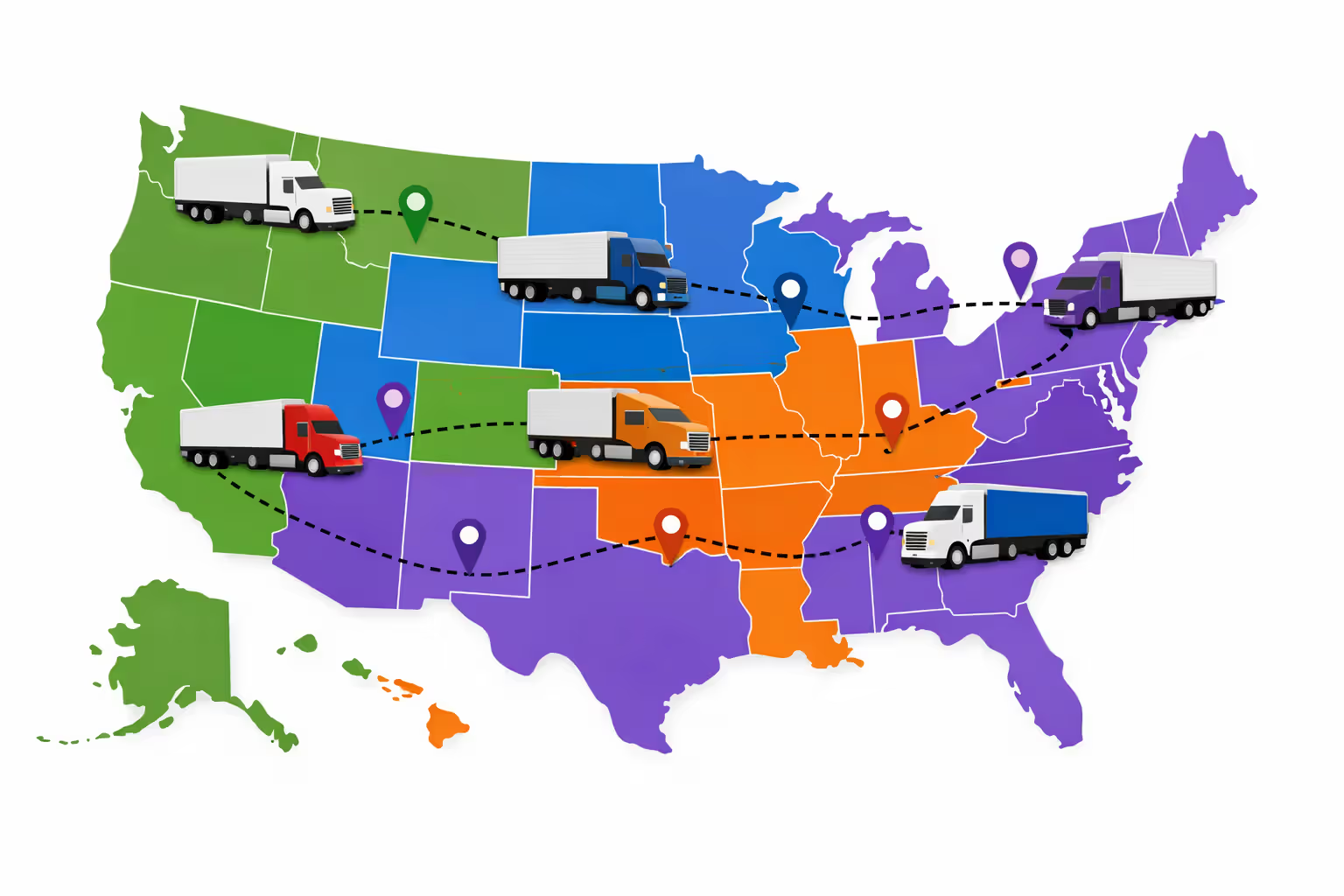
Carriers running regional routes across multiple states need policies that satisfy the highest requirement in any jurisdiction they enter. A truck registered in Georgia but regularly running loads into New York must meet New York's standards. This creates complexity for fleet managers trying to balance compliance costs against operational flexibility.
Author: Rebecca Thornton;
Source: capeverde-vip.com
How Load Securement Failures Create Insurance Claims and Legal Exposure
Improperly secured cargo causes approximately 25,000 accidents annually, according to Federal Motor Carrier Safety Administration data. When a load shifts, falls, or breaks free, liability questions multiply quickly. The trucking company faces exposure on multiple fronts: damage to the cargo itself, injuries or property damage caused by falling freight, and potential regulatory violations that can void coverage.
Your general liability policy typically covers third-party damage when cargo falls onto another vehicle or causes a multi-car pileup. But here's where carriers get surprised: if inadequate securement constitutes gross negligence or willful violation of FMCSA regulations, insurers may deny the claim entirely. A driver who skipped required securement checks or used damaged straps creates documentation that underwriters scrutinize carefully during claims investigation.
Load securement liability extends beyond the obvious falling-cargo scenario. Shifting freight that causes a truck to roll over, even if nothing leaves the trailer, can trigger claims from other motorists involved in the resulting accident. The cargo owner will file a separate claim for their damaged goods. If the driver suffers injuries, workers' compensation enters the picture. A single securement failure can generate four or five simultaneous insurance claims across different policies.
Accident prevention responsibility for load securement falls squarely on the carrier. The driver must inspect cargo securement within the first 50 miles of a trip and again every 150 miles or three hours, whichever comes first. These aren't optional best practices—they're regulatory requirements under FMCSA 393.100. Failing to maintain securement logs gives insurers ammunition to reduce or deny claims. Smart carriers implement photo documentation protocols where drivers snap pictures of secured loads before departure and after each inspection, creating a defensible record if claims arise.
The greatest risk in trucking isn’t the accident itself—it’s the gap between what you think your policy covers and what it actually pays when the claim hits. Carriers who invest time understanding their coverage before a loss occurs are the ones still in business five years later
— Kevin Judkins
Who Pays When Freight Gets Damaged: Understanding Your Coverage Gaps
Freight damage claims create confusion because multiple insurance policies potentially apply, each with different coverage triggers and exclusions. Carriers often assume their trucking company insurance automatically covers any cargo they're hauling. That assumption leads to expensive surprises when a $200,000 load of electronics arrives water-damaged and the general liability insurer points to policy exclusions.
Motor Truck Cargo Insurance vs. Freight Liability
These two coverage types sound similar but serve distinct purposes. Motor truck cargo insurance protects freight in your physical possession during transport. It's a first-party coverage—you're insuring property you're responsible for but don't own. Freight liability, sometimes called cargo legal liability, only pays when you're legally liable for damage due to negligence.
| Coverage Type | What It Covers | Typical Limits | Who Needs It | Approximate Cost |
| Motor Truck Cargo Insurance | Physical loss/damage to freight in your care, regardless of fault | $100,000–$250,000 per load | All for-hire carriers; often required by shippers | $400–$1,200 per truck annually |
| Freight Liability Insurance | Damage you're legally liable for due to negligence | $50,000–$100,000 per occurrence | Carriers wanting basic protection | $300–$800 per truck annually |
| Cargo Legal Liability | Similar to freight liability but broader coverage triggers | $100,000–$500,000 | Contract carriers with high-value freight | $600–$1,500 per truck annually |
The distinction matters during claims. Motor truck cargo insurance typically covers damage even when the carrier wasn't negligent—a refrigeration unit fails mechanically, spoiling a produce load. Freight liability would deny that claim because no negligence occurred. Conversely, motor truck cargo policies contain per-load limits. Hauling a $500,000 machinery shipment with only $100,000 in cargo coverage leaves you exposed for the difference.
Common Exclusions That Leave Trucking Companies Exposed
Every cargo policy contains exclusions that can gut coverage when you need it most. Delay damages represent the most common surprise. Your truck breaks down, and a time-sensitive pharmaceutical shipment misses its delivery window. The shipper files a claim for $50,000 in lost value due to the delay. Most cargo policies explicitly exclude consequential damages from delay, regardless of cause.
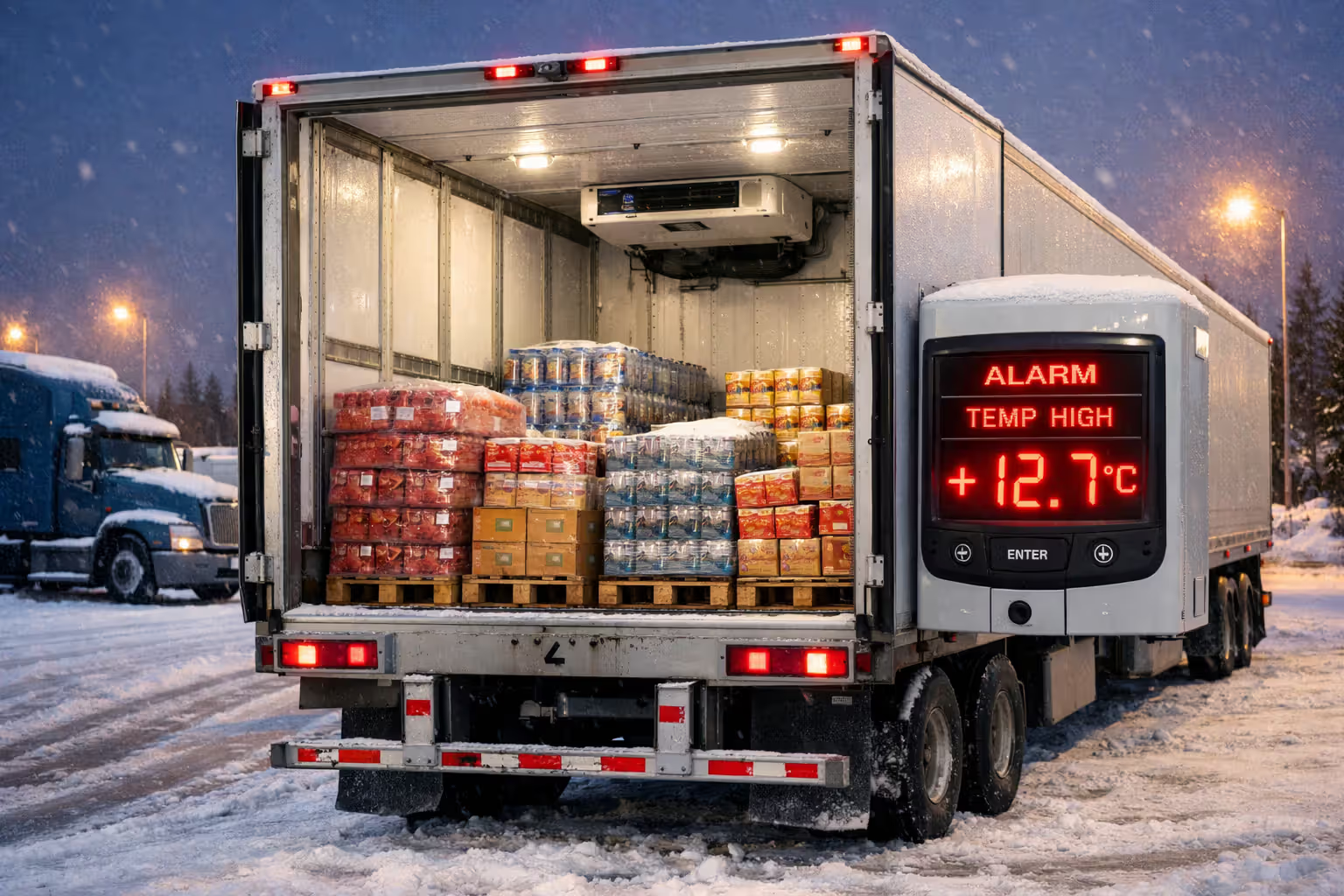
Temperature-controlled freight carries additional exclusions. Policies often exclude spoilage claims unless the refrigeration failure resulted from a covered peril like collision or fire. Mechanical breakdown of the reefer unit? Excluded. Driver error in setting temperature controls? Excluded. These gaps explain why specialized reefer cargo coverage costs more than standard motor truck cargo insurance.
Theft exclusions contain traps for unwary carriers. Many policies exclude theft from an unattended vehicle unless it shows signs of forced entry. A driver leaves the truck unlocked at a rest stop while using the facilities, and thieves walk away with the cargo. The claim gets denied. Even worse, some policies exclude theft entirely from certain high-risk areas—specific truck stops, parking lots, or entire metropolitan areas known for cargo theft.
Author: Rebecca Thornton;
Source: capeverde-vip.com
Accident Prevention Programs That Actually Lower Your Insurance Premiums
Insurance companies price trucking policies based on loss history and risk indicators. Carriers with strong safety programs demonstrably reduce claims frequency and severity, making them more profitable to insure. But not all safety initiatives deliver measurable premium reductions. Insurers look for specific, documented programs that correlate with lower loss ratios.
Electronic logging devices (ELDs) and telematics systems provide the data insurers value most. These systems track hard braking events, speeding incidents, rapid acceleration, and hours-of-service compliance in real time. Carriers who can demonstrate consistent safety scores across their fleet—typically measured through CSA BASIC scores and telematics data—qualify for premium discounts ranging from 5% to 15%.
Driver training programs must be formal and documented to influence insurance pricing. Sending drivers through a certified defensive driving course once annually, with completion certificates on file, gives underwriters evidence of accident prevention responsibility. Advanced training in specific areas—winter driving, mountain operations, hazmat handling—can unlock additional discounts when your operation involves those risks regularly.
The most effective safety programs combine technology with accountability. One mid-sized carrier reduced their accident frequency by 40% over two years by implementing a three-strike policy for harsh braking events. Drivers who triggered three events in a month faced mandatory retraining. Those who showed improvement received safety bonuses. Their insurance premiums dropped 22% at renewal, saving more than the program cost to operate.
Drug and alcohol testing programs beyond federal minimums also factor into underwriting decisions. Random testing rates above the required 50% for drugs and 10% for alcohol demonstrate commitment to safety. Post-accident testing protocols that exceed regulatory requirements further strengthen your risk profile. Document everything—insurers want to see testing logs, results, and actions taken when violations occur.
Safety is not an expense—it’s the most profitable investment a fleet can make. Every dollar spent on driver training and telematics returns three to five dollars in reduced claims, lower premiums, and fewer out-of-service violations. The data doesn’t lie: disciplined carriers pay less and earn more
— Anne Ferro
Legal Obligations Every Carrier Must Meet Beyond Basic Insurance
Trucking company insurance satisfies federal licensing requirements, but carriers face additional legal obligations that insurance alone doesn't address. The Carmack Amendment governs interstate freight liability, creating strict carrier obligations regardless of your insurance coverage. Under Carmack, carriers are presumed liable for any loss or damage to freight they accept for transport. The burden falls on you to prove the damage resulted from one of the limited exceptions: acts of God, acts of the shipper, acts of public authority, inherent vice of the goods, or acts of a public enemy.
This presumption of liability means you can't simply point to your insurance policy and walk away from a freight damage claim. You're legally responsible first, and your insurance reimburses you second. Shippers can sue you directly under Carmack, and your insurance company isn't a party to that lawsuit. The judgment against you might exceed your cargo coverage limits, leaving you personally liable for the difference.
Brokers and freight forwarders add another layer of legal obligations. When you haul loads arranged through a broker, you're typically required to maintain specific insurance levels and provide certificates of insurance before touching the freight. These aren't just business preferences—they're contractual obligations. Hauling a load without current insurance that meets the broker's requirements can void the entire contract, meaning you won't get paid even if you deliver the freight perfectly.
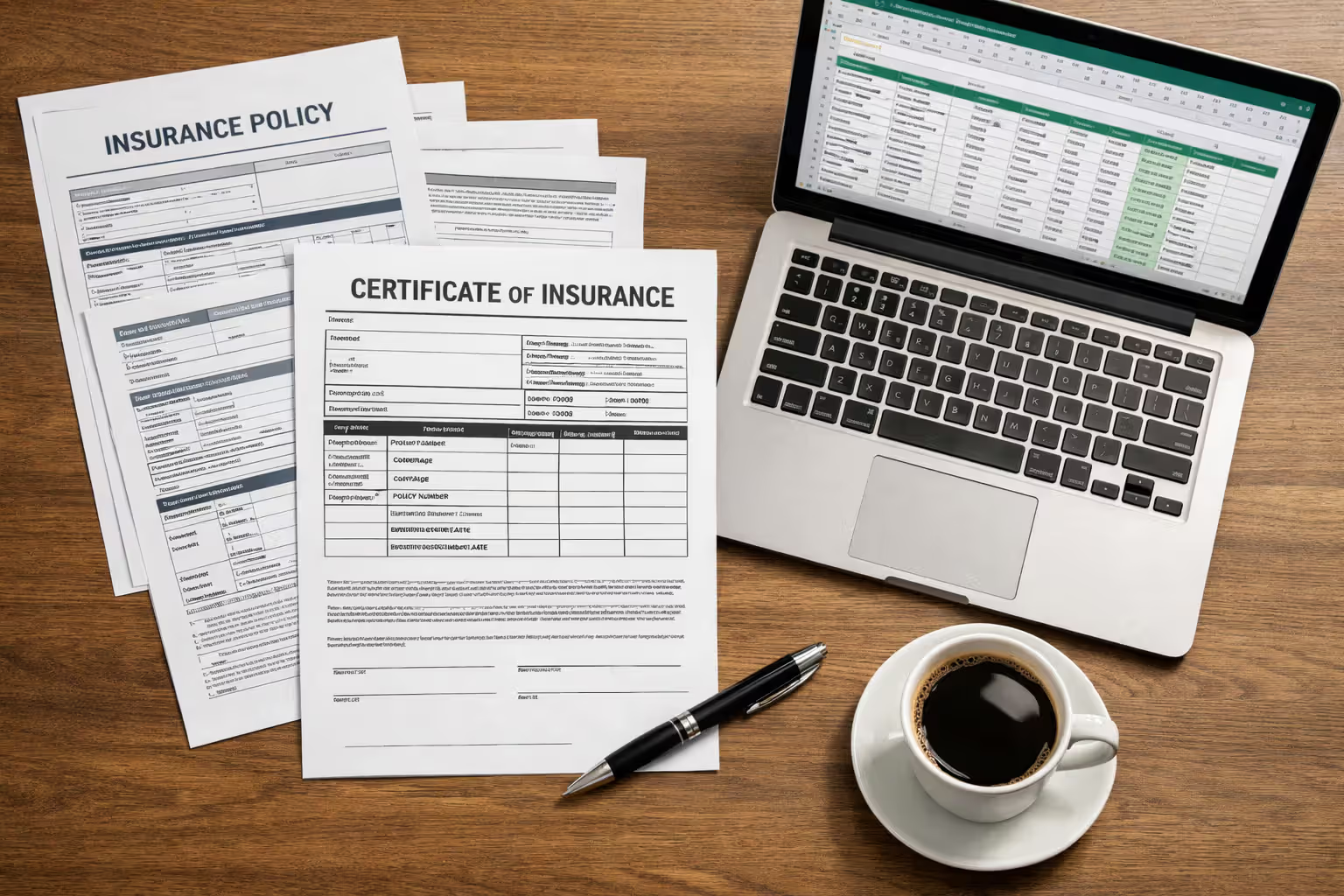
Certificate of insurance protocols have become increasingly complex. Many shippers now require named insured endorsements, additional insured status, or waiver of subrogation clauses. Each of these modifications affects your coverage and potentially your premium. A waiver of subrogation prevents your insurer from recovering their claim payout from a negligent third party—effectively increasing the insurer's risk and your cost.
Contract carrier duties often exceed common carrier obligations. If you operate under contract with specific shippers, those agreements may require higher insurance limits, additional coverage types, or faster claims response times than federal regulations mandate. Failing to maintain contract-required insurance can breach the agreement, exposing you to contract damages on top of any cargo claims.
Author: Rebecca Thornton;
Source: capeverde-vip.com
What Happens During a Freight Damage Claim: Timeline and Financial Impact
Freight damage claims follow a predictable pattern, but timing varies dramatically based on how quickly you respond and document the situation. The process begins the moment damage is discovered—usually at delivery when the consignee inspects the freight. What happens in the next 24 hours largely determines whether your claim gets paid or denied.
The delivery driver must note any visible damage on the delivery receipt immediately. "Subject to inspection" or "damaged carton" notations preserve your rights. Clean delivery receipts—signed without exception—make later claims nearly impossible to win. Consignees often pressure drivers to sign clean receipts, promising to "work it out later." That promise is worthless. Once you sign a clean receipt, you've documented that freight arrived undamaged.
Documentation Requirements to Avoid Claim Denials
Claims adjusters deny more freight damage claims for insufficient documentation than for any other reason. They need proof that damage occurred during transit, not before you picked up the freight or after you delivered it. Start with pickup documentation—photograph the freight as loaded, noting any pre-existing damage. Many carriers now use apps that timestamp and GPS-tag photos, creating irrefutable evidence of condition at origin.
During transport, document any incidents that might affect cargo integrity. Hard braking to avoid an accident? Note it in your logs and inspect the cargo at the next opportunity. Unusual weather conditions? Document them. Temperature excursions in reefer units? Your monitoring system should log them automatically, but verify the data is being captured.
At delivery, photograph everything before the consignee touches the freight. Broken pallets, torn shrink wrap, crushed cartons, leaning stacks—capture it all. If the consignee refuses delivery due to damage, photograph the freight from multiple angles and get their refusal in writing. Never leave damaged freight without documentation. Some consignees will accept damaged goods with the intention of filing a claim later, then blame additional damage on the carrier.
Claim submission speed matters. Most cargo policies require written notice of loss within a specific timeframe—often 24 to 48 hours. Miss that deadline and you've given the insurer grounds for denial. The formal claim, with all supporting documentation, typically must be filed within 90 days. Shippers have up to nine months to file a Carmack claim against you, but your insurance claim deadline is much shorter.

Author: Rebecca Thornton;
Source: capeverde-vip.com
How Claims Affect Your Insurance Rates Long-Term
A single large freight damage claim can increase your premiums for three to five years. Insurance companies use loss runs—detailed histories of all claims filed against your policy—to calculate renewal premiums. Underwriters look at claim frequency (how often you file claims) and severity (how large each claim is). Multiple small claims can hurt you worse than one large claim because they suggest systemic problems rather than an isolated incident.
The loss ratio—total claims paid divided by total premiums paid—drives renewal pricing. Carriers with loss ratios above 60% face steep premium increases or non-renewal. A $100,000 cargo claim on a policy with $10,000 in annual premium creates a 1000% loss ratio for that year. Even if you had no claims the previous four years, that single incident will spike your premiums at renewal.
Some carriers try to avoid premium increases by paying small claims out of pocket rather than filing with insurance. This strategy works only if you can truly afford the expense and the claim won't surface later. Remember that Carmack claims can be filed up to nine months after delivery. Paying a shipper $5,000 to settle a damage claim informally seems smart until they file an insurance claim six months later for the same incident. Now you've paid twice and still have a claim on your loss run.
Frequently Asked Questions About Trucking Insurance and Liability
Trucking company insurance represents more than a regulatory checkbox—it's the financial foundation that keeps your business operational when accidents, theft, or cargo damage occurs. Carriers who treat insurance as a commodity, shopping solely on price, often discover their coverage contains gaps that become apparent only during claims. The cheapest policy is rarely the best value when it leaves you exposed to six-figure liability on a $50,000 load.
Building a comprehensive insurance portfolio requires understanding how different coverage types interact. General liability, motor truck cargo, physical damage, occupational accident, and non-trucking liability each serve specific purposes. They don't overlap—they complement each other to address the full spectrum of risks your operation faces daily. Work with an insurance agent who specializes in transportation. They understand how endorsements, exclusions, and policy limits affect real-world claims in ways that generalist agents miss.
Risk management extends beyond purchasing insurance. The most effective protection combines adequate coverage with active loss prevention. Implement documented safety programs, maintain meticulous records, train drivers thoroughly, and use technology to monitor and improve performance. These investments reduce claims frequency and severity while simultaneously lowering your insurance costs. Carriers who view insurance and safety as integrated parts of their business model consistently outperform those who treat them as separate compliance burdens.
Review your coverage annually, not just at renewal. As your operation grows, adds new equipment, enters new markets, or changes the type of freight you haul, your insurance needs evolve. A policy that provided adequate protection two years ago may contain serious gaps today. Don't wait for a claim to discover you're underinsured. Regular policy reviews with a qualified agent ensure your coverage keeps pace with your business.