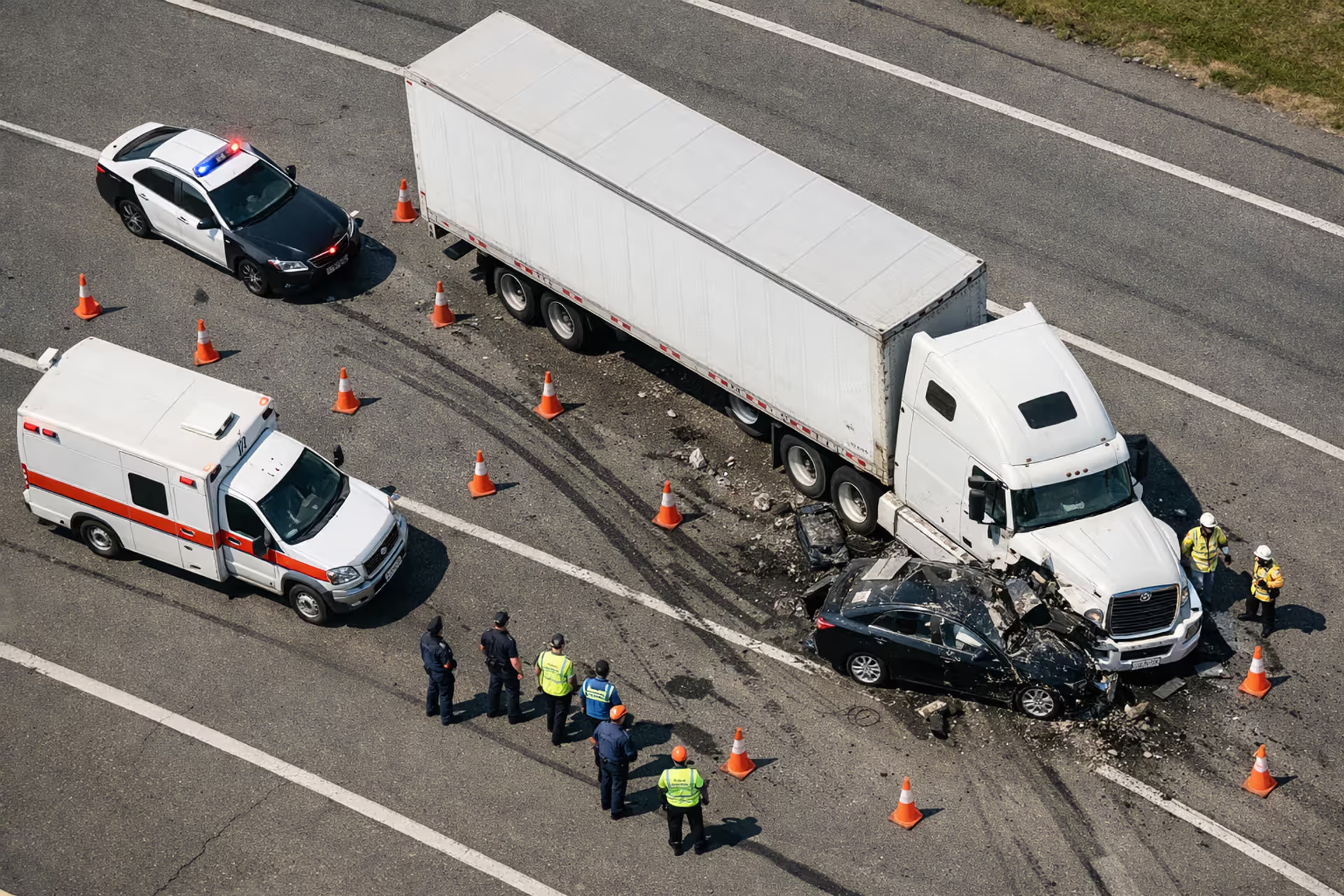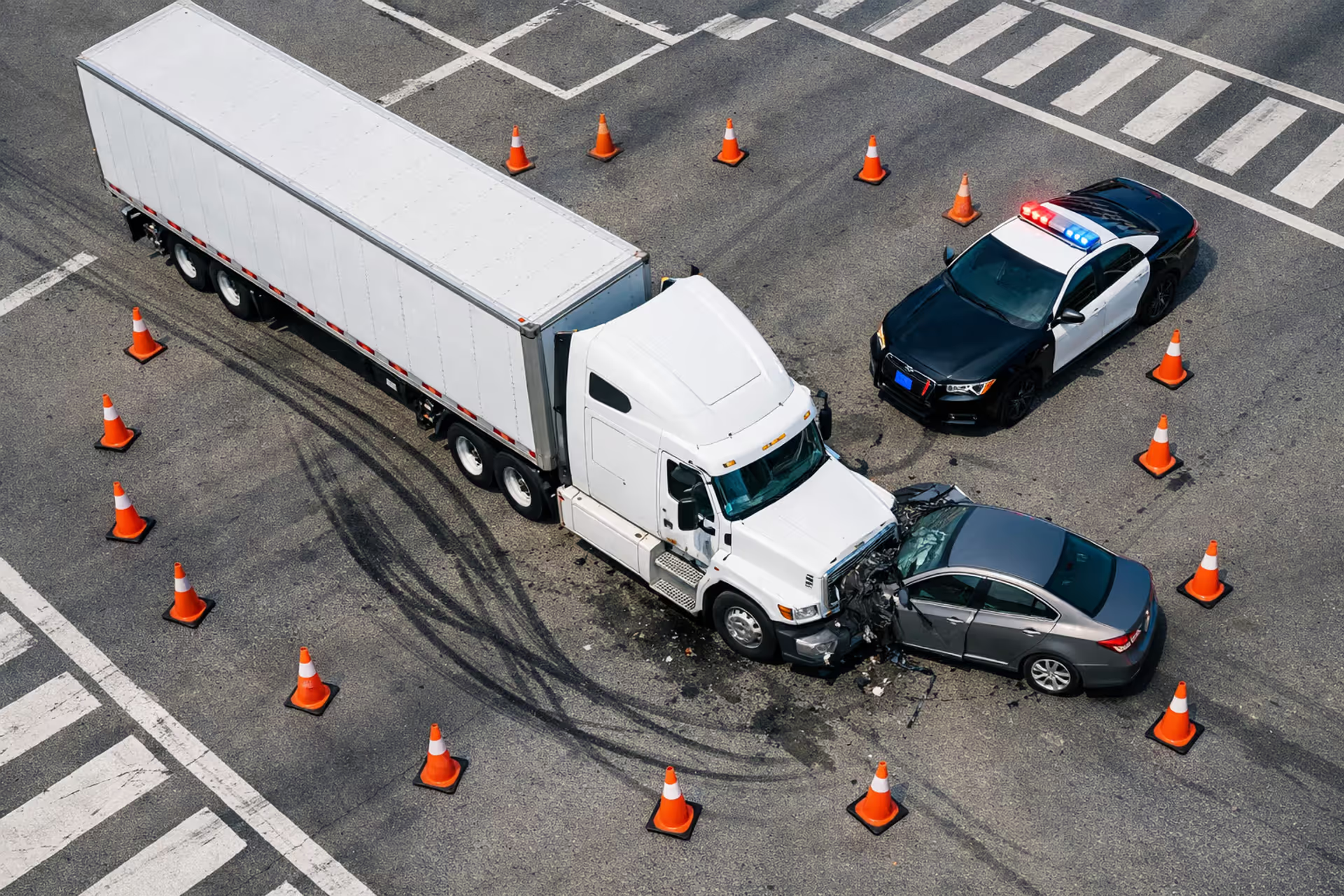
Aerial view of a commercial truck collision with a passenger car at an intersection with police vehicle and road cones
Employer Liability for Driver Negligence: When Companies Pay for Employee Accidents

Content
When a commercial driver causes a collision, victims often discover that pursuing compensation solely from the individual behind the wheel leaves them undercompensated. The driver's personal assets rarely cover catastrophic injuries or wrongful death damages. This reality forces injured parties to examine whether the employing company shares legal responsibility for the crash.
Employer liability for driver negligence operates through two distinct legal pathways. The first, vicarious liability, holds companies responsible simply because the accident occurred during work-related activities. The second, direct negligence, targets the employer's own failures in hiring, training, or supervising drivers. Understanding these mechanisms determines whether victims can access the deeper financial resources that commercial enterprises typically possess.
The stakes are substantial. Federal Motor Carrier Safety Administration data shows that large truck crashes alone result in billions of dollars in annual damages. Establishing employer responsibility often means the difference between partial recovery and full compensation for medical bills, lost wages, and non-economic damages.
Legal Framework: How Vicarious Liability Applies to Employer-Driver Relationships
The doctrine of respondeat superior—Latin for "let the master answer"—forms the bedrock of vicarious responsibility trucking law. Under this centuries-old principle, employers automatically bear legal responsibility for employee torts committed within the scope of employment. No showing of employer wrongdoing is required; the employment relationship itself creates liability.
Courts apply the "scope of employment" test to determine when this doctrine applies. An employee acts within scope when performing duties assigned by the employer or advancing the employer's business interests. A delivery driver making scheduled stops clearly falls within scope. The same driver taking a two-hour detour to visit family before returning to deliveries likely does not.
Author: Marcus Delaney;
Source: capeverde-vip.com
Three factors typically guide scope determinations: whether the act was the type the employee was hired to perform, whether it occurred substantially within authorized work hours, and whether the employee intended to serve the employer's purpose. All three need not be present, but the analysis becomes more complicated when they conflict.
The independent contractor distinction creates the most frequent litigation. Companies often classify drivers as contractors to avoid liability, but courts look beyond labels to examine the actual relationship. Key considerations include who controls the work method, who supplies equipment, the payment structure, and whether the work is part of the employer's regular business.
A trucking company that dictates routes, mandates specific delivery times, requires branded vehicles, and treats the driver as part of its core business will likely face vicarious liability regardless of contractual language claiming independent contractor status. Conversely, a retailer hiring a third-party logistics company with its own fleet faces weaker liability exposure for that company's driver negligence.
Federal regulations add complexity to vicarious responsibility trucking cases. Motor carriers must maintain operating authority, comply with hours-of-service rules, and meet vehicle maintenance standards. When companies lease drivers or equipment, the leasing regulations at 49 CFR Part 376 determine who bears regulatory responsibility—and often civil liability follows regulatory duty.
Corporate Oversight Failures That Trigger Direct Liability Claims
Author: Marcus Delaney;
Source: capeverde-vip.com
Direct negligence claims sidestep the scope-of-employment analysis by targeting the employer's own misconduct. These claims assert that the company's failures in managing its workforce directly caused or contributed to the accident. Four categories dominate: negligent hiring, inadequate training, insufficient supervision, and vehicle maintenance failures.
Negligent Hiring and Retention Practices
Employers owe a duty to exercise reasonable care in selecting employees whose work involves foreseeable risk to others. For driving positions, this means conducting proper background checks, verifying licenses, reviewing driving records, and screening for disqualifying conditions.
A company that hires a driver with three DUI convictions and a suspended license has breached this duty. When that driver causes a collision, the employer faces direct liability for placing a dangerous person in control of a commercial vehicle. The same principle applies to retention—keeping a driver employed after learning of disqualifying incidents.
The Federal Motor Carrier Safety Regulations establish minimum standards that provide a baseline for negligent hiring claims. Carriers must verify commercial driver's license validity, conduct drug and alcohol testing, and investigate employment history for the preceding three years. Failure to complete these steps not only violates regulations but also provides strong evidence of negligence.
Corporate oversight failures in hiring often involve shortcuts to fill driver shortages. Companies facing tight deadlines may skip background checks, accept incomplete applications, or ignore red flags in driving records. One trucking company paid $28 million after hiring a driver whose record showed multiple preventable accidents and a pattern of aggressive driving that went unexamined.
The employer who puts an incompetent or unfit person in a position where he can injure others is directly liable for the harm that person causes. The duty to investigate is not a formality — it is the first and most critical line of defense against preventable tragedy on our roads
— Justice Robert Benham
Inadequate Driver Training and Supervision Programs
Even qualified drivers require company-specific training on equipment, routes, and safety protocols. Employers who provide minimal orientation or skip training entirely create foreseeable risks. Training deficiencies become particularly significant when drivers operate specialized equipment like tanker trucks, hazardous materials vehicles, or oversized loads.
Supervision failures occur when companies ignore warning signs of dangerous driving. A driver who receives multiple customer complaints about speeding, generates repeated near-miss reports, or shows a pattern of logbook violations requires intervention. Employers who collect this information but take no corrective action demonstrate the type of deliberate indifference that can support punitive damages.
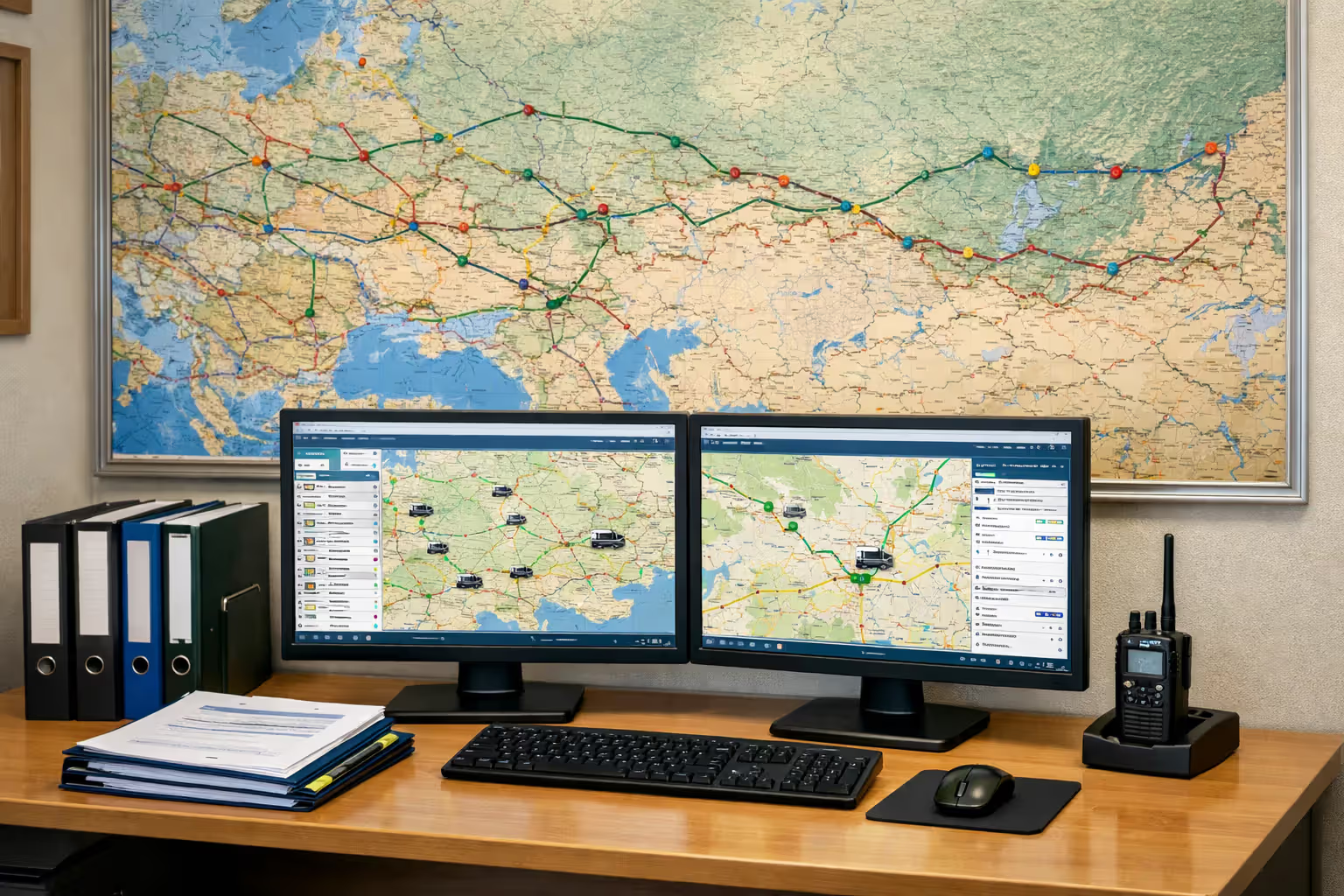
Electronic logging devices and fleet tracking systems have made supervision easier but also raised the bar for what constitutes reasonable oversight. Companies that install monitoring equipment but never review the data may face stronger liability than those with no monitoring at all, because they had the means to prevent accidents but chose not to use it.
Landmark Legal Precedent Cases That Shaped Employer Accountability
Judicial decisions have refined employer liability standards over decades, establishing principles that guide modern litigation. These cases demonstrate how courts balance employer responsibility against fairness concerns.
| Case Name & Year | Jurisdiction | Key Facts | Court Ruling | Impact on Employer Liability Standards |
| Fruit v. Schreiner (1972) | Alaska Supreme Court | Employee driving company vehicle struck pedestrian while intoxicated after leaving bar during work trip | Employer liable; employee remained within scope despite personal detour | Expanded scope-of-employment test to include travel time and mixed-purpose trips |
| Barclay v. Briscoe (2000) | Maryland Court of Appeals | Trucking company hired driver without checking record showing multiple serious violations | Employer directly liable for negligent hiring | Established that regulatory minimum standards don't limit common-law duties; companies must investigate beyond federal requirements |
| Muniz v. United Parcel Service (2013) | California Court of Appeal | UPS driver caused fatal accident; company argued independent contractor status | Court found employment relationship based on control factors | Clarified that delivery companies cannot avoid liability through contractor misclassification when they control work details |
| Puckrein v. ATI Transport (2018) | Federal District Court (Illinois) | Leasing company claimed lease agreement transferred all liability to motor carrier | Both parties held jointly liable | Established that lease agreements cannot fully insulate leasing companies from liability when they retain operational control |
The Fruit decision remains particularly influential because it rejected the "going and coming" rule in circumstances where employers derive benefit from employee travel. This ruling affects countless cases involving drivers traveling to job sites, making deliveries, or attending work-related events.
Barclay elevated hiring standards by holding that employers must conduct reasonable investigations even when drivers hold valid commercial licenses. The court noted that licenses prove minimum competency, not fitness for particular employment. Companies must examine actual driving history, not just licensure status.
California's Muniz decision sent shockwaves through the gig economy by applying traditional employment tests to modern business models. The ruling emphasized that companies controlling routes, setting schedules, and requiring branded uniforms cannot escape liability by labeling workers as contractors.

Author: Marcus Delaney;
Source: capeverde-vip.com
The Accident Investigation Process: Building a Liability Case
Establishing employer liability requires methodical evidence gathering that connects corporate decisions to crash causation. Attorneys and investigators follow a structured approach to uncover the full picture.
The process begins at the accident scene, where investigators document vehicle condition, gather electronic control module data, and photograph evidence before it disappears. Commercial vehicles contain black boxes recording speed, braking, and other parameters that prove critical in reconstruction. Companies sometimes "lose" or overwrite this data, making immediate preservation demands essential.
Driver qualification files form the next investigative target. Federal regulations require carriers to maintain files containing applications, license verifications, road tests, medical certificates, and violation histories. Gaps or irregularities in these files suggest corporate oversight failures. An incomplete file may indicate the company never properly vetted the driver; a pristine file might reflect post-accident sanitization.
Employment records reveal patterns. Investigators examine hiring dates, training documentation, performance reviews, and disciplinary records. A driver hired one week before a fatal crash with minimal training presents a strong negligent hiring case. Multiple warnings about aggressive driving that went unaddressed demonstrate supervision failures.

Author: Marcus Delaney;
Source: capeverde-vip.com
Vehicle maintenance records expose another liability avenue. The Federal Motor Carrier Safety Regulations mandate regular inspections and repairs. Maintenance logs showing deferred repairs, skipped inspections, or altered records indicate that corporate cost-cutting compromised safety. When brake failure causes an accident and records show the company ignored repeated repair recommendations, direct negligence becomes evident.
Hours-of-service logs deserve careful scrutiny. Drivers must comply with complex rules limiting driving hours and mandating rest breaks. Violations indicate either driver misconduct or company pressure to meet unrealistic schedules. Text messages or emails from dispatchers telling drivers to "make it work" or "do what you have to do" to meet deadlines provide powerful evidence of corporate encouragement of regulatory violations.
Expert testimony typically proves necessary to connect evidence to liability theories. Accident reconstructionists explain crash dynamics and causation. Trucking industry experts testify about standard practices, regulatory compliance, and whether the employer's conduct fell below industry norms. Human factors experts may address how fatigue, distraction, or inadequate training contributed to driver error.
The investigation often expands beyond the nominal employer. In trucking, multiple entities may share responsibility: the company whose name appears on the vehicle, the actual motor carrier authority holder, leasing companies, freight brokers, and shippers. Unraveling these relationships requires examining contracts, insurance certificates, and regulatory filings.
How Company Insurance Coverage Responds to Driver Negligence Claims
Commercial insurance policies provide the primary source of compensation in employer liability cases, but coverage is rarely straightforward. Understanding policy structures, limits, and exclusions determines recovery prospects.
Motor carriers must maintain minimum insurance under federal regulations: $750,000 for most general freight, $1 million for certain cargo, and $5 million for hazardous materials. These minimums represent floors, not ceilings. Many carriers purchase higher limits, but even $5 million may prove inadequate for catastrophic crashes involving multiple victims or severe injuries.
Primary liability policies typically cover bodily injury and property damage caused by vehicle operation. These policies respond to both vicarious liability and direct negligence claims, provided the accident occurred during covered activities. The insurer owes a duty to defend the employer and indemnify judgments up to policy limits.
Excess or umbrella policies provide additional coverage above primary limits. These policies activate only after primary coverage is exhausted. Umbrella policies may contain broader exclusions than primary coverage, creating gaps where the primary policy pays but the umbrella does not. Careful policy analysis prevents surprises when damages exceed primary limits.
Coverage disputes frequently arise over whether the driver was acting within the scope of employment. Insurers may deny claims involving substantial personal detours or off-duty conduct. The same scope-of-employment analysis that determines vicarious liability often controls coverage, but policy language sometimes creates different standards.
Exclusions can eliminate coverage entirely. Most commercial policies exclude intentional acts, criminal conduct, and operation without proper licensure. When a driver deliberately causes a collision or operates with a suspended license, the employer may face liability without insurance protection. Some policies also exclude punitive damages, leaving employers personally responsible for punishment-focused awards.
Multiple insurance policies sometimes apply to a single accident. The driver's personal auto policy, the employer's commercial policy, and umbrella coverage may all respond. Determining which policy is primary and how they coordinate requires examining "other insurance" clauses in each policy. These clauses attempt to make competing policies secondary, sometimes creating circular disputes.
Subrogation rights allow insurers who pay claims to pursue recovery from responsible parties. When employer negligence causes an accident but the driver's insurer pays the claim, that insurer may sue the employer for reimbursement. This dynamic affects settlement negotiations and can prolong litigation.
Self-insured retention programs, common among large carriers, require the company to pay initial damages before insurance activates. A $100,000 retention means the employer pays the first $100,000 of each claim. This structure incentivizes safety but also means injured parties must look to the company's assets for initial recovery.

Author: Marcus Delaney;
Source: capeverde-vip.com
Mistakes Employers Make That Increase Their Liability Exposure
Certain practices consistently appear in high-value employer liability cases. Companies that avoid these errors substantially reduce their legal risk.
Treating independent contractor classifications as liability shields without examining the actual relationship tops the list. Courts disregard labels when facts show employee-like control. Companies that dictate work methods, require exclusive service, and integrate contractors into their business face reclassification risk.
Inadequate documentation creates proof problems that work against employers. Missing driver qualification files, incomplete training records, and absent maintenance logs prevent companies from demonstrating reasonable care. When records don't exist, juries often infer the worst.
Ignoring red flags in driver performance represents a critical failure. Companies that receive complaints about aggressive driving, observe policy violations, or learn of off-duty arrests but take no action demonstrate deliberate indifference. This conduct supports punitive damages that can exceed insurance limits.
Pressuring drivers to violate hours-of-service rules or skip vehicle inspections to meet schedules creates both regulatory and tort liability. Text messages, emails, and recorded calls preserving these demands become devastating trial exhibits. Compensation structures that reward speed over safety—paying only for completed deliveries without accounting for legally required rest—create similar problems.
Failing to update policies after regulatory changes leaves companies exposed. Motor carrier regulations evolve frequently, and outdated procedures may violate current requirements. Regular compliance audits identify gaps before they contribute to accidents.
Inadequate insurance coverage for the company's risk profile represents a strategic error. Minimum coverage may satisfy regulatory requirements but leaves companies vulnerable to excess judgments. Catastrophic crashes can generate eight-figure damages that bankrupt underinsured carriers.
Post-accident document destruction or alteration transforms defensible cases into indefensible ones. Companies that modify driver files, alter maintenance records, or delete electronic data after crashes face spoliation sanctions, adverse inferences, and punitive damages. Preservation obligations arise immediately upon learning of potential litigation.
Safety is not an intellectual exercise to keep us in work. It is a matter of life and death. It is the sum of our contributions to safety management that determines whether the people we work with live or die
— Sir Brian Appleton
FAQ: Common Questions About Employer Liability for Driver Negligence
Employer liability for driver negligence serves dual purposes: compensating victims and incentivizing corporate safety practices. The legal framework recognizes that companies control hiring, training, supervision, and operational policies that directly affect road safety. By imposing liability for both employee acts and corporate failures, the law encourages businesses to invest in comprehensive safety programs.
Victims pursuing compensation after driver-caused accidents should investigate employer liability early. Evidence disappears quickly, and companies sometimes destroy or alter records. Immediate legal action preserves critical documentation and maximizes recovery prospects.
Employers can substantially reduce liability exposure through rigorous hiring practices, comprehensive training programs, meaningful supervision, and genuine compliance with safety regulations. The investment in prevention costs far less than the legal and financial consequences of catastrophic accidents. Companies that prioritize safety over short-term efficiency protect both the public and their own long-term viability.
The distinction between independent contractors and employees continues evolving, particularly as new business models emerge. Companies relying on contractor classifications should regularly reassess their practices against current legal standards rather than assuming old arrangements remain valid.
Understanding insurance coverage before accidents occur prevents unpleasant surprises when claims arise. Adequate limits, proper policy coordination, and clear comprehension of exclusions ensure that coverage matches risk exposure.
The consequences of driver negligence extend beyond individual crashes to shape corporate behavior across entire industries. When companies know they will answer for employee misconduct and their own oversight failures, they implement systems that prevent accidents before they happen. This accountability mechanism, imperfect as it may be, represents one of the most effective tools for promoting commercial transportation safety.