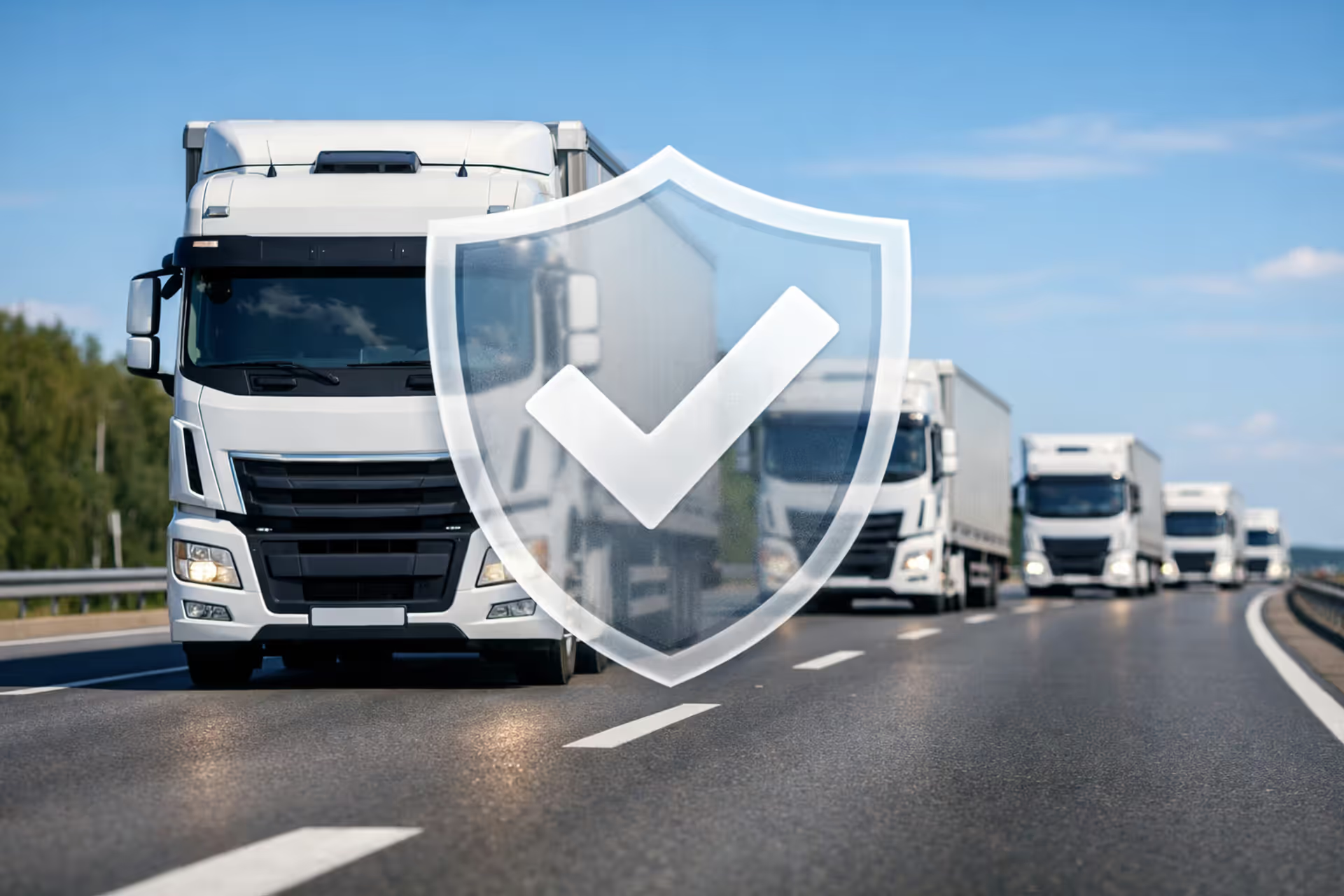
Fleet of white semi-trucks driving on highway with insurance shield protection icon overlay
Trucking Company Insurance Liability: Coverage Requirements and Risk Management for Fleet Operators
Content
Operating a trucking business without understanding your liability exposure is like driving a loaded semi with faulty brakes—you might get away with it for a while, but when something goes wrong, the consequences will be catastrophic. Every year, trucking companies face financial ruin not because they lacked insurance, but because they misunderstood what their policies actually covered or carried inadequate limits for their operation's risk profile.
The liability landscape for commercial trucking has grown increasingly complex. Between federal regulations, state-specific requirements, evolving case law around driver negligence, and insurance policies filled with exclusions, fleet operators need more than just a certificate of insurance—they need a comprehensive understanding of how liability protection actually works when accidents happen.
What Trucking Liability Insurance Actually Covers (And What It Doesn't)
Trucking company insurance liability serves as your financial shield when your vehicles cause bodily injury or property damage to third parties. This coverage pays for medical expenses, lost wages, pain and suffering, vehicle repairs, and legal defense costs when someone files a claim against your company after an accident involving your trucks.
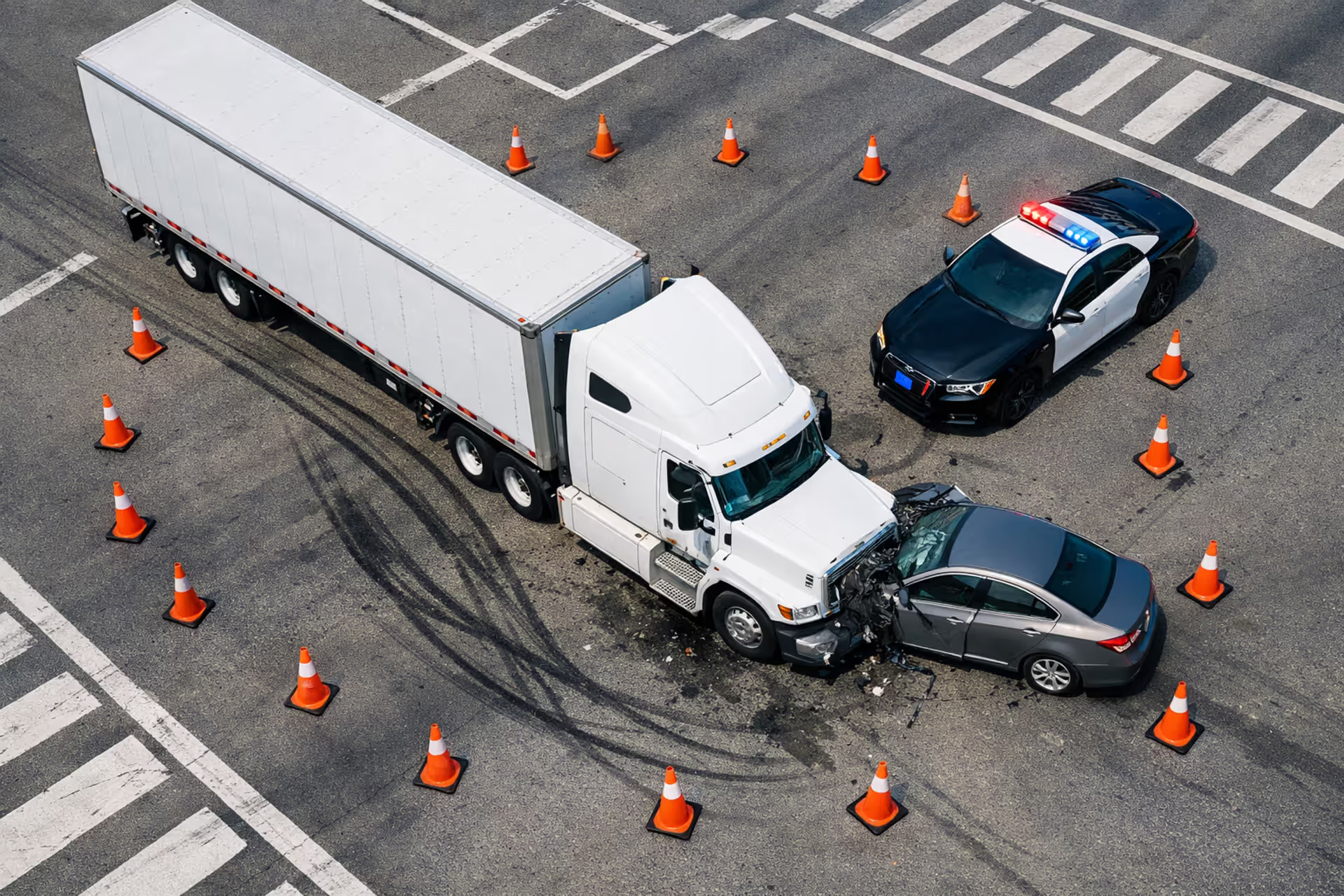
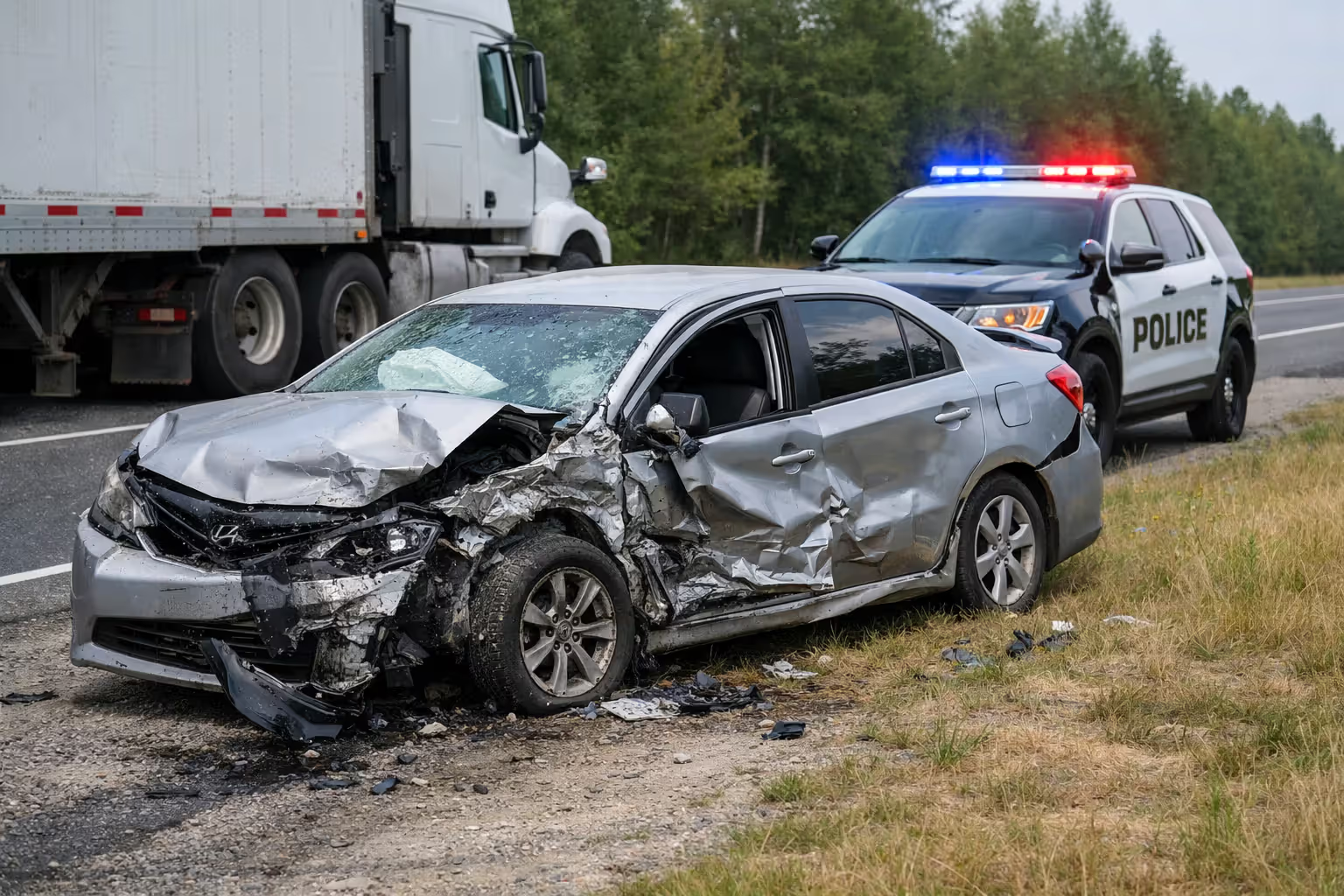
The standard commercial vehicle insurance policy covers bodily injury and property damage liability arising from the operation of your trucks. If your driver runs a red light and T-bones another vehicle, your liability coverage pays for the other driver's medical bills, their vehicle repairs, and your legal defense. If that driver can't work for six months due to injuries, your policy covers those lost wages. If they sue for pain and suffering, your insurer either settles or defends the case in court.
Federal minimum requirements exist, but they're exactly that—minimums. A truck operating general freight under 10,000 pounds requires $300,000 in liability coverage. That sounds substantial until you consider that a single serious injury can generate medical bills exceeding $500,000, and a fatality lawsuit regularly reaches into the millions. The federal minimum won't cover attorney fees once the policy limit is exhausted, leaving your business assets exposed.
Author: Jason Calloway;
Source: capeverde-vip.com
What catches operators off-guard are the exclusions. Most policies exclude intentional acts, so if a driver deliberately rams another vehicle during a road rage incident, your insurer may deny coverage. Pollution liability typically requires separate coverage—if your truck spills fuel or hazardous materials, your standard liability policy won't cover environmental cleanup costs. Criminal acts, driving under the influence, and operating outside your policy's stated radius or commodity restrictions can all trigger coverage denials.
Another common misunderstanding involves cargo liability versus trucking liability. Your liability policy covers damage you cause to other people's property and bodies. It doesn't cover the cargo you're hauling or damage to your own trucks. That requires separate physical damage and cargo coverage.
Federal and State Liability Requirements: Minimum Coverage Limits by Vehicle Type
The Federal Motor Carrier Safety Administration (FMCSA) sets baseline liability requirements for interstate commerce, but these minimums vary dramatically based on vehicle weight and cargo type. Understanding where your operation falls within these categories determines your legal minimum coverage.
| Vehicle/Cargo Classification | Minimum Liability Coverage |
| Vehicles 10,001+ lbs (general freight, non-hazmat) | $750,000 |
| Vehicles under 10,001 lbs (general freight) | $300,000 |
| Vehicles transporting oil or hazardous materials (placarded) | $5,000,000 |
| Vehicles transporting hazardous substances (non-placarded quantities) | $1,000,000 |
| Vehicles transporting 16+ passengers | $5,000,000 |
| Vehicles transporting 15 or fewer passengers | $1,500,000 |
These federal requirements apply to interstate carriers. Intrastate operators must comply with state regulations, which sometimes exceed federal minimums. California requires $750,000 for trucks over 10,000 pounds regardless of cargo, while Texas aligns with federal minimums. If you cross state lines, you must meet the highest requirement of any state you operate in.
Operating without proper coverage triggers severe penalties. The FMCSA can fine carriers up to $16,864 per day for operating without required insurance and place your company out of service until you demonstrate compliance. State authorities can impound your vehicles, suspend your operating authority, and pursue criminal charges against company principals. Beyond regulatory penalties, if you're in an accident without adequate coverage, you'll face personal liability for damages exceeding whatever coverage you do carry.
Many carriers make the mistake of letting their insurance lapse during slow periods or when cash flow tightens. Your certificate of insurance must remain continuously active with the FMCSA. Even a single day gap requires filing new authority applications and can take months to resolve.
How Driver Negligence Affects Your Company's Liability Exposure
The legal doctrine of respondeat superior—Latin for "let the master answer"—forms the foundation of trucking company liability. Under this principle, employers are liable for negligent acts their employees commit within the scope of employment. When your driver causes an accident while performing job duties, injured parties can sue both the driver and your company. In practice, they'll pursue your company because you have deeper pockets.
Common negligence scenarios create predictable liability patterns. Distracted driving—texting, eating, adjusting GPS while moving—accounts for roughly 30% of commercial vehicle accidents. Hours-of-service violations create another major exposure. If your driver causes an accident after driving 13 hours straight when federal regulations cap driving time at 11 hours, plaintiffs' attorneys will argue your company's pressure to meet deadlines contributed to the crash. That transforms a simple rear-end collision into a case involving punitive damages.
Improper maintenance represents another liability multiplier. When brake failure causes an accident and investigation reveals your company skipped required inspections, you've moved beyond simple negligence into gross negligence territory. Expect the lawsuit to include claims for punitive damages, which many insurance policies don't cover.
"The biggest mistake trucking companies make is treating insurance as their only risk management tool," says Patricia Hernandez, Risk Management Director at Commercial Transport Solutions. "When we review accident litigation files, we consistently see that companies with robust safety programs, documented training, and enforced policies face significantly lower settlement amounts even when their drivers are clearly at fault. Juries and insurance adjusters distinguish between an isolated mistake by a well-trained driver and systemic negligence by a company that cuts corners."
The independent contractor versus employee distinction significantly impacts liability exposure. If you classify drivers as independent contractors, you might assume their negligence is their problem. Courts increasingly reject this argument, applying the "borrowed servant" doctrine or piercing contractor classifications they view as shams. If you control routes, schedules, and equipment, courts often find you're the employer regardless of how you classify the relationship for tax purposes.
When Your Company Is Liable vs. When the Driver Bears Responsibility
Your company faces liability when drivers operate within the scope of employment—essentially any time they're performing job-related duties. If your driver causes an accident while hauling your load on your assigned route, your company is liable even if the driver violated company policy by texting while driving.
The driver bears personal responsibility when they act outside employment scope. If your driver detours 50 miles off-route to run personal errands and causes an accident, you might successfully argue they weren't acting within their job duties. If a driver takes the truck home overnight against policy and causes an accident while intoxicated on their personal time, that's likely outside employment scope.
But these distinctions rarely protect companies completely. Plaintiffs' attorneys name everyone remotely connected to the accident in lawsuits, forcing you to spend money on legal defense even when you ultimately prevail. And if you negligently hired a driver with a terrible safety record, you face direct negligent hiring liability regardless of employment scope issues.
Risk mitigation requires multiple layers beyond insurance. Implement rigorous hiring practices with thorough background checks, motor vehicle record reviews, and drug testing. Conduct regular safety training and document everything. Install telematics and dash cameras to provide objective evidence of driver behavior. Enforce hours-of-service compliance through electronic logging devices. Create a safety culture where drivers understand that following protocols protects both them and the company.
In trucking, the cost of prevention is always a fraction of the cost of a single catastrophic claim. Companies that invest in driver screening, continuous training, and proactive maintenance don’t just reduce accidents—they fundamentally change how insurers, juries, and regulators perceive their operations. That perception translates directly into lower premiums and more favorable legal outcomes
— Robert J. Caldwell
Determining the Right Coverage Limits for Your Fleet Size and Operation
Federal minimums bear little relationship to actual liability exposure in serious accidents. A single fatality lawsuit routinely seeks $3-5 million in damages. A multi-vehicle pileup can generate combined claims exceeding $10 million. Determining appropriate coverage requires analyzing your specific risk factors.
Fleet size matters, but not as much as operation type. A five-truck fleet hauling general freight on rural highways faces different exposure than five trucks navigating dense urban areas. A company running 20 trucks with an excellent safety record needs less coverage than a competitor with the same fleet size but multiple at-fault accidents annually.
Annual revenue provides another benchmark. As a rule of thumb, your liability coverage should equal or exceed your annual revenue. A company grossing $2 million annually should carry at least $2 million in liability coverage. This protects your business's earning capacity if a major claim threatens to bankrupt you.
| Fleet Size | Annual Revenue | Recommended Minimum Coverage | Suggested Umbrella/Excess |
| 1-5 trucks | Under $500K | $1,000,000 | $1,000,000 |
| 1-5 trucks | $500K-$2M | $2,000,000 | $2,000,000 |
| 6-20 trucks | $2M-$5M | $3,000,000 | $5,000,000 |
| 6-20 trucks | $5M-$10M | $5,000,000 | $10,000,000 |
| 20+ trucks | $10M+ | $5,000,000+ | $15,000,000+ |
Umbrella and excess liability policies provide additional coverage above your primary policy limits. If you carry $1 million in primary liability and $4 million in umbrella coverage, you have $5 million total protection. Umbrella policies are relatively inexpensive compared to increasing your primary coverage—often $1,000-$3,000 annually per million in additional coverage.
The cost-benefit analysis favors higher limits. Premium increases for higher coverage are non-linear. Jumping from $1 million to $2 million in coverage might increase your premium by 25%, not 100%. Meanwhile, that extra million in coverage could mean the difference between surviving a major lawsuit and closing your business.

Author: Jason Calloway;
Source: capeverde-vip.com
Consider your cargo's potential to cause catastrophic damage. Hauling steel coils that could crush multiple vehicles in an accident? Transporting goods through densely populated areas where a single accident could involve multiple vehicles? These factors warrant higher coverage limits regardless of fleet size.
Navigating the Insurance Claims Process After a Fleet Accident
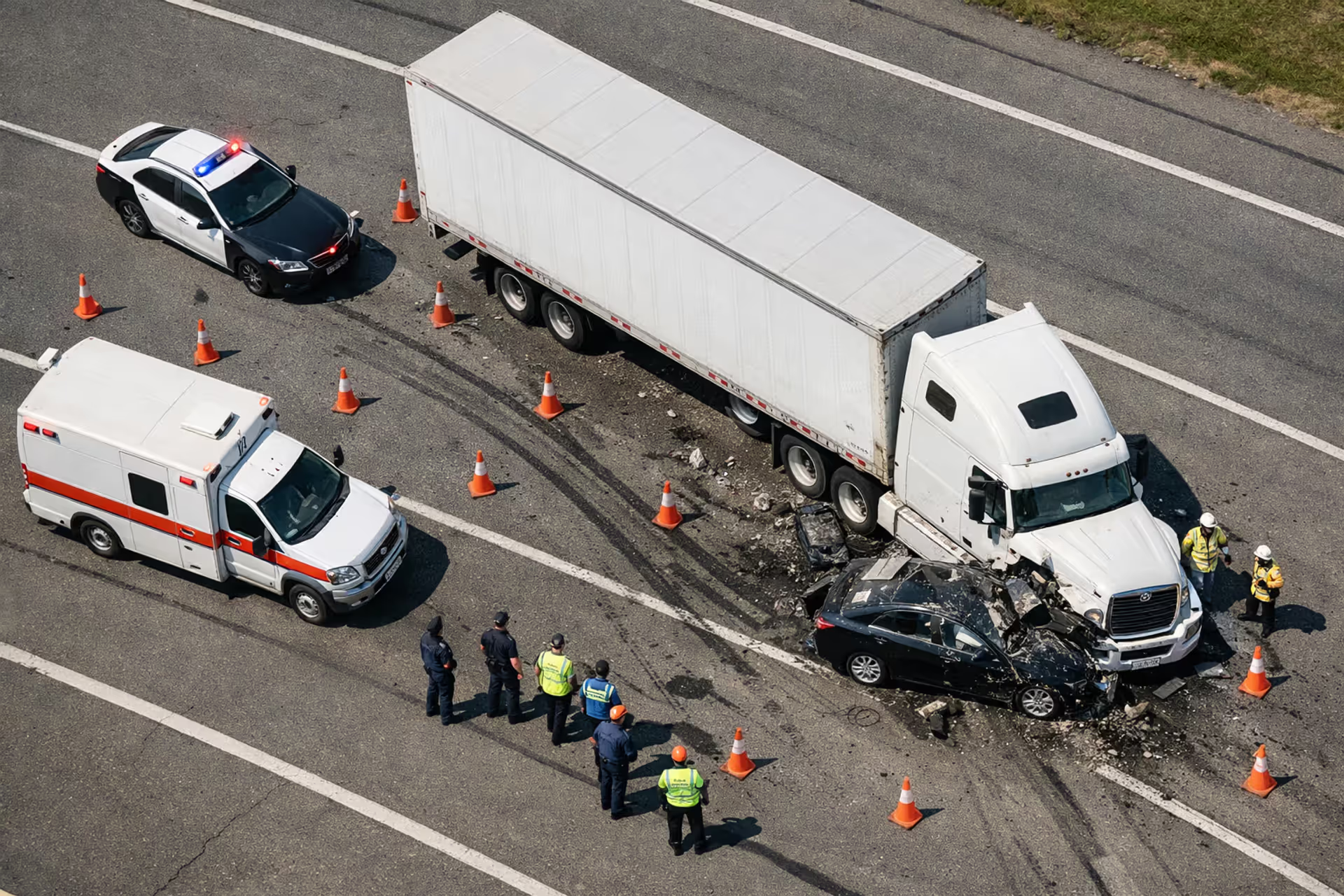
The minutes and hours following a fleet accident protection event determine whether your claim proceeds smoothly or turns into a coverage dispute nightmare. Your immediate actions after an accident directly impact the insurance claims process outcome.
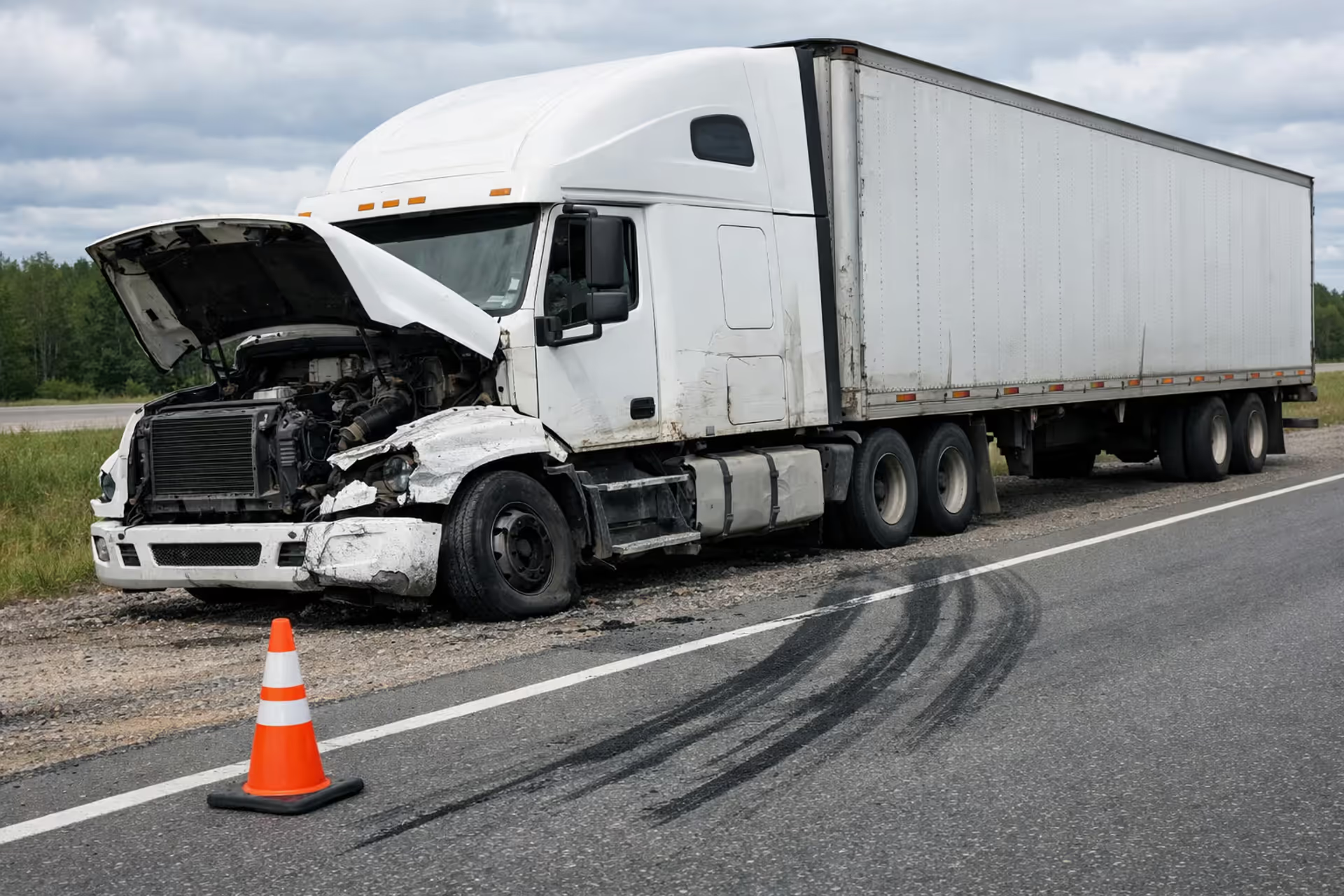
First, ensure safety and summon emergency services. Then begin documentation. Photograph everything—vehicle positions, skid marks, road conditions, traffic signs, weather conditions, and all vehicle damage from multiple angles. Collect contact information from all parties, witnesses, and responding officers. Many carriers now equip drivers with accident reporting apps that guide them through proper documentation.
Notify your insurer immediately, ideally within hours. Most policies require "prompt" notice, and delays raise red flags with adjusters. Provide factual information about what happened without speculating about fault. "The other vehicle entered my lane" is factual. "The other driver must have been distracted" is speculation that could undermine your claim later.
Preserve all evidence. Don't repair vehicles until your insurer inspects them. Download data from electronic logging devices, telematics systems, and dash cameras before it's overwritten. Secure the driver's logs, pre-trip inspection reports, and maintenance records for the involved vehicle.
Working with adjusters requires a delicate balance. Cooperate fully with their investigation, but understand their goal is minimizing what the insurance company pays out. Provide requested documentation promptly, but don't volunteer information beyond what they ask. If the claim is complex or involves serious injuries, engage legal counsel experienced in trucking liability before giving recorded statements.
Common claim denial reasons include late reporting, material misrepresentations on your insurance application, operating outside your policy's stated radius or commodity restrictions, and driver violations like DUI or operating without a valid CDL. Prevent denials by maintaining accurate policy information, understanding your coverage restrictions, and enforcing driver compliance with licensing and safety regulations.
Timeline expectations vary dramatically. Simple property-damage-only claims might resolve in 30-60 days. Injury claims take months or years depending on medical treatment duration. Serious injury and fatality claims often take 18-36 months to resolve, especially if they proceed to litigation. Subrogation claims—where another insurer pays their client then seeks reimbursement from you—can drag on even longer.
During the claims process, maintain detailed records of all communications, expenses, and time spent dealing with the claim. If you disagree with your insurer's handling of the claim, most policies include appraisal or arbitration provisions for resolving disputes without litigation.
Documentation is the single most undervalued asset in trucking liability management. I’ve seen cases where a well-organized accident file with dash cam footage, maintenance logs, and training records turned a potential seven-figure settlement into a dismissed claim. The carriers who survive major lawsuits are the ones who can prove exactly what happened and what they did to prevent it
— Karen M. Whitfield
Cost Factors and How to Lower Your Trucking Liability Premiums
Underwriters evaluate dozens of factors when pricing commercial vehicle insurance policies. Understanding what drives your premiums helps you take strategic actions to reduce costs without sacrificing necessary protection.
Your loss history dominates pricing decisions. Insurers typically review five years of claims history. A single at-fault accident with significant damages can increase your premiums by 20-40% at renewal. Multiple accidents or a pattern of frequent small claims mark you as a high-risk account, potentially doubling your premiums or making coverage difficult to obtain.
Driver qualifications significantly impact rates. Carriers with rigorous hiring standards—requiring clean motor vehicle records, minimum experience levels, and regular training—receive better rates than those who hire anyone with a pulse and a CDL. Some insurers offer discounts up to 15% for carriers that exceed minimum qualification standards.
Safety programs demonstrate risk management commitment. Formal safety policies, regular driver training, documented vehicle maintenance programs, and participation in programs like the FMCSA's Safety Management System all signal to underwriters that you're serious about preventing accidents. These programs can reduce premiums by 10-25%.
Author: Jason Calloway;
Source: capeverde-vip.com
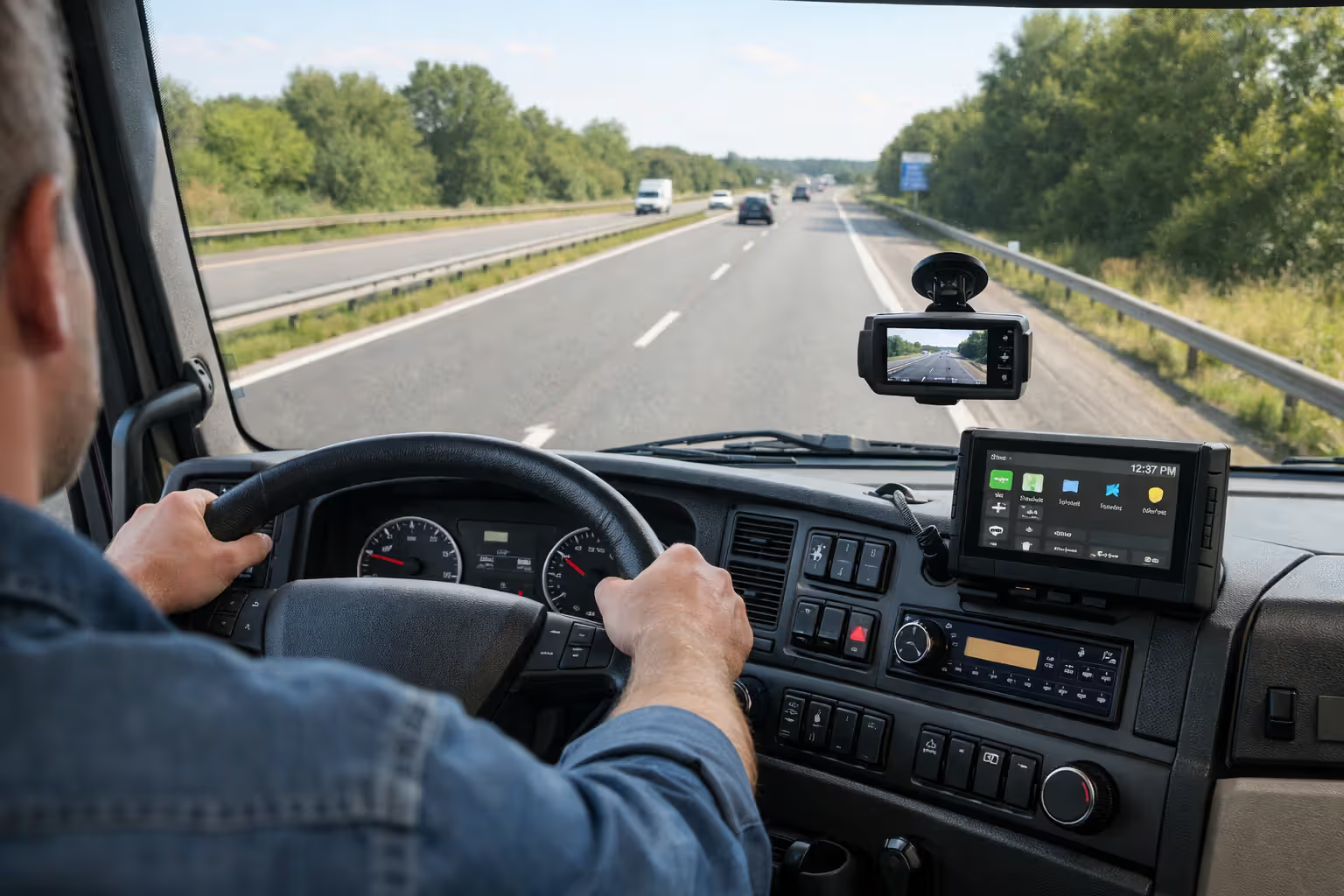
Telematics and dash cameras provide objective data about driver behavior. Insurers increasingly offer usage-based insurance programs that monitor speeding, harsh braking, rapid acceleration, and hours of operation. Carriers whose telematics data demonstrates consistently safe driving receive premium discounts of 5-15%. Dash cameras that record accidents help resolve liability disputes quickly, reducing claim costs and demonstrating your commitment to accountability.
Vehicle age and maintenance affect rates. Newer trucks with modern safety features like collision avoidance systems, lane departure warnings, and stability control qualify for better rates. Well-maintained older trucks can still receive favorable pricing if you document rigorous maintenance programs.
Your business's financial stability matters. Insurers prefer carriers with solid financials because financially stressed companies often cut corners on maintenance and safety. Demonstrating stable revenue and profitability can improve your rates.
Comparison shopping makes sense, but specialized brokers who understand trucking often deliver better value than going direct or using general commercial insurance agents. Trucking-specialized brokers have relationships with insurers who actually want trucking business and understand the industry's unique risks. They can often find coverage options and pricing that general agents miss.
Deductible selection provides another cost control lever. Increasing your deductible from $1,000 to $5,000 might reduce your premium by 15-20%. If you have the financial reserves to handle higher out-of-pocket costs on smaller claims, higher deductibles make economic sense.
Frequently Asked Questions About Trucking Company Liability Insurance
Protecting Your Business Through Comprehensive Liability Management
Understanding trucking company insurance liability transforms from abstract regulatory compliance into concrete business survival strategy when you recognize that a single serious accident can generate financial consequences exceeding years of profitable operations. Federal minimums provide a legal baseline, not adequate protection for real-world exposure.
Effective liability management requires multiple coordinated strategies. Carry coverage limits that reflect your actual exposure, not just regulatory minimums. Implement robust safety programs that prevent accidents rather than just responding after they occur. Understand how driver negligence creates company liability and take proactive steps to minimize those risks through proper hiring, training, and monitoring.
The insurance claims process rewards preparation and documentation. Equip your drivers with tools and knowledge to properly document accidents. Maintain meticulous records of safety training, vehicle maintenance, and driver qualifications. These records serve double duty—they help prevent accidents and provide crucial evidence when accidents do occur.
Cost management matters, but not at the expense of adequate protection. The premium savings from inadequate coverage or high-risk drivers evaporate instantly when a serious accident occurs. Invest in telematics, safety programs, and qualified drivers. These investments reduce both accident frequency and insurance costs while protecting your business from catastrophic liability exposure.
Your trucking company's long-term viability depends on managing liability exposure as seriously as you manage routes, maintenance, and customer relationships. The companies that thrive are those that view comprehensive liability protection not as an expensive burden, but as fundamental infrastructure that enables sustainable growth.