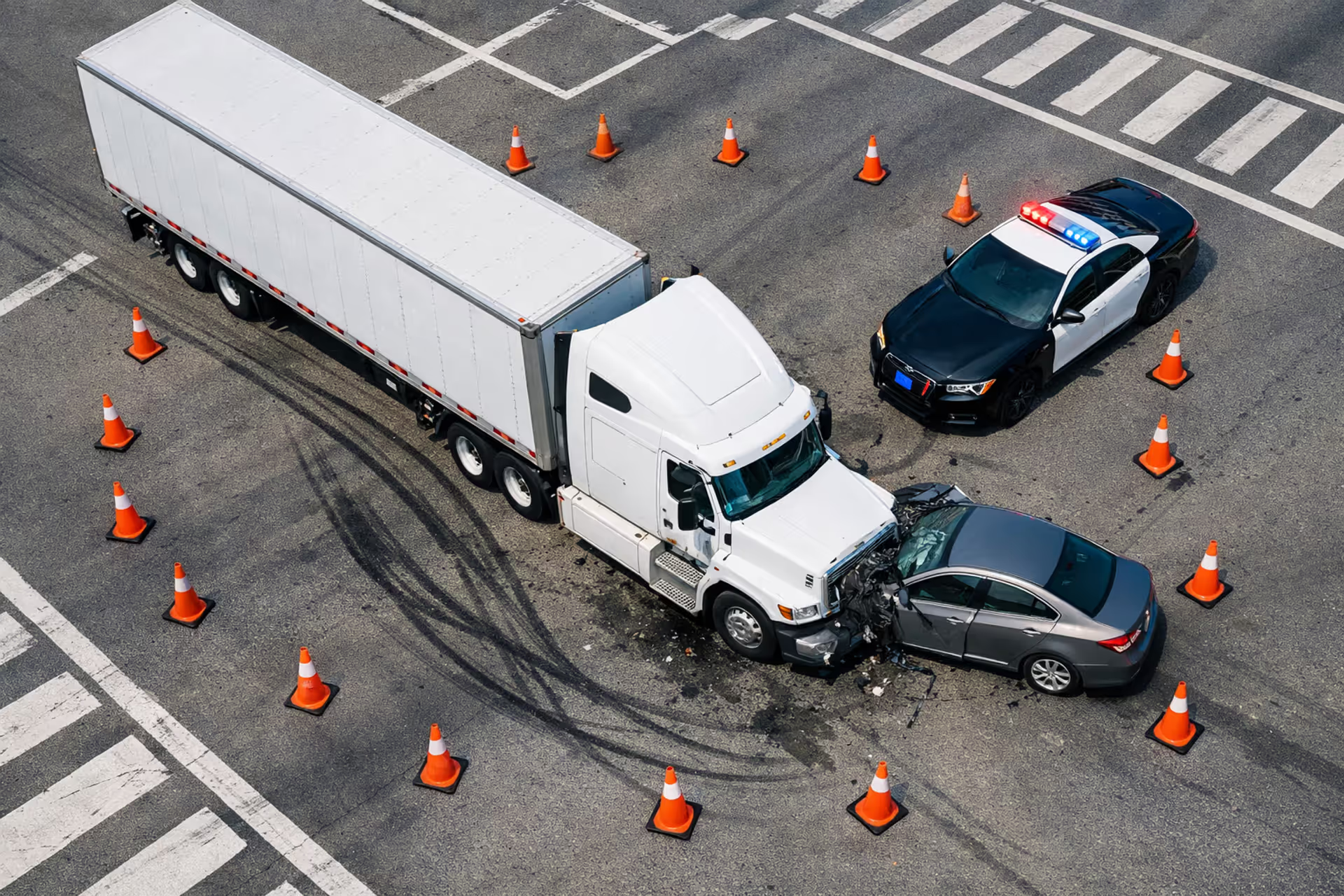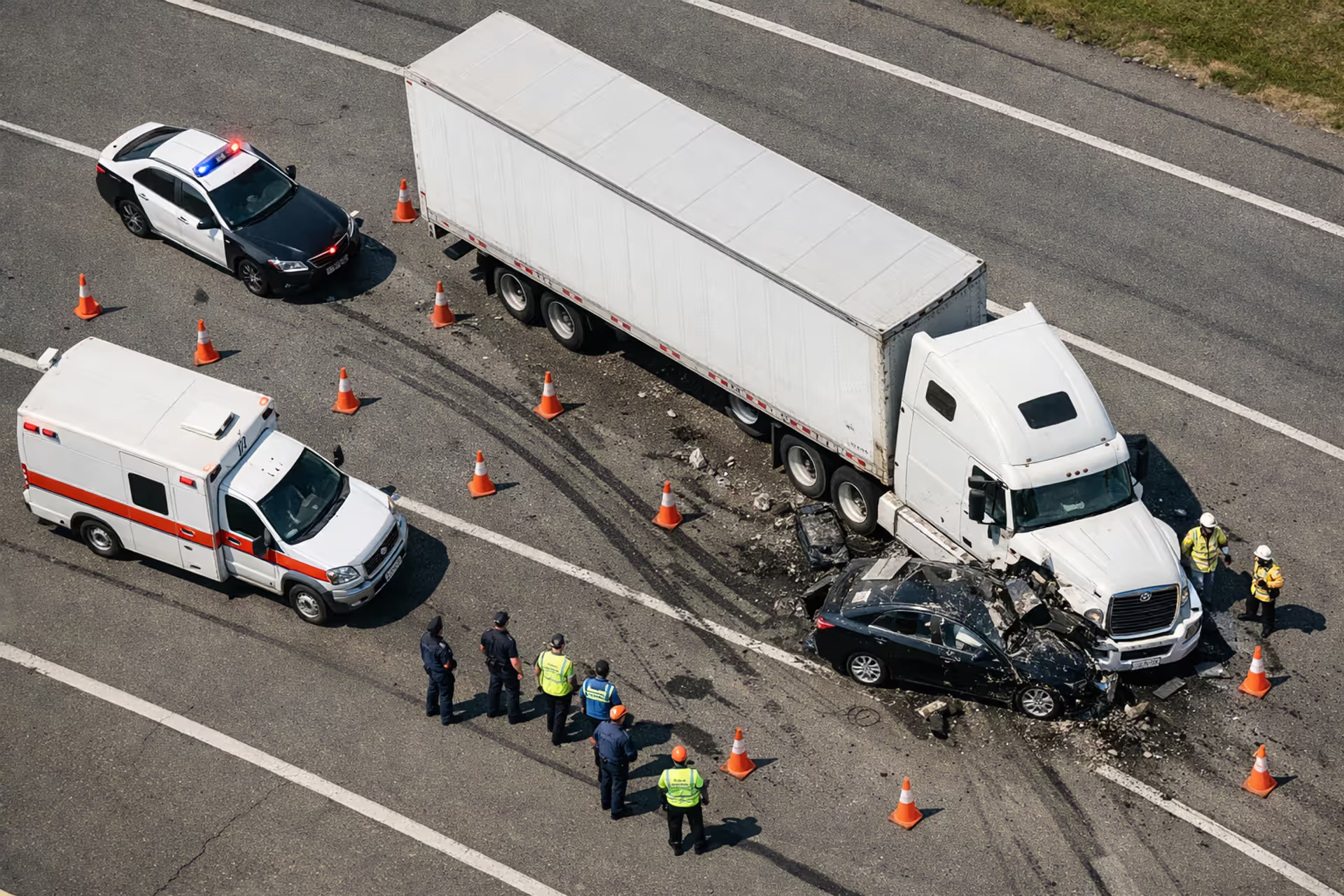
Aerial view of a truck accident scene on a highway with a semi-trailer and a sedan, emergency vehicles and traffic cones on the road
Understanding Legal Responsibility: Who Faces Liability in a Truck Accident?

Content
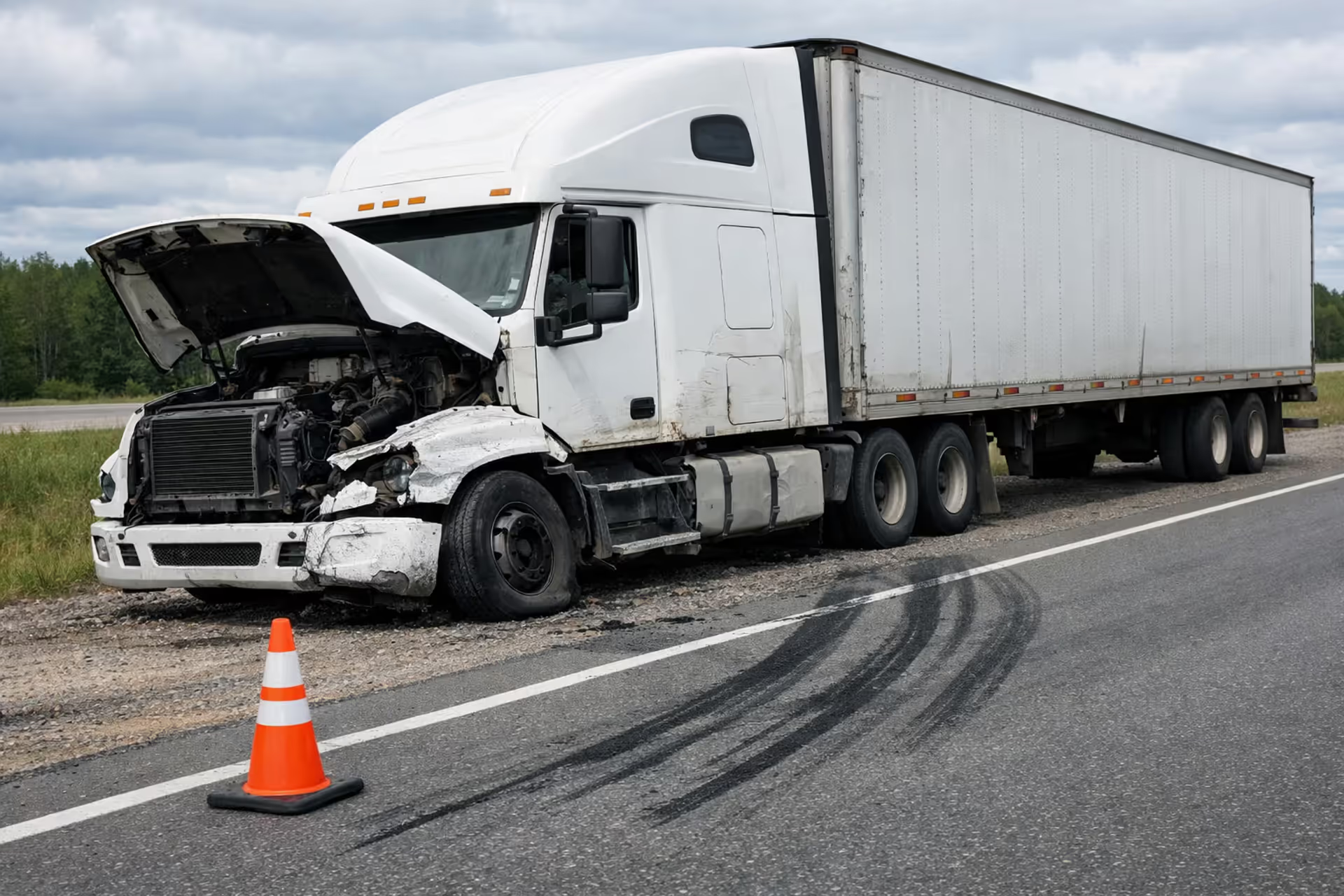
A collision between an 80,000-pound tractor-trailer and a family sedan triggers legal investigations that stretch far beyond the two drivers involved. Commercial vehicle crashes create intricate liability networks connecting corporate fleet managers, equipment service centers, warehouse loading crews, and several insurance providers—each potentially responsible for compensating the victims.
Determining who is liable in a truck accident requires examining every organization and individual connected to that commercial rig's journey: the person behind the wheel, the business managing that truck, the mechanics servicing its braking system, and the warehouse staff distributing weight in the trailer. Federal transportation law establishes specific safety duties for each participant, and failing to meet those obligations usually creates legal responsibility.
Injury victims must identify every party whose actions contributed to their crash, because missing even one defendant could mean losing access to millions in compensation. A driver's personal insurance might cover $1 million, but uncovering additional defendants—the fleet operator, the maintenance facility, and the cargo company—might increase available insurance to $10 million or higher. Thorough liability investigation separates inadequate settlements from complete financial recovery.
How Truck Driver Negligence Creates Liability in Accident Claims
The person operating a commercial truck bears direct responsibility when their decisions cause a crash. Driver negligence trucking cases form the foundation of most lawsuits, though they rarely represent the only source of legal fault.
Common Forms of Driver Error That Establish Fault
Fatigue causes more commercial vehicle crashes than nearly any other single factor. Federal regulations limit continuous driving to 11 hours after 10 consecutive hours off duty, yet many operators manipulate digital records or misuse regulatory exemptions to extend their shifts. When a trucker falls asleep after spending 15 straight hours driving, they've broken safety rules in ways that make proving negligence relatively simple.
Distraction represents another widespread danger. Truckers adjusting GPS systems, eating meals, or checking dispatch messages while traveling at 70 miles per hour have practically no time to react when hazards appear ahead. A three-second glance away at highway speeds covers the length of a football field—enough distance to crash into stopped vehicles without any braking.
Speed creates exponentially worse outcomes in an 80,000-pound vehicle compared to a passenger car. Commercial trucks traveling just 10 miles above posted limits require significantly more distance to stop, and high-velocity collisions involving massive vehicles can completely crush smaller cars. Crash reconstructions showing excessive speed in construction zones or during rain make defending fault nearly impossible.
Substance impairment—whether alcohol, illegal drugs, or certain prescription medications—violates federal commercial driving standards. These operators must maintain blood alcohol concentrations below 0.04%, exactly half the legal threshold for regular drivers, and must submit to mandatory testing after crashes. Positive drug screening results essentially prove negligence automatically.

Author: Natalie Sinclair;
Source: capeverde-vip.com
When Independent Contractors vs. Company Employees Make a Difference
How businesses classify their drivers fundamentally alters who ultimately pays damages. Traditional employees operate under "respondeat superior" principles, making employers answerable for negligent acts performed during work duties. When a company employee causes a crash while hauling an assigned shipment on an approved route, direct employer liability follows.
Owner-operators introduce additional legal complexity. Trucking businesses increasingly classify drivers as independent contractors to avoid liability, but courts look beyond paperwork classifications to examine actual working relationships. Key questions include: Who controls delivery schedules, routing choices, and timing demands? Who provides the trailer and determines maintenance schedules? When companies exercise comprehensive operational control despite contractor labels, judges regularly assign liability regardless.
Some owner-operators lease equipment to carriers through agreements that shift insurance responsibility and legal exposure to the leasing business. These arrangements require detailed contract review to determine which entity's insurance applies to injury claims.
The tragedy in trucking accidents is not that liability is difficult to establish — it is that victims too often settle for a fraction of what they deserve because they fail to look beyond the driver’s seat. The carrier, the mechanic, the loader — each link in the chain that broke deserves scrutiny, and each may hold the key to full and fair compensation
— Robert A. Clifford
Trucking Company Liability: When Employers Are Held Responsible
Corporate fleet operations face liability risks on multiple fronts beyond simple vicarious responsibility for employee conduct. Trucking company liability extends to independent corporate failures involving recruitment practices, qualification verification, oversight systems, and regulatory compliance.
Negligent Hiring and Training Failures
Federal law requires commercial operators possess valid CDLs with appropriate endorsements, yet some businesses compromise safety by hiring drivers with problematic histories or skipping credential checks. When a trucking operation employs someone with five prior crashes or multiple license suspensions, and that individual causes another collision, the company faces direct liability for reckless hiring choices.
Training obligations extend well beyond initial licensing. New employees need supervised road time and equipment-specific instruction for the vehicles they'll drive. Businesses that assign drivers familiar only with standard trailers to operate liquid tankers without proper preparation create unreasonable public hazards. When that operator's inexperience contributes to a crash, inadequate training becomes an independent liability foundation.
Hours-of-Service Violations and Pressure to Meet Deadlines
Trucking economics work on extremely tight margins, creating intense pressure to maximize miles covered and minimize downtime. Companies that incentivize speeding, encourage skipping mandatory breaks, or threaten termination for missed deliveries create the conditions for fatigue-related crashes.
Electronic logging requirements now make hours-of-service violations harder to hide, though they haven't eliminated the problem. Some operations tell drivers to misclassify driving time as on-duty-not-driving or inappropriately exploit regulatory exceptions. Litigation document discovery often reveals text messages explicitly ordering hours-of-service violations—powerful evidence of corporate negligence.
Vicarious Liability Under Federal Motor Carrier Regulations
Federal Motor Carrier Safety Regulations impose non-delegable duties on trucking businesses. They must perform annual vehicle inspections, maintain detailed operational files, administer drug testing programs, and monitor driver performance data. Companies cannot escape these obligations by assigning them to outside contractors.
When a steering system fails because a company delayed required inspections, corporate liability applies regardless of who did the mechanical work. Similarly, when companies overlook accumulating traffic tickets and that driver later causes a crash, inadequate oversight creates independent liability.
Maintenance Providers and Equipment Failures in Truck Accidents
Mechanical failures cause or contribute to thousands of trucking crashes annually. Proving maintenance liability trucking requires reviewing service histories and identifying where preventable failures started.
Third-Party Maintenance Companies and Defective Repairs
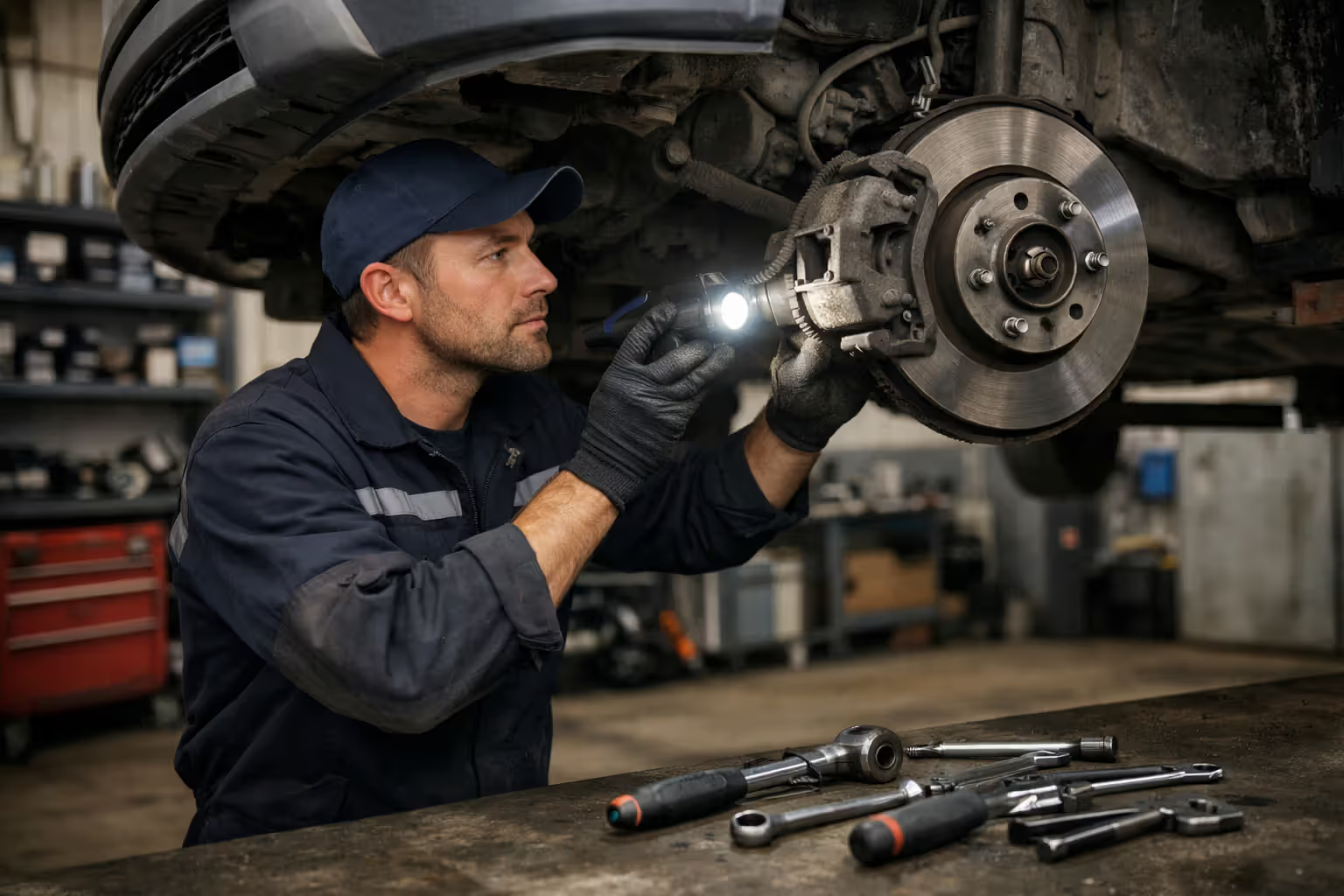
Many fleet operators outsource maintenance to specialized repair shops rather than operating internal service bays. When outside mechanics incorrectly service air brake systems, miss deteriorating tie rod ends, or improperly secure fifth-wheel connections linking tractor and trailer, those service businesses share responsibility for resulting crashes.
Brake adjustment mistakes represent common scenarios. Air brake systems demand precise calibration for safe operation, and technicians unfamiliar with specific truck configurations sometimes set them incorrectly. When brakes fail because a shop adjusted them outside manufacturer specifications two days before a collision, that facility bears clear responsibility.
Parts suppliers can also face claims. Shops installing counterfeit brake pads or substituting cheaper materials to cut costs have introduced dangerous products into the marketplace. When those inferior parts fail, both suppliers and installers may face liability.
Author: Natalie Sinclair;
Source: capeverde-vip.com
How Maintenance Records Prove or Disprove Liability
Federal requirements mandate detailed maintenance documentation showing all inspections, repairs, and part replacements. These records become litigation focal points. Commercial vehicles with zero documented brake service across 20 months that crash due to brake failure present obvious liability for whoever held maintenance responsibility—whether the fleet operator or contracted repair shops.
Conversely, comprehensive maintenance documentation showing regular servicing, prompt repairs, and adherence to manufacturer guidelines can protect defendants from claims. When records demonstrate proper brake service just 400 miles before a crash and no defects were reasonably detectable, proving maintenance negligence becomes difficult.
Driver-completed inspection reports before and after trips also carry significant weight. Operators who document "excessive brake pedal travel" on inspection forms but continue driving share fault for subsequent brake-related collisions. When companies ignore such reports and fail pulling vehicles from service, they increase liability exposure.
Cargo Liability Laws: When Loading Companies Share Fault
The freight commercial vehicles haul affects handling characteristics, braking performance, and stability. Cargo liability laws place responsibility on loading operations when improper practices contribute to crashes.
Improper Loading, Securement, and Weight Distribution Issues
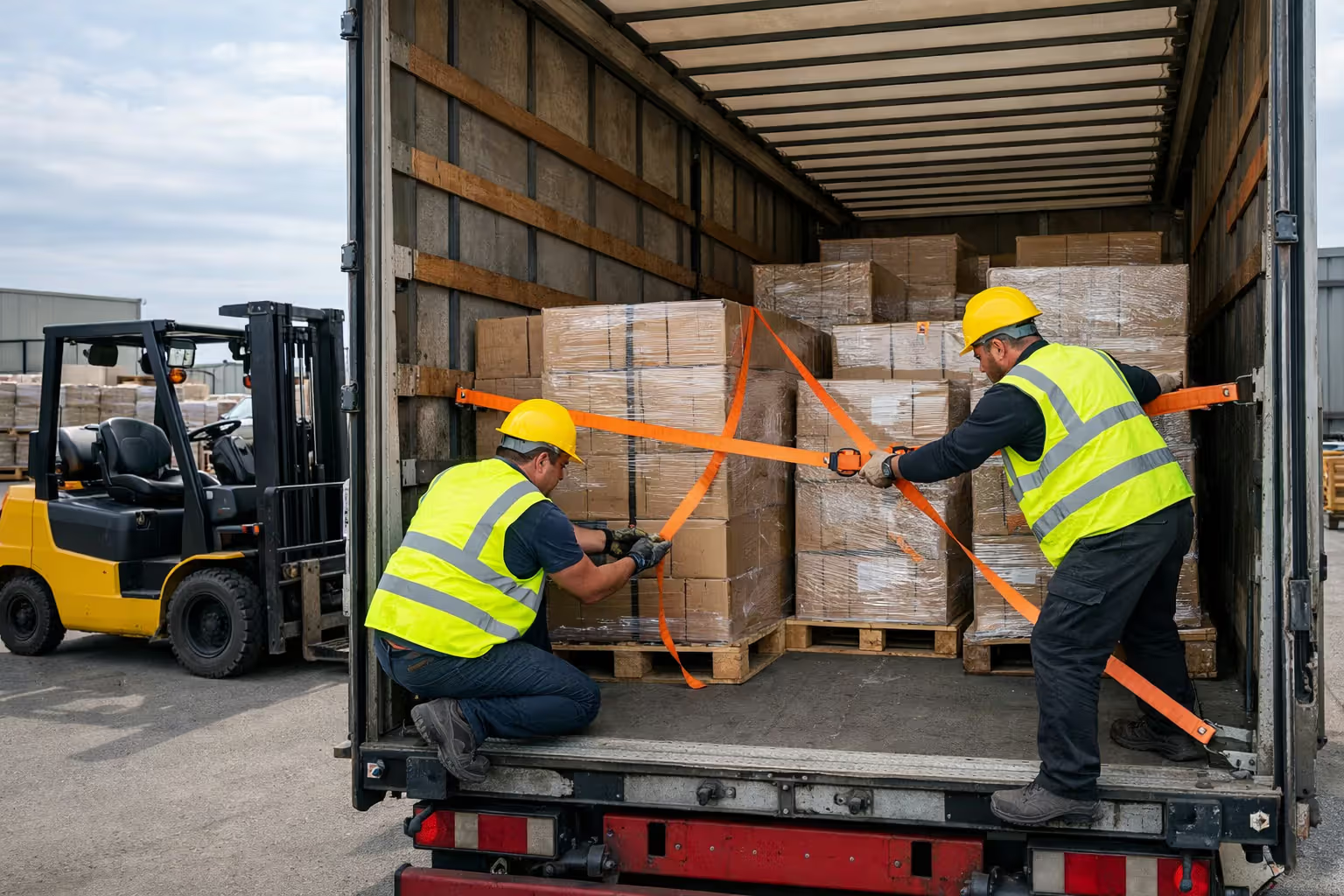
Federal cargo securement regulations specify exactly how different freight types must be restrained, including minimum tie-down quantities and specifications based on cargo properties and weight. Insufficient restraints allow freight to shift during transit, destabilizing trucks and potentially triggering rollovers or jackknife incidents.
Weight distribution matters as much as total weight. Cargo positioned too far rearward reduces front-axle grip and steering control; cargo concentrated too far forward increases jackknife risks. Loaders must distribute weight evenly across axle groups while respecting legal limits for each assembly. Trucks loaded beyond the 34,000-pound tandem axle limit handle unpredictably and accelerate brake wear.
Overweight conditions create multiple hazards. Beyond handling problems, excessive weight extends stopping distances substantially. Trucks loaded to 90,000 pounds rather than the legal 80,000-pound limit need considerably more road to stop—distance that might mean the difference between stopping safely and plowing into traffic.
Shipping Companies vs. Loading Contractors
Determining cargo loading responsibility requires examining business relationships. Sometimes trucking companies load their own trailers at distribution centers. Other times, shippers—the businesses whose products are being hauled—handle loading at their warehouses. Frequently, third-party logistics operations or warehouse facilities perform loading services under contract arrangements.
Whichever organization physically loaded and secured freight holds primary responsibility for loading defects, but shippers providing inadequate equipment or instructions may share fault. When shippers tell loaders to exceed weight restrictions to avoid paying for additional trucks, both organizations have created dangerous conditions.
Bills of lading and shipping paperwork document what was loaded, which organization performed the work, and under whose authorization. These records become vital evidence in cargo-related liability litigation.
Author: Natalie Sinclair;
Source: capeverde-vip.com
Multi-Party Accident Claims: Sorting Out Shared Responsibility
Commercial trucking crashes routinely involve multiple defendants, with each attempting to shift blame toward others. Multi party accident claims require sophisticated legal analysis to properly allocate fault.
Comparative Negligence in Truck Accidents
Most states apply comparative negligence frameworks, allowing recovery even when plaintiffs bear partial responsibility. Under modified comparative negligence systems (used by many states), plaintiffs can recover damages reduced by their fault percentage, provided they're not primarily responsible—typically meaning less than 50% or 51% fault depending on jurisdiction.
Pure comparative negligence states permit plaintiffs bearing 90% responsibility to still collect 10% of damages from other liable parties. This matters in truck crashes because even when commercial drivers hold primary responsibility, other organizations often contributed.
Consider a collision where a drowsy truck operator (60% liable) couldn't stop because mechanics improperly serviced brakes (30% liable), and cargo loaders exceeded weight restrictions (10% liable). Injured parties can pursue all three defendants, collecting proportionate amounts from each.
How Multiple Defendants Affect Settlement Negotiations
Multiple defendants create intricate settlement dynamics. Each defendant's insurance carrier wants to minimize their client's liability share, frequently by arguing other parties bear greater responsibility. This blame-shifting can benefit plaintiffs, as defendants undermine each other's defenses.
However, settling with one defendant risks releasing others from liability unless settlement agreements include careful language. Most multi-defendant settlements contain provisions preserving claims against non-settling parties, but this requires explicit negotiation.

Author: Natalie Sinclair;
Source: capeverde-vip.com
Joint and several liability—where any defendant can be held responsible for entire judgments regardless of their fault percentage—exists in certain states. This allows plaintiffs collecting full damages from whichever defendant has greatest financial resources, leaving that defendant to seek contribution from other responsible parties. Other states limit joint liability to economic damages or eliminate it entirely, requiring each defendant paying only their proportionate share.
What Evidence Determines Liability in Commercial Truck Crashes
Proving who is liable in a truck accident requires specific documentation that commercial vehicles generate but passenger cars don't.
Electronic logging device (ELD) records provide objective documentation of driving time, rest breaks, and hours-of-service compliance. This data is electronically preserved and resistant to tampering, making it far more reliable than historical paper logbooks. ELD records showing a driver operated for 14 consecutive hours before a fatigue-related crash establish both operator and corporate liability.
Evidence in commercial vehicle litigation is perishable by nature. Electronic logs overwrite, black box data cycles, and maintenance records conveniently disappear. The first seventy-two hours after a crash are not just medically critical — they are legally decisive. What you preserve in those hours determines what you can prove in court months later
— Lisa A. Blue
Event data recorders—commonly called "black boxes"—capture pre-crash moments: speed, brake application, accelerator position, and steering inputs. This data establishes whether drivers were exceeding safe speeds, failed to brake, or attempted evasive actions. In one recent case, black box data showed a truck operator never touched the brakes before striking stopped traffic—clear evidence of inattention or distraction.
Maintenance and inspection documentation tracks equipment condition and service history. Federal regulations require trucking companies retaining these records for specified timeframes. Missing or falsified service documentation creates negligence presumptions.
Driver qualification files contain license verifications, medical certifications, road test results, and employment backgrounds. Irregularities or gaps in these files suggest negligent hiring practices. Drivers fired by previous employers for safety violations should raise concerns for any later employer.
Logbooks and dispatch message records expose company pressure violating hours-of-service requirements. Text messages telling drivers to "push through" or "skip the break" provide direct corporate negligence evidence.
Loading documentation—including bills of lading, scale tickets, and securement checklists—shows what freight was loaded, its weight, and how it was restrained. Discrepancies between documented and actual cargo weight establish overloading.
Eyewitness accounts from other motorists, passengers, and bystanders provide independent perspectives on crash circumstances. People who observed trucks weaving between lanes or drivers looking down at phones offer compelling testimony.
Accident reconstruction engineering by specialists can determine vehicle speeds, impact angles, and event sequences based on physical evidence. Skid marks, crush damage, and debris fields reveal collision narratives.
Video recordings from dashboard cameras, traffic monitors, or security systems provide the most persuasive evidence. Many fleet operators now install forward-facing and driver-facing cameras capturing crashes as they happen. Such footage often resolves liability questions immediately.
Comparison of Liability by Party Type in Truck Accidents
| Party Type | Common Liability Scenarios | Evidence Needed | Insurance Coverage Type |
| Truck Driver | Fatigue, distraction, excessive speed, substance impairment, traffic violations | ELD records, event recorder information, toxicology results, witness statements | Primary commercial auto liability (federal minimum $750K-$1M) |
| Trucking Company | Negligent hiring/insufficient training, hours-of-service violations, maintenance deficiencies, employer responsibility | Driver personnel records, dispatch messages, service logs, corporate policies | Primary commercial auto liability, excess/umbrella policies |
| Maintenance Provider | Faulty repairs, missed mechanical issues, substandard replacement parts | Service documentation, inspection reports, parts invoices, mechanical expert testimony | General liability, garage keeper's liability, professional errors coverage |
| Cargo/Loading Company | Insufficient restraints, excessive weight, improper weight distribution | Bills of lading, scale tickets, loading logs, securement photographs | Cargo insurance, commercial general liability |
| Vehicle Manufacturer | Design defects, manufacturing flaws, inadequate safety warnings | Recall notices, similar incident data, engineering evaluation, product testing | Product liability insurance |
| Other Motorists | Plaintiff's comparative responsibility, dangerous lane changes, sudden stopping | Traffic camera footage, witness testimony, crash reconstruction | Personal automobile liability |
Frequently Asked Questions About Truck Accident Liability
Understanding liability concepts in commercial trucking crashes clarifies why these cases require specialized legal expertise. The interaction of federal regulations, corporate structures, and insurance frameworks creates both opportunities and challenges that don't appear in typical auto collision claims.
Injured parties should preserve evidence immediately: photograph scene conditions, collect witness contact information, and seek medical evaluation even for apparently minor injuries. Contact an attorney quickly so they can send preservation notices to trucking companies, maintenance contractors, and other parties before critical evidence disappears. Electronic data gets overwritten, service records get "lost," and witness memories deteriorate.
The numerous parties potentially bearing truck accident responsibility means injured people shouldn't accept initial settlement offers without understanding full recovery potential. That first offer from the truck driver's insurer might represent a tiny fraction of total available compensation once you've identified all responsible organizations and their coverage.
Answering who bears liability in a truck accident requires investigating operator conduct, trucking company practices, maintenance provider service quality, cargo handler procedures, and sometimes vehicle manufacturer design choices. Each investigative thread may reveal another compensation source and another party whose negligence contributed to the crash.
The trucking industry's size and complexity work both for and against crash survivors. While multiple corporate defendants with substantial insurance create recovery possibilities, these same organizations employ experienced defense attorneys and claims professionals whose mission is minimizing payouts. Creating a level playing field requires understanding the regulatory structure, knowing what evidence to demand, and recognizing the leverage points that bring defendants to negotiations with reasonable offers.
Commercial trucking fulfills an essential economic function, but that function doesn't justify the thousands of preventable deaths and catastrophic injuries occurring annually when companies prioritize profit margins over safety protocols. Holding all responsible parties accountable—not just the operator who happened to be steering at impact—creates the financial incentives for systemic safety improvements preventing future tragedies.