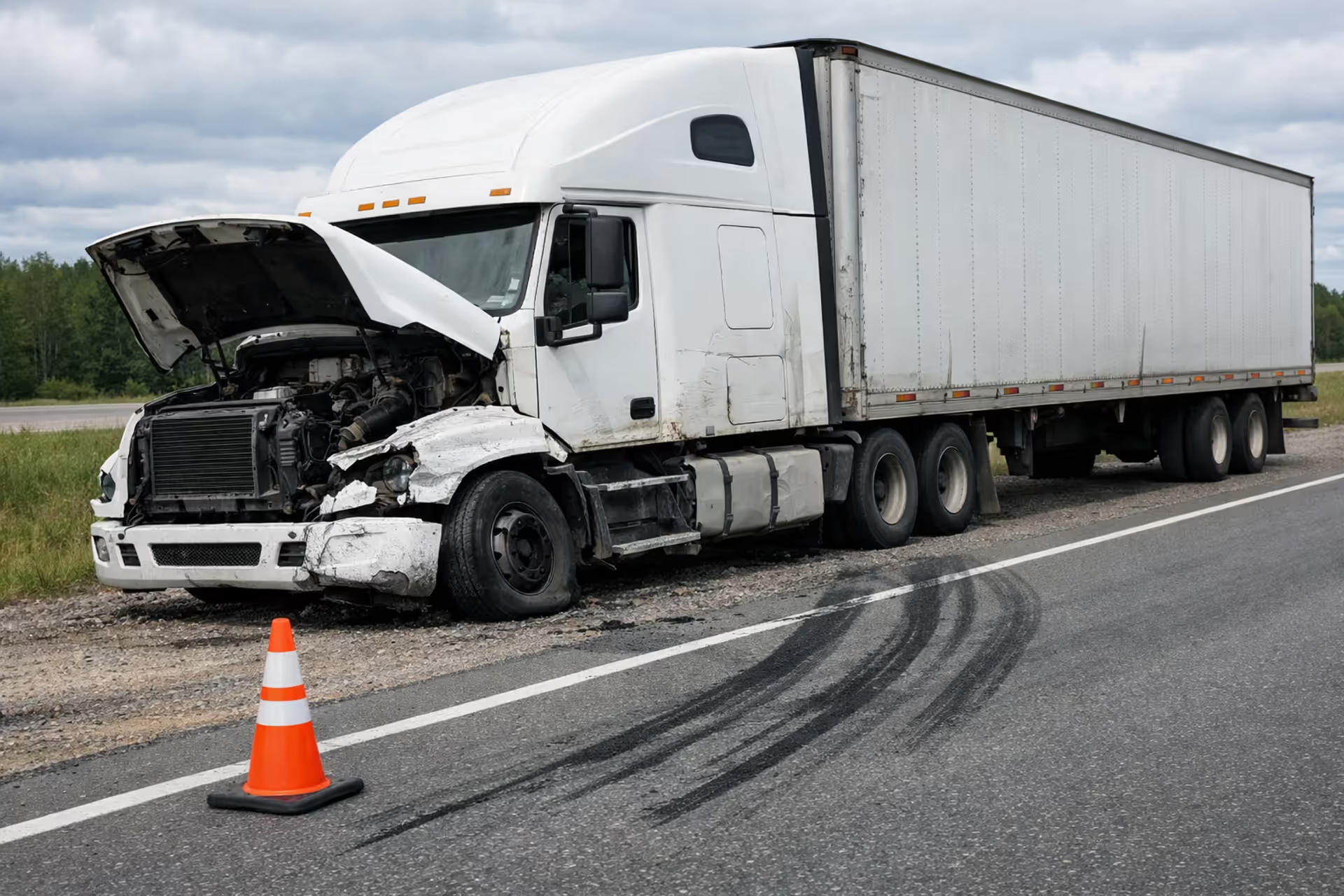
Refrigerated semi-truck stopped on icy highway shoulder at dusk with emergency lights flashing
Commercial Truck Insurance Coverage: Types, Requirements, and How to Choose the Right Policy

Content
You've just signed a major contract hauling refrigerated produce cross-country. Two weeks in, your driver jackknifes on black ice—$80,000 of organic strawberries turns to jam, and the sedan you clipped racks up $200,000 in medical bills. Your personal State Farm policy? Denies the claim in 48 hours. Welcome to the expensive reality that personal auto coverage doesn't cover commercial operations, period.
Most trucking operators learn about insurance gaps the hard way. Maybe you bought a used Freightliner and assumed your regular car insurance would cover it for "business use." Or perhaps you're hauling your third Amazon load this month on a policy that explicitly excludes for-hire freight. Either scenario leaves you personally liable for every dollar of damage.
What Makes Commercial Truck Insurance Different from Regular Auto Coverage
Here's what trips up new trucking operators: weight matters more than you'd think. Once your vehicle hits 10,001 pounds gross vehicle weight rating (GVWR), you've crossed into FMCSA jurisdiction. That threshold isn't negotiable—federal regulators don't care if you're hauling feathers or steel. Cross a state line for commerce? Same deal. You need specialized coverage.
Personal auto policies contain exclusions specifically targeting commercial use. Check your current policy's fine print—you'll find language like "excludes vehicles used for transporting goods for a fee" or "excludes vehicles over 10,000 pounds." Insurance companies aren't being difficult. They're pricing risk accurately. Your F-150 commuting 30 minutes daily presents vastly different exposure than that same truck hauling construction equipment 80 hours weekly.
The DOT won't issue your MC number without Form MCS-90 proving financial responsibility. That's your insurance company's promise to the federal government that they'll cover minimum liability requirements. Cancel your policy mid-year? Your carrier notifies FMCSA within 35 days, and your operating authority gets suspended. No authority means no legal freight operations.
Think about usage patterns realistically. Commercial trucks accumulate 100,000+ miles yearly versus maybe 15,000 on your family sedan. You're driving through blizzards at 3 AM because the load must deliver by morning. Your newest driver has six months experience—not six years. Underwriters calculate these factors into premiums that run 300-500% higher than personal auto policies covering similar vehicle values. That's not price gouging. That's math.
Core Types of Liability Insurance for Trucking Operations
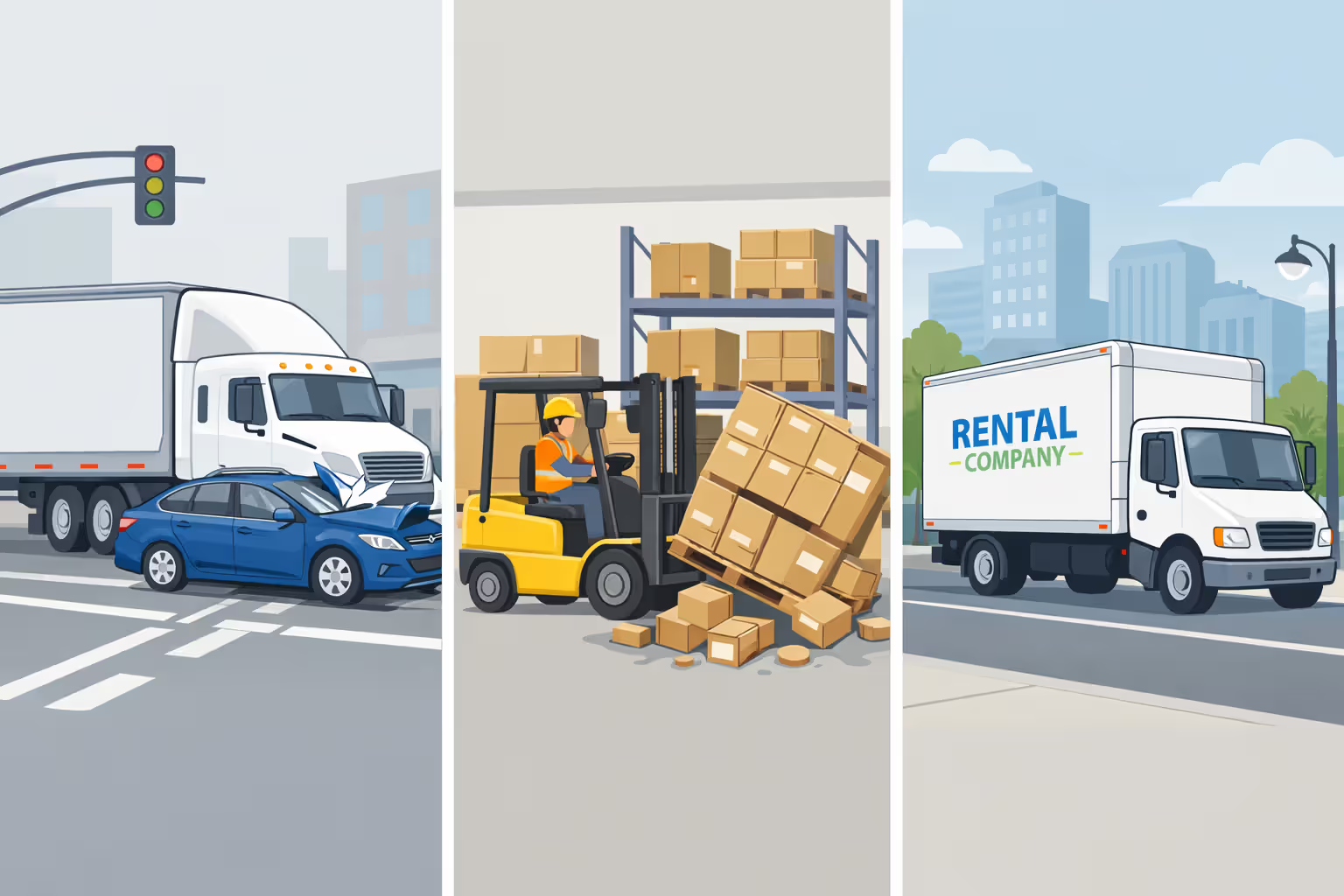
Primary auto liability forms your baseline protection—covering bodily injury and property damage when your truck causes an accident. Your driver rolls through a stop sign and T-bones a minivan? This coverage pays for their hospital bills, totaled vehicle, rehab costs, lost income, and your legal defense if they sue. Without it, those expenses drain your business accounts and personal assets.
General liability handles incidents unrelated to vehicle operation. A forklift operator at your yard drops a pallet on a visitor's foot. Diesel fuel leaking from your tank contaminates a customer's parking lot. Your driver knocks over a display while backing into a tight warehouse dock. These claims fall under general liability, not your auto policy. Most shipping facilities won't grant you dock access without proof of both coverages—they've learned from expensive experience that auto liability alone leaves gaps.
Hired and non-owned auto liability closes a sneaky exposure. You rent a Penske truck during peak season when your fleet runs at capacity. Your dispatcher sends an employee to grab parts using their personal Toyota Tacoma. These scenarios create liability that your primary auto policy doesn't address because you don't own the vehicles. Without this endorsement, lawsuits from accidents in those vehicles target your business directly.
Author: Rebecca Thornton;
Source: capeverde-vip.com
Minimum Federal Liability Requirements by Truck Type
Federal floors depend on what you're hauling and how heavy you're running:
For non-hazardous freight over 10,001 pounds operating interstate, you'll need $750,000 minimum. But here's the disconnect—most brokers and shippers demand $1 million before they'll tender freight. You can legally operate with $750,000, then watch load opportunities evaporate because customers require higher limits in their carrier agreements.
Refrigerated products bump you to $1 million federal minimum. Same for oil and petroleum products. Haul placarded hazardous materials? You're looking at $5 million required coverage. For-hire passenger vehicles carrying 16+ people also hit that $5 million threshold.
These minimums haven't increased since the 1980s while medical costs and jury verdicts have exploded. A serious spinal injury case easily exceeds $2 million once you calculate lifetime care, lost earning capacity, and pain-and-suffering damages. Carrying just the federal minimum basically means you're self-insured for everything above that floor—a scary prospect when your business and personal assets are on the line.
State-Specific Liability Additions
California doesn't mess around—they require $1 million minimum for any property-carrying truck over 10,001 pounds, regardless of cargo. That refrigerated strawberry load we mentioned earlier? You'd need that million even if federal rules said $750,000.
Texas adds $500,000 environmental restoration coverage if you're hauling petroleum products. Reasonable when you consider that cleaning up a tanker spill can cost ten times that amount. New York imposes additional requirements for operations within city limits, where congested streets and higher accident frequency justify extra protection.
Don't assume operating intrastate (only within your home state) exempts you from commercial coverage requirements. States impose their own financial responsibility laws. Even if you never cross state lines and stay under federal weight thresholds, your state probably requires commercial coverage exceeding personal auto limits. Call your state's public utilities commission or transportation department for specifics—requirements vary wildly.
The trucking industry operates on razor-thin margins, and insurance is one of the few expenses that can either save your entire business or bankrupt it overnight. Operators who treat coverage as just another cost to minimize are gambling with their livelihoods. The smartest carriers I work with view insurance as a strategic investment—one that protects every dollar of revenue they’ve fought to earn.
— Robert Caldwell
Physical Damage and Cargo Insurance: What Gets Protected
Physical damage coverage splits into two buckets: collision and comprehensive. Collision handles accident damage—whether you back into a concrete barrier, get sideswiped changing lanes, or roll the truck on an icy exit ramp. Comprehensive covers everything else that goes wrong: theft (increasingly common), vandalism, fire, hail damage, hitting deer, or falling objects.
Financed your truck? Your lender requires both coverages as loan conditions. Pay off that note and you can drop physical damage entirely—but should you? A seven-year-old Kenworth worth $45,000 represents massive capital. Could you write a $45,000 check tomorrow if your truck burned or got stolen? If not, keep the coverage. Deductibles typically run $1,000-$5,000. Choose higher deductibles for lower premiums, understanding you'll pay more out-of-pocket per incident.
Your liability policy won't pay a dime for damaged freight—that's a separate cargo insurance policy. The freight you're transporting falls under your care, custody, and control, creating bailment liability. Most shippers and brokers require $100,000 cargo coverage minimums, though hauling high-value electronics or pharmaceuticals demands much higher limits.
Filing cargo insurance claims successfully requires immediate action. Discover crushed cartons during delivery? Note "5 cartons damaged, contents unknown" on the bill of lading before anyone signs. Take photos of everything. Preserve damaged goods until adjusters inspect them. Insurers routinely deny claims when drivers sign clean delivery receipts for obviously damaged freight or when goods vanish without police reports documenting theft.
Cargo policies exclude specific scenarios you'd better understand upfront. Refrigeration breakdown that spoils frozen food might not be covered unless you purchased the refrigeration breakdown endorsement. Mysterious disappearance—cargo missing without evidence of forced entry—faces the highest denial rates. Your policy definitions matter. Read what constitutes "theft" versus "unexplained loss" very carefully.
Author: Rebecca Thornton;
Source: capeverde-vip.com

Author: Rebecca Thornton;
Source: capeverde-vip.com
Fleet Insurance for Trucking Companies: How Multi-Vehicle Policies Work
Operating three or more trucks? Fleet insurance trucking policies usually beat insuring each vehicle separately. Insurers spread risk across your entire operation rather than treating each truck as an isolated exposure. Plus, you manage a single renewal date instead of juggling multiple policy anniversaries and certificate deadlines.
Insurers price fleets based on aggregate exposure—total vehicle count, average values, cargo types, driver demographics, safety programs, and loss history. Need to add a truck in July? Simple endorsement adds it to your policy with pro-rated premium. Sell a truck in October? That vehicle comes off the policy and you receive return premium for unused coverage.
Certificate management becomes dramatically simpler with fleet coverage. If you've ever dealt with brokers and shippers constantly requesting certificates of insurance, you know the hassle. Each customer wants proof you meet their specific requirements—named as certificate holder, showing their required limits, listing them as additional insured. With individual policies on different renewal cycles, you're constantly chasing expiring certificates and coverage gaps. Fleet policies maintain consistent coverage across all equipment with one master certificate as the template.
Cost factors extend beyond vehicle count. Run newer trucks equipped with collision mitigation, lane departure warnings, and electronic stability control? Expect discounts reaching 10-15% compared to older equipment lacking these safety features. But mixing 2023 Volvos with 2015 Internationals in the same fleet might increase overall rates if those older units lack modern safety tech.
Driver qualification carries even more weight in fleet pricing. One driver with a recent DUI might spike a single-truck policy 40%. In a 10-truck fleet, that same driver's impact dilutes across your entire driver pool. You'll still pay more than if everyone had clean records, but the penalty spreads thinner. Insurers look at aggregate fleet safety culture—driver hiring standards, ongoing training, safety bonuses, and telematics monitoring.
Understanding Coverage Limits and How They're Calculated
Coverage limits function in two ways: per-occurrence and aggregate. A $1 million per-occurrence limit means your insurer pays up to $1 million for any single accident. One crash generates $1.4 million in claims? You're personally liable for that $400,000 excess. This is why many operators carry $2-5 million limits despite higher premiums—catastrophic claims happen more often than you'd think.
Aggregate limits cap total annual payouts. A $2 million aggregate means once your insurer has paid $2 million across all claims during your policy year, you're self-insured for additional losses. Good news: liability policies typically don't include aggregates—each accident gets the full per-occurrence limit. Cargo and physical damage policies often do carry aggregates, so multiple cargo claims could exhaust your annual limit before policy renewal.
Compare federal minimums against real-world recommended coverage:
| Cargo Type | Weight Class | Federal Minimum | What You Actually Need |
| General freight | 26,001+ lbs | $750,000 | $1,000,000 or higher |
| Refrigerated goods | Any weight | $750,000 | $1,000,000 minimum |
| Hazmat (placarded) | Any weight | $5,000,000 | $5,000,000 (no wiggle room) |
| High-value electronics | Any weight | $750,000 | $2,000,000+ recommended |
| Household goods | Any weight | $300,000 per shipment | $1,000,000 aggregate |
Increasing limits costs less than you'd expect. Jumping from $750,000 to $1 million might add just $1,000-$1,500 annually. That's cheap protection when you consider nuclear verdicts—the industry term for $10+ million jury awards in severe truck accident cases. These verdicts have tripled in frequency over the past decade.
Calculate adequate coverage by auditing your worst-case scenario. Total your most expensive truck, add your highest-value typical cargo load, then factor in potential third-party liability from a multi-vehicle accident. Your coverage should address that scenario without forcing bankruptcy. Operating in dense urban areas with heavy traffic? That increases accident probability, justifying higher limits. Hauling hazmat through residential areas? Same logic applies.

Author: Rebecca Thornton;
Source: capeverde-vip.com
How Truck Crash Insurance Rules Affect Your Claims and Premiums
Federal regulations mandate immediate accident reporting for crashes involving fatalities, injuries requiring immediate medical treatment away from the scene, or disabling damage to any vehicle requiring tow-away. You must notify FMCSA within specific timeframes, and these incidents become permanent entries in your public safety record. That's the data potential customers review when qualifying carriers.
Claims investigations start the moment you report an accident—sometimes before you report it. For serious crashes, insurers dispatch adjusters directly to accident scenes, documenting vehicle positions, measuring skid marks, photographing road conditions, interviewing witnesses, and downloading electronic logging device data. Every word you or your driver utters becomes claim file evidence. Apologizing at the scene or saying "I didn't see them" can complicate your defense even when investigation later proves the other party ran a red light.
Fault determination relies on multiple evidence sources: police reports, witness statements, physical evidence, and increasingly, telematics and camera footage. Electronic control modules record your truck's speed, braking, throttle position, and stability control activation in the seconds before impact. Forward-facing dash cameras show exactly what your driver saw. These objective data sources often override conflicting human memories and self-serving testimony.
Your CSA scores—Compliance, Safety, Accountability ratings—directly impact what you pay for insurance. High percentiles in crash indicators, unsafe driving behaviors, or vehicle maintenance violations trigger rate increases of 20-50%. Rack up three preventable accidents within 24 months and you might become uninsurable with standard carriers, forcing you into assigned risk programs at 200-300% of normal market rates.
We see carriers implementing comprehensive safety programs—rigorous driver training, preventive maintenance schedules, real-time telematics monitoring—experience 30-40% fewer accidents than industry averages. Insurers aren't just pricing your past losses anymore. We're predicting future risk based on whether you have a genuine safety culture or just checking regulatory boxes
— Jennifer Martinez
Claims affect your experience modification factor—your X-mod. New operators start at 1.0 as baseline. Maintain a clean record for three years and you might drop to 0.85, earning a 15% premium discount. Multiple claims push your X-mod to 1.3 or higher, increasing premiums 30% across the board. Switch insurers to escape high rates? Doesn't work. Your loss history follows you through industry databases every carrier accesses. You can't outrun your accident history.
Common Mistakes When Filing Cargo Insurance Claims
Documentation failures kill more cargo claims than actual policy exclusions. Drivers who don't note "3 pallets short" or "water damage visible on 8 cartons" on delivery receipts give consignees the opening to claim damage that possibly occurred after delivery or during their own unloading process. Count every piece. Inspect for visible damage. Note all discrepancies before the receiver signs anything. That delivery receipt is your primary defense against fraudulent claims.
Missing notification deadlines represents another frequent killer. Most cargo policies require written notice within 24-48 hours of discovering loss or damage. You discover stolen cargo Tuesday morning but wait until Friday to report it because you're hoping it'll turn up? Claim denied for late notice. Prompt reporting also lets insurers investigate while evidence remains fresh—surveillance footage, witness memories, and physical evidence all degrade rapidly.
Valuation disputes happen when claimed values exceed what documentation supports. You file a $75,000 electronics cargo claim but can't produce bills of lading, shipper invoices, or packing lists proving actual freight value. Insurers deny or dramatically reduce payouts when values aren't documented. Maintain complete shipping paperwork for every single load—not just the big ones. If you regularly transport high-value cargo, photograph sealed trailers before departure and immediately upon arrival. That extra minute documents tampering or damage.
Subrogation creates complications when multiple parties share fault for cargo loss. Your trailer's refrigeration unit fails, but the shipper loaded product that was already above safe temperatures. The warehouse used defective pallets that collapsed during transport. Your insurer pays your claim initially, then pursues recovery from other responsible parties through subrogation. Full cooperation with these efforts is a policy requirement—and subrogation recoveries prevent your future rates from spiking.
Documentation is the lifeblood of every successful cargo claim. In my twenty years adjusting freight losses, I’ve seen more claims denied over missing paperwork than over actual policy exclusions. A driver who spends sixty seconds photographing load condition at pickup and delivery is worth more to a carrier’s bottom line than any discount on premiums
— David Chen
Temperature-sensitive cargo creates unique challenges. Reefer unit fails and $35,000 of frozen seafood spoils completely. Your cargo insurer will investigate whether you maintained required temperatures, performed pre-trip inspections of refrigeration equipment, monitored temperatures during transit, and responded appropriately when temperature alarms activated. Maintenance records and continuous temperature logs become critical evidence supporting or sinking your claim.
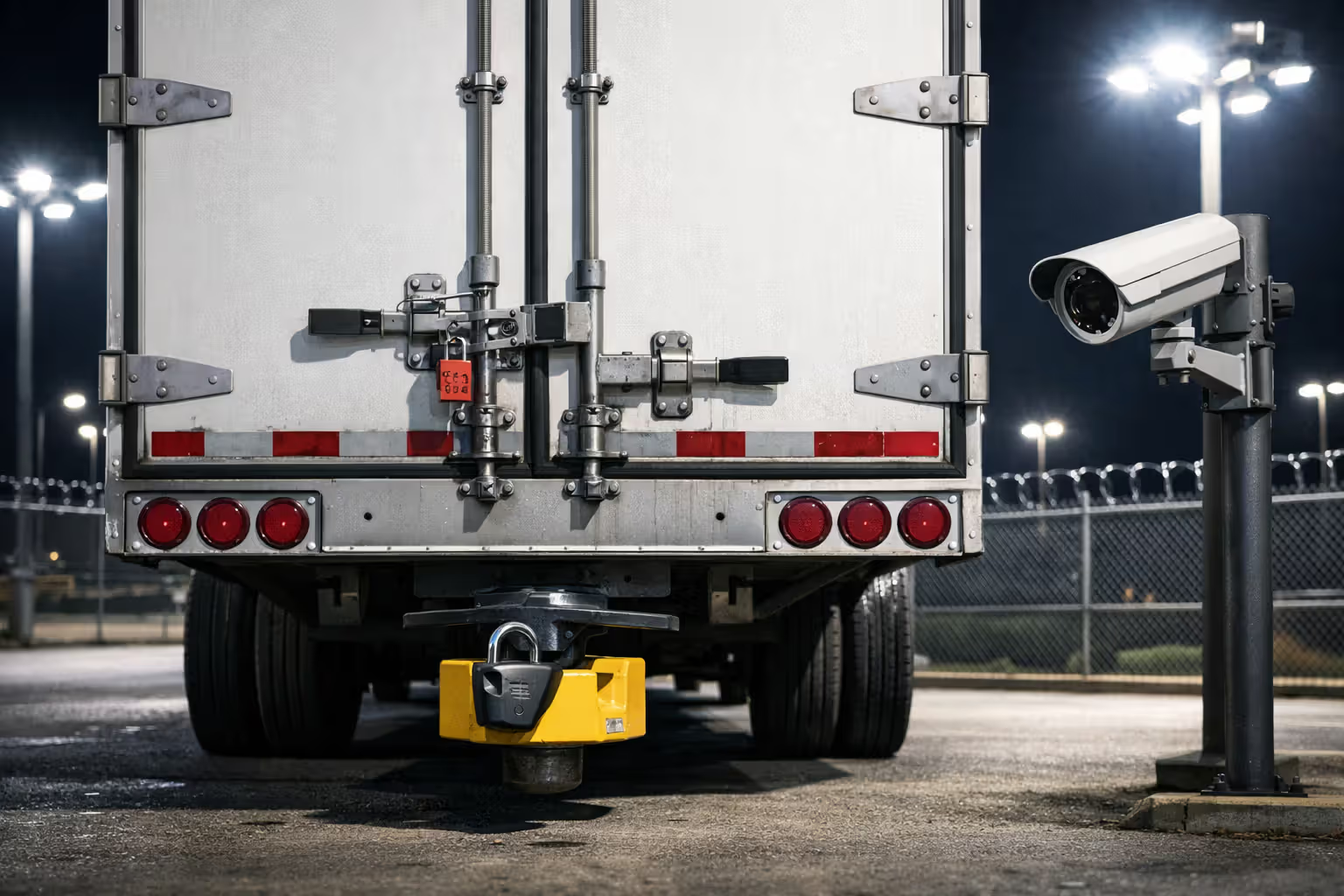
Mysterious disappearance—goods vanishing without evidence of forced entry or theft—faces the highest claim denial rates in the industry. A pallet missing from your trailer with no signs of break-in, no broken seals, no breached locks looks like driver theft or inventory errors rather than covered theft. Always park in secure, well-lit, monitored locations. Use king-pin locks, air-cuff locks, and numbered trailer seals. Document security precautions to demonstrate you took reasonable steps preventing theft.
Author: Rebecca Thornton;
Source: capeverde-vip.com
FAQ: Commercial Truck Insurance Coverage Questions
Choosing commercial truck insurance coverage requires balancing regulatory compliance, customer requirements, and realistic risk tolerance. Federal minimums keep you legally compliant but rarely provide adequate protection in today's litigation climate. The gap between a $750,000 minimum and a $4 million jury verdict? That comes straight from your business accounts and personal assets—including your house.
Start by honestly auditing your actual exposures. What's your most valuable truck worth if totaled tomorrow? What's the highest-value cargo you regularly haul? What could a catastrophic injury claim cost if your driver caused a chain-reaction accident involving multiple vehicles? Add those numbers together—that total represents your realistic coverage need, not what federal minimums suggest.
Compare quotes from at least three carriers, but don't choose based solely on price. The cheapest premium often comes with the most restrictive policy language, the slowest claims service, and the least coverage flexibility. When you're sitting roadside at 2 AM with a stolen trailer or facing a lawsuit that threatens your business, you'll appreciate an insurer offering 24/7 claims reporting and a track record of fair, prompt settlements.
Review coverage annually as your business evolves. Adding trucks, drivers, routes, or cargo types changes your risk profile substantially. A $1 million policy that fit perfectly when you operated one truck running local routes becomes dangerously inadequate when you expand to five trucks running cross-country. Mid-term endorsements cost far less than discovering coverage gaps after a major loss.
Work with an independent agent or broker specializing in trucking insurance. They understand DOT requirements, can explain obscure policy language, and maintain relationships with multiple carriers competing for your business. When claims arise, they advocate on your behalf rather than leaving you to navigate complex insurance bureaucracy alone. Good brokers also alert you to coverage gaps before they become expensive problems.
The right commercial truck insurance coverage doesn't just satisfy regulatory checkboxes or appease demanding customers. It provides financial security that lets you focus on profitable growth rather than constantly worrying about one accident destroying everything you've built. Invest time understanding what you're actually buying, maintain detailed records supporting potential claims, and implement genuine safety practices that prevent accidents before they generate losses.