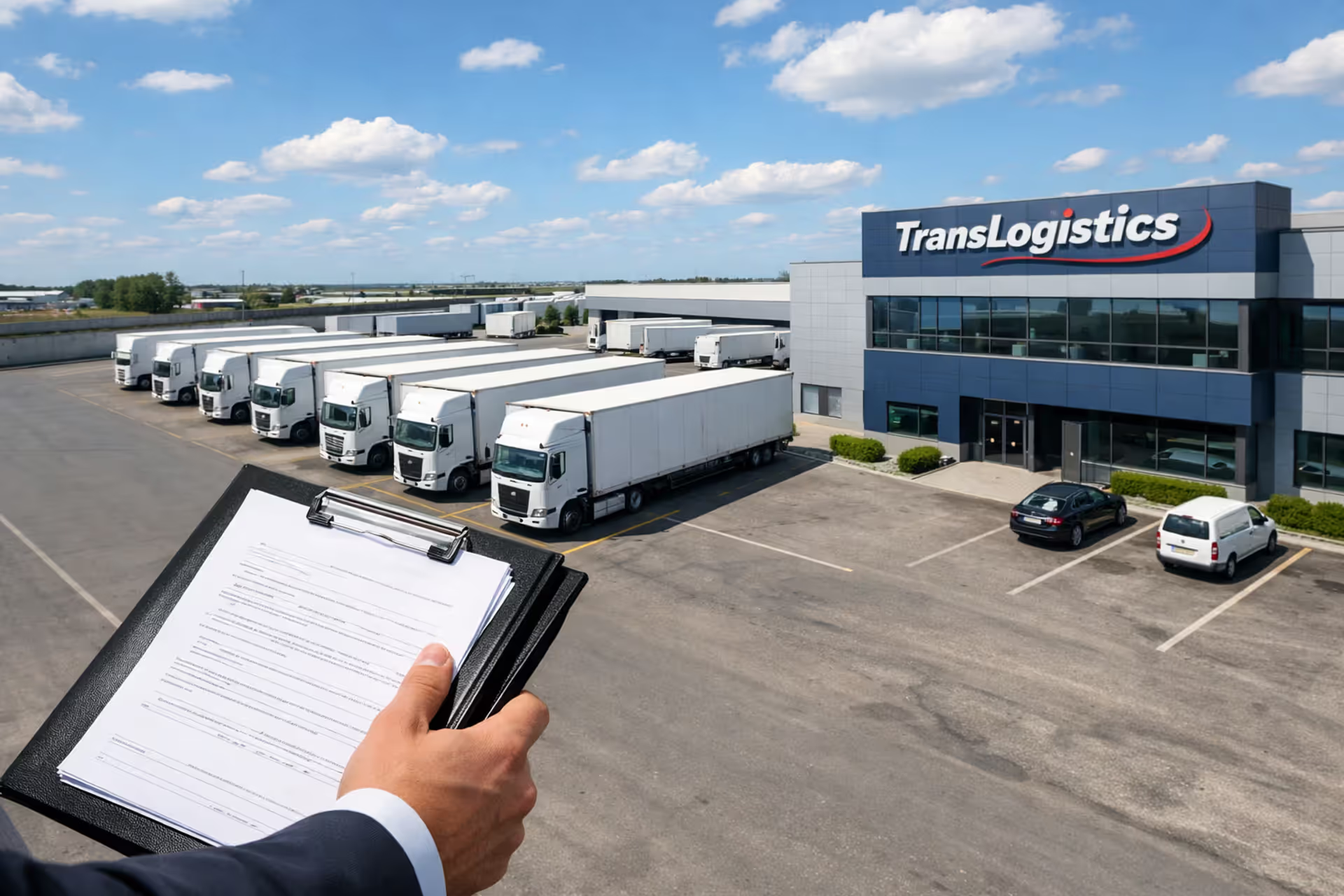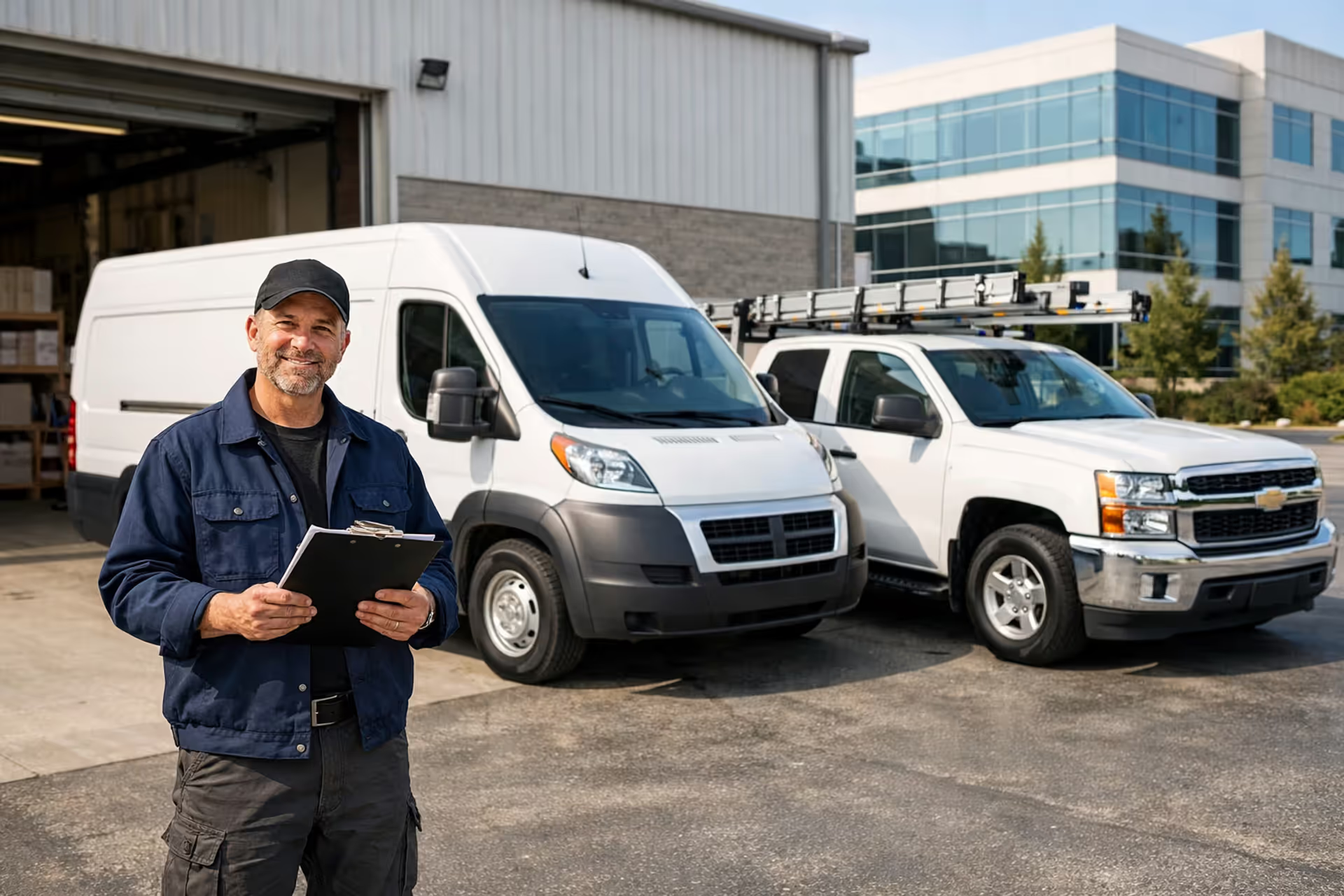
Commercial work van and pickup truck with ladder rack parked outside a warehouse while a business owner reviews insurance documents
Commercial Vehicle Insurance: Coverage Options and Requirements for Business Fleets

Content
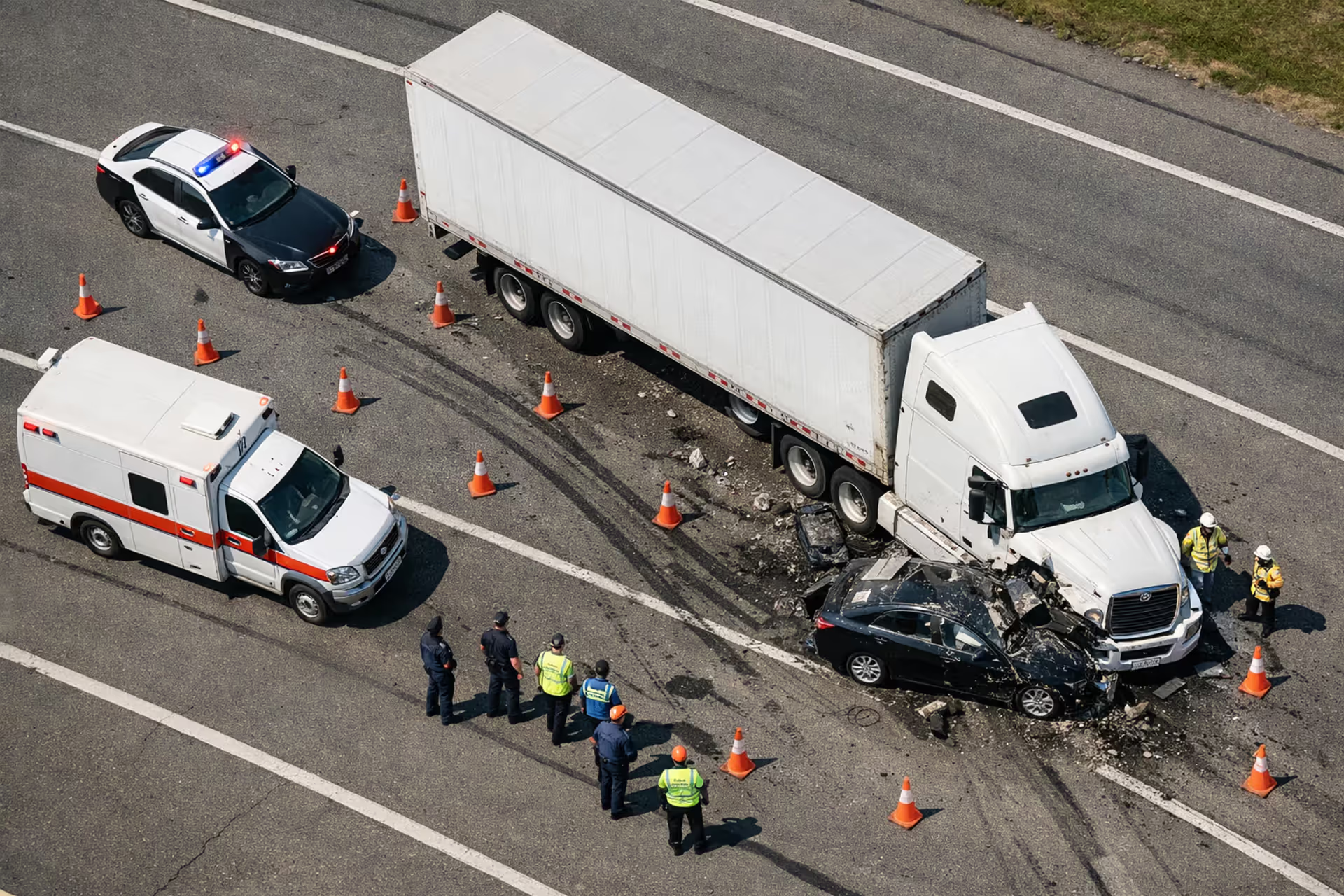
Here's what nobody tells you about business vehicle insurance: that pickup truck you use for jobs twice a week? Your personal policy probably won't pay a cent when you file a claim. I've watched contractors, delivery services, and small fleet owners learn this lesson the expensive way—after accidents, when insurers deny claims and lawyers start circling.
Using vehicles to generate income creates risks that standard auto policies explicitly exclude. One accident, one serious injury, and suddenly you're defending your business assets in court with no insurance backing you up.
What Qualifies as a Commercial Vehicle and When Personal Auto Insurance Isn't Enough
Most business owners get this wrong initially. They figure a work truck is just a truck—same insurance, same coverage. Then reality hits during a claim denial.
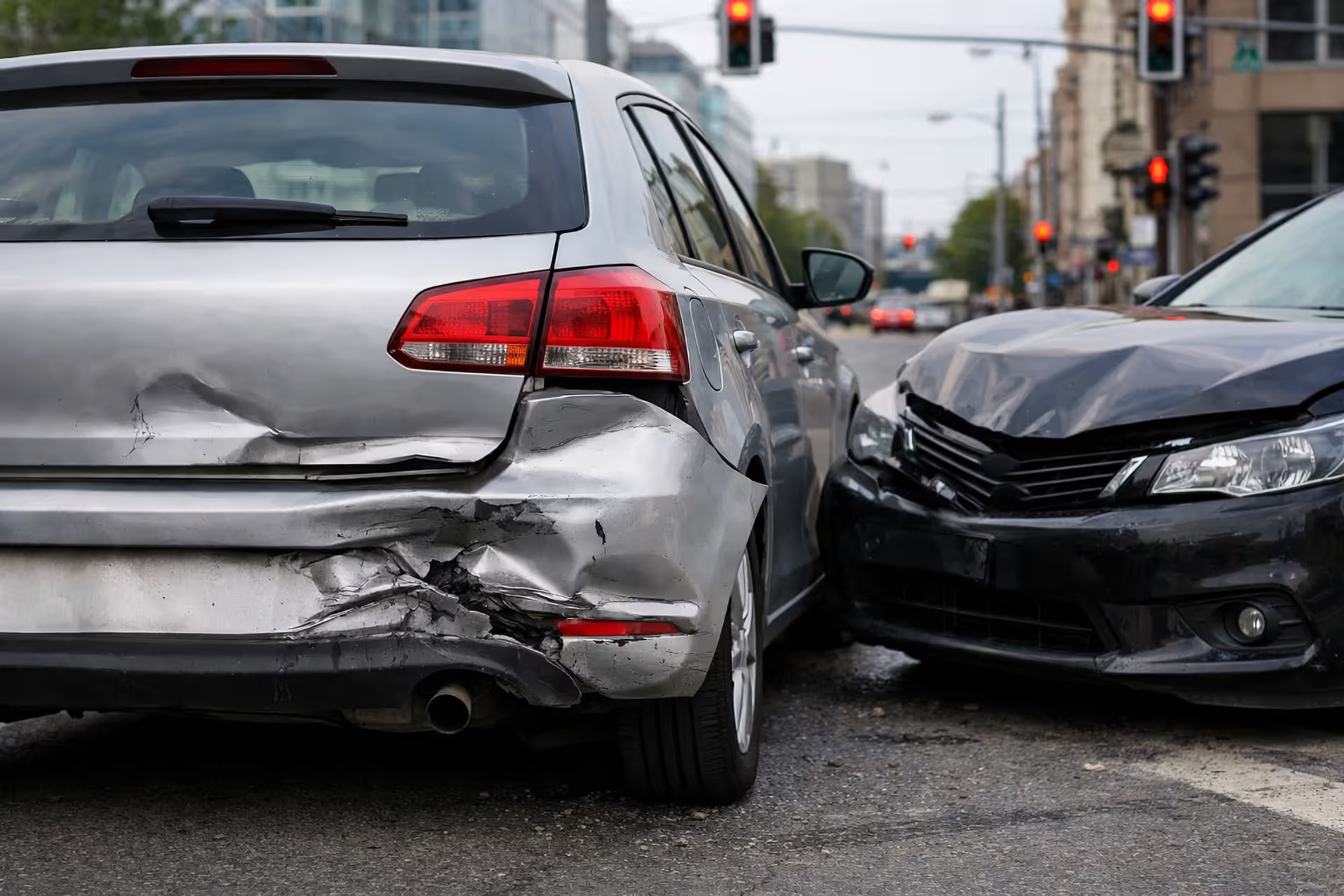
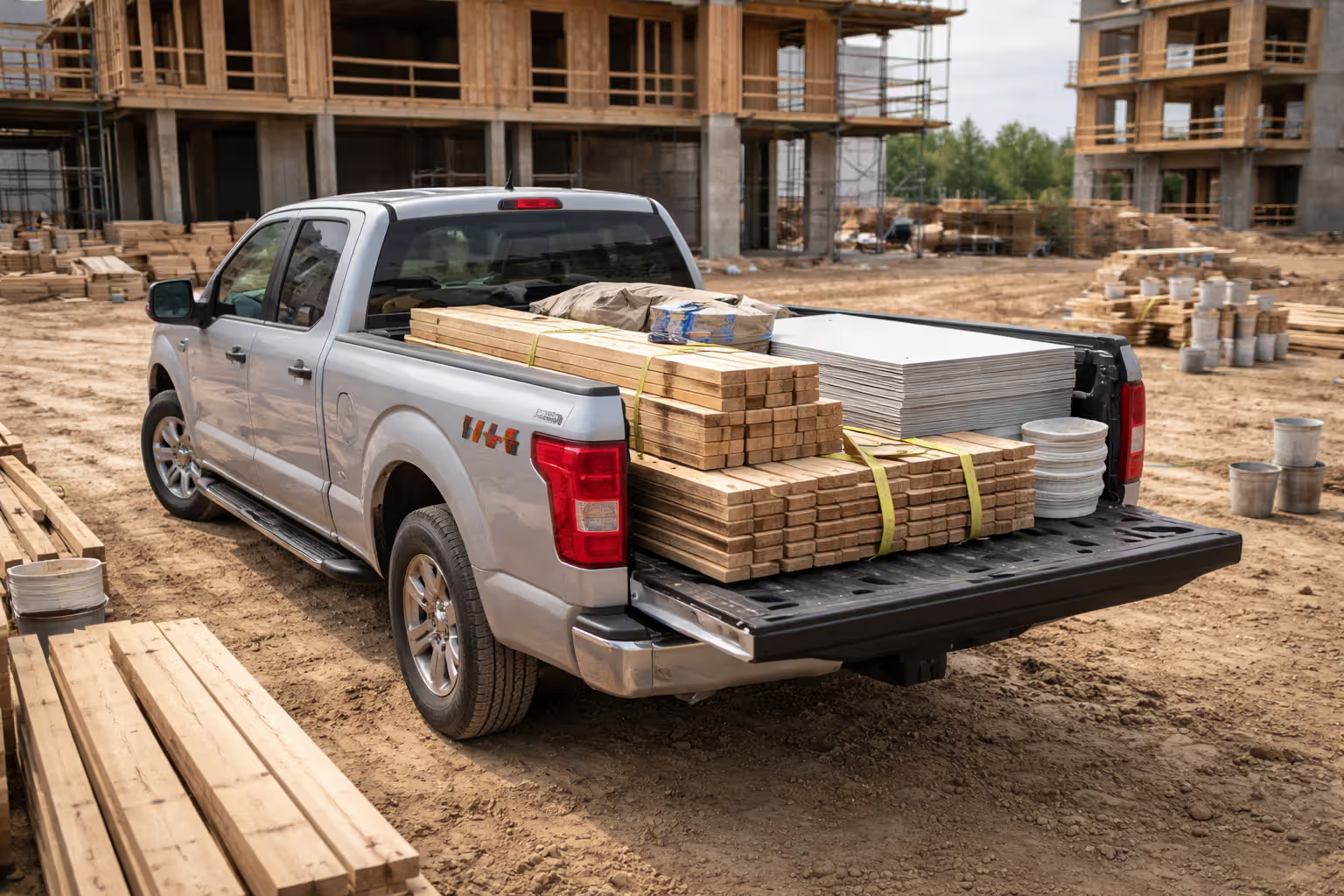
The line between personal and commercial use? It's blurrier than you'd think, and it catches people off guard constantly. Take that contractor with the F-150. He commutes to an office, so personal insurance works fine, right? Except twice a week he loads materials and drives to job sites. The day he rear-ended someone while carrying drywall and lumber, his personal insurer walked away from the claim. Business use meant no coverage, period.
Weight and passenger capacity trigger federal rules—the FMCSA steps in when your vehicle tops 10,001 pounds, hauls 16+ people, or carries hazmat requiring posted warnings. But you'll need commercial coverage long before hitting those thresholds.
Your state cares more about how you're using that vehicle than what badge is on the grille. Insurers look at patterns. Transporting clients regularly? Making sales calls three days weekly? Hauling inventory or equipment as a normal part of operations? That's commercial use, even if you're driving a basic sedan.
Author: Marcus Delaney;
Source: capeverde-vip.com
Here's the kicker: frequency doesn't save you. Using your car every other week to haul supplies still creates business exposure your personal policy excludes. Courts and insurers focus on the nature of the activity, not how often you do it.
Every state writes its own rulebook on this. California draws a hard line—if the vehicle's titled to your LLC or corporation, you need commercial coverage regardless of how you actually use it. Texas looks at weight ratings and passenger counts. New York requires commercial policies when vehicles display company names or regularly transport merchandise. You'd better check your DMV's specific requirements before assuming you're covered.
Common Vehicle Types That Require Commercial Policies
Box trucks and delivery vans? Obviously commercial. But the less obvious ones trip up more businesses:
- Personally-owned pickups that regularly carry tools, materials, or equipment (even if you also use them for personal errands)
- Any van shuttling employees between locations or transporting clients
- Cars or trucks titled under your business name, regardless of actual usage patterns
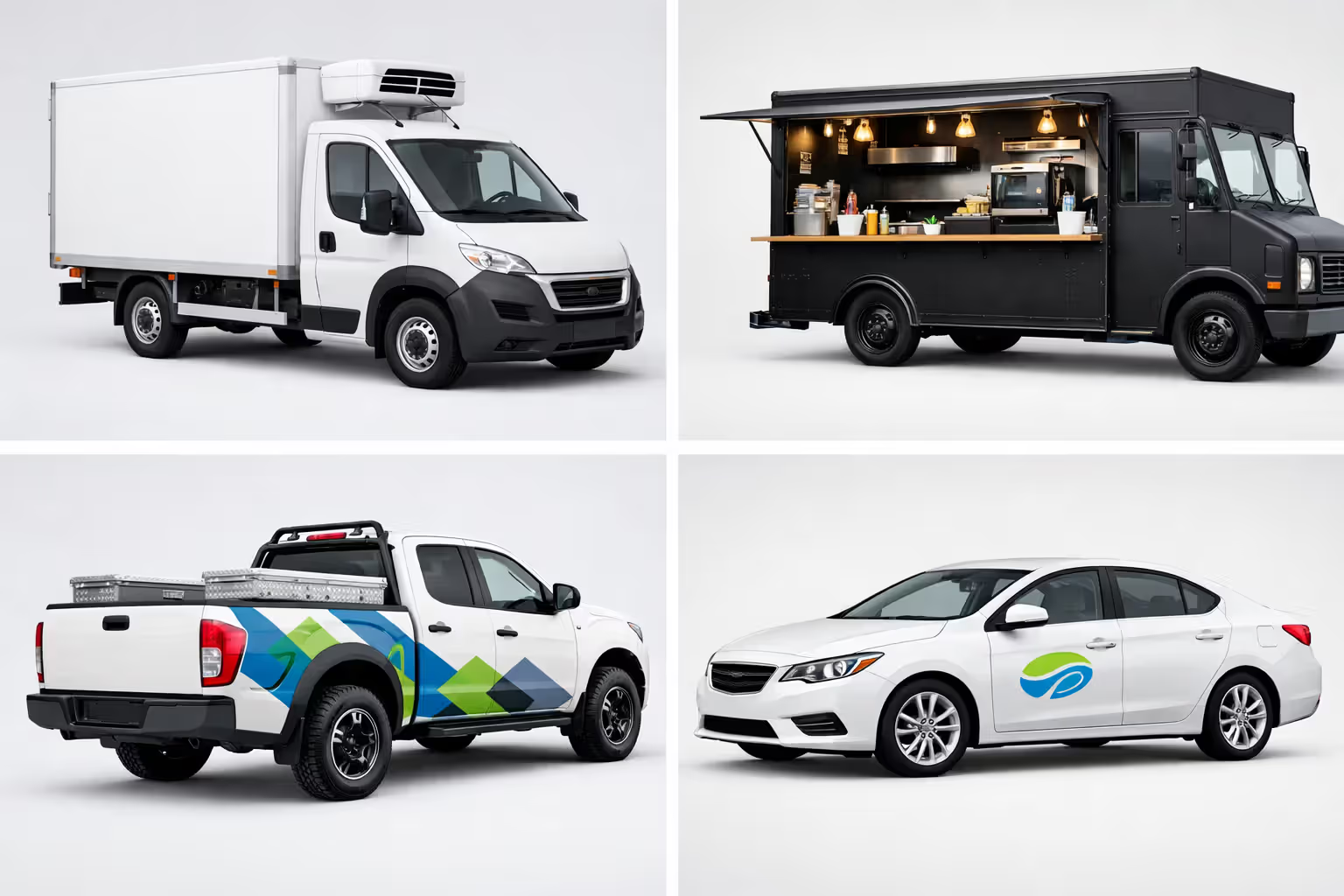
- Mobile businesses—food trucks, mobile repair services, beverage carts
- Any rideshare or livery vehicle operating under commercial permits
- Work trucks with permanent modifications: ladder racks, tool boxes, company wraps, specialized equipment
Those modifications matter more than people realize. Bolt a permanent tool chest or lift gate onto your truck, and you've transformed it into something requiring commercial coverage in most insurers' eyes.
Author: Marcus Delaney;
Source: capeverde-vip.com
Personal vs. Commercial Use: Where the Line Gets Drawn
Personal auto policies typically allow one thing: driving to and from a single workplace. Problems start when work involves multiple destinations, client meetings, or transporting anything business-related.
Some personal policies offer "business use" endorsements. Sounds convenient, right? These endorsements provide minimal protection with severe limitations. They cap business-related claims at lower limits, exclude employees driving your vehicle, don't cover cargo liability, and won't pay for accidents during deliveries or service calls. They're designed for the occasional business errand, not regular commercial operations.
A landscaping company owner found this out after an accident while transporting equipment. He'd added a business use endorsement to his personal policy, thinking he was protected. After the accident, his insurer denied the claim—the mowers, edgers, and commercial-grade trimmer in his truck bed indicated regular business use exceeding the endorsement's scope. He paid $18,000 out of pocket for the other driver's vehicle repairs plus his own truck damage.
Financial responsibility laws add another layer of complexity. Sure, your state might only require $25,000 in liability coverage. But commercial operations create exposure that makes those minimums laughably inadequate. One delivery van accident involving multiple injured parties generates claims topping $1 million or $2 million—especially when serious injuries require ongoing medical care. Personal policies maxing out at $100,000 or $300,000 in total liability leave your business assets exposed to judgments for the difference.
The single biggest misconception I encounter among small business owners is that a personal auto policy with a business use endorsement provides meaningful commercial protection. It doesn’t. These endorsements were designed for someone who occasionally drives to an off-site meeting, not for contractors hauling equipment or delivery operators running daily routes. When a claim gets denied because the insurer determines regular commercial activity, that business owner faces the full financial weight of the accident alone
— Sarah J. Whitfield
Core Coverage Components in Commercial Vehicle Insurance Policies
Commercial policies stack multiple coverages together, each addressing specific risk scenarios. Understanding what each component actually protects prevents expensive gaps in coverage.
Bodily injury liability handles the aftermath when your vehicle injures someone—medical bills, lost income, rehabilitation costs, pain and suffering claims, and your legal defense costs. This extends to everyone: passengers in other vehicles, pedestrians, cyclists, motorcyclists. Serious injury claims routinely hit $500,000 to $1 million+, making strong limits non-negotiable.
Property damage liability pays when your vehicle damages someone else's stuff: vehicles, buildings, fences, utility poles, landscaping, equipment, merchandise. Backing a delivery truck into a storefront? You're looking at $50,000+ in structural repairs before even considering the business's lost revenue while they're closed for repairs.
Collision coverage fixes your vehicle after accidents, whether you caused them or not. For newer vehicles or ones critical to daily operations, collision coverage prevents one accident from parking your business while you scramble to find replacement funds or secure financing.
Comprehensive coverage addresses everything else that can damage your vehicle: theft, vandalism, fire, hail, flooding, hitting deer, falling trees, riots. Parking vehicles overnight in high-crime neighborhoods or operating in tornado alley makes comprehensive coverage essential rather than optional.
Medical payments coverage provides immediate funds for medical expenses—yours and your passengers'—after accidents, with no waiting around for fault determination. Emergency room visits, ambulance transport, follow-up doctor appointments, physical therapy. This coverage pays regardless of who caused the accident.
Uninsured and underinsured motorist coverage protects you when at-fault drivers carry insufficient insurance or none at all. About 13% of U.S. drivers operate without insurance—in Mississippi, it's over 29%. This coverage ensures your business doesn't absorb costs when irresponsible drivers cause damage.
| Coverage Component | What Actually Gets Protected | Limit Ranges You'll See | Works Best For |
| Bodily Injury Liability | Medical costs, lost income, legal fees when you injure others | $500K–$1M per individual; $1M–$2M per incident | Every business needs this; passenger transport requires higher amounts |
| Property Damage Liability | Fixing vehicles, structures, equipment you damage | $100K–$500K per incident | All businesses; heavier vehicles need higher limits |
| Collision | Your vehicle repairs after crashes | Actual value minus your deductible | Newer vehicles or ones essential to operations |
| Comprehensive | Theft, vandalism, weather damage, fire, animal collisions | Actual value minus your deductible | City operations, severe weather zones, expensive vehicles |
| Medical Payments | Medical bills for you and passengers after any accident | $5K–$25K per individual | Businesses frequently carrying employees or customers |
| Uninsured/Underinsured Motorist | Coverage when at-fault drivers lack sufficient insurance | Usually matches your liability amounts | Every business, particularly in high-uninsured states |
How Fleet Insurance Policies Differ from Single-Vehicle Commercial Coverage
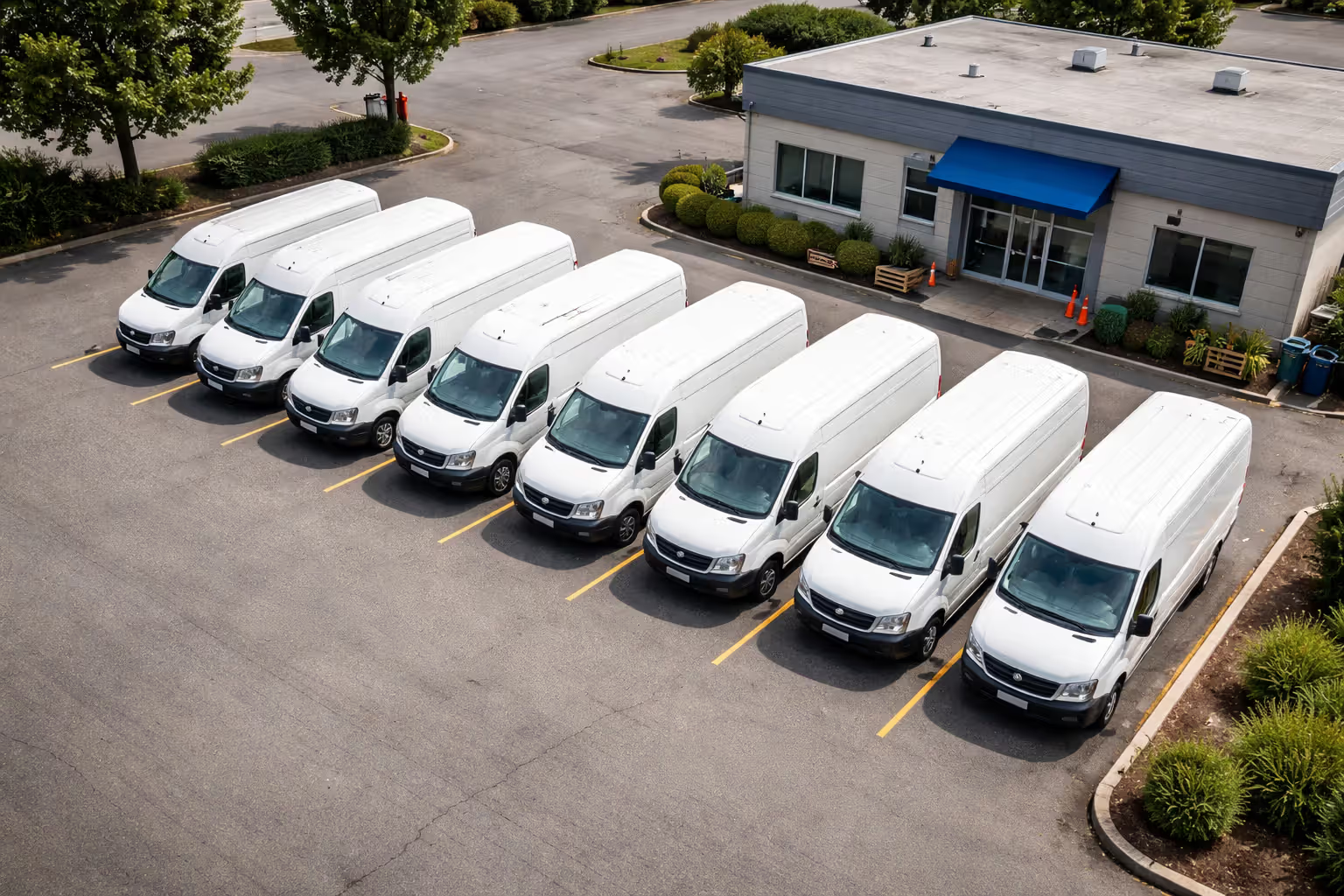
The magic number changes by insurer—some call it a fleet at five vehicles, others at three. But fleet policies offer advantages beyond just bundling multiple individual policies together.
Blanket coverage works differently than you might expect. Instead of separate limits for each vehicle, you get one policy limit applying regardless of which vehicle's involved in an incident. Carry $1 million in liability? That amount applies whether it's truck #1 or van #12 in the accident. Administration becomes dramatically simpler—one renewal date, one policy number, one set of coverage details to track instead of managing separate policies for each vehicle.
Scheduled coverage takes the opposite approach, listing every vehicle individually with specific coverage amounts. This makes more sense when you're running diverse vehicle types with vastly different values and risks. Your $80,000 refrigerated truck needs higher physical damage limits than your $22,000 cargo vans.
Volume discounts make fleet policies financially attractive. That sixth vehicle? It'll cost significantly less per vehicle than insuring it separately. Insurers spread risk across multiple vehicles, recognizing their total exposure decreases compared to single-vehicle policies.
Author: Marcus Delaney;
Source: capeverde-vip.com
Automatic coverage for new acquisitions saves headaches. Most fleet policies automatically cover newly purchased vehicles for 30 days, giving you time to formally add them without creating coverage gaps. Single-vehicle policies require immediate notification and payment before new vehicles get any coverage.
Driver management simplifies considerably. One driver list instead of managing driver authorizations across multiple separate policies. This becomes crucial when employees rotate between vehicles or when you bring on seasonal workers.
The trade-off? Less flexibility. Fleet policies often mandate identical coverage types across all vehicles, even when some need more or less protection. Running a fleet mixing cargo vans and executive SUVs might mean overpaying for coverage on cheaper vehicles while underinsuring premium ones.
Driver Coverage Limits: Who's Protected Behind the Wheel
Commercial policies handle driver coverage completely differently than personal auto insurance. The "named insured" typically includes your business entity and employees operating vehicles within their job duties. Complications arise with contractors, temporary workers, and permission-based use situations.
Any driver coverage protects your business when any licensed driver operates your vehicle with your permission. This broad approach works well for businesses with frequent driver turnover, seasonal hiring, or situations where multiple employees might need to drive company vehicles. You'll pay higher premiums reflecting this increased risk.
Named driver coverage specifically lists authorized individuals. Premiums drop because insurers evaluate each driver's record individually and price accordingly. This works well for smaller operations with stable workforces. The catch: an unlisted driver operating your vehicle during an emergency creates serious coverage disputes.
Motor vehicle records become critical here. Federal regulations require MVR checks for commercial drivers, but smart businesses pull records for everyone operating company vehicles. One DUI or multiple speeding violations should trigger mandatory additional training or driving restrictions.
Employee screening prevents expensive mistakes. A delivery service hired a driver without checking his background—he had three at-fault accidents over 24 months. When he caused another accident in the company van, the insurer hiked premiums 40% and questioned whether the business exercised reasonable hiring practices. Poor screening nearly doubled their insurance costs.
Independent contractors create unique challenges. When contractors use their own vehicles for your business, their insurance provides primary coverage. But gaps appear when contractors underinsure themselves or their policies exclude commercial activities. Requiring insurance certificates from contractors and getting added as an additional insured provides protection.
Permissive use—letting employees use company vehicles for personal errands—extends your liability exposure. That quick lunch run or stop at the post office technically falls under your policy coverage. Many businesses eliminate personal use entirely or require specific written authorization to limit exposure.
Fleet operators who invest in rigorous driver screening and ongoing MVR monitoring consistently see 25 to 40 percent lower claims frequency compared to those who skip these steps. Insurance is your financial safety net, but proactive driver management is your first line of defense. Every dollar spent on screening, training, and monitoring saves three to five dollars in claims costs and premium increases over a three-year cycle
— David R. Kaminski
Company Liability Coverage: Protecting Your Business Beyond the Vehicle
Vehicle liability covers accidents involving your vehicles specifically, but businesses face broader liability exposures. An employee running work errands in their personal car, a contractor you hired for deliveries, or an employee renting a vehicle—all create liability that standard commercial auto policies don't address.
Vicarious liability makes businesses responsible for employee actions within their employment scope. When your employee causes an accident while making deliveries, injured parties sue both the driver personally and your business. Your business assets—bank accounts, equipment, real property, inventory—become vulnerable to court judgments exceeding insurance limits.
Hired and non-owned auto coverage plugs gaps when employees use vehicles you don't own. This applies when employees drive personal vehicles for work or when you rent vehicles temporarily. The coverage costs relatively little—frequently just a few hundred dollars annually—but protects against multi-million dollar claims.
Real scenario: A real estate agent drove clients to property showings in her personal vehicle and caused a serious accident. Her personal auto policy paid its $100,000 limit, but medical expenses topped $400,000. Injured parties sued her brokerage under vicarious liability principles. The brokerage's hired and non-owned coverage paid the excess $300,000, preventing the business from bankruptcy.

Author: Marcus Delaney;
Source: capeverde-vip.com
Commercial umbrella policies add liability limits above your primary commercial auto coverage. Your primary policy carries $1 million in liability, you face a $2.5 million judgment—umbrella coverage pays the $1.5 million difference. These policies typically begin at $1 million in additional coverage and cost less than expected—often $500 to $1,000 annually for that first million.
Umbrella policies require sufficient underlying coverage first, usually $500,000 or $1 million in primary liability limits. They also cover liability claims beyond auto accidents, including general liability and employer liability situations, making them valuable for comprehensive business protection.
Accident legal protection ensures adequate resources to defend against claims, including meritless ones. Legal defense costs appear in addition to policy limits under most policies, meaning legal expenses don't reduce amounts available to pay actual claims. Some policies cap defense costs or include them within policy limits—understanding your policy's specific structure prevents unpleasant surprises when you need defense most.
Cost Factors That Determine Your Commercial Vehicle Insurance Premium
Insurers evaluate dozens of variables when calculating what you'll pay. Understanding major cost drivers helps you make informed decisions about coverage and business operations.
Vehicle type and value form the starting point. A $70,000 refrigerated box truck costs substantially more to insure than a $25,000 cargo van because replacement costs are higher. Specialized vehicles with expensive equipment face elevated comprehensive premiums due to theft risks and repair costs.
Cargo type significantly impacts rates. Hauling general merchandise carries different risk than transporting hazardous materials, high-value electronics, pharmaceuticals, or perishable goods requiring refrigeration. Insurers recognize certain cargo types increase accident severity or create additional liability exposures beyond basic vehicle accidents.
Radius of operation measures how far vehicles typically travel from your base location. Local delivery within 50 miles costs less to insure than regional operations covering multiple states. Interstate commerce triggers additional federal regulations and increased accident exposure from highway driving and unfamiliar routes.
Driver records might represent the single most significant variable. A driver with five years of clean record costs substantially less to insure than someone with recent accidents or violations. Businesses with multiple drivers see premiums calculated based on the worst driver's record influencing rates, not an average across all drivers.
Claims history follows your business for years. Multiple claims within three years, even relatively small ones, signal higher risk to insurers. Some businesses deliberately pay minor accidents out-of-pocket rather than filing claims that will increase premiums for the next 3-5 years.
Deductibles offer the most direct premium control you have. Increasing collision deductibles from $500 to $2,500 might slash premiums 20-30%. Businesses with strong cash reserves frequently choose higher deductibles to lower ongoing costs, essentially self-insuring against smaller losses.
Annual mileage affects premiums because more driving creates more exposure to accidents. Vehicles driven 50,000 miles annually face substantially higher accident probability than those driven 15,000 miles. Accurate mileage reporting prevents overpaying for coverage you don't actually need.
Garaging location matters more than many business owners realize. Urban areas with high theft rates, dense traffic patterns, and elevated accident frequency cost considerably more to insure than rural locations. Secure parking facilities overnight can reduce comprehensive coverage costs noticeably.
Most businesses dramatically underestimate their commercial vehicle insurance needs by focusing exclusively on state minimum requirements rather than examining their actual exposure. A single serious accident can generate claims exceeding $2 million when multiple parties suffer injuries or when commercial cargo gets involved. I've personally seen businesses carrying $300,000 in liability coverage face bankruptcy after one accident. The cost difference between truly adequate coverage and bare minimum coverage typically runs just $1,500 to $3,000 annually—a tiny fraction of what inadequate coverage could ultimately cost you
— Michael Torres
7 Mistakes Businesses Make When Purchasing Commercial Auto Insurance
- Choosing bare minimum liability limits to reduce costs. State minimums—frequently just $25,000 or $50,000—won't cover serious accidents. Medical costs for significant injuries easily reach $500,000, and multiple injured parties multiply your exposure exponentially. Carrying $1 million in liability coverage costs only marginally more than minimum coverage but provides enormously better protection against catastrophic losses.
- Failing to update coverage when business operations evolve. You launched with local deliveries but expanded to regional service last year. Your policy still reflects local operations with correspondingly lower limits. Or you added three vehicles in the past six months but never notified your insurer, leaving them completely uninsured. Annual policy reviews catch these dangerous gaps before accidents expose them.
- Skipping hired and non-owned auto coverage entirely. Your employee runs a work errand in their personal vehicle and causes an accident. Their personal policy pays first, but when damages exceed their limits, injured parties sue your business under vicarious liability. Hired and non-owned coverage costs just a few hundred dollars annually but protects against million-dollar exposures from this common scenario.
- Inadequate driver screening and ongoing monitoring. Hiring drivers without pulling motor vehicle records invites problems. Ongoing monitoring catches DUIs, suspended licenses, and accumulating violations before they cause accidents. Many insurers now require annual MVR checks for all authorized drivers—doing it proactively costs less than waiting for insurers to mandate it.
- Selecting the wrong deductible structure for your finances. A $250 deductible looks appealing initially until you realize the premium savings from a $1,000 deductible pays for itself within one year. Small businesses with stable cash flow benefit enormously from higher deductibles that reduce long-term costs significantly.
- Misclassifying vehicles or understating operations. Describing your box truck as a cargo van or understating annual mileage reduces premiums initially. When you eventually file a claim, insurers investigate thoroughly and discover the misrepresentation. They might deny the claim entirely or reduce payment proportionally—leaving you covering the substantial difference out of pocket.
- Missing fleet policy opportunities when they make sense. Businesses operating four vehicles often insure each separately, paying higher per-vehicle rates and managing multiple renewal dates unnecessarily. Asking about fleet policy options when you reach three or four vehicles can reduce total costs while simplifying administration considerably.

Author: Marcus Delaney;
Source: capeverde-vip.com
FAQ: Commercial Vehicle Insurance Questions Answered
Commercial vehicle insurance protects your business from financial devastation following accidents, but only when you carry genuinely adequate coverage amounts. State minimum requirements rarely reflect actual exposure businesses face in real-world accident scenarios. A serious accident involving multiple injuries or significant property damage routinely generates claims exceeding $2 million—far beyond the $50,000 or $100,000 minimum limits many states require.
Begin by accurately assessing your actual operations: vehicle types and values, driver records and experience, cargo types and values, radius of operation, and realistic annual mileage. Work with an insurance professional who specializes in commercial coverage rather than relying on personal auto agents unfamiliar with business exposures and commercial policy structures. Request quotes with varying liability limits to understand the actual cost difference between minimum coverage and adequate protection—you'll frequently discover that doubling your coverage increases premiums only 20-30%.
Review your coverage annually as your business evolves and changes. Adding vehicles, expanding service territories, hiring new drivers, or changing cargo types all directly affect your insurance needs and risk profile. Schedule annual policy reviews to identify and fix gaps before accidents expose them catastrophically.
Seriously consider hired and non-owned auto coverage if employees ever use personal vehicles for work purposes, even occasionally or in emergencies. Add umbrella coverage once your business reaches stable profitability—the additional protection costs considerably less than most business owners expect and provides substantial peace of mind during operations.
Commercial vehicle insurance isn't merely a legal requirement or basic financial protection—it's fundamentally a business continuity tool ensuring survival. Adequate coverage ensures that a single accident doesn't derail years of hard work building your business from the ground up. The difference between surviving a serious accident and permanently closing your doors often comes down entirely to coverage decisions you make today—long before you ever need to file your first claim.