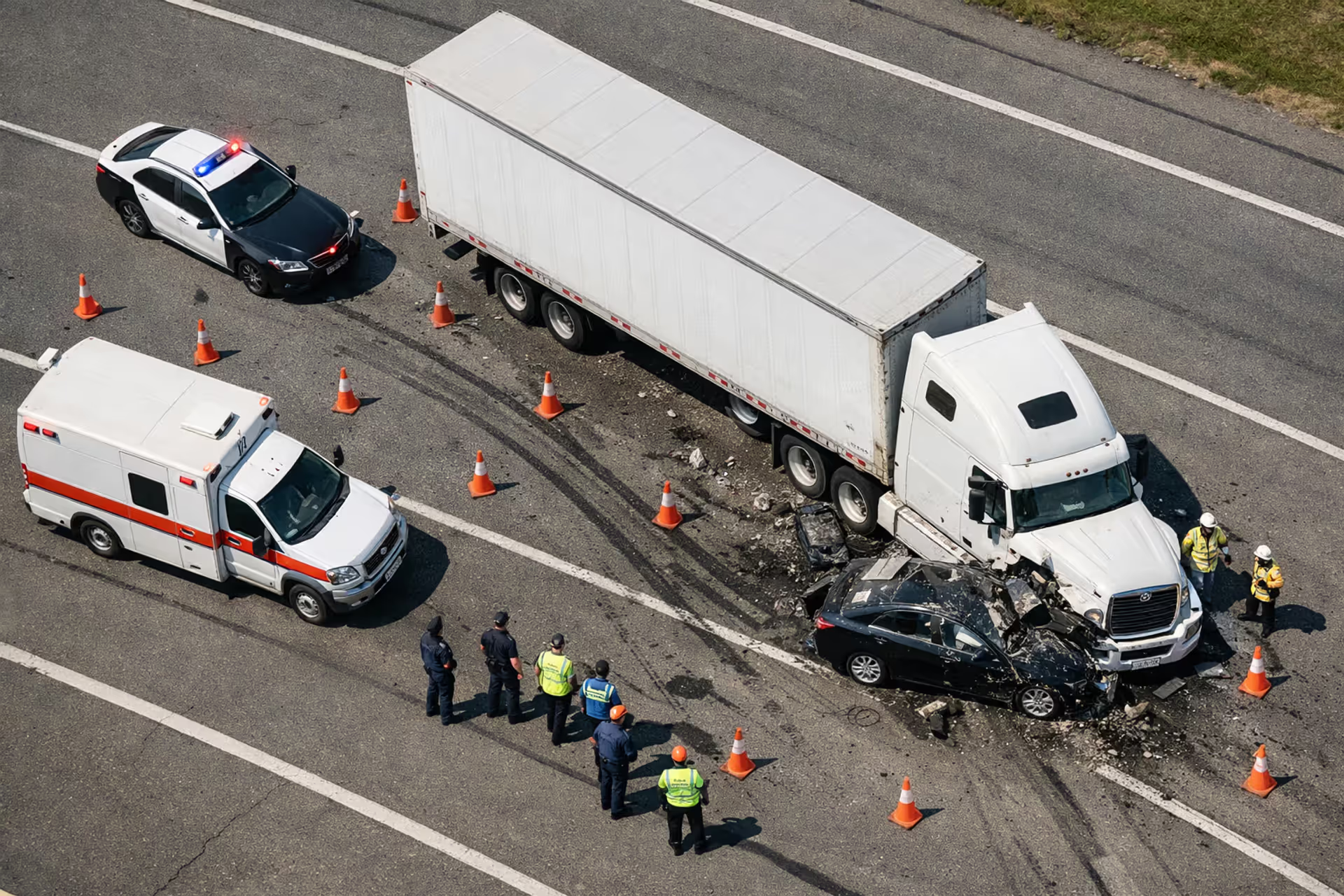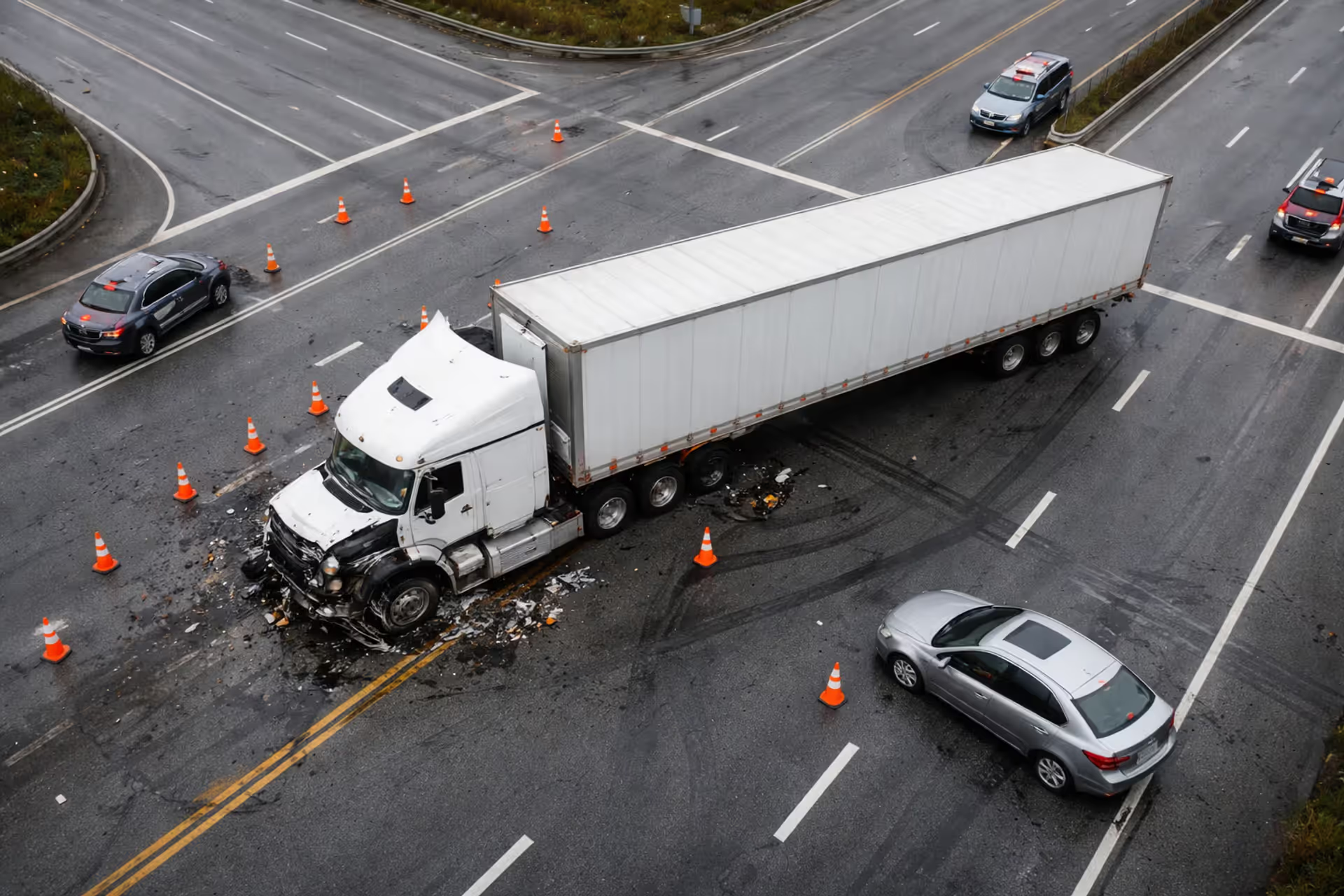
Aerial view of a highway intersection with a damaged semi-truck and a crashed passenger car surrounded by emergency cones and skid marks
Corporate Responsibility for Truck Crashes: When Companies Face Legal Liability

Content
When an 80,000-pound tractor-trailer collides with a passenger vehicle, the consequences are often catastrophic. Yet the driver behind the wheel is rarely the only party at fault. Behind most serious truck crashes lies a web of corporate decisions—cutting corners on maintenance, pushing drivers beyond safe limits, or failing to screen candidates with dangerous driving histories. Understanding when and how trucking companies bear legal responsibility can mean the difference between minimal compensation and full recovery for victims.
How Federal Regulations Define Trucking Company Legal Duties
The Federal Motor Carrier Safety Administration establishes clear obligations that create a legal duty trucking company owners cannot sidestep. These regulations form the foundation of corporate accountability in the trucking industry.
Motor carriers must maintain detailed qualification files for every driver, including road tests, medical examinations, and verification of previous employment. Companies that skip these steps or rubber-stamp approvals violate 49 CFR Part 391, creating direct liability exposure.
Hours of service rules under 49 CFR Part 395 limit property-carrying drivers to 11 hours of driving after 10 consecutive hours off duty, with a maximum 14-hour workday. Companies that pressure drivers to falsify electronic logging device records or ignore hours-of-service violations assume responsibility when fatigue-related crashes occur.
Maintenance requirements under 49 CFR Part 396 mandate annual inspections and systematic preventive maintenance programs. A trucking company cannot claim ignorance when brake failure causes a crash if maintenance records show skipped inspections or deferred repairs. The regulations require written policies, periodic reviews, and documentation—all discoverable in litigation.
Driver qualification standards prohibit carriers from employing anyone with recent DUI convictions, multiple serious traffic violations, or disqualifying medical conditions. When companies ignore red flags in driving records or fail to conduct required background checks, they create a paper trail of negligence that plaintiffs' attorneys can follow directly to the corporate boardroom.
Five Ways Fleet Management Negligence Causes Preventable Accidents
Inadequate Driver Screening and Training Programs
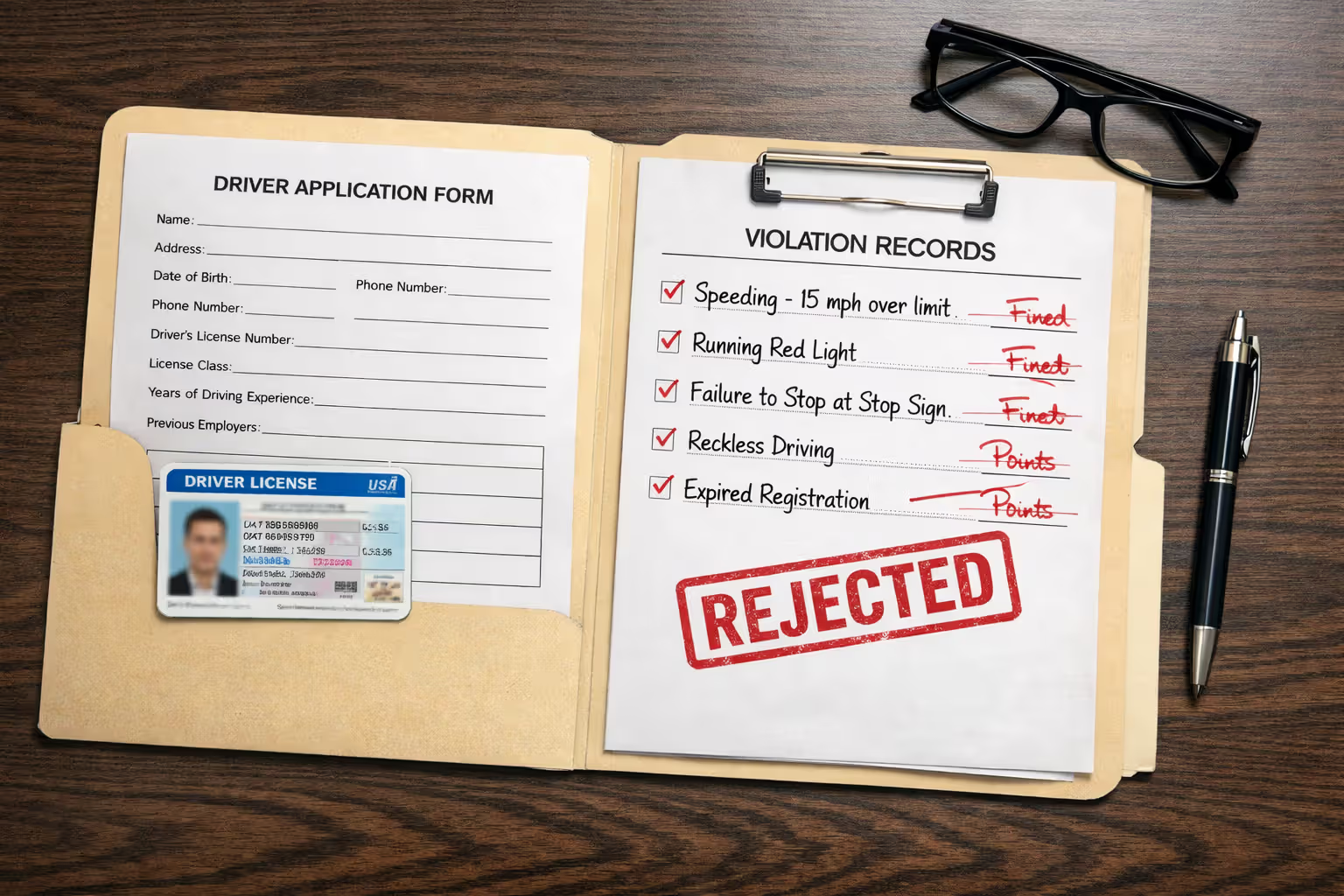
A regional carrier in Ohio hired a driver with three speeding tickets and an at-fault accident in the previous 18 months—violations that should have disqualified him under company policy. Six weeks later, he rear-ended stopped traffic at 65 mph, killing two people. The company's failure to enforce its own screening standards became the centerpiece of the wrongful death case.
Many carriers treat orientation as a formality rather than genuine training. New drivers receive minimal instruction on company-specific equipment, route hazards, or emergency procedures. When crashes occur during the first 90 days of employment—a statistically high-risk period—inadequate training becomes a key liability factor.
Deferred Maintenance and Inspection Failures
Fleet management negligence often appears in maintenance records long before a crash occurs. Companies that extend oil change intervals beyond manufacturer recommendations, delay brake replacements, or ignore tire wear patterns gamble with public safety to save money.
One multi-state carrier saved an estimated $400 per truck annually by stretching maintenance intervals from 15,000 to 25,000 miles. When a steering component failed on a poorly maintained truck, causing a multi-vehicle pileup, those savings evaporated in the face of a $12 million verdict. The company's own internal memos discussing cost savings through deferred maintenance became devastating trial exhibits.
Pre-trip and post-trip inspection reports often reveal a pattern of ignored defects. Drivers report issues that go unaddressed for weeks or months. When the same defect appears in multiple reports before a crash, it demonstrates conscious disregard for safety—the standard for punitive damages in many jurisdictions.
Safety is not an intellectual exercise to keep us in work. It is a matter of life and death. It is the sum of our contributions to safety management that determines whether the people we work with live or die
— Sir Brian Appleton
Pressure to Meet Unrealistic Delivery Schedules
Just-in-time delivery demands have intensified pressure on drivers to maintain impossible schedules. Dispatchers who penalize drivers for refusing unsafe loads or taking required rest breaks create a corporate culture that prioritizes speed over safety.
Text messages, dispatch communications, and performance reviews often expose this pressure. A driver who messages dispatch saying "I'm too tired to continue safely" and receives a response threatening termination provides clear evidence of employer oversight failure. When that driver subsequently crashes after continuing against his better judgment, the company shares responsibility.
Some carriers implement bonus systems that reward drivers for early deliveries or penalize them for delays, regardless of weather, traffic, or hours-of-service constraints. These incentive structures directly contradict safety obligations and create powerful evidence of corporate negligence.
Failure to Monitor Driver Performance and Safety Records
Modern telematics systems provide real-time data on speeding, hard braking, rapid acceleration, and other risk indicators. Companies that install these systems but fail to act on the data they collect cannot claim ignorance when a high-risk driver causes a serious crash.
A fleet manager who receives weekly reports showing a driver consistently exceeding speed limits by 10-15 mph, yet takes no corrective action, demonstrates negligent supervision. The company's own monitoring data becomes evidence against it.
Motor Vehicle Records checks should occur at least annually, but many carriers conduct them only at hiring. A driver who accumulates multiple citations during employment may continue driving for a company that never bothers to check updated records. When that driver's deteriorating safety record culminates in a fatal crash, the company's failure to monitor becomes indefensible.
Inadequate Cargo Loading and Securement Oversight
Author: Natalie Sinclair;
Source: capeverde-vip.com
Improperly loaded or secured cargo causes thousands of crashes annually. While drivers bear responsibility for checking loads, companies must provide proper equipment, training, and supervision.
A flatbed carrier that fails to supply enough chains, straps, or tarps forces drivers to improvise. When cargo shifts or falls, killing motorists, the company cannot blame the driver for inadequate securement if it failed to provide proper equipment.
Weight distribution affects handling and braking. Companies that load trailers improperly—too much weight on rear axles or unevenly distributed side-to-side—compromise vehicle stability. Electronic onboard recorders and scale tickets often reveal patterns of overweight violations that demonstrate systematic disregard for safety regulations.
Employer Oversight Failure: What Victims Must Prove in Trucking Litigation
Establishing corporate liability requires proving the company's negligence contributed to the crash beyond the driver's actions. Several legal theories support claims against trucking companies.
Respondeat superior holds employers liable for employee actions within the scope of employment. If a company driver causes a crash while performing job duties, the company typically shares liability even without independent negligence. This doctrine applies regardless of whether the company itself did anything wrong—vicarious liability flows from the employment relationship.
Negligent hiring claims require showing the company knew or should have known the driver posed an unreasonable risk. A carrier that hires a driver with a suspended license or fails to verify employment history creates liability when that driver's incompetence causes harm.
Negligent retention applies when a company learns of a driver's dangerous propensities but fails to take action. If a driver causes multiple minor crashes or accumulates safety violations, yet remains employed without additional training or supervision, the company may be liable for subsequent crashes.
Negligent supervision claims focus on the company's failure to properly oversee drivers. Allowing drivers to falsify logs, ignoring hours-of-service violations, or failing to conduct required drug testing demonstrates inadequate supervision.
The strongest corporate liability cases combine regulatory violations with internal company documents showing management knew about problems but chose not to act. When we find emails or memos discussing cost savings from cutting corners on safety, juries understand that corporations made conscious choices that led to tragedy.
— Michael Leizerman
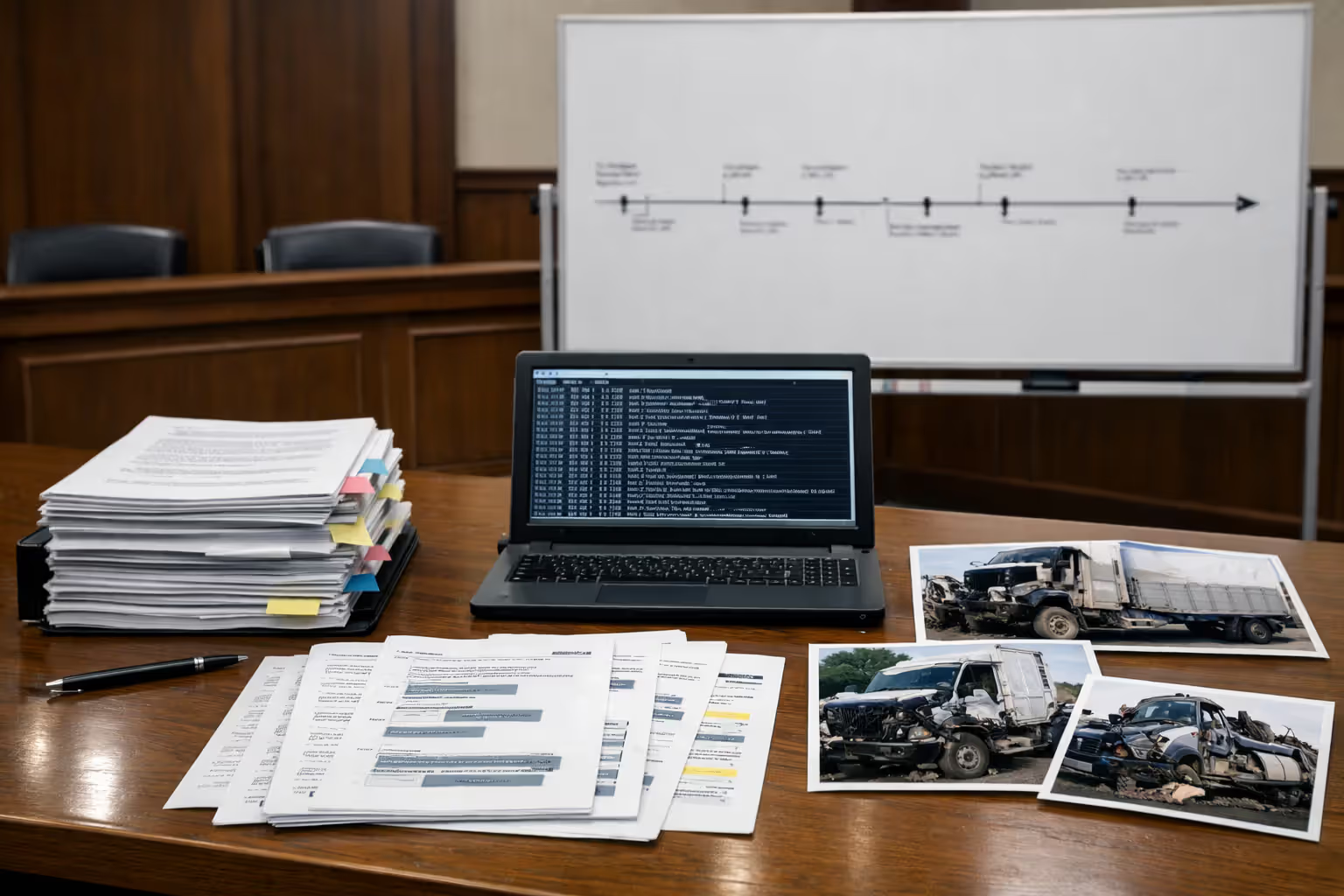
Evidence requirements in trucking litigation extend beyond typical car accident cases. Plaintiffs must obtain the driver's qualification file, maintenance records, hours-of-service logs, dispatch communications, safety policies, training materials, and previous crash history. Federal regulations require carriers to maintain these records, and spoliation of evidence can result in sanctions or adverse inferences.
Understanding Accident Liability Coverage Requirements for Commercial Fleets
Federal law mandates minimum insurance coverage for commercial motor vehicles based on vehicle type and cargo. These requirements ensure victims have access to compensation, though minimums often prove inadequate in serious crashes.
| Vehicle/Cargo Type | Minimum Coverage | Regulatory Citation |
| General freight (10,001+ lbs) | $750,000 | 49 CFR 387.9 |
| Hazardous materials (certain quantities) | $5,000,000 | 49 CFR 387.9 |
| Passenger vehicles (16+ passengers) | $5,000,000 | 49 CFR 387.33 |
| Oil or hazardous waste | $1,000,000 | 49 CFR 387.9 |
These minimums represent floor amounts, not adequate protection for catastrophic injuries. A crash causing quadriplegia, traumatic brain injury, or multiple fatalities easily generates damages exceeding $750,000. Responsible carriers maintain umbrella policies providing $5 million to $10 million or more in coverage.
Self-insurance is permitted for carriers demonstrating sufficient financial resources, but the FMCSA imposes strict requirements. Companies must prove they can satisfy judgments without insurance, submit to financial monitoring, and maintain minimum asset levels. Few carriers qualify.
Accident liability coverage becomes crucial in determining victim compensation. When a trucking company carries only minimum coverage but a jury awards $8 million, the corporate veil may be pierced to reach company assets if the carrier operated recklessly or fraudulently transferred assets to avoid liability.
Some carriers create shell companies with minimal assets, leasing trucks and equipment to avoid liability exposure. Courts increasingly disregard these structures when they exist primarily to shield parent companies from legitimate claims. Factors like shared management, commingled finances, and inadequate capitalization support piercing the corporate veil.
Author: Natalie Sinclair;
Source: capeverde-vip.com
Common Defense Tactics Trucking Companies Use to Avoid Responsibility
Trucking companies deploy predictable strategies to minimize corporate responsibility for truck crashes. Recognizing these tactics helps victims and attorneys counter them effectively.
The independent contractor defense attempts to sever the legal relationship between carrier and driver. Companies claim drivers are independent businesspeople, not employees, avoiding vicarious liability. However, courts examine the actual relationship, not just the label. If the company controls routes, schedules, equipment specifications, and performance standards, the driver is effectively an employee regardless of contract language.
Blaming the driver alone is perhaps the most common defense. Companies argue they hired a qualified driver, provided proper equipment and training, and bear no responsibility for the driver's negligence. This defense fails when discovery reveals inadequate screening, ignored safety violations, or pressure to meet unrealistic schedules.
The regulatory compliance defense asserts that because the company followed FMCSA regulations, it cannot be negligent. This argument misunderstands the law—regulatory compliance establishes a minimum standard, not a liability shield. Companies can comply with regulations yet still act negligently under the circumstances.
Challenging causation attempts to break the link between corporate negligence and the crash. A company might admit it failed to conduct proper background checks but argue that failure didn't cause the crash because the driver's error was unrelated to his driving history. Plaintiffs must establish clear causal connections between corporate failures and the specific crash.
Comparative fault defenses shift blame to the victim or other drivers. While legitimate in some cases, trucking companies often overreach, claiming minimal victim errors absolve them of responsibility for their driver's gross negligence. Most states apply comparative negligence rules that reduce but don't eliminate recovery when victims share fault.
In the corporate world, there is a tendency to avoid blame and responsibility. But true accountability means acknowledging what went wrong, understanding why, and making sure it never happens again. Anything less is a betrayal of the people who were harmed.
— Sidney Dekker
How to Build a Strong Case Against a Trucking Company After a Crash
Successful corporate liability claims require methodical evidence gathering starting immediately after the crash. Time is the enemy—companies may destroy or "lose" damaging documents, and memories fade.
Preserve the truck and trailer before repairs occur. Electronic control modules (black boxes) contain critical data about speed, braking, and driver inputs in the seconds before impact. This data can be overwritten or "accidentally" erased if the vehicle returns to service. Attorneys should immediately send spoliation letters demanding preservation of all physical and electronic evidence.
Obtain police reports, but don't rely on them exclusively. Officers rarely have expertise in commercial vehicle regulations and may miss violations obvious to trucking specialists. Crash scene photographs, witness statements, and physical evidence often tell a more complete story.
Driver qualification files reveal hiring and supervision failures. These files, required by 49 CFR 391.51, must include applications, road tests, medical certificates, previous employment verification, and annual reviews. Missing documents or falsified records demonstrate regulatory violations.
Maintenance records show whether the company properly maintained the vehicle. Compare required maintenance schedules with actual service records. Gaps between recommended and performed maintenance, repeated repairs of the same component, or inspection violations establish fleet management negligence.
Hours-of-service logs—now primarily electronic—reveal whether the driver exceeded legal limits. Analyze logs for patterns suggesting falsification: mathematically impossible trips, missing entries, or sudden corrections. Compare logs with fuel receipts, toll records, and delivery documents to verify accuracy.
Dispatch communications expose pressure tactics. Text messages, satellite communications, and recorded phone calls often contain smoking-gun evidence of companies pushing drivers beyond safe limits. Subpoena these records early before "routine deletion" occurs.
Expert witnesses provide credibility and translate technical evidence for juries. Accident reconstructionists establish how the crash occurred. Trucking industry experts explain regulatory violations and standard practices. Human factors specialists address fatigue and driver impairment. Economic experts calculate lifetime damages in catastrophic injury cases.
Company safety policies create standards against which to measure actual practices. If a carrier's written policy requires three years of experience but it hired a driver with six months, that gap demonstrates negligent hiring. Policies often exceed regulatory minimums, creating higher standards the company must meet.
Previous crashes and safety violations establish patterns. FMCSA's Safety Measurement System provides carrier safety ratings and violation histories. Multiple crashes or high violation rates in vehicle maintenance, hours-of-service, or driver fitness categories suggest systemic problems beyond isolated incidents.

Author: Natalie Sinclair;
Source: capeverde-vip.com
FAQ: Corporate Liability in Truck Accident Cases
Corporate responsibility for truck crashes extends far beyond the actions of individual drivers. Companies that cut corners on hiring, maintenance, or oversight create dangers that inevitably lead to tragedy on our highways. Federal regulations establish clear duties, but enforcement depends largely on holding negligent carriers accountable through civil litigation.
Victims facing life-altering injuries or families grieving lost loved ones need to understand that trucking companies carry substantial insurance precisely because their operations pose serious risks. When corporate negligence contributes to crashes, the law provides mechanisms to ensure full compensation and, through punitive damages, to deter future misconduct.
Building successful cases requires immediate action to preserve evidence, thorough investigation of company practices, and expertise in both trucking regulations and litigation strategy. The complexity of these cases—involving federal regulations, extensive documentation, and well-funded corporate defendants—makes experienced legal representation essential.
The stakes in trucking litigation extend beyond individual cases. Every verdict holding a company accountable for fleet management negligence or employer oversight failure sends a message throughout the industry. When companies face real financial consequences for prioritizing profits over safety, they modify policies, improve training, and enhance oversight. Corporate accountability saves lives.